
Mediterranean rainbow wrasse
Coris julis



Special features
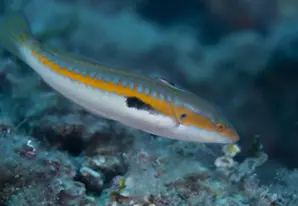
Mediterranean rainbow wrasses change gender from female to male over the course of their lives and become more colorful in the process.
If they are threatened and have to flee, they can bury themselves up to 5 cm deep in the sediment.

Appearance
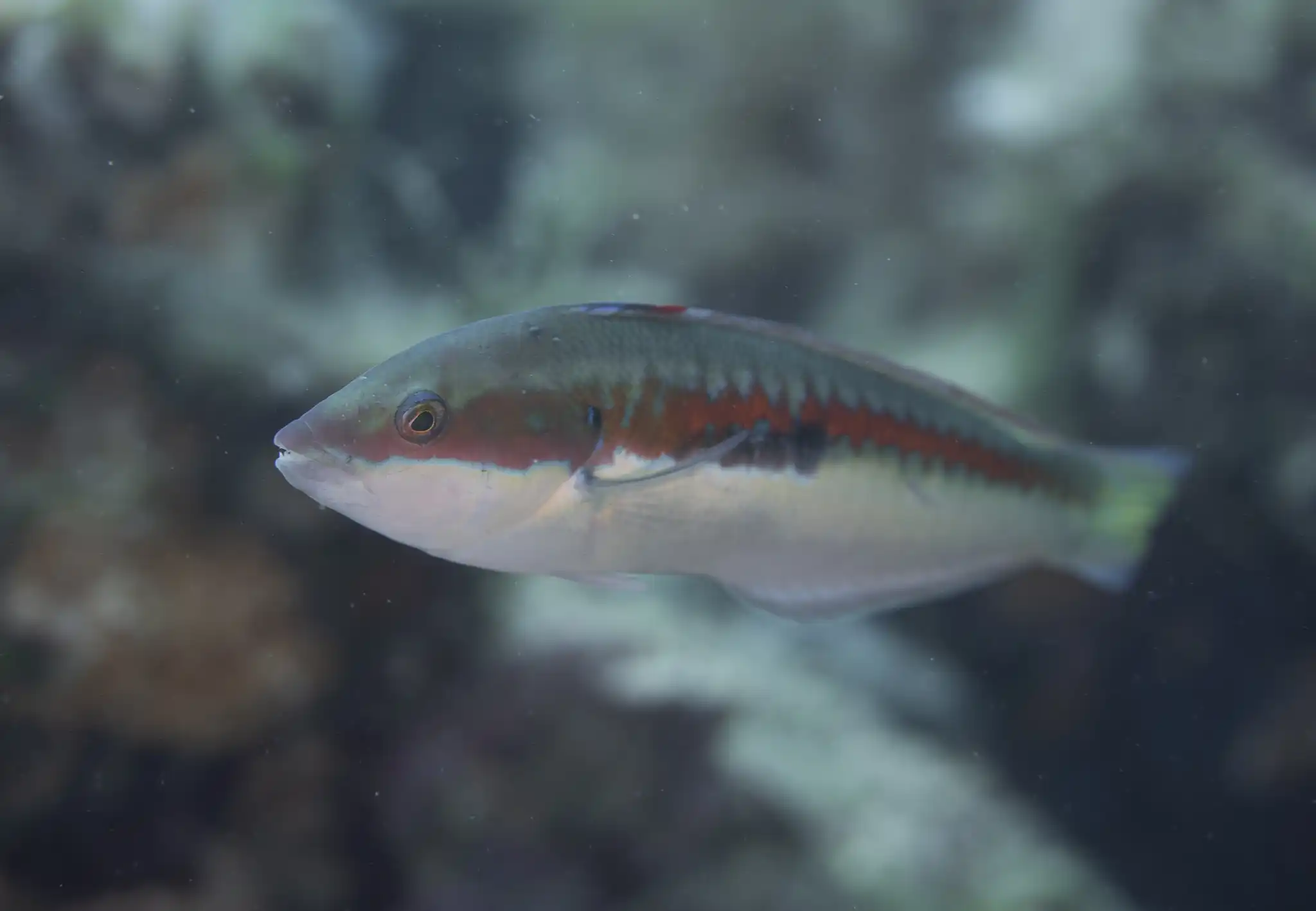
The Mediterranean rainbow wrasse has an elongated, torpedo-shaped body.
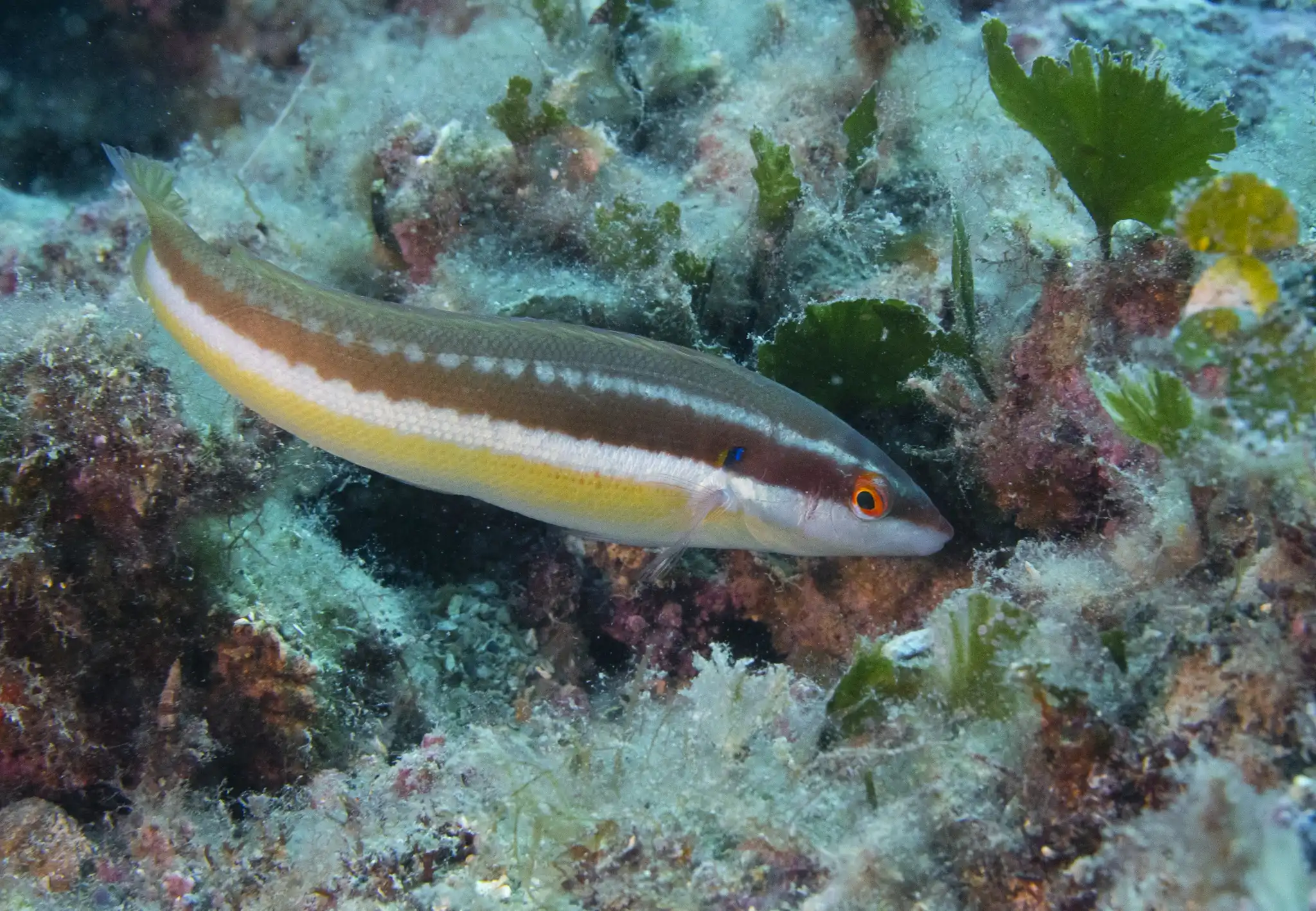
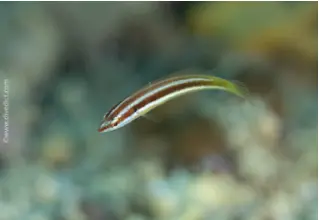
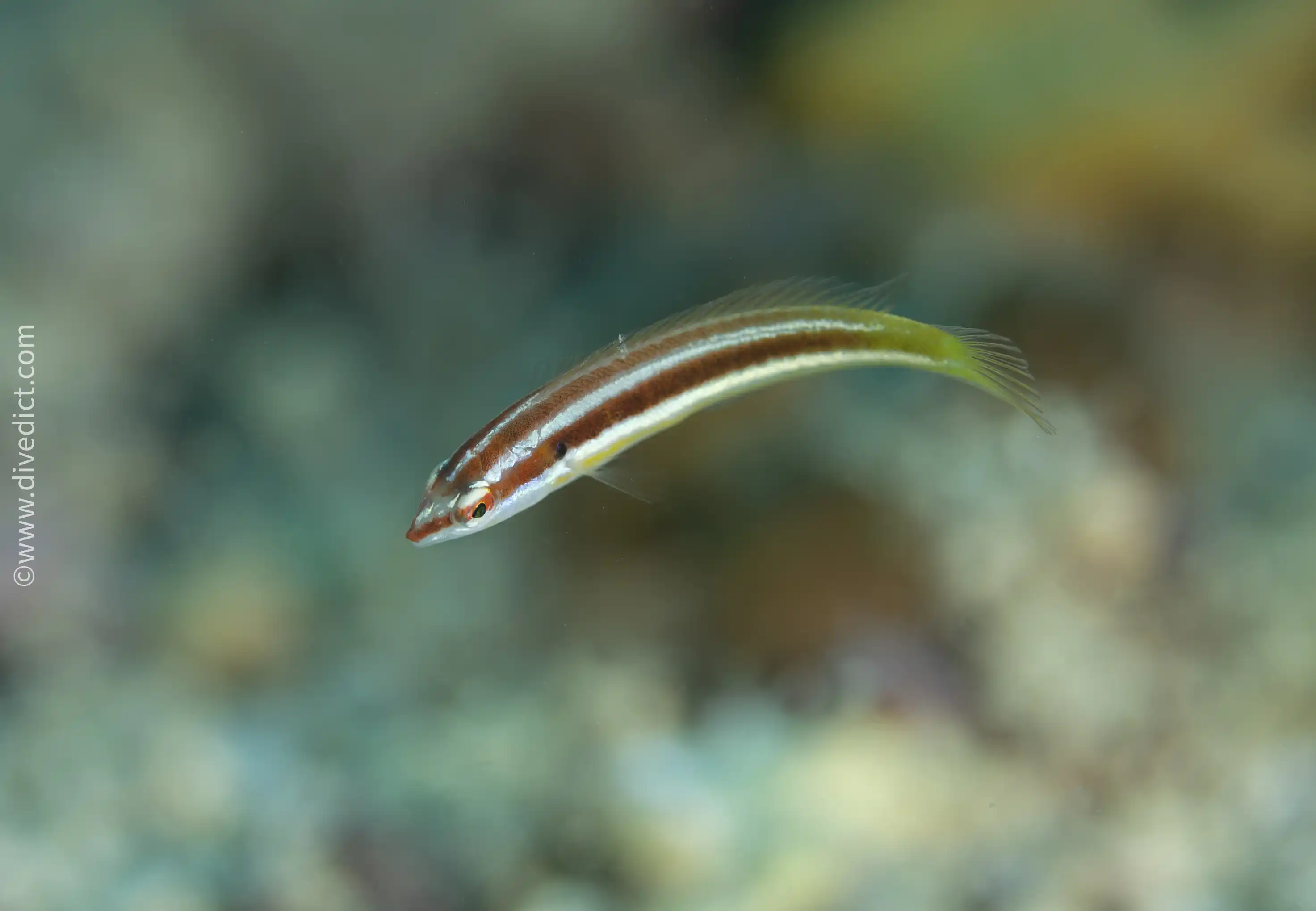
As females, their body is colored reddish-brown with a yellow line along the side and a white belly.
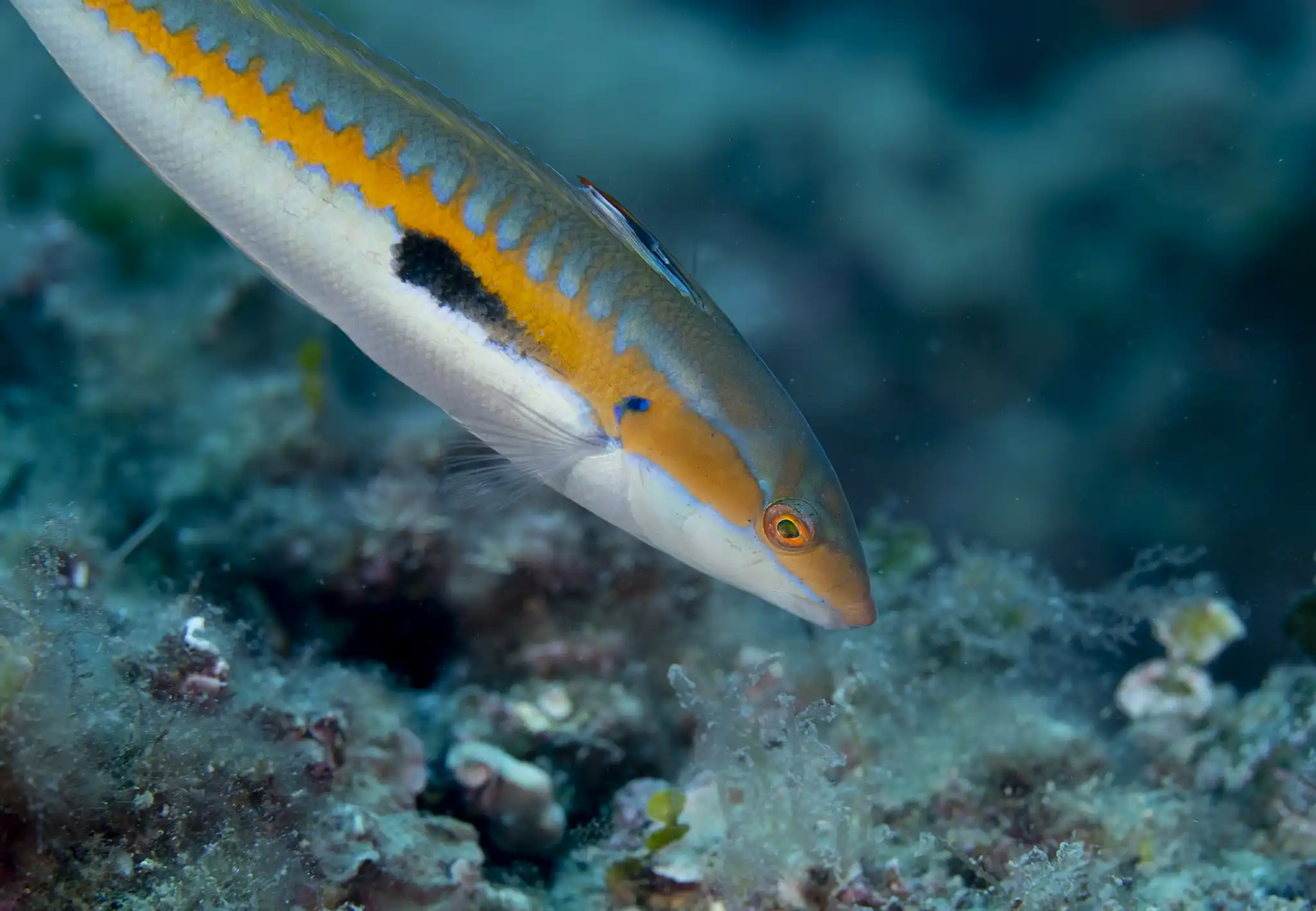
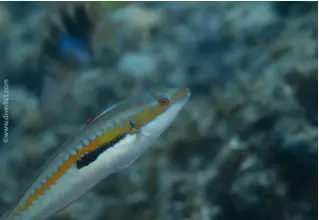
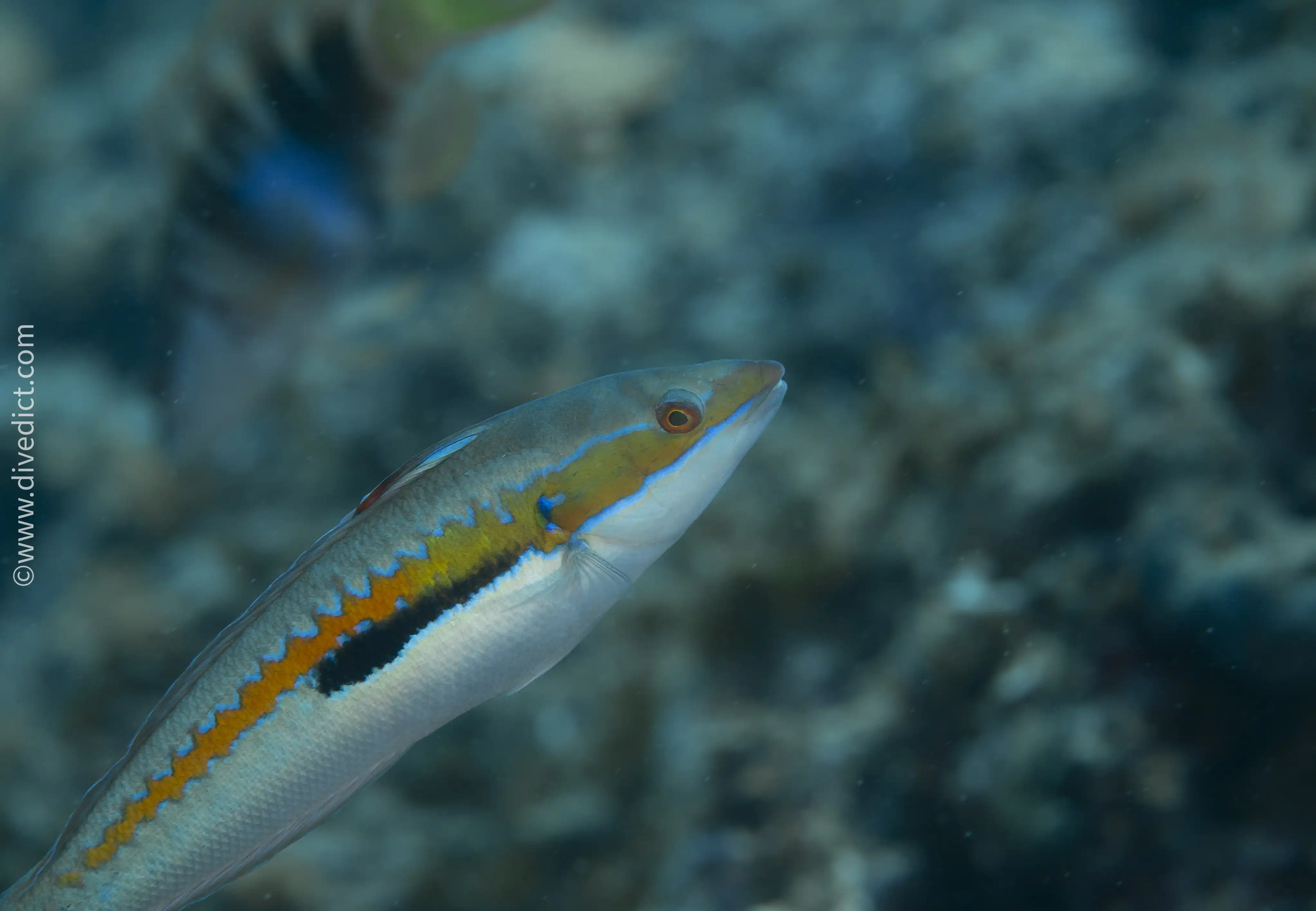
The males on the other hand, which have developed from the females, are extremely colorful.
They are green on the back, and on the sides, they have an orange zigzag band with an oblong, black spot. In general, the coloration and body shape can vary significantly within the species.
Natural enemies
Dental bream  (Dentex dentex)
Dangerous/venomous
Editerranean rainbow wrasses are neither dangerous nor venomous.
Sketch
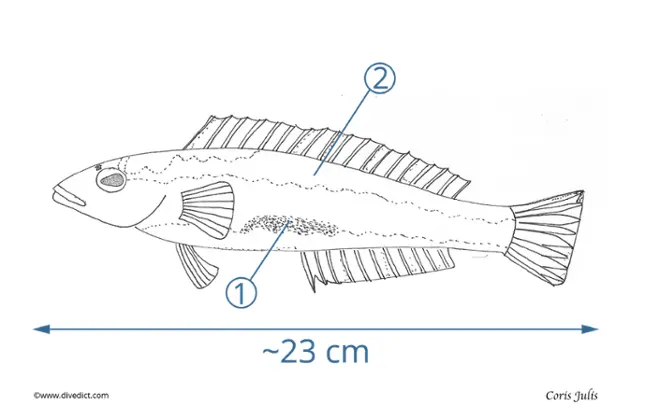
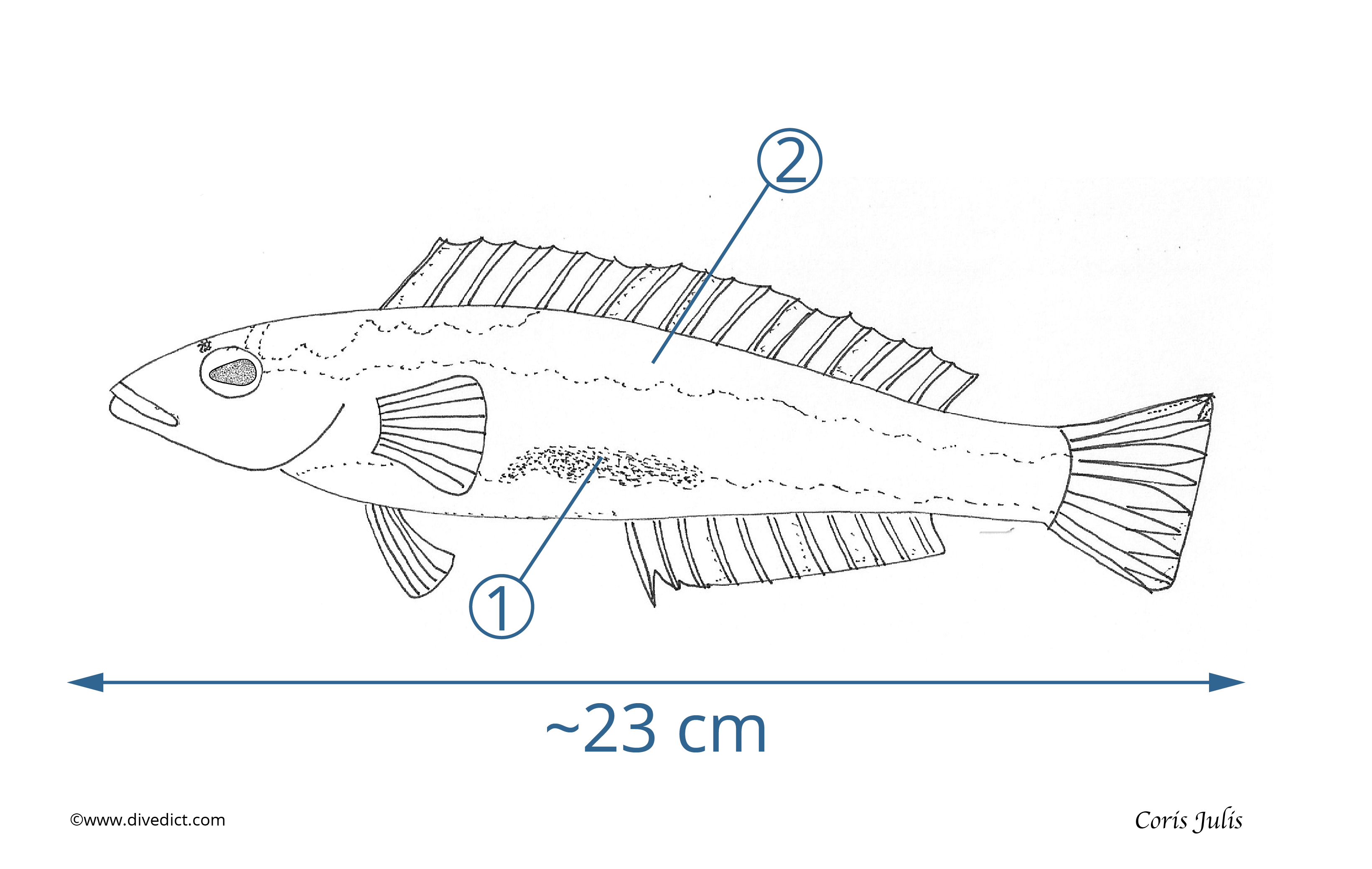
1. Black, wedge-shaped spot
2. Orange zigzag ribbon with blue trim
Pro tips
These fish are extremely curious and will approach you slowly if you remain calm.
They have above-average eyesight, and they eat anything along the way, including snails, crabs, mussels, small fish, bristles, echinoderms, woodlice, and algae.
It hunts during the day and buries itself in the sand to sleep at night.
Cold temperatures and darkness can trigger this sleeping pattern, which is why it usually buries itself in winter. In doing so, he retreats to deeper areas.
Juveniles also sometimes act as cleaner fish.
The colorful males show strong impressive and territorial behavior. During mating season (mid-July) they show the most aggressive behavior.
Text: Carolina Leiter, Felician Hosp, Pia Balaka
Pic: Felician Hosp, Sabine Probst
Illustration: Dive Dict