
Where can I be found?
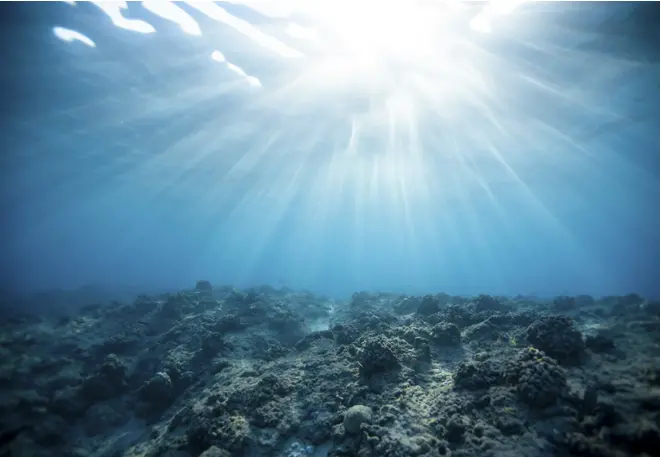
Lots of sun and shallow water - sunny rocky seabeds can be found on rocky, sun-exposed coasts.
Only a few areas of the world's oceans are shallow enough for sunlight to reach the bottom.
In turn, even less area is exposed to extreme solar radiation.
Why am I important?
Sunny rocky seabeds are the most popular habitat for algae. They love warmth and sunshine, and they quickly overgrow every free millimeter of solid ground.
If you compare this habitat to the dark, barren depths of the oceans, you can see that the sun-exposed rocky seabed is a highly productive habitat.
The high exchange of light, grass, and nutrients provides excellent conditions for the growth of algae, the primary food source for most living organisms.
Who am I giving home to?
Many types of brown algae can grow to several meters in height under good growing conditions.
They form a stable structure for protozoa and other algae that grow on top of them. Many of these tiny animals use algae to reach far into the water to catch particles and plankton.
Fast-growing types of brown and green algae also occur sporadically among the stable types of brown algae. They are all an extremely important food source for fish and invertebrates - they feed on seaweed meadows like cows on pasture.
However, there are also species of fish that attack the algae gardens in schools, leaving them almost barren and devastated.
As nature intended, the fish, crabs, and mollusks that feed on the algae themselves serve as food for the larger and stronger inhabitants of this habitat.
Hardly any living organism can compete with the lush algae growth for a little space. There are, however, a few exceptions among the animals that have grown on the rocks: Sea anemones, corals, and sponges have their own microscopic algae in their bodies that they can use to make extra energy.
What do I consist of?
Like my brother, the shadowy rocky seabed, I am made up of large and small rock formations permanently attached to the bottom of the sea.
Currents, waves, or fishing nets don't disturb me easily. I've been around a long time and will probably survive the end of mankind.
Text: Carolina Leiter