
Peacock wrasse
Symphodus tinca




Special features
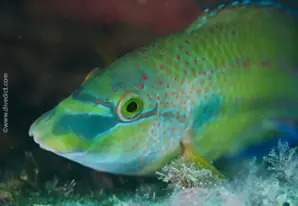
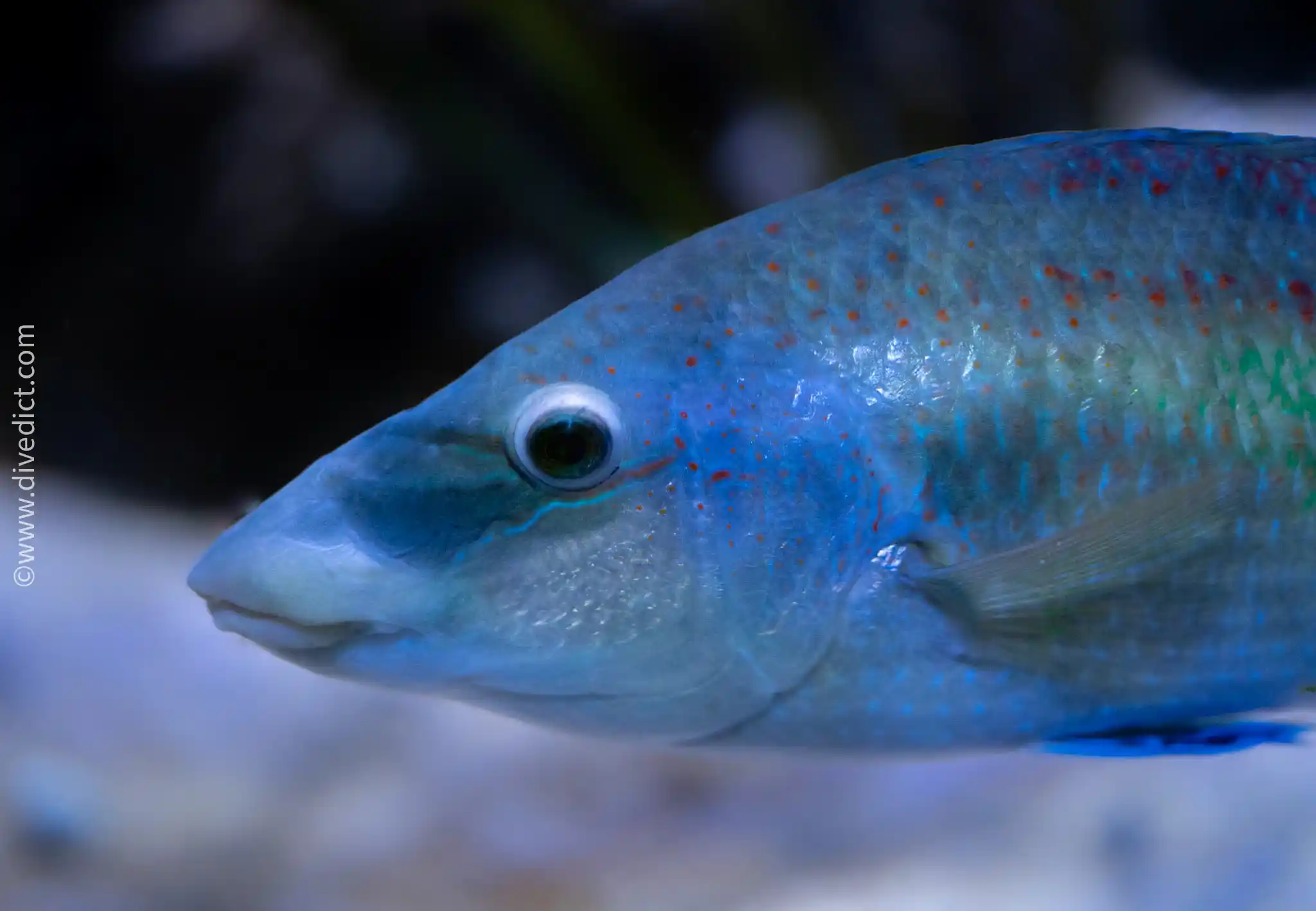
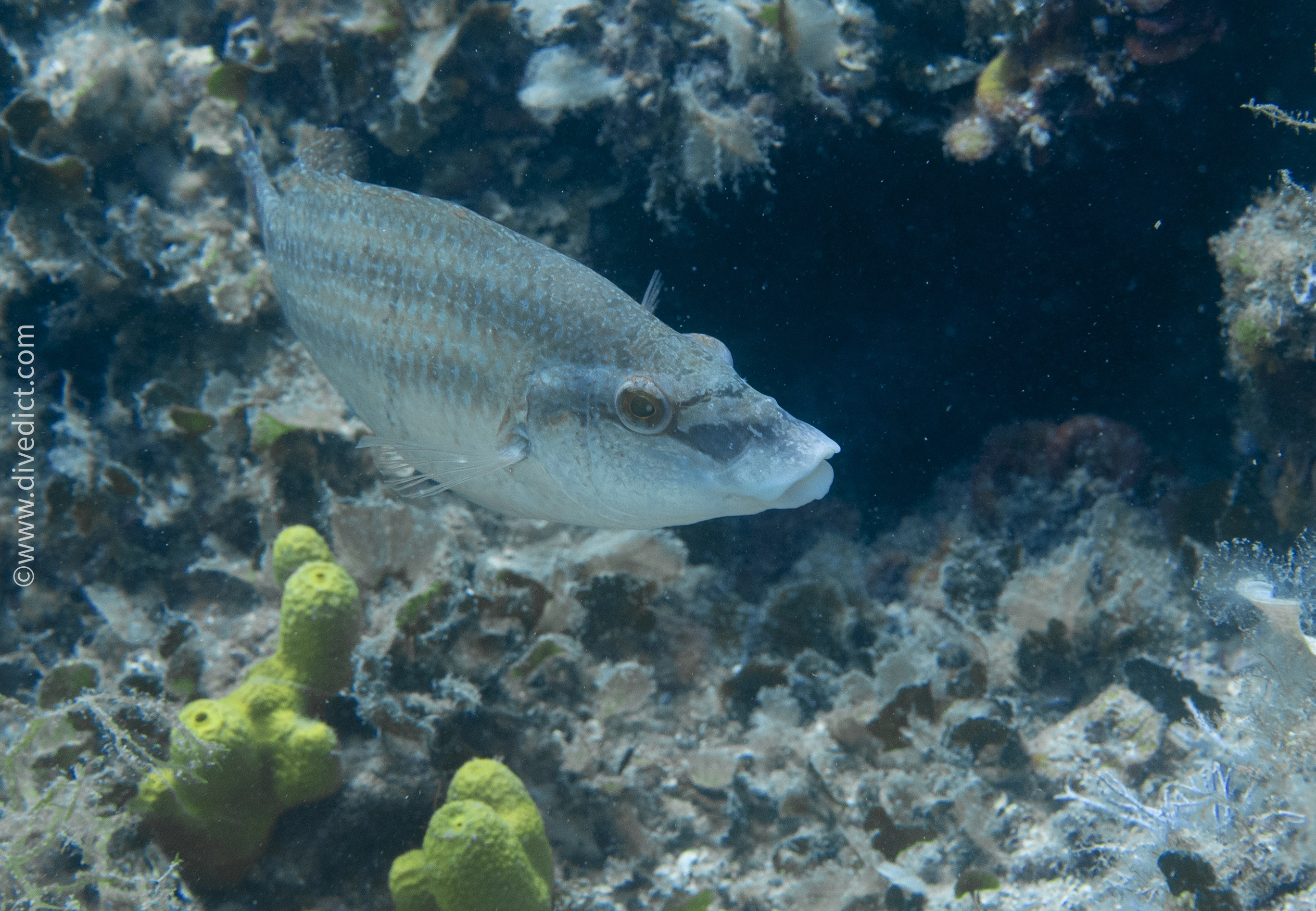
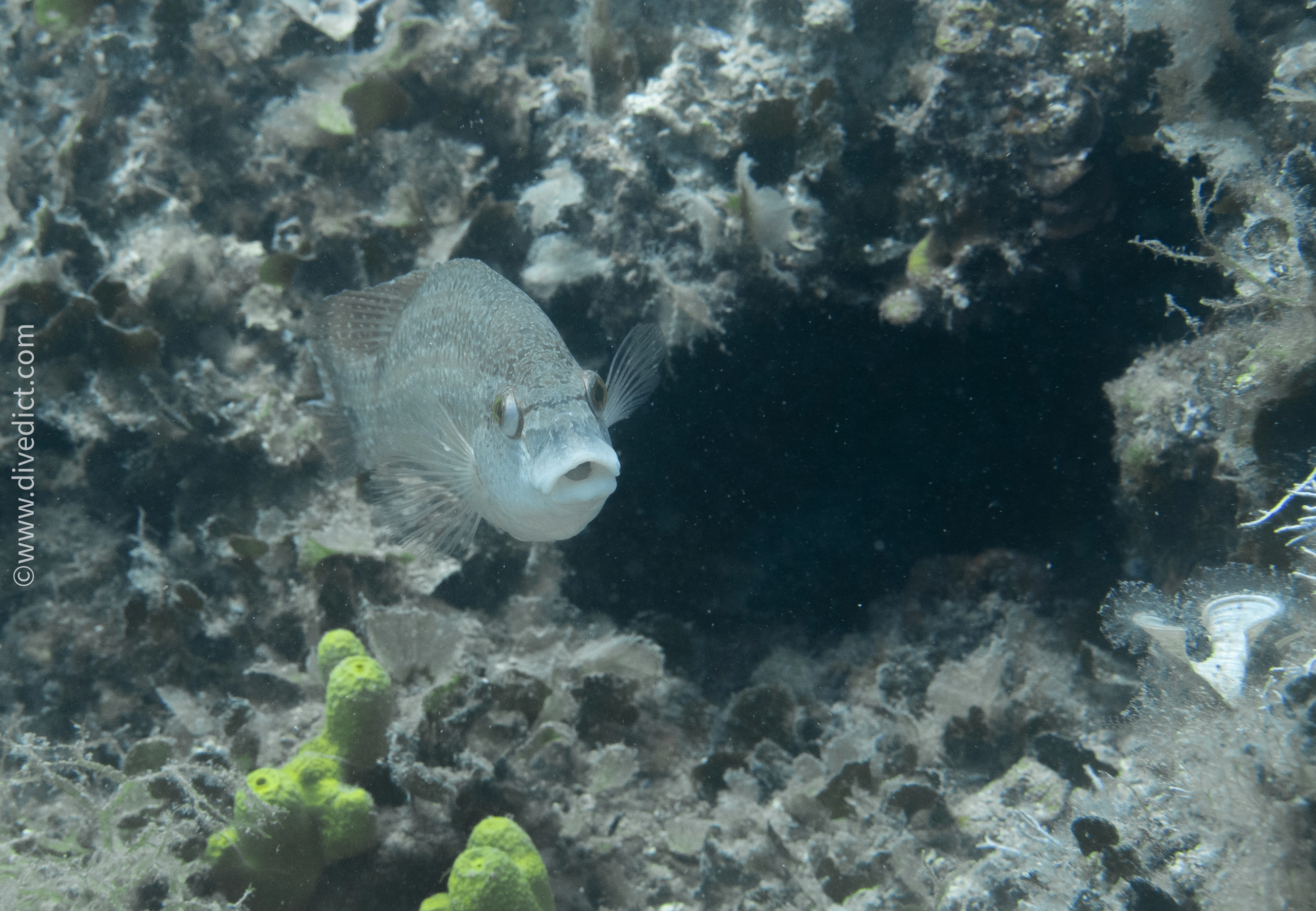
Specimen of both sexes have a dark spot on the base of the tail on both sides. It wears its fins in pale yellow with blue tips.
The peacock wrasse can proudly claim to be the largest of its kind.
With a life expectancy of 14 years, it can be referred to as the grandfather among his peers.
To stay strong, it eats sea urchins, brittle-starfish (Ophiuroids), mussels, shrimps, and crabs.
Appearance
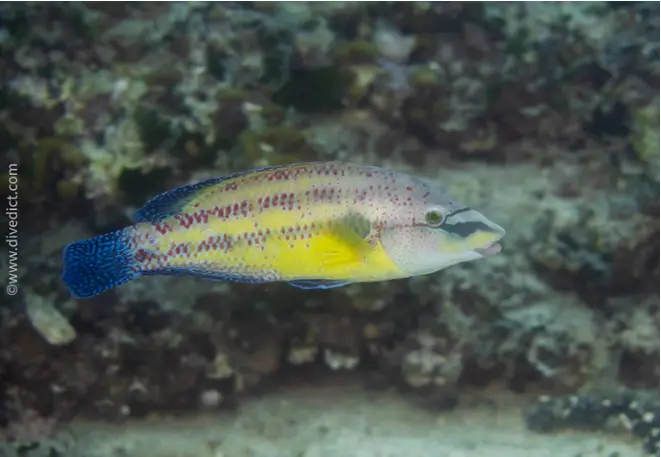
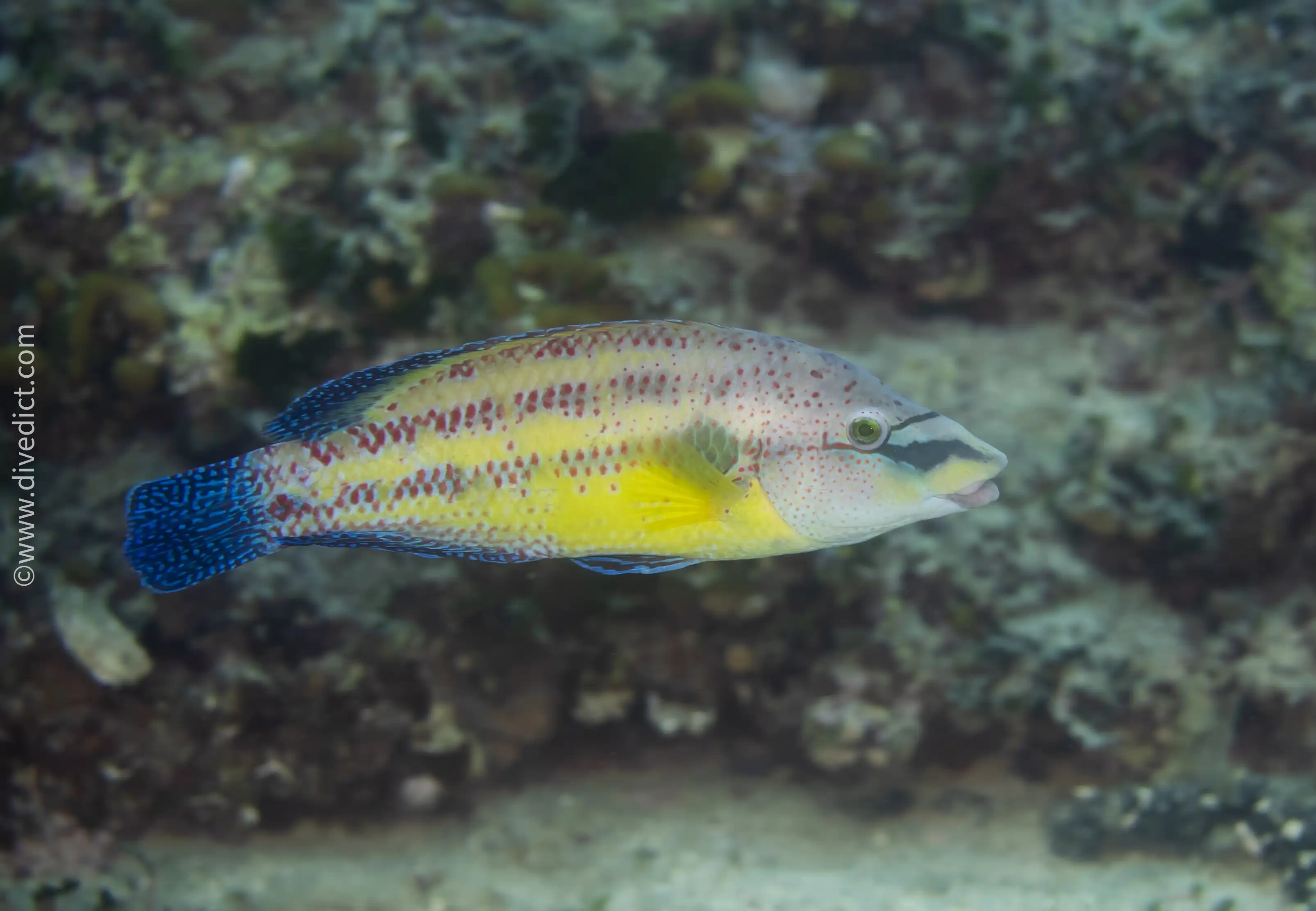
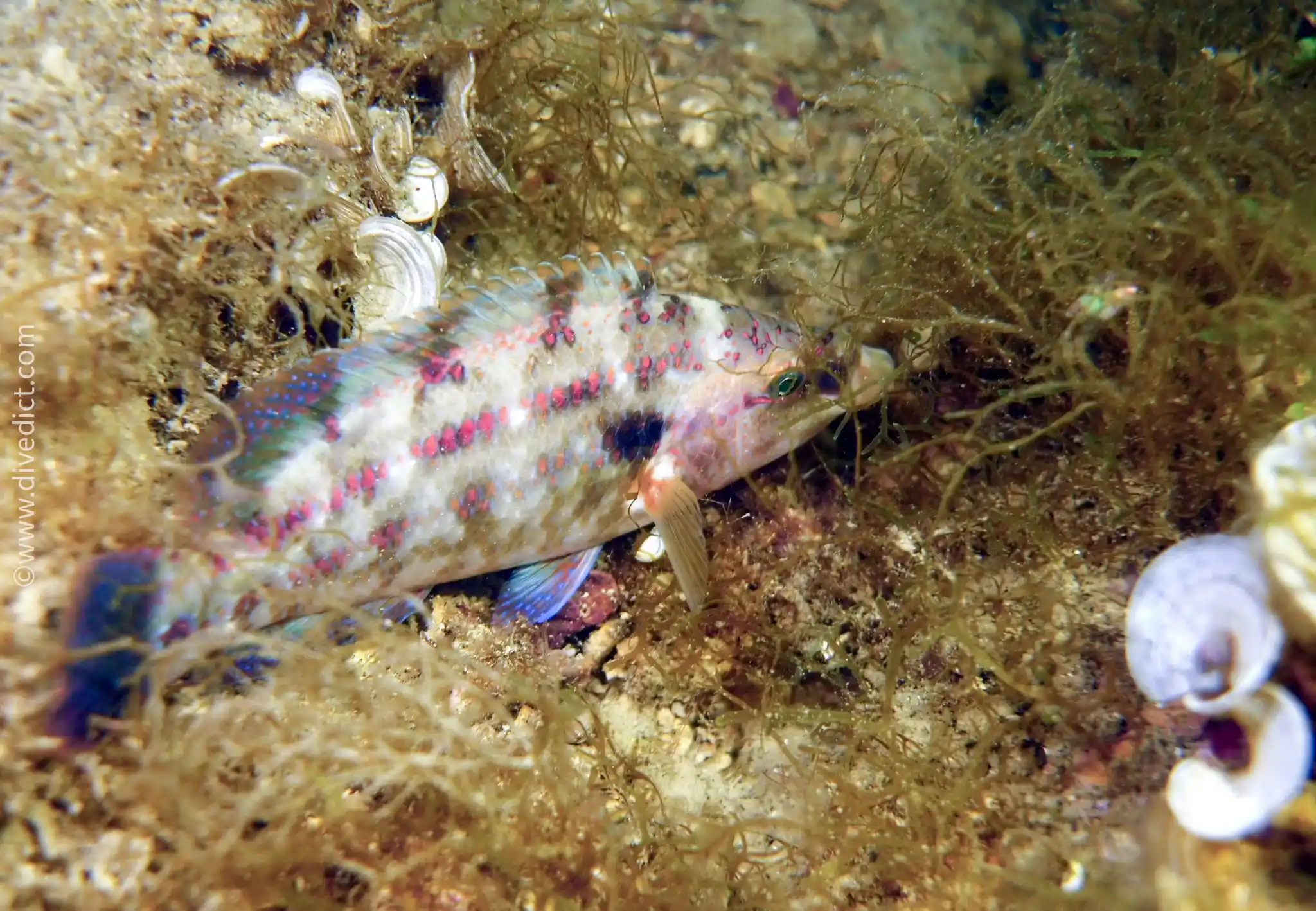
Its scales are adorned with shimmering silver, two to three brownish stripes from head to tail fin, and a somewhat dark-colored face mask.
During mating season, its fins in particular shine in an intense blue-green with light blue dots and its longitudinal stripes turn strikingly red.
This colorful species usually roams the waters alone or in small groups.
Natural enemies
Predatory fish
Dangerous/venomous
This species is neither dangerous nor venomous.
Sketch
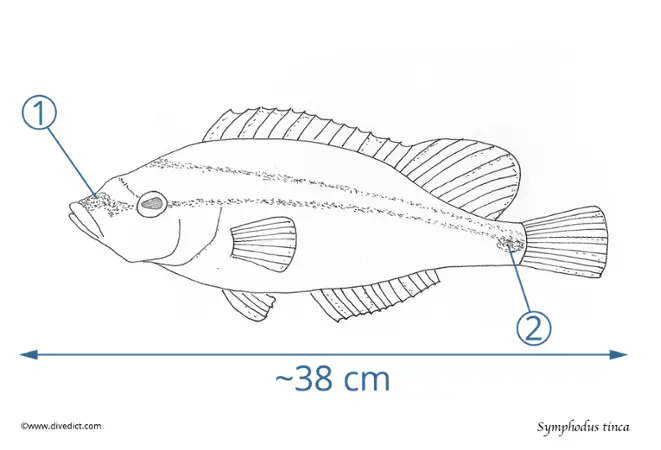
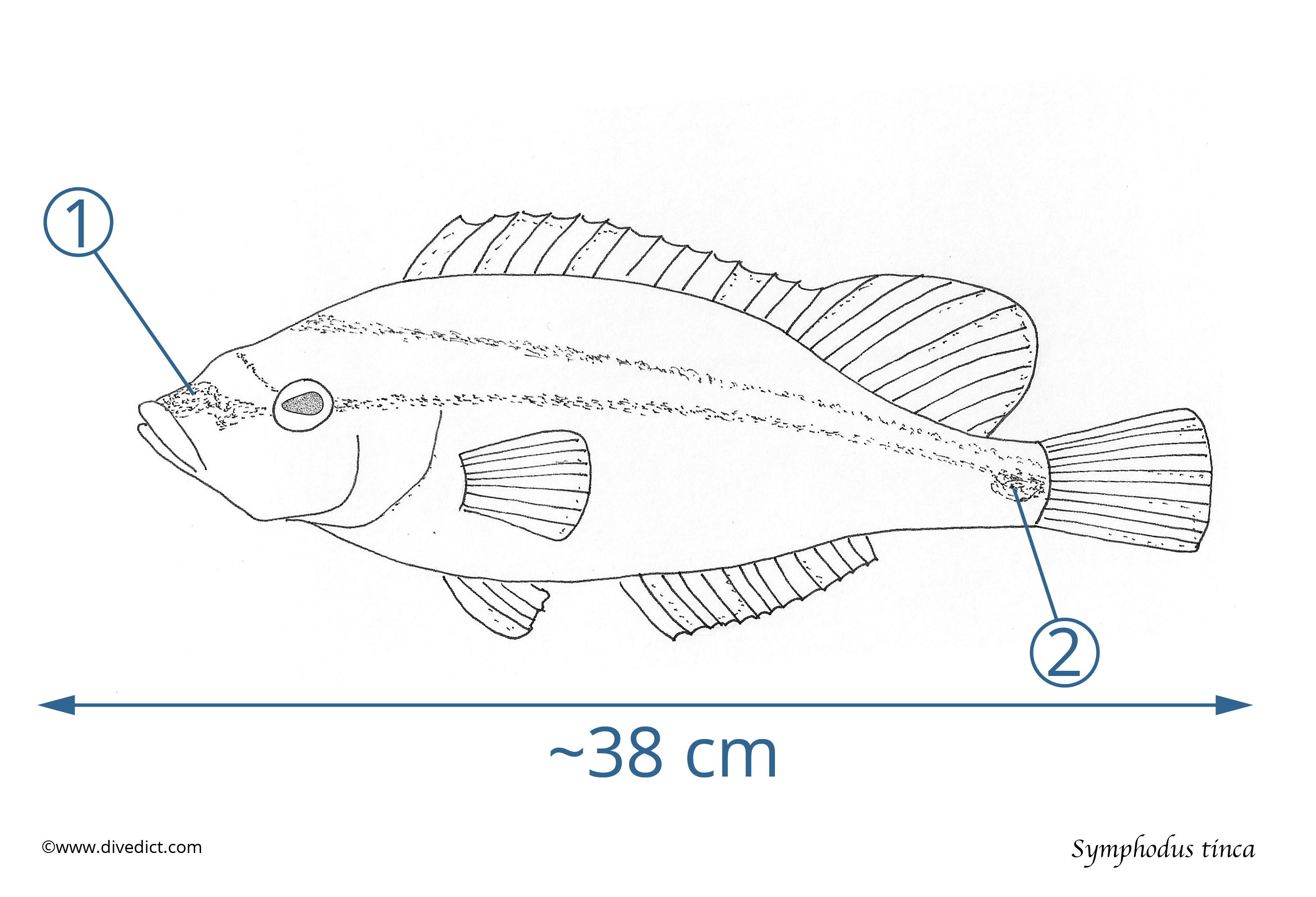
1. Dark face mask
2. Dark blue spot at the base of the tail
Pro tips
The largest males of this species are rather loners, otherwise, they are actually very sociable companions.
They have particularly interesting behavioral patterns in their mating strategies:
1: They build a single spawning nest from algae, which they guard during the entire mating and breeding season (April-June).
2: The strategy of lurking males is particularly insidious: males wait near foreign nests until the eggs are laid and fertilize them there.
3: The smaller males of this species “catch” passing females and mate with them. However, the laid eggs are then not guarded.
4: The largest males drive the guards out of their nests, eat the eggs laid there, and then spawn with their females in the foreign nests. The original nest owner is left with the task of guarding the strangers' eggs.
Text: Carolina Leiter
Pic: Dive Dict
Illustration: Dive Dict