
Ornate wrasse
Thalassoma pavo
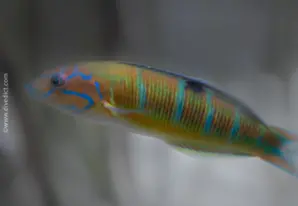




Special features
Thanks to its colors, the Ornate wrassewould also fit perfectly into a tropical reef.
Both males and females truly look like colorful peacocks in the shape of a fish.
The sea peacock changes its sex and body color significantly over the course of its life.
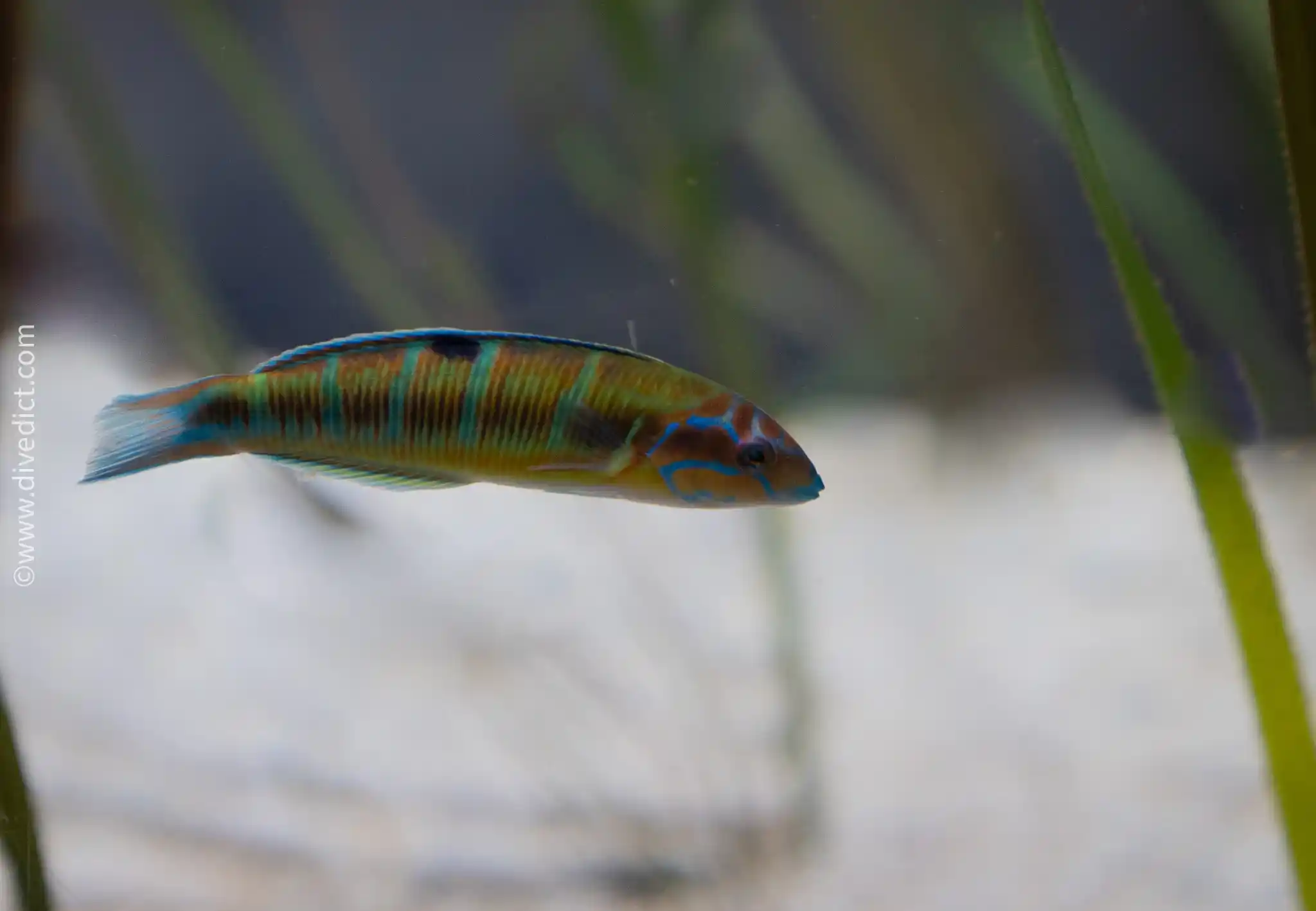
At first, it is female with an orange-yellow base color and five blue horizontal stripes.
It becomes a bright green male who has a wide blue-red band on his neck later on.
Appearance
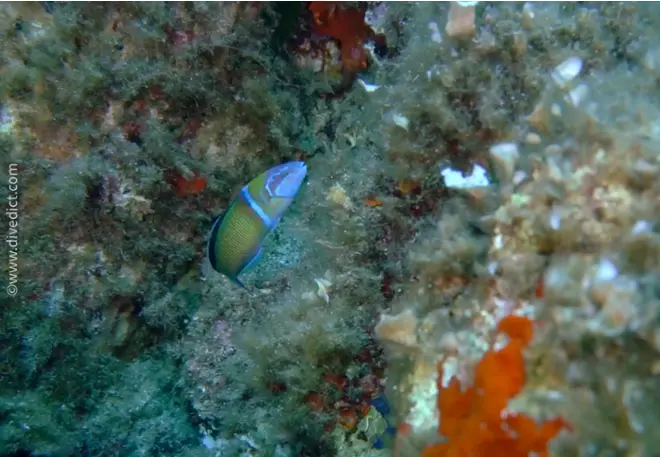
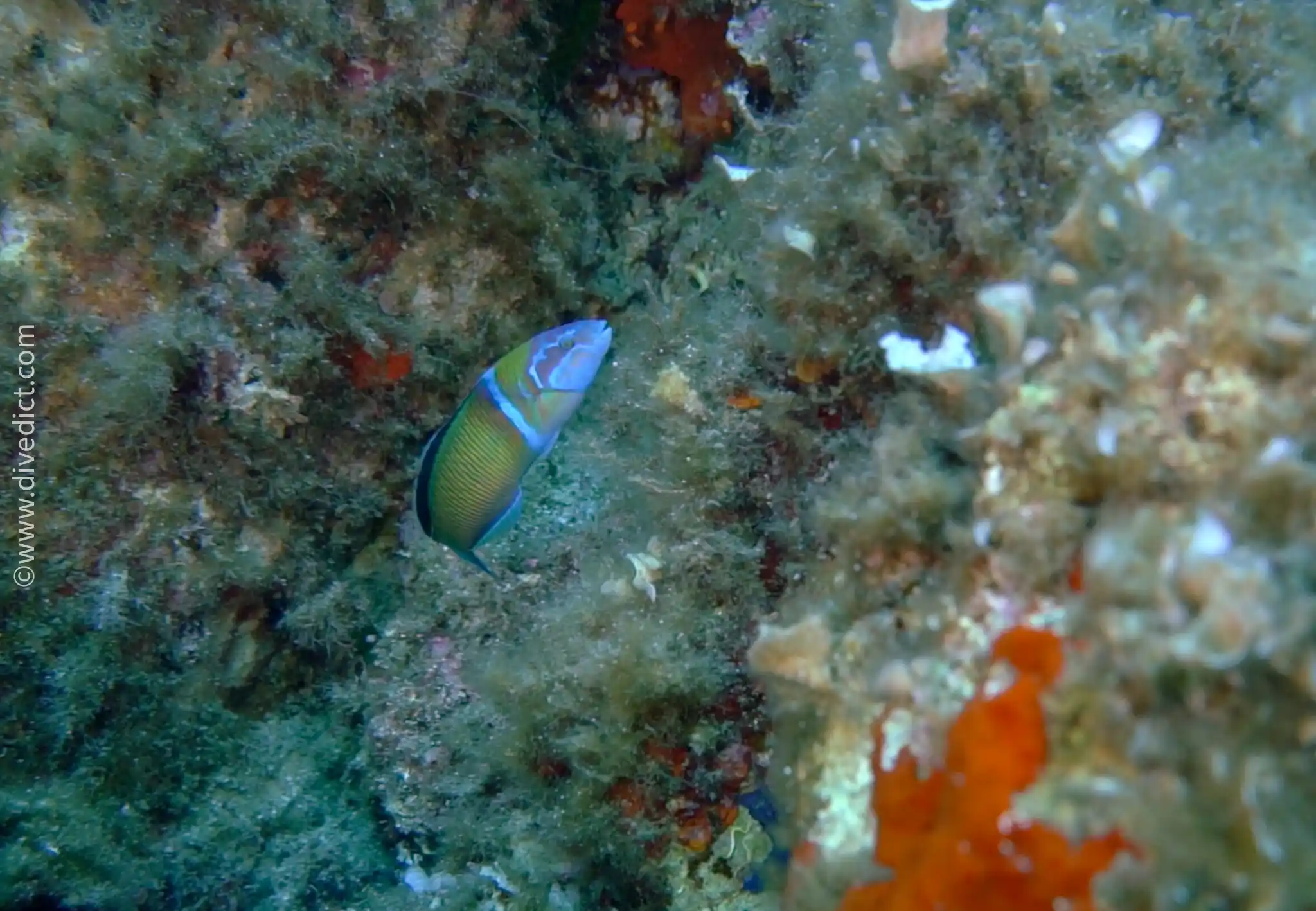
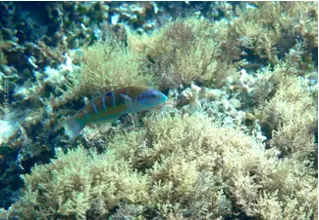
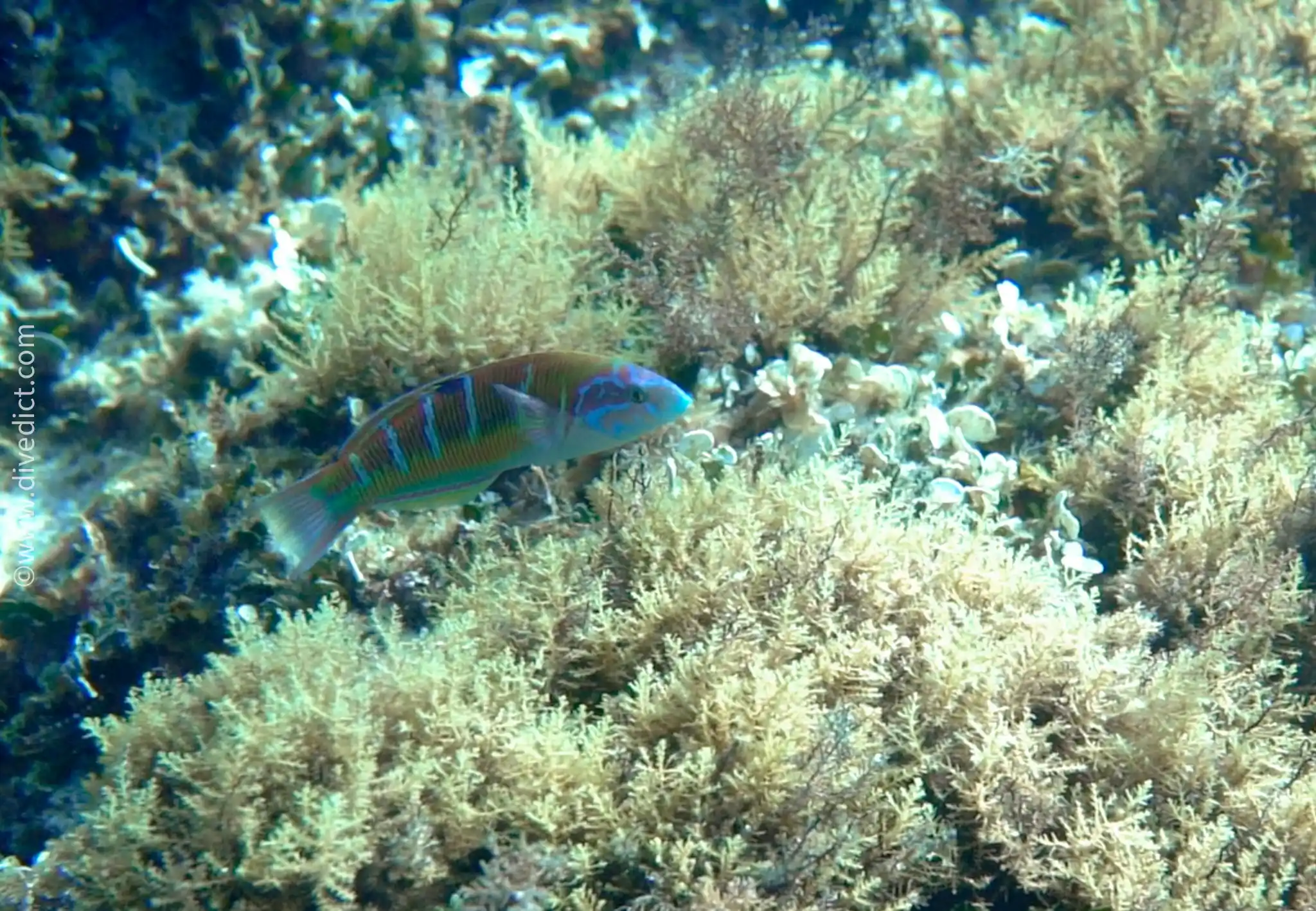
As already mentioned, the Ornate wrasse is a very colorful animal that has an elongated physique. The body color varies depending on gender, age and season.
However, the Ornate wrasse always has blue lines on its head. Younger animals can be recognized by the black spot in the middle of their backs.
The tail fin of males is naturally frayed.
Natural enemies
Predatory fish
Dangerous/venomous
The sea peacock is neither dangerous nor venomous.
Sketch

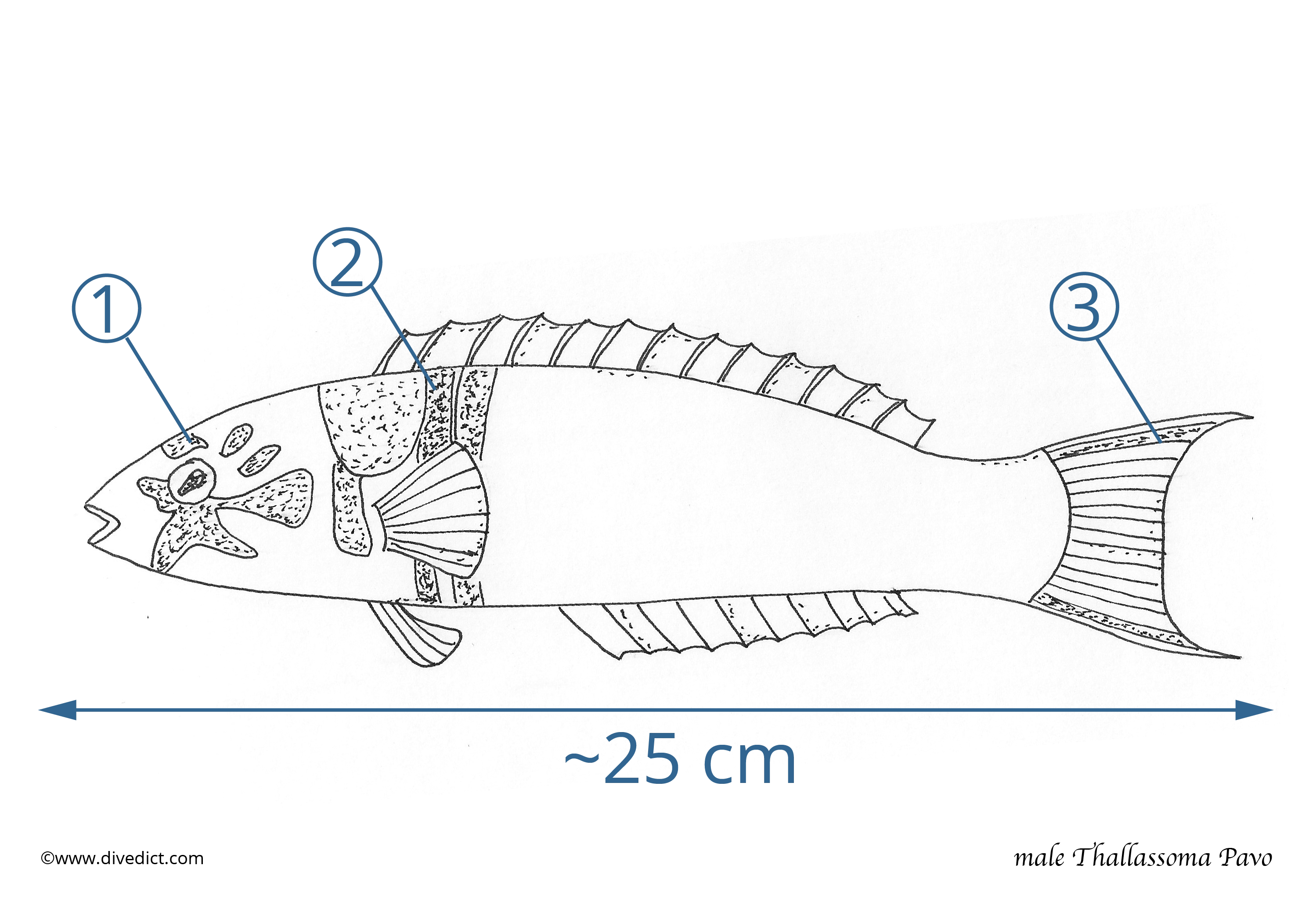
1. Blue spot-like pattern
2. Blue-red band
3. Frayed tail fin (= male)
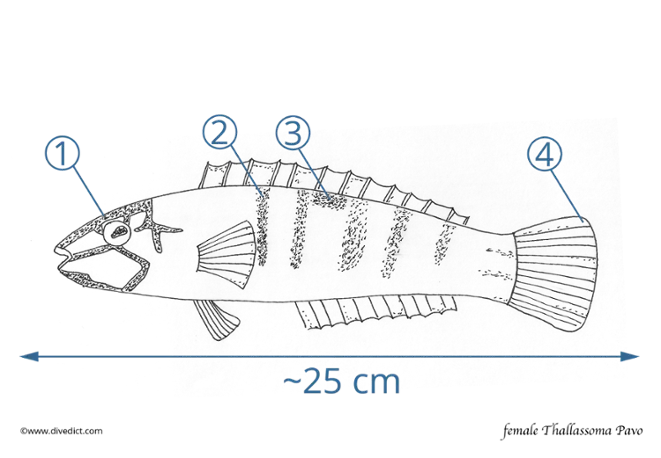
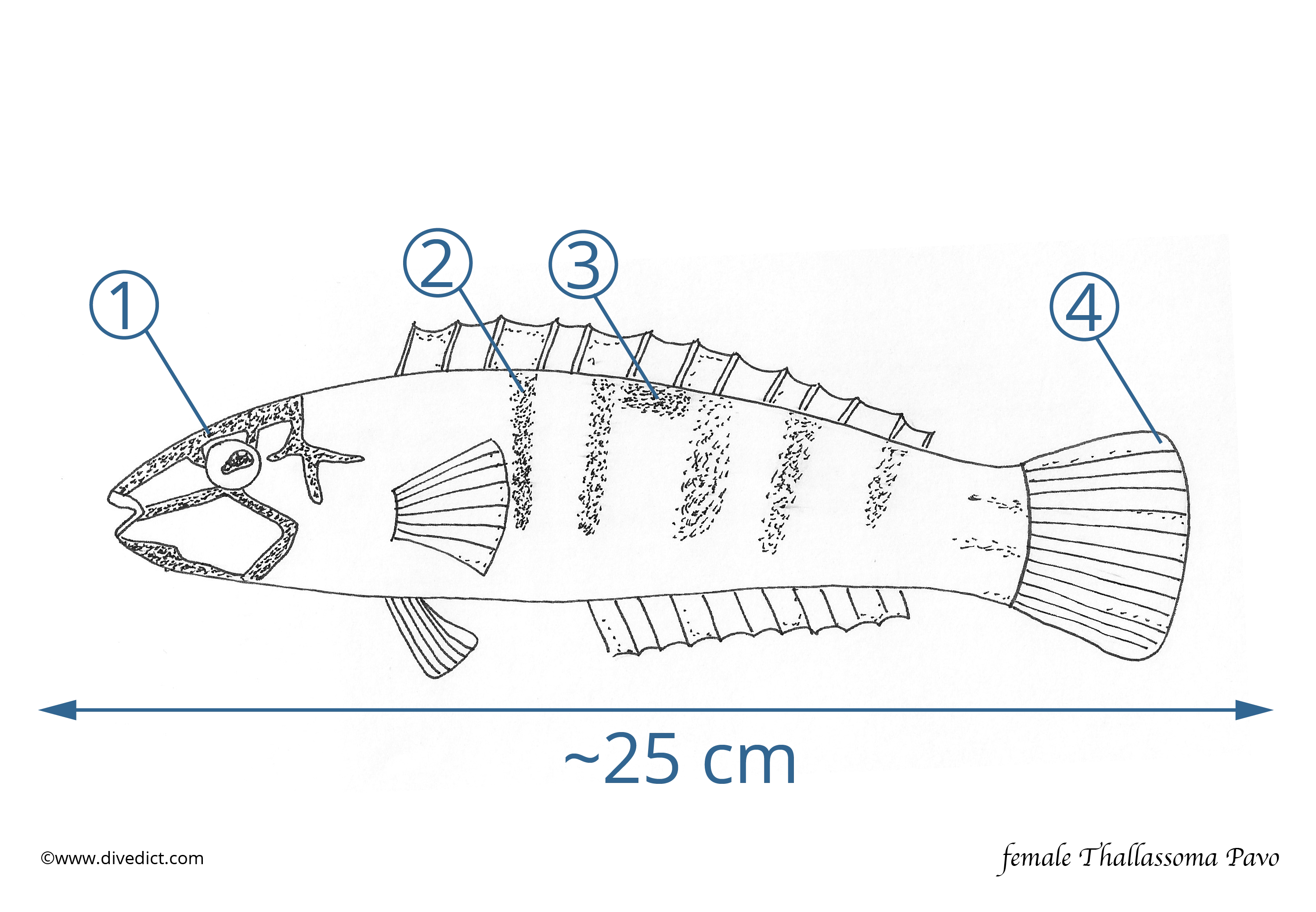
1. Blue line-like pattern
2. Five blue horizontal stripes
3. Black spot in young animals
4. Caudal fin without fraying (= female)
Pro tips
The ornate wrasse is a highly territorial fish, often observed swimming in small groups.
It tends to stay close to man-made structures such as shipwrecks or jetties, making these spots ideal for encounters.
Divers frequently have the chance to witness juvenile ornate wrasses performing a fascinating behavior: cleaning larger fish by removing parasites.
This species thrives in warmer waters, which is why it is more commonly found in the southern Mediterranean Sea. To rest, the ornate wrasse burrows into the sand using its tail fin—a unique and intriguing habit.
During the warm summer months, it can also be spotted farther north. Its preference for warm water means it typically inhabits depths of up to 20 meters, where the temperature remains comfortable.
Text: Carolina Leiter, Felician Hosp, Pia Balaka
Pic: Felician Hosp, Sabine Probst
Illustration: Dive Dict