
Where can I be found?
Seagrass beds need to be protected from strong currents, so they like to grow off rough, rocky shores.
They also need a lot of sunlight, which limits them to coastal areas.
Why am I important?
With its strong root systems, seagrass stabilizes the otherwise loose sandy soil. In fact, they can form meter-thick mats of roots and trapped sediment.
This behavior makes seagrass a permanent habitat for organisms. In contrast, pure sandy soils provide little more than an unstable home.
Who am I giving home to?
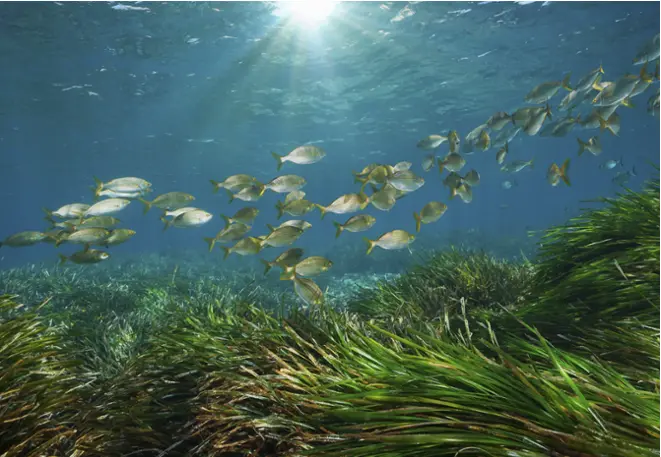
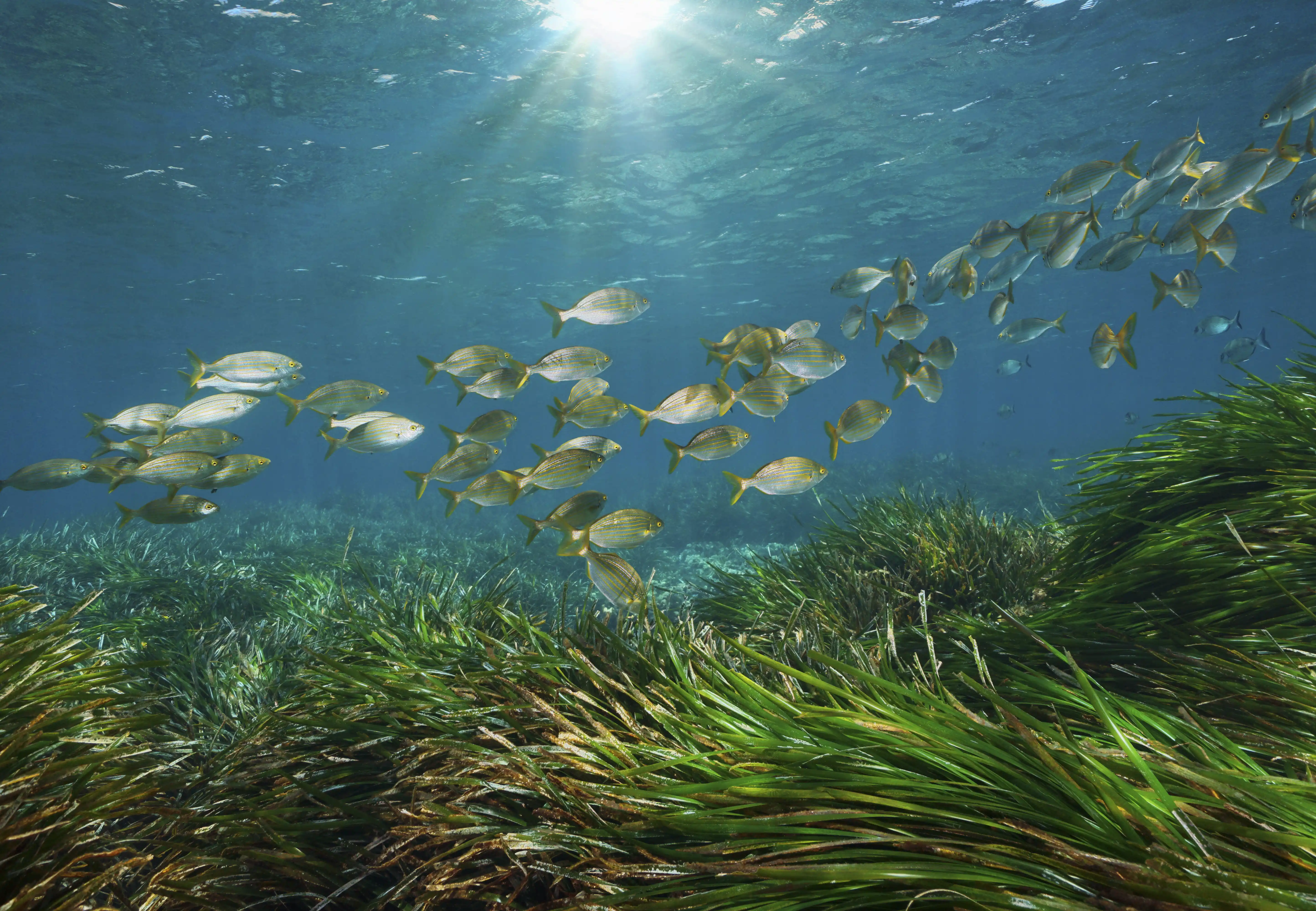
There is a lot of frolicking in the seagrass. Juvenile animals hide in thickets from hunters and predators.
A variety of organisms live on the long leaves of the seagrass: calcareous worms, foraminifera, hydropolyps, and calcareous red algae find a pleasant habitat here.
There are also small crabs and hermit crabs, as well as bottom-dwelling fish such as gobies.
If you want to see seahorses, you should also take a look at the seagrass from time to time, but they are not so easy to find as they blend in almost completely with their surroundings.
What do I consist of?
Seagrass beds on the ocean floor are the equivalent of our familiar meadows on land.
They also consist of long blades of grass, except that the seagrass has long since returned to the water.
For this reason, eelgrass is fundamentally different from seagrass, which has never left the water.
Text: Carolina Leiter