
Common octopus
Octopus vulgaris



Specifics
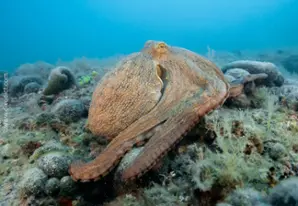
The common octopus is one of the most intelligent animals in the world. Its brain's ability to change and adapt when experiencing and learning new things (plasticity), as well as its number of neurons (500 million) are similar to the brain structures of mammals.
Their ability to regenerate body parts and change their body patterns and color at lightning speed also makes them a popular research subject in neuroscience, cognitive research, and developmental biology.
Appearance
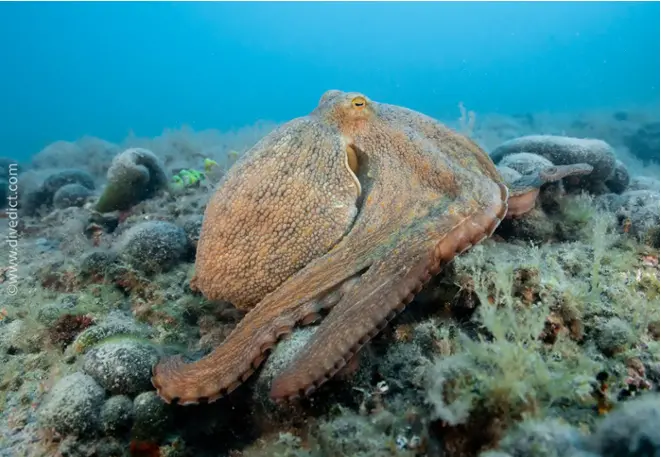
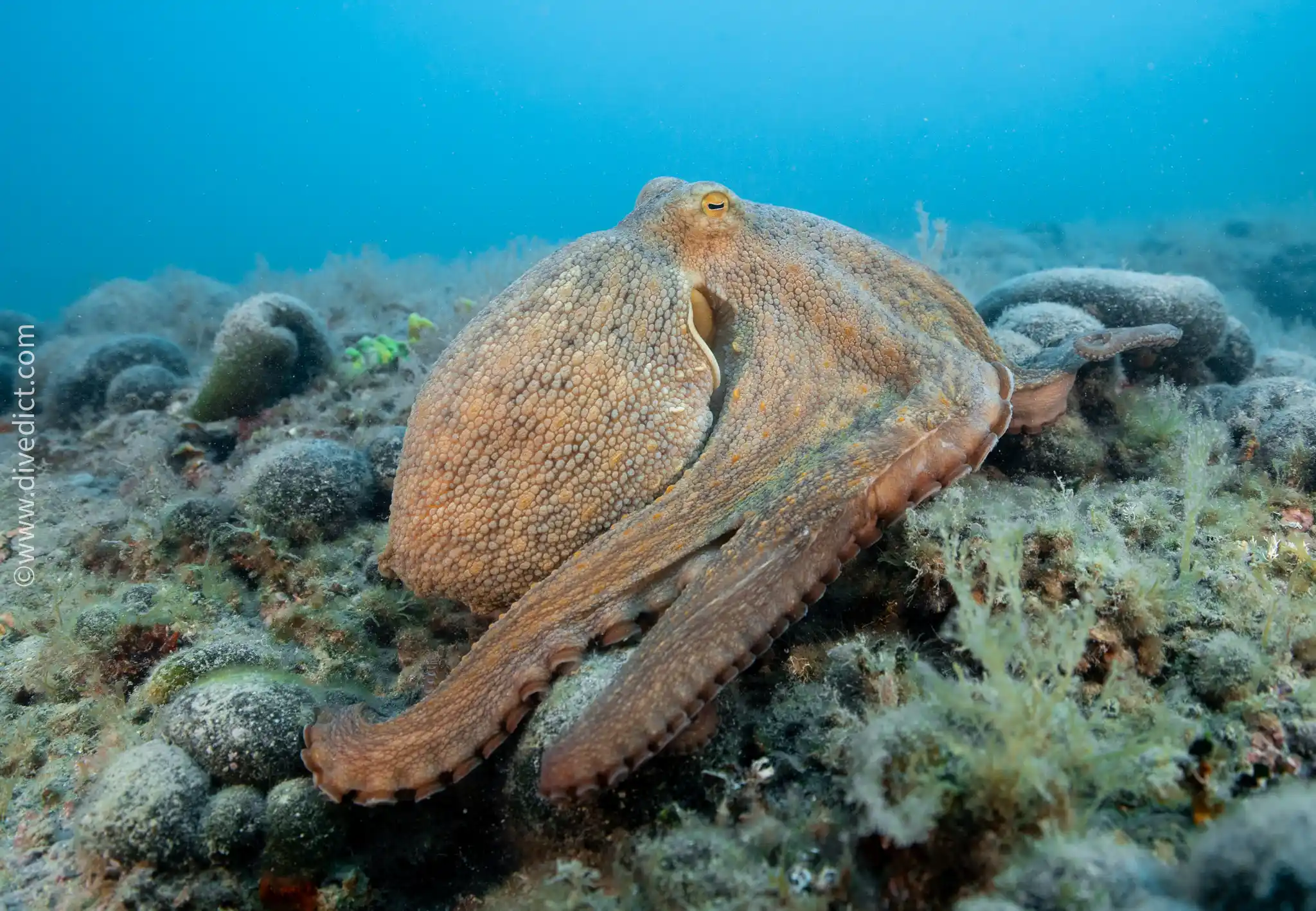
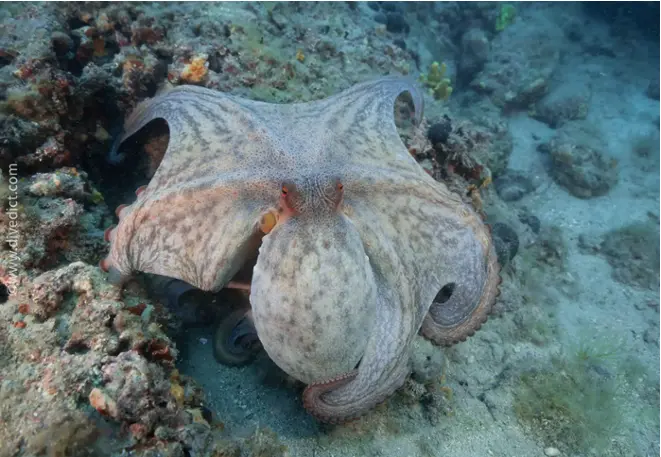
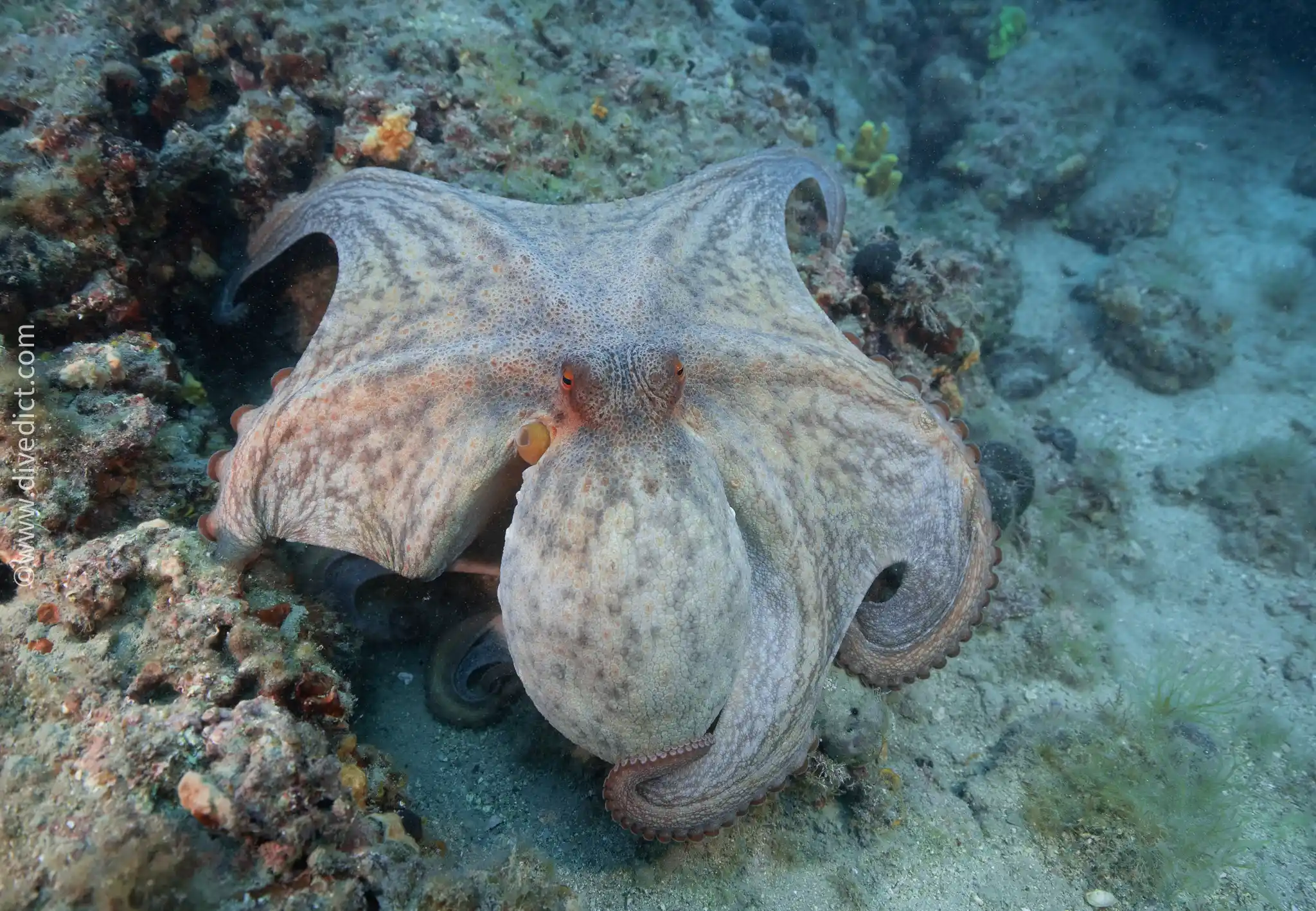
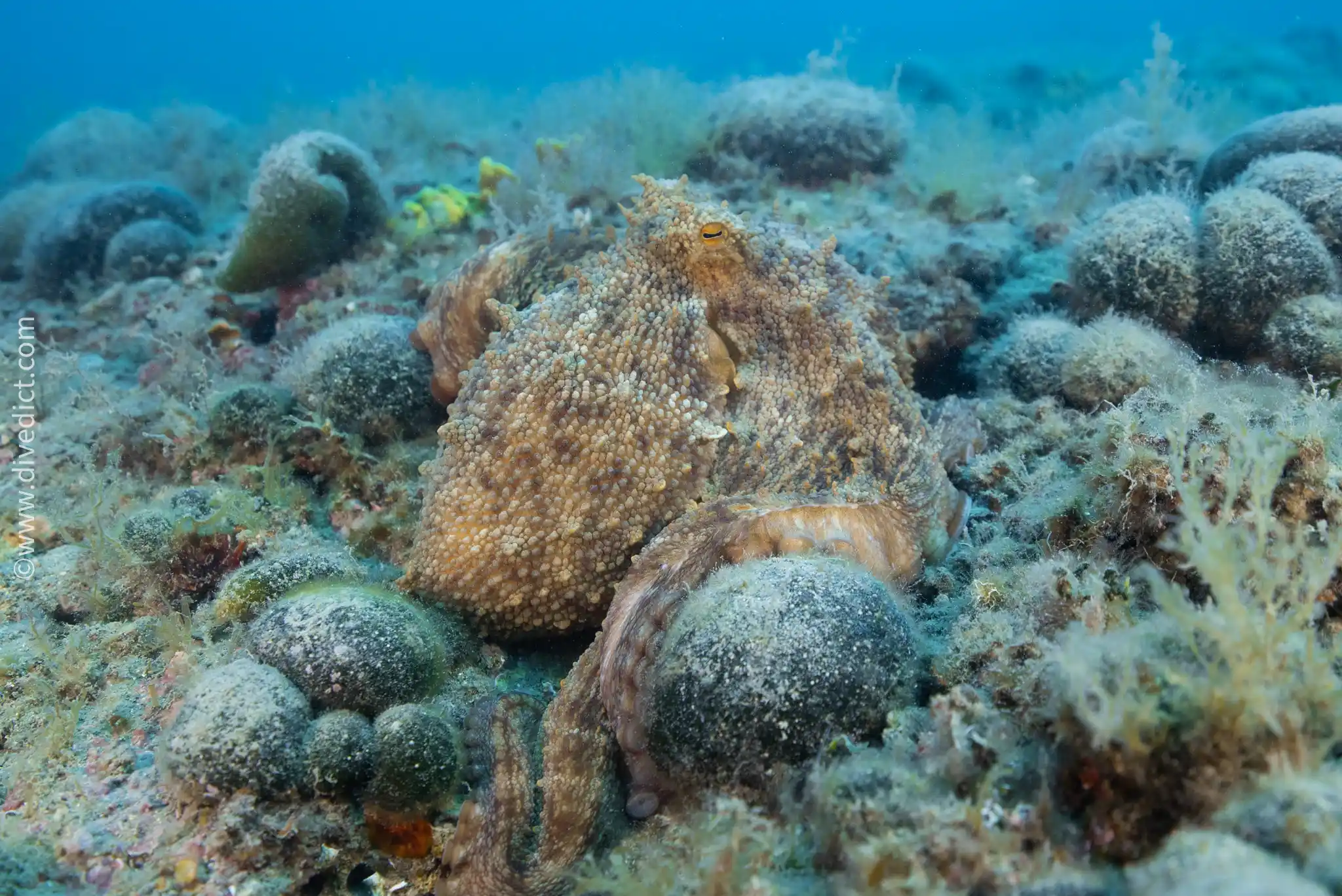
The common octopus is a veritable master of metamorphosis!
In fact, it can change its color and pattern in a flash.
From whitish-gray, sand-colored, light to dark brown with marbling, depending on which habitat he is currently in or what state of mind he is in.
Even during sleep, he can change them, maybe he's dreaming?
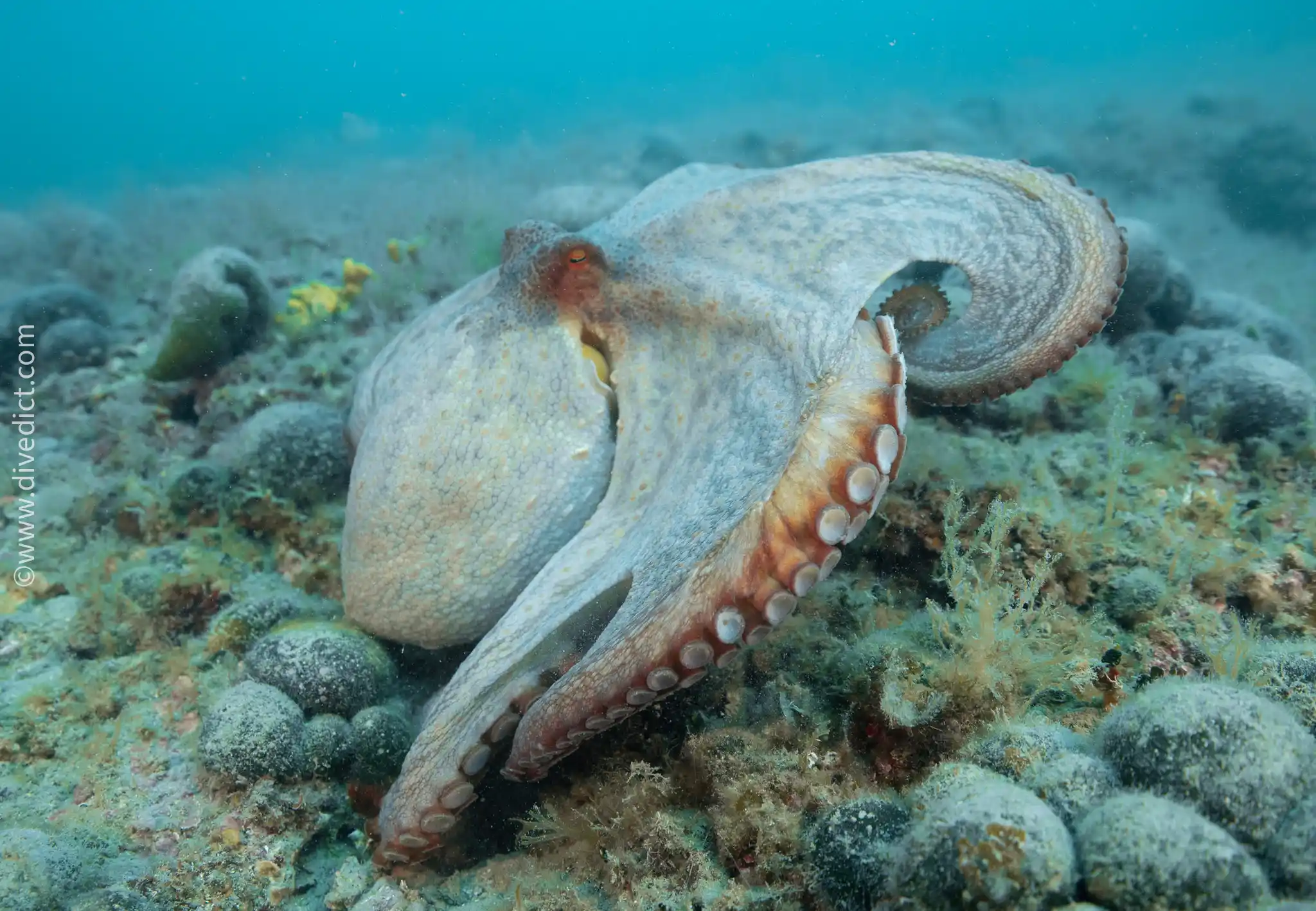
His 8 head arms, which by the way contain his sensory cells, are equipped with two zigzag rows of suction cups on the underside.
When he tenses his muscles, the top appears smooth; when he is lazily at ease, he is more wrinkled and cartilaginous.
If it stretches out its arms, it can reach up to 2m in length, but most specimens reach 1m.
Although you can't immediately see this on its sack-shaped body, it has a beak with which it can crack hard-shelled animals.
Natural enemies
Predatory fish and sharks
Dangerous/venomous
Before it eats its prey, it drugs them with the venom in its beak.
If it ever bites a person, its venom leads to long-lasting inflammation.
Sketch

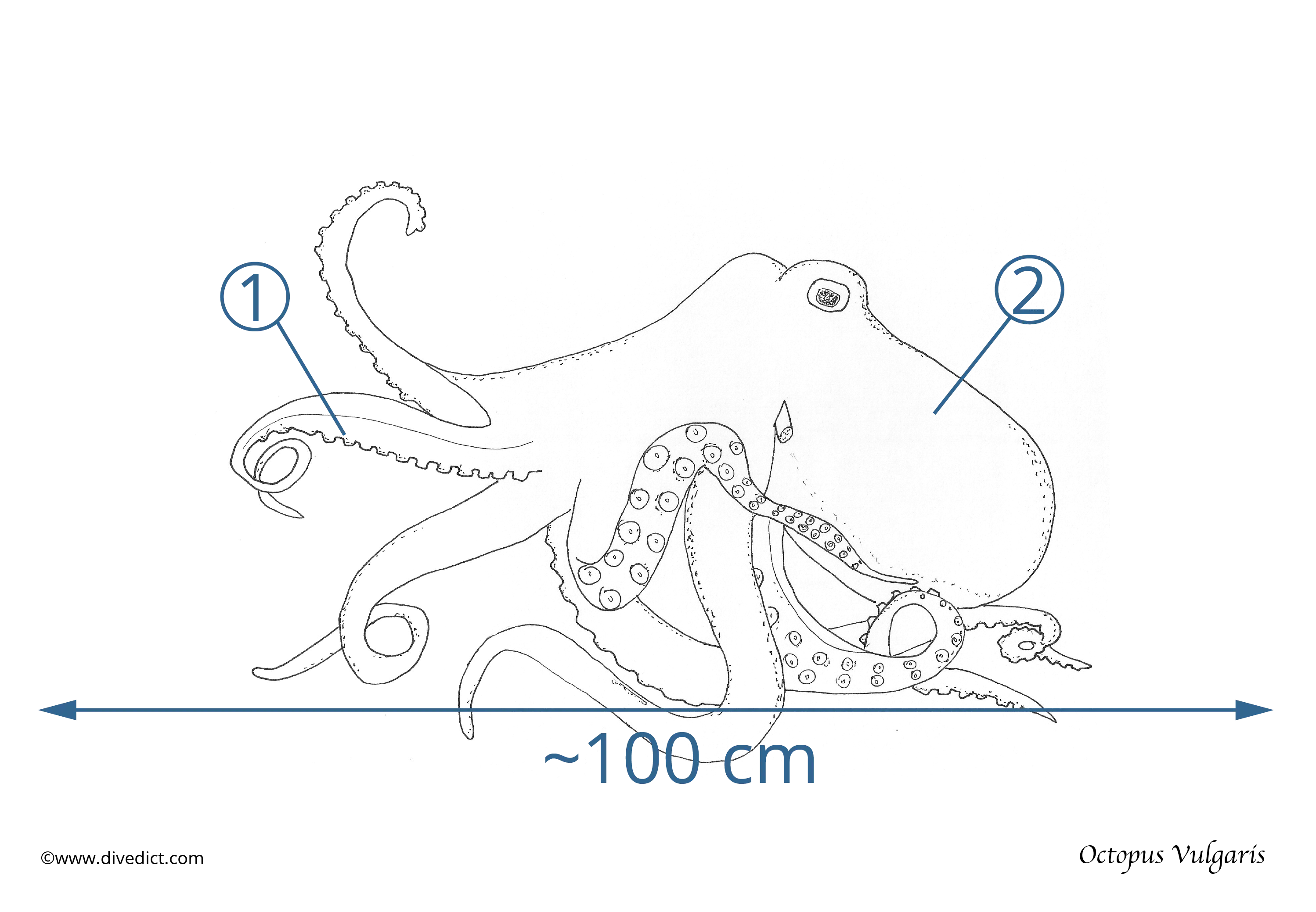
1. Head arms with suction cups
2. Sack-shaped body
Pro tips
The biography of every female is extremely dramatic and actually calls for a saving octopus hero. However, Mother Nature wrote a different script.
In the last month of their life, which is only 2 years short, the females lay hundreds of thousands of eggs in a cave and guard its entrance until the young animals hatch. In doing so, they do not feed and starve to death.
When it comes to its home, it isn't picky at all, it tends to claim "everywhere" as its safe place.
But sometimes it chooses a cave as its own, it lovingly decorates it with empty mussel shells.
Over the summer, it usually wanders between 1-25m in crevices and caves. In winter, on the contrary, it prefers to wander deeper and in the sandy seabed.
However, there is also the chance to spot a migrating specimen in shallow waters near the coast in both seasons from time to time.
It ends up eating anything that comes up his lane, but its favorite dishes are crustaceans and mollusks that he kills at dusk.
Text: Carolina Leiter, Felician Hosp, Pia Balaka
Pic: Felician Hosp, Sabine Probst
Illustration: Dive Dict