
Common sea ear
Haliotis tuberculata




Special features
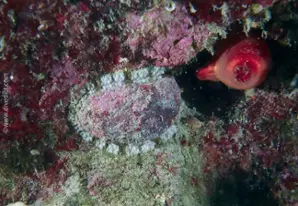
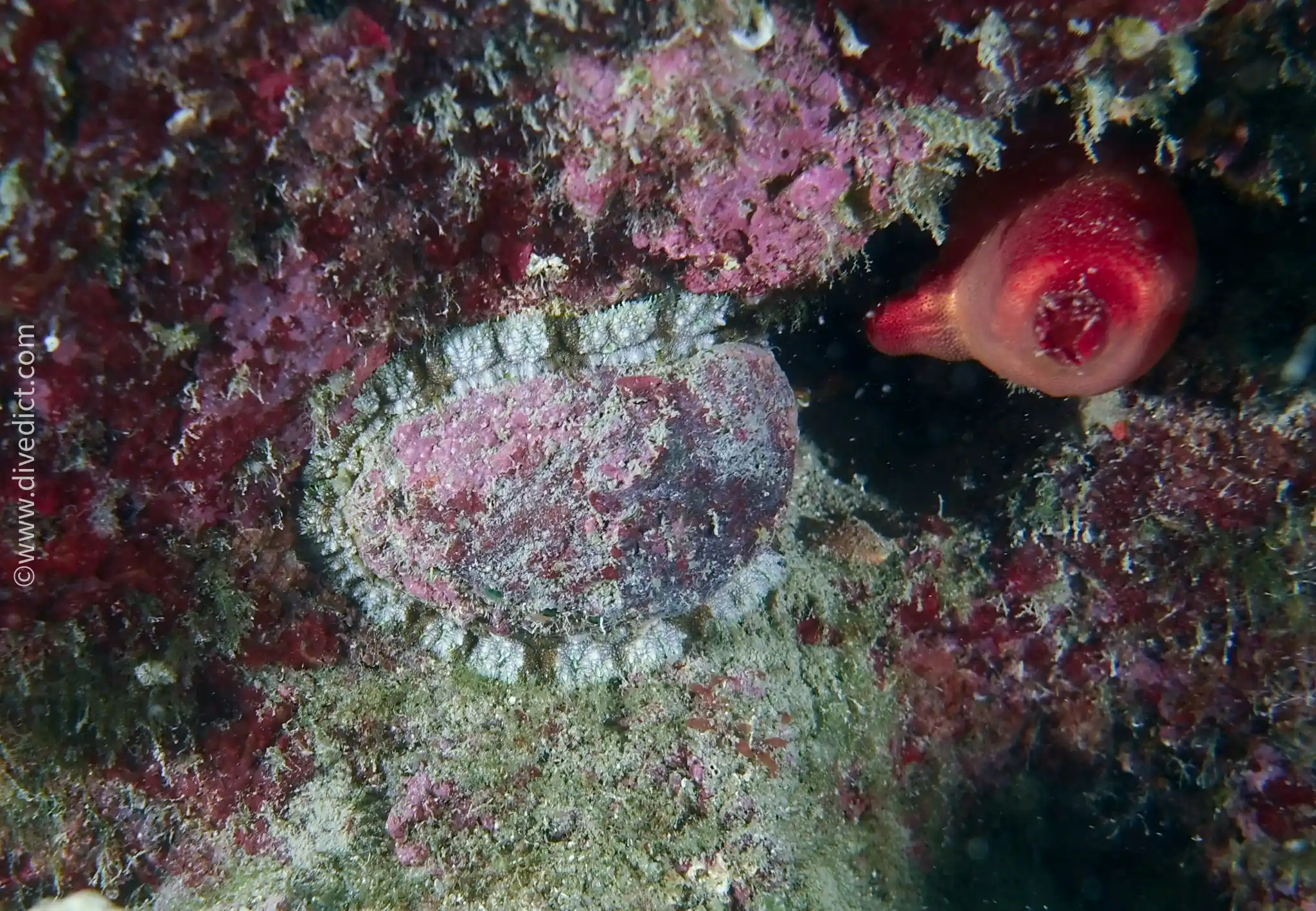
You are what you eat: Depending on the color of the algae they graze on, their shell can vary in color. It can be green, gray, brown, or red.
However, this coloration is often not visible because the shell is covered by bryozoans, algae, and hydrozoans.
Appearance
Common limpets still retain the original features of fossilized sea snails.
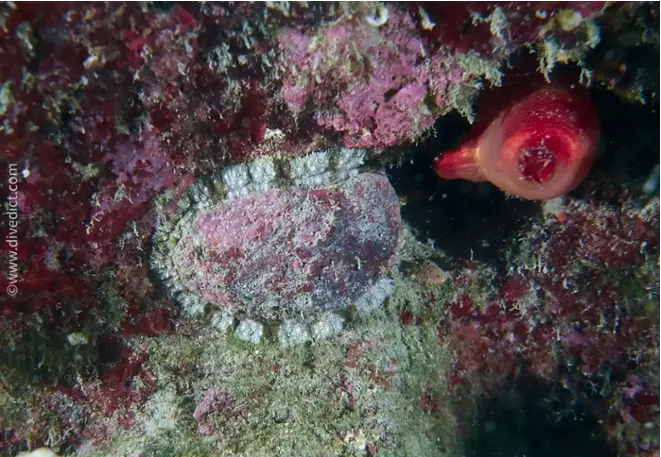
They have 5 to 7 small siphons on the outer edge of their shell, through which the snail expels used breathing water.
As the name suggests, their shell is ear-shaped and flat, with whorls that rapidly increase in size. The inside is covered with a beautifully shiny mother-of-pearl layer.
In contrast, the body of the snail is pitch black, with numerous tentacle-like protrusions. Their shell can grow up to 10 cm in length, but most specimens found are much smaller.
Natural enemies
Crustaceans, seabirds, predatory fish, cephalopods
Dangerous/Venomous
The Green ormer is neither dangerous nor venomous.
Sketch

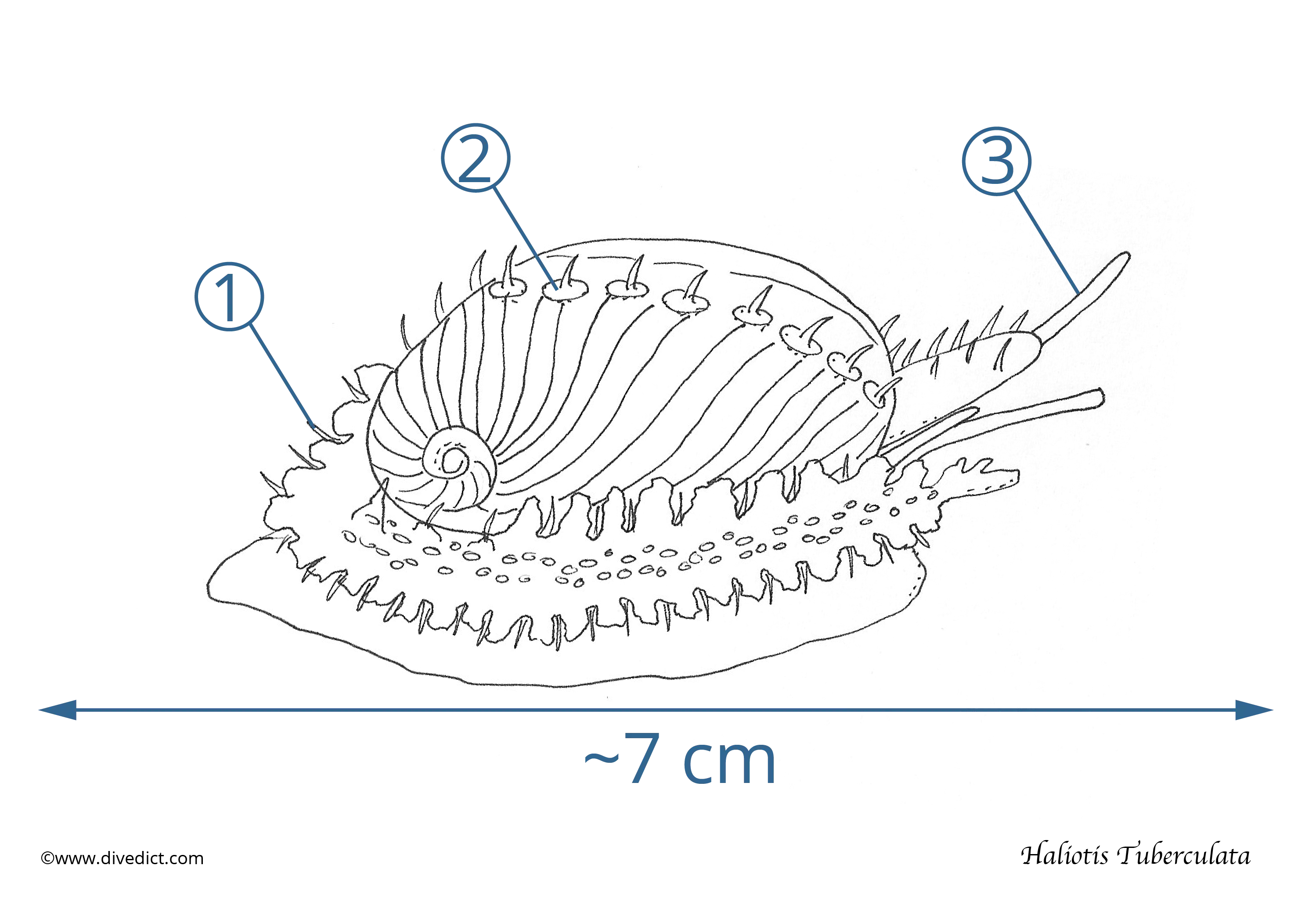
1. Tentacle protuberances
2. Siphon
3. Antennas
Pro tips
In fact, in this species, the males reach adulthood earlier than the females.
Just 12 hours after the eggs are fertilized, free-swimming larvae form, which then transform into fully developed snails.
The common limpet prefers to roam on hard substrates in shallow waters, where it uses its strong foot to suction itself to the bottom.
It also enjoys finding a spot beneath rocks and pebbles.
Text: Carolina Leiter, Pia Balaka
Pic: Felician Hosp, Sabine Probst
Illustration: Dive Dict