
White-spotted pufferfish
Arothron hispidus




Special features
A dark spot at the base of its pectoral fins, surrounded by a bright yellow ring, might be designed to confuse predators.
Appearance
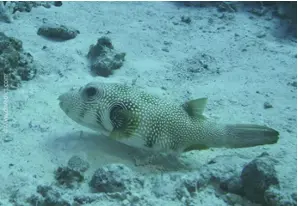
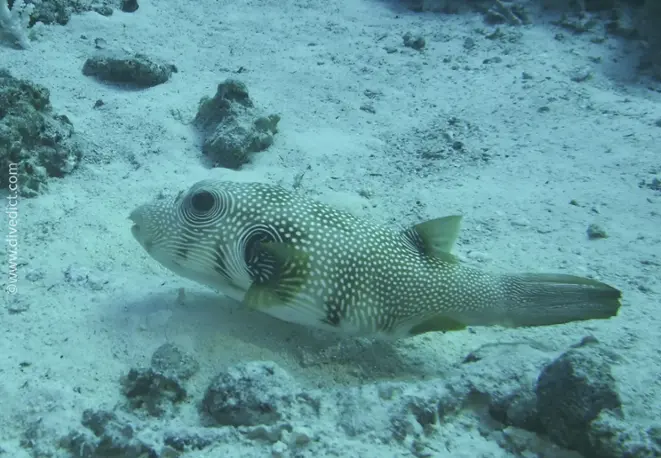
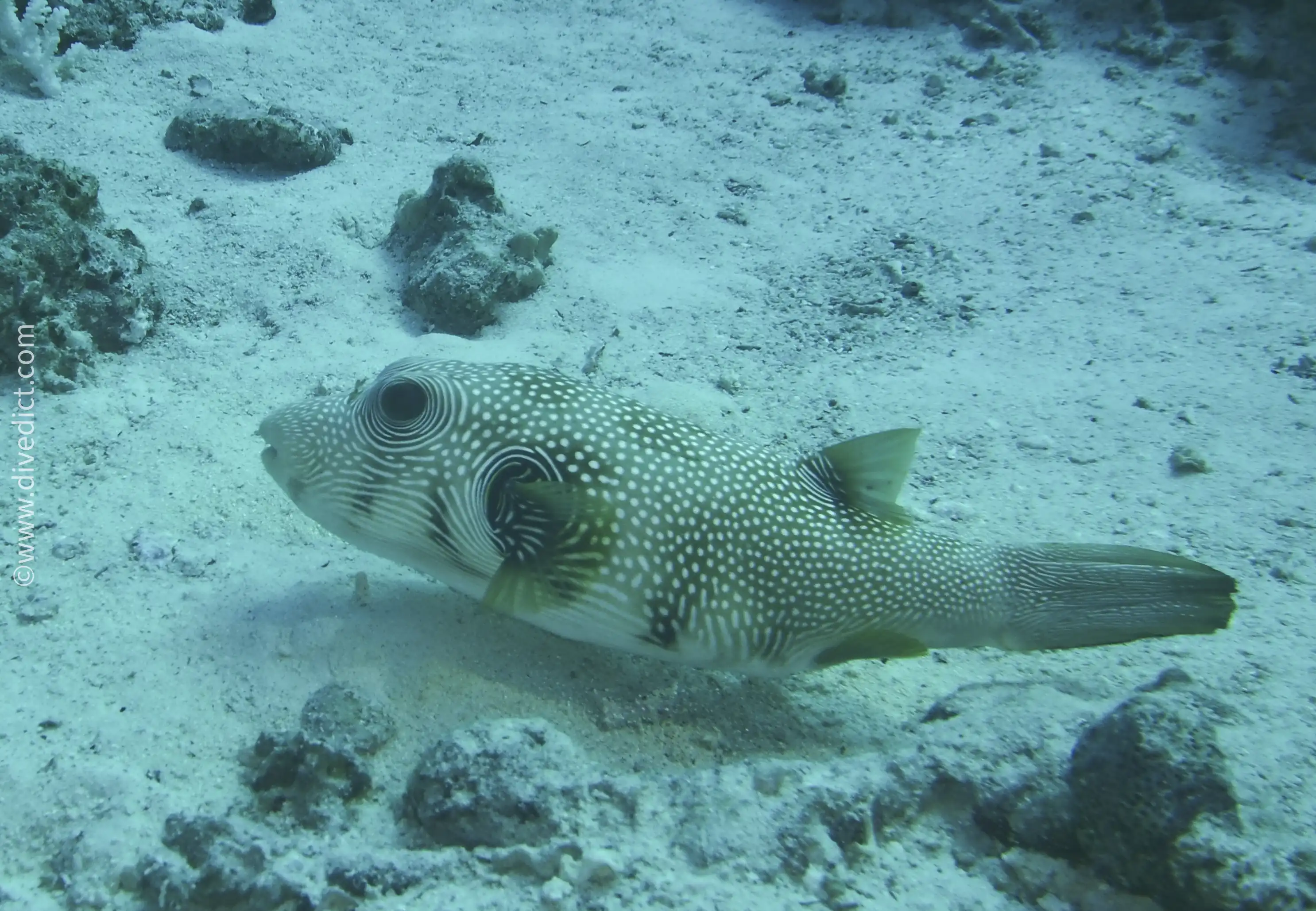
This fish has a brown base color with white spots, which sometimes form beautiful concentric circles around the eyes and the bases of the pectoral fins. One of its most striking features is the dark spot at the base of the pectoral fins, outlined with a bright yellow ring, making it a true standout!
Young fish typically have few white spots, but they already carry the distinctive yellow ring around the pectoral fin base, making them easily recognizable.
Natural enemies
Due to their toxicity, pufferfish have few natural enemies. Large predatory fish, such as sharks, may occasionally try to catch them, but they quickly realize they are not very appetizing.
Dangerous/Venomous
Pufferfish contain tetrodotoxin, one of the deadliest natural venoms. Consuming them can cause muscle paralysis, including the respiratory muscles, which may lead to suffocation and death.
Sketch

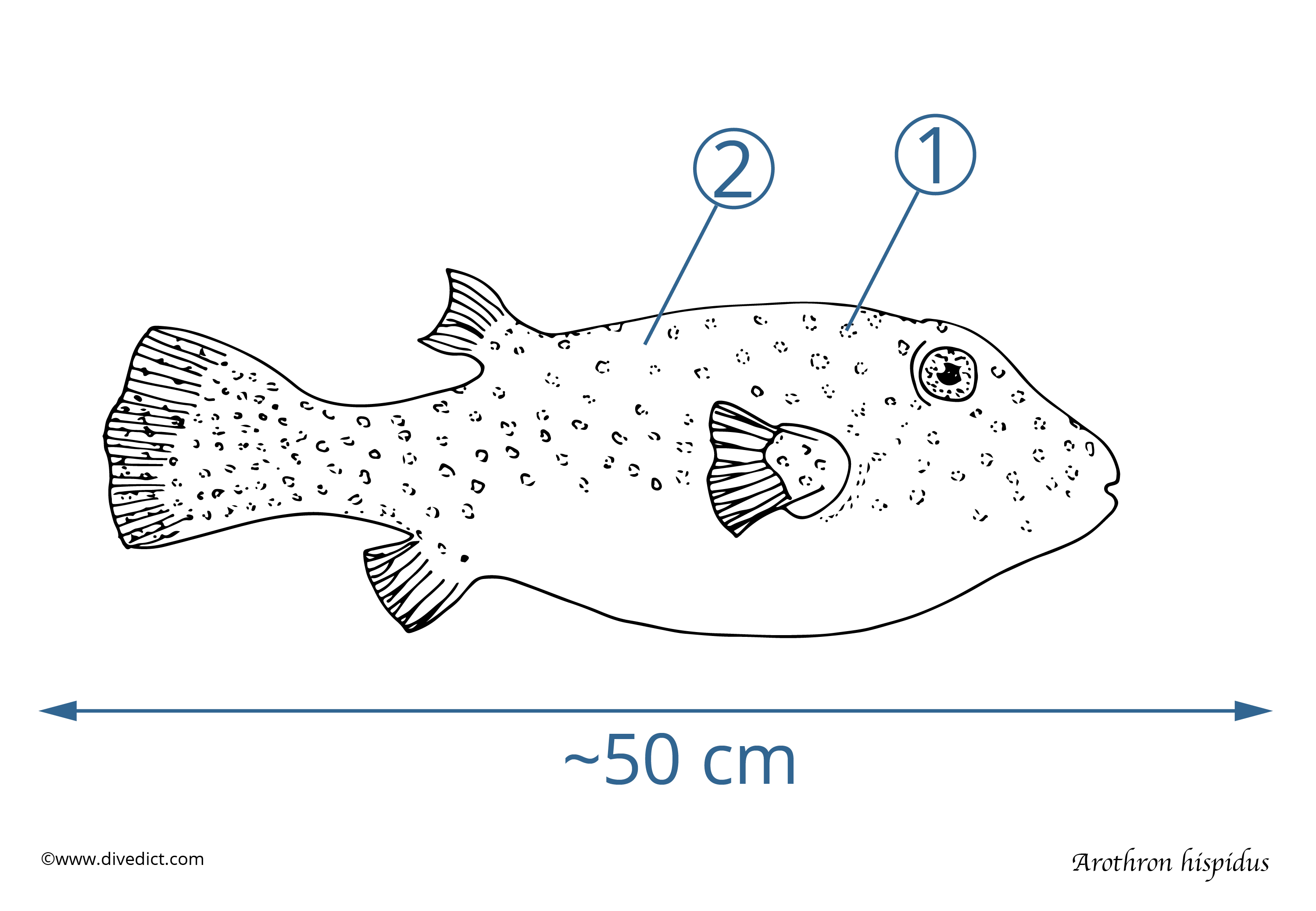
1. White dots
2. Dark base color
Pro tips
This fish prefers to stay in protected areas – it is commonly found in lagoons, bays, and outer reefs. It inhabits coral, sand, or rubble bottoms, and also feels at home in seagrass meadows. It often stays close to the seabed.
When it comes to diet, the whitespotted puffer is not picky: it eats sponges, sea squirts, crabs, corals, starfish, and mollusks.
Although they might look a bit chubby and sluggish, pufferfish are surprisingly agile swimmers. They can rotate 180 degrees on the spot or even swim backward.
Pufferfish are famous for their ability to inflate into a spherical shape by sucking water into a special chamber of their stomachs. This makes them look much bigger and acts as a deterrent to predators, as their new size often prevents them from fitting into the mouth of an attacker.
Text: Carolina Leiter
Pic: Felician Hosp
Illustration: Sabine Probst