
Where can I be found?
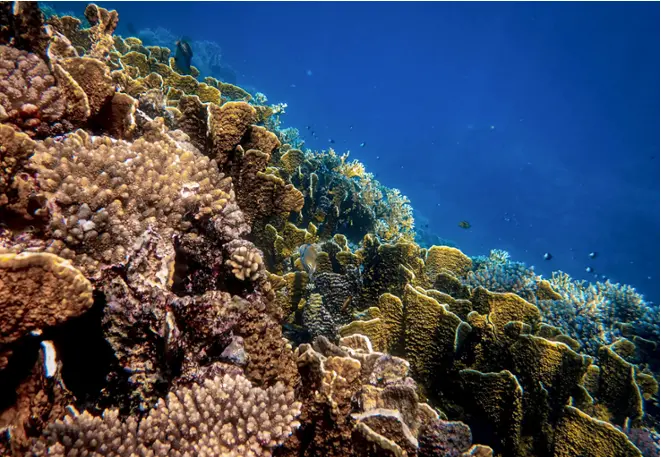
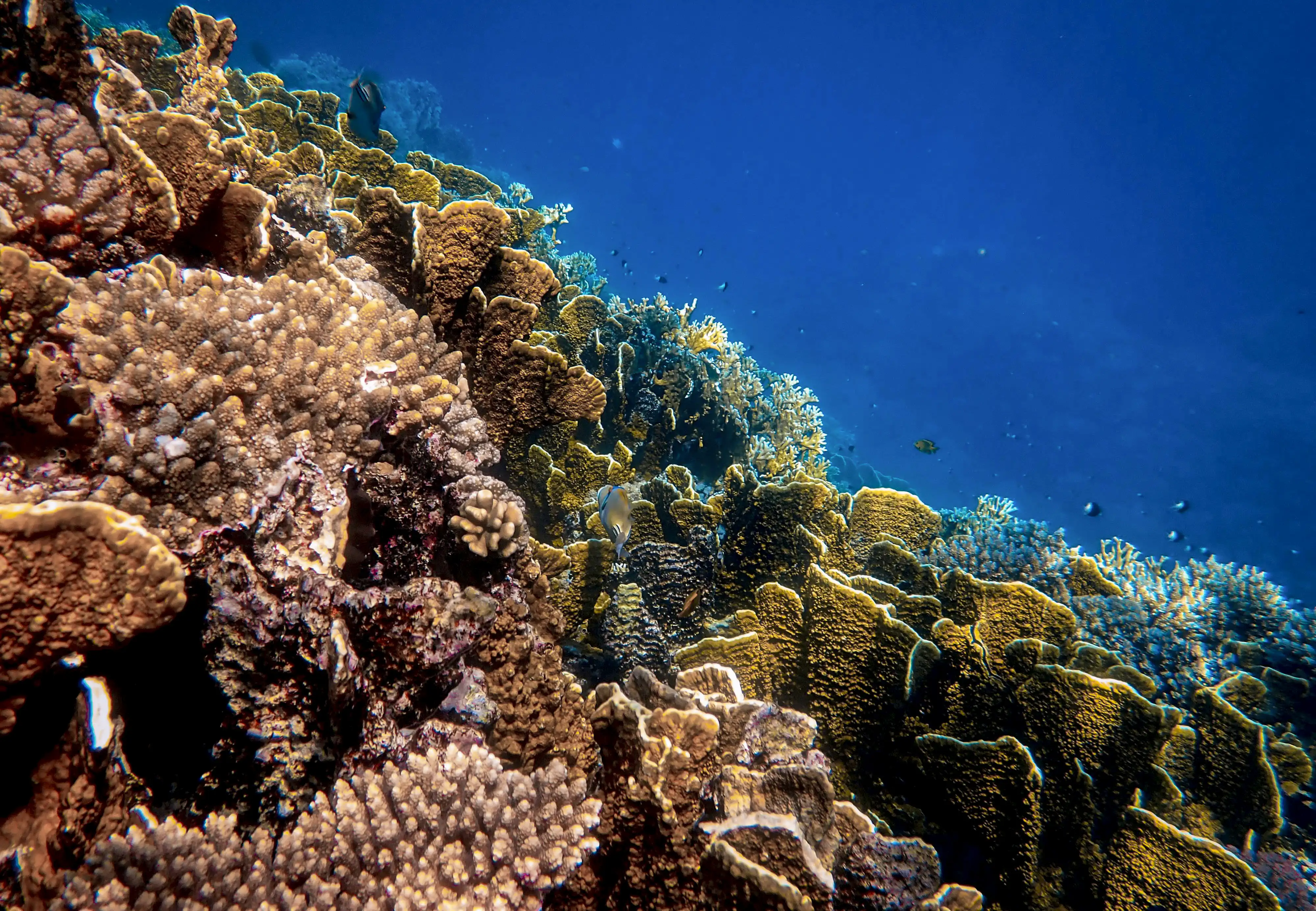
Coral reefs are the shy gardens of the oceans, hidden in the Earth's tropical waters.
They prefer to be found on the coasts of the Red Sea, Indo-Pacific, Caribbean and Australia, where sunlight sinks into the clear water and makes life flourish.
These reefs extend over vast areas of land, often in areas where there is little phytoplankton and are therefore more like oases in the middle of the oceans.
They feel most comfortable in shallow, calm waters.
There are also corals in the Mediterranean; although not as extensive, species-rich colonies, they are at least as beautiful to look at.
The decisive factor for their growth is, among other things, the water temperature, which must not be below 20°C on average at the water surface, even in the coldest month of the year.
Why am I important?
Coral reefs are guardians of coasts and the most productive habitats on Earth.
They are home, food and nursery and thus the livelihood for 25% of all marine inhabitants.
Around 500 million people worldwide depend on fishing, which is profitable thanks to the coral reef habitat.
Because these tiny heroes absorb the power of waves, they are a natural barrier against storms.
By the way, corals are also relevant for research. The genetic material of Acropora coral is 48% the same as that of humans.
This may sound surprising, but it shows how many fundamental biological processes are shared between different forms of life — even across vast evolutionary distances.
This similarity in genetic material relates to basic genes and mechanisms such as cell growth and division.
Who am I giving home to?
Although they cover just 0.2% of the ocean area, coral reefs are home to 30% of marine biodiversity.
While smaller fish such as clownfish or parrotfish, which clean the reef with their sharp teeth, search their way through the branch abyrinth of corals, rays float silently over them.
Lobsters, crabs, starfish, sea urchins, sea cucumbers are up to mischief between coral trees and sea anemones, snails and algae blend wonderfully into the colorful reef with their own color intensity.
What do I consist of?
A reef is an underwater elevation of biogenic limestone (calcium carbonate) or dolomite (magnesium carbonate, calcium carbonate).
The main players in reef building are corals, which are discussed in detail in the following section of this work.
In addition to the corals of the class Anthozoa, other marine animals also contribute to the formation of the reef.
Examples include calcified red and green algae, protozoa, prokaryotes, sponges, bryophytes with calcareous skeletons and bristle worms with lime tubes.
Coral reefs can be divided into different types, of which the largest sub-categories are:
1. Shallow reefs: These reefs extend right on the coast and are separated from the mainland by shallow waters. They are the most common reef species and are often found in tropical regions.
2. Lagoon reefs: They run at a certain distance from the coast and are separated from the land by a lagoon (a shallow bay). A well-known example is the Great Barrier Reef off Australia.
3. Atolls: These reefs form a ring around a lagoon and are often formed on the remains of sunken volcanoes. They are widespread in tropical seas, particularly in the Indo-Pacific.
Text: Carolina Leiter