
Black sea urchin
Arbacia lixula




Special features
The Black sea urchin likes it hot.
It has been observed that the larvae develop significantly faster in warm waters — in hot summers, the population literally explodes.
In addition, due to overfishing, they hardly have any natural enemies anymore.
Climate change is therefore very much favoring this kind.
For the marine ecosystem, however, the leaf is double-edged: On one hand, more fish, crabs, and worms find shelter between the spines of Black sea urchins, and on the other hand, the algae stocks that they graze will decline significantly.
Appearance
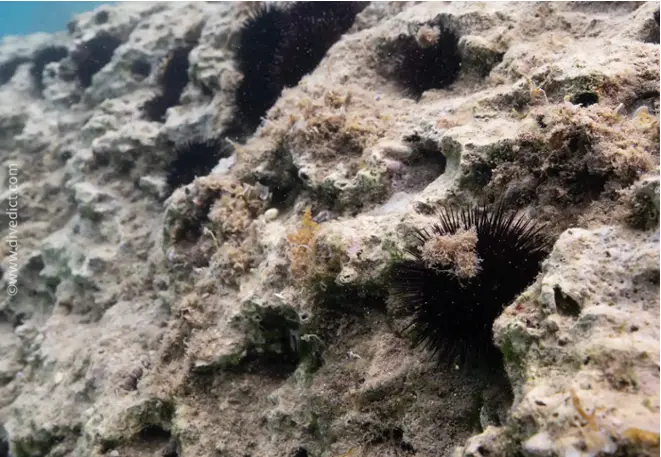
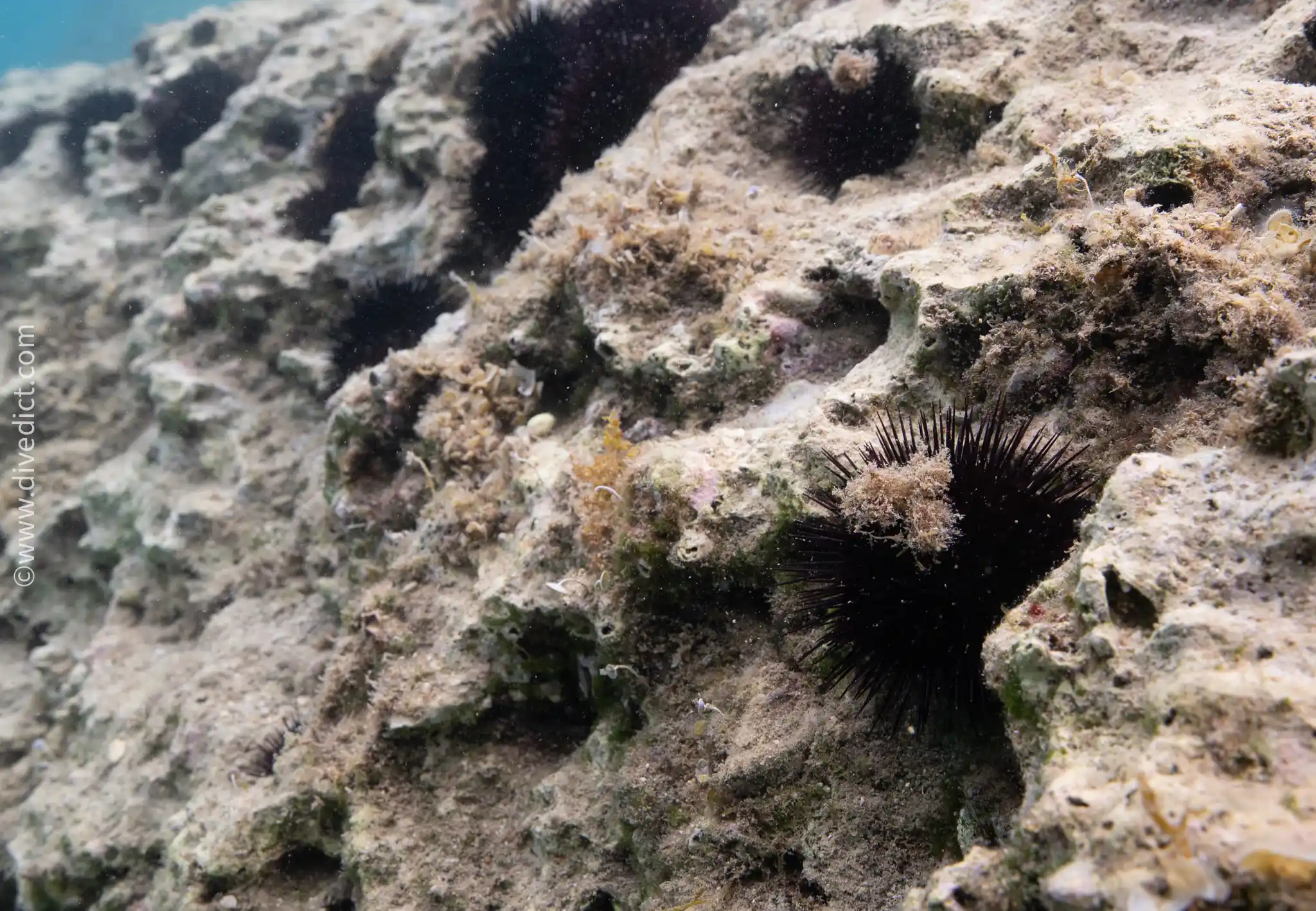
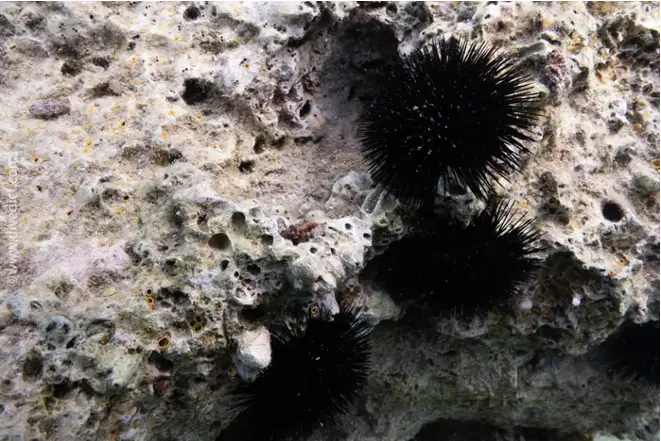
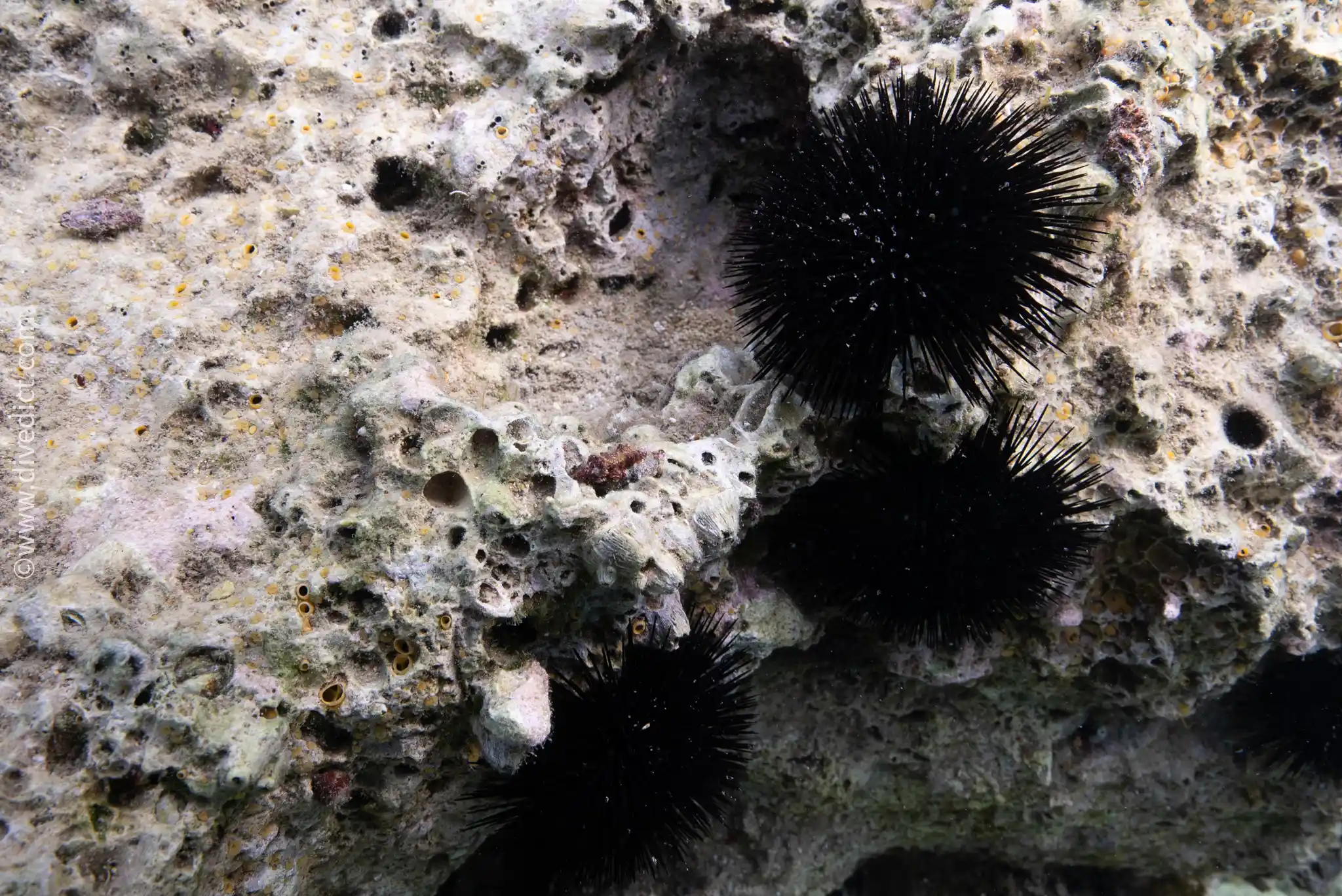
The name says it all: This sea urchin is pitch black and has 3cm long, extremely pointed spines.
However, between the spiked forest, you will find their body pink-red with dark brown stripes.
The mouth area, which rests on the ground, is greenish.
In contrast to its close relatives, this sea urchin does not have suction feet on ambulacral feet.
It is therefore unable to disguise himself with objects (by placing them on its spikes) and is restricted in its movements.
Natural enemies
Dangerous/venomous
Although the spines of Black sea urchins are not venomous, they break easily in the wound and thus can provoke painful inflammation.
Sketch
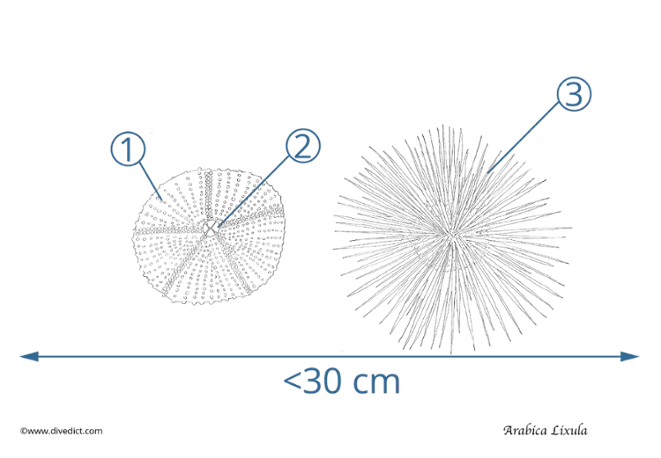
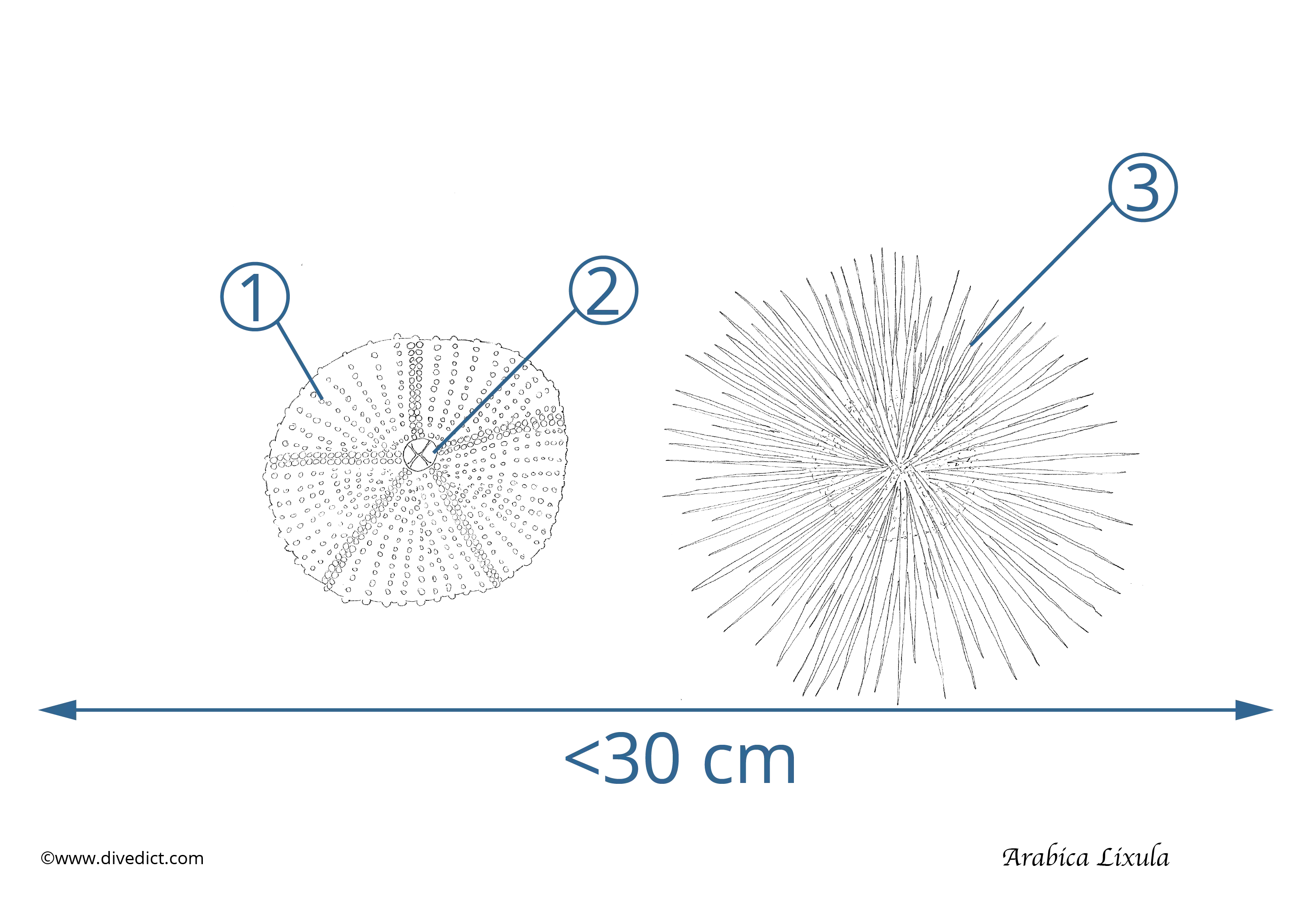
1. Skeleton
2. Mundfeld
3. Pointed spines
Pro tips
The Black sea urchin and its similar-looking buddy, the Purple sea urchin, are common in the surf zone because they repel algae lawns, such as brown algae.
When a small resident animal gets caught between its teeth while grazing, the black sea urchin won't pass up the opportunity.
But its absolute favorite meal? The crusty, calcareous algae that forms on the rocks.
Text: Carolina Leiter, Pia Balaka
Pic: Felician Hosp
Illustration: Dive Dict