
European common cuttlefish
Sepia officinalis




Special features
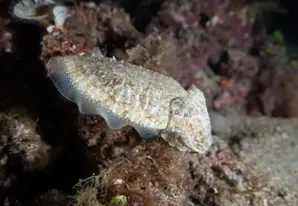
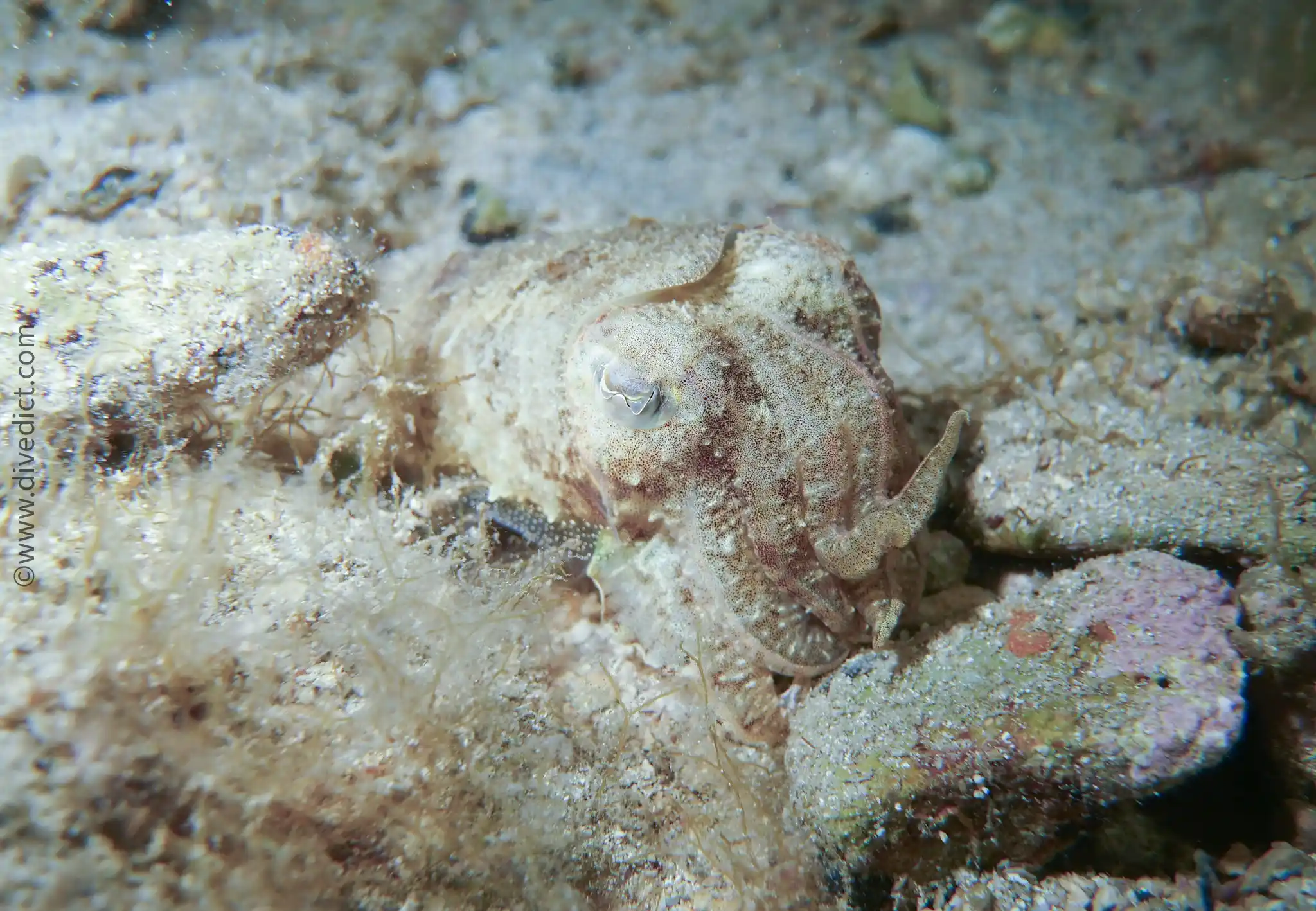
Beauty is deceptive: During the day, these beautiful animals rest with pleasure buried in sediment, at night, though, they turn into deceitful predators.
They stalk their prey and ambush it.
Appearance
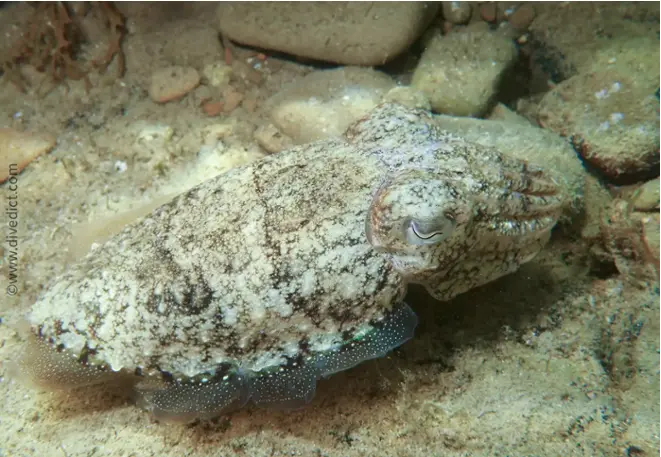
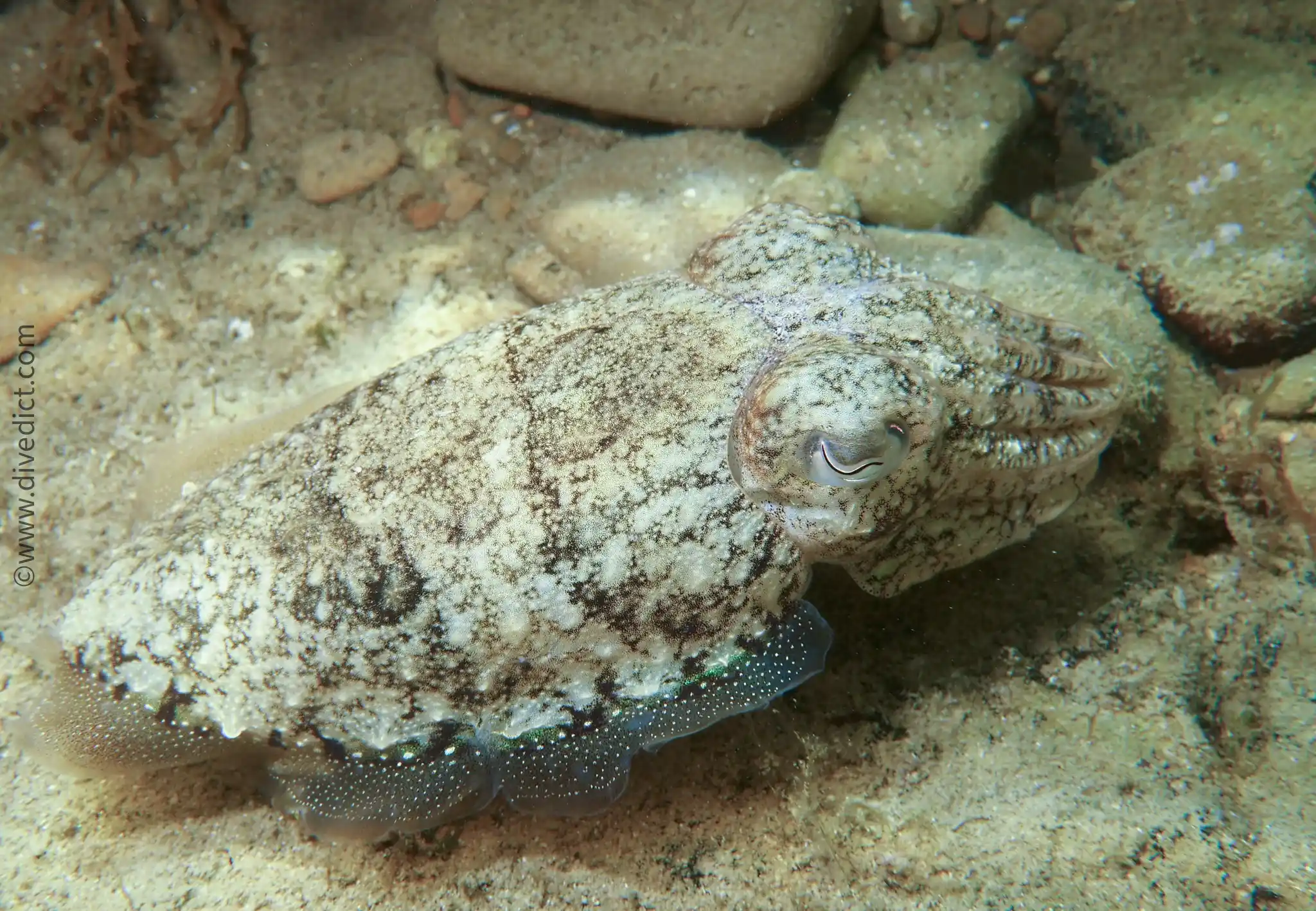
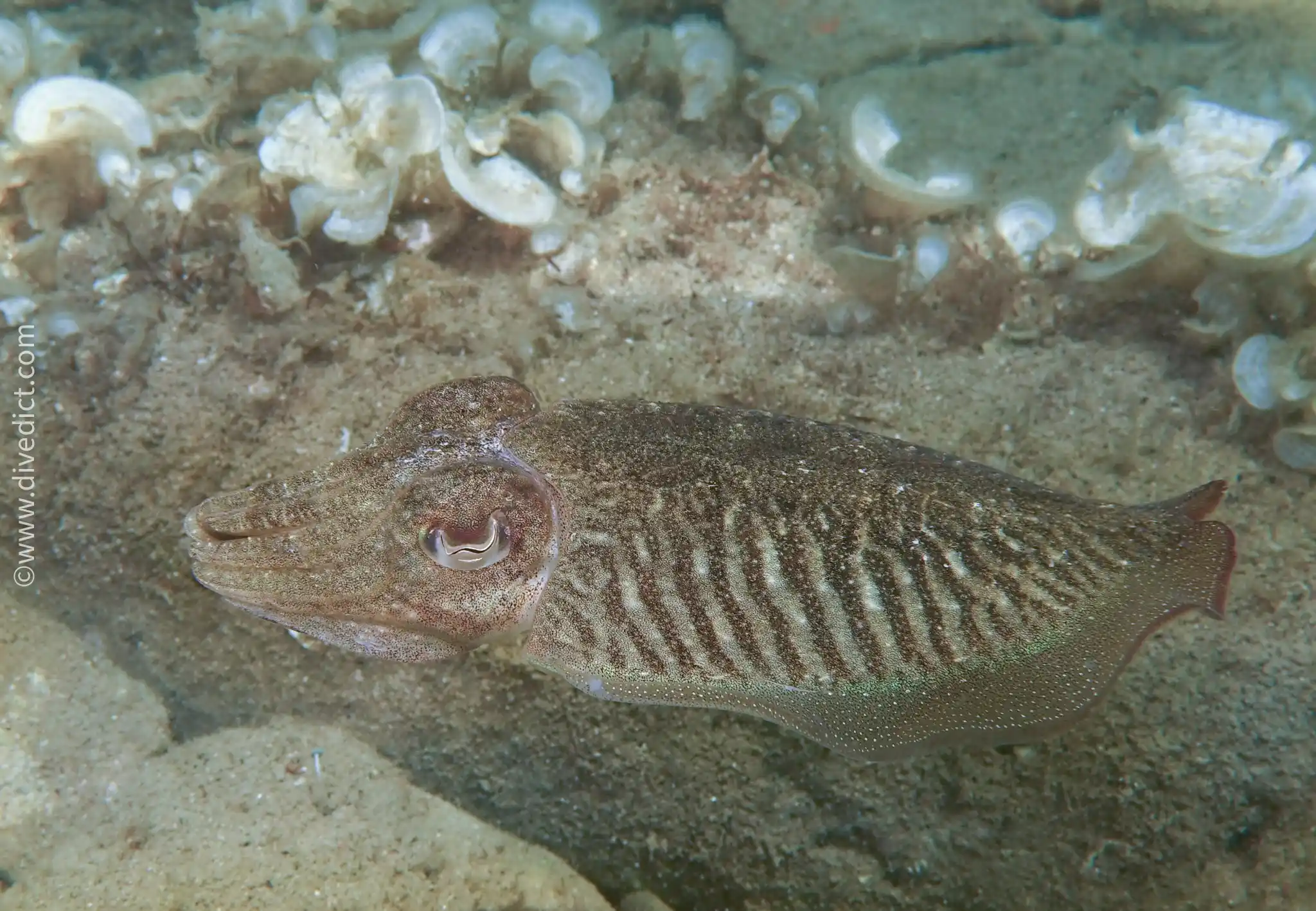
The common cuttlefish looks like a football, only with big eyes and arms on its face.
Eight of his arms are always visible, another two can only be seen when it is hunting.
That's when it jerks them forward to catch its prey.
Its body is supported by a chalky so-called Schulp, with which he moves.
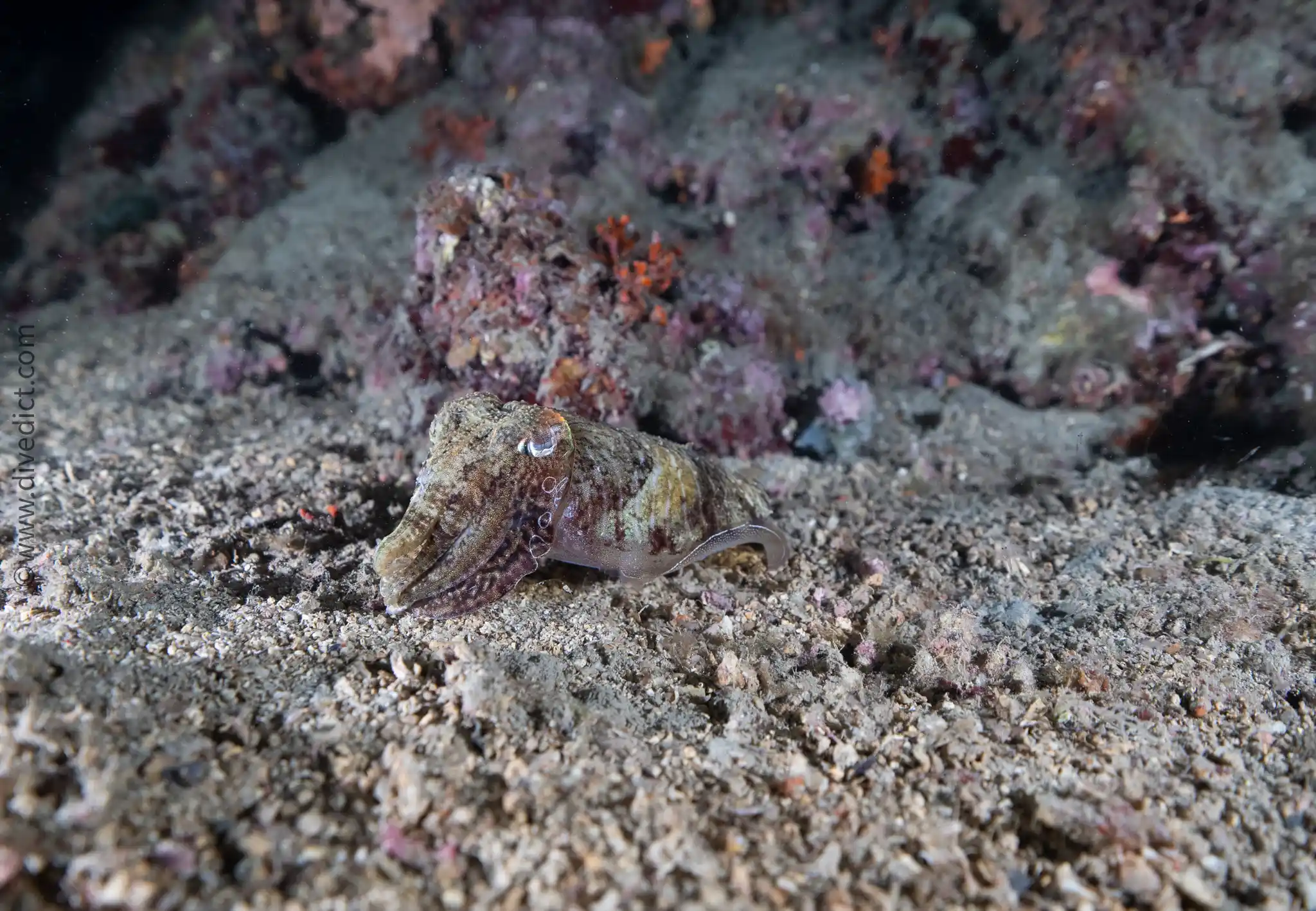
Referring back to the topic of beauty: the top of his body is often wonderfully patterned.
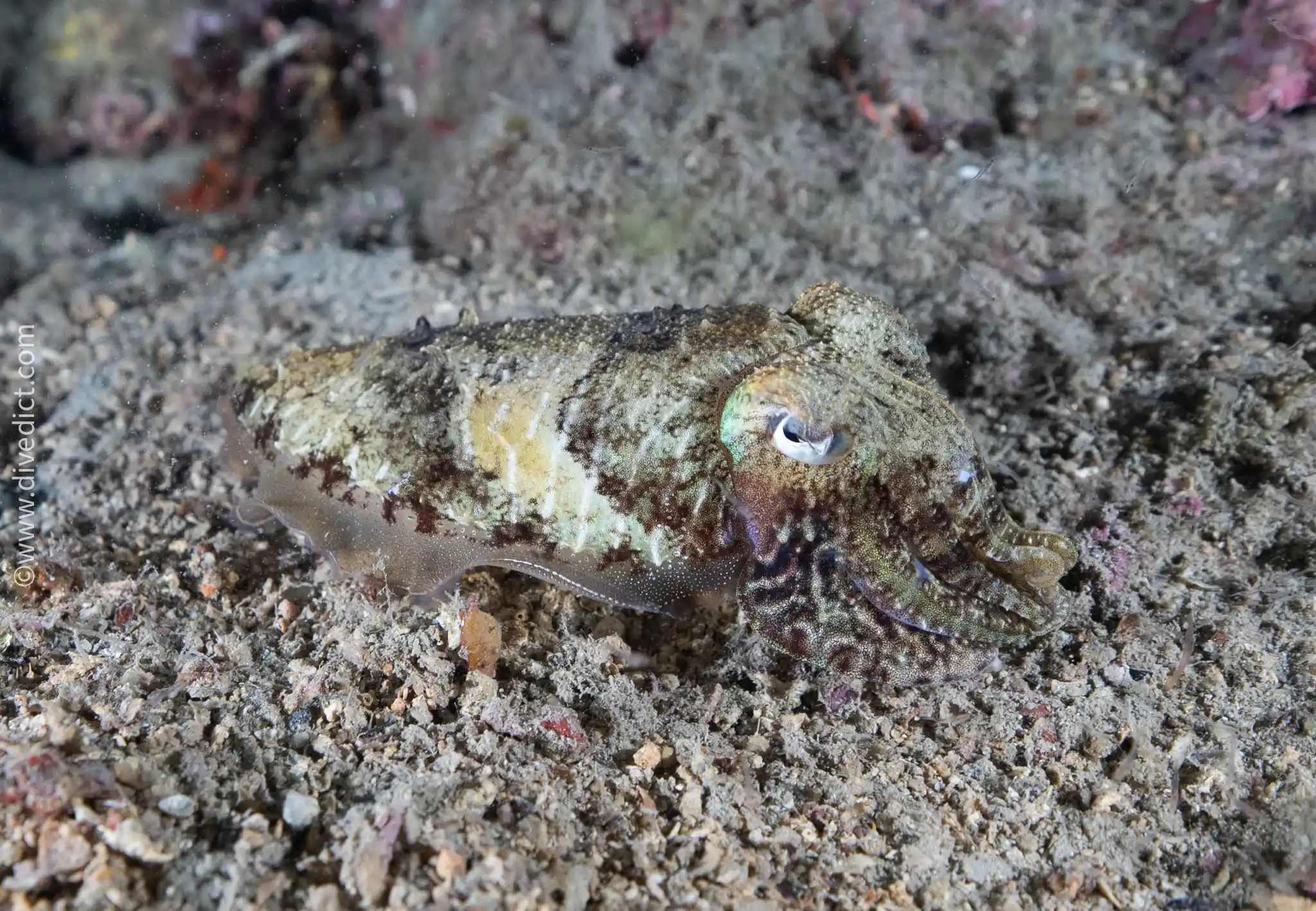
The base color is light sandy to darker reddish brown and it can change its color in a matter of seconds depending on its mood or background.
Natural enemies
Sharks, dolphins, seals, predatory fish, other cephalopods
Dangerous/venomous
The European common cuttlefish has a neurotoxin in the saliva of its beak, which can also cause injuries in humans.
Sketch

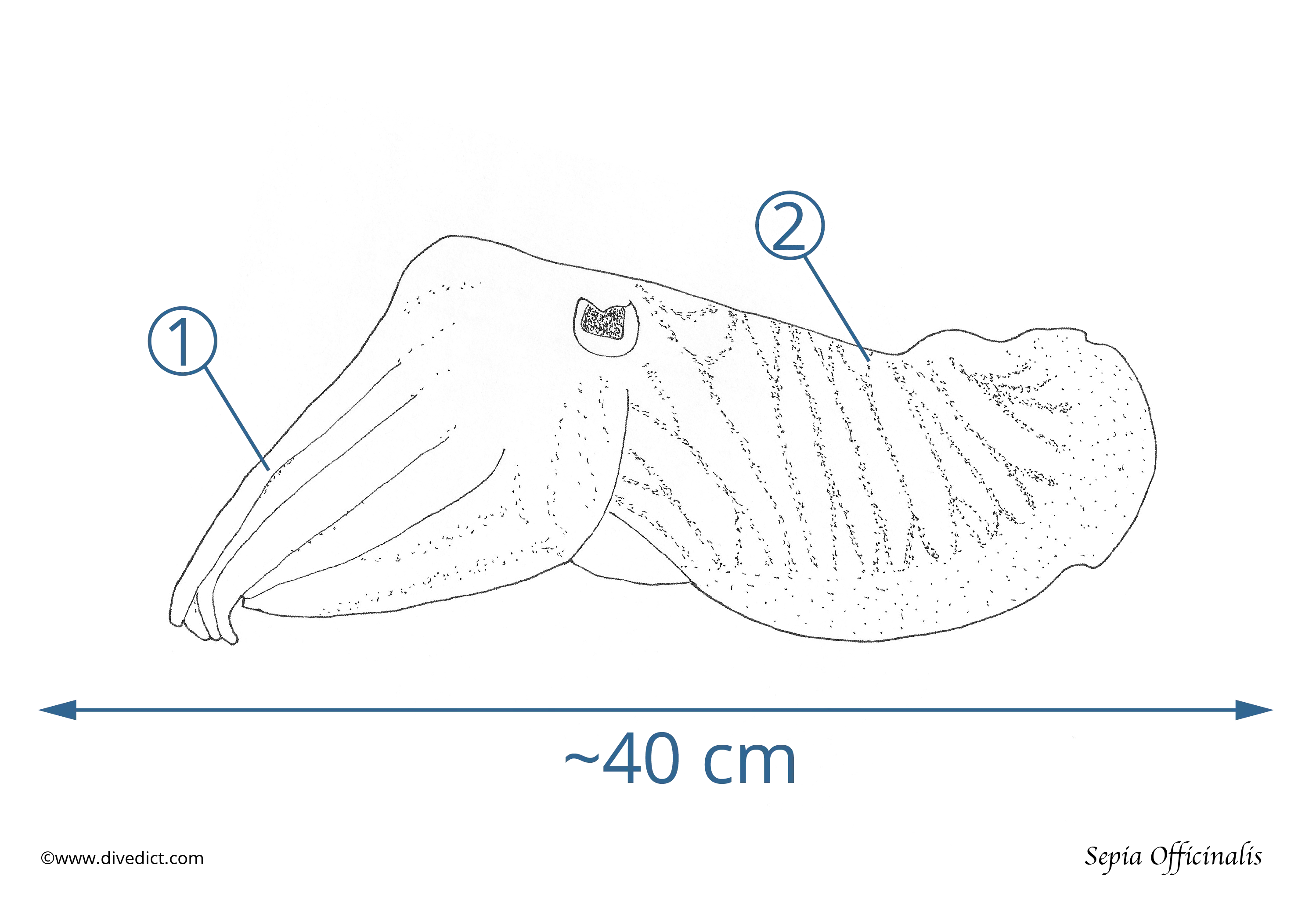
1. Tentacles
2. Patterned body
Pro tips
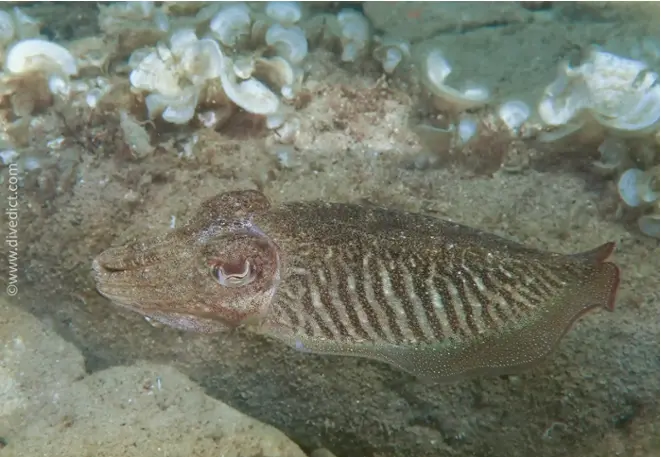
Especially during mating season, males adorn themselves with dominant zebra patterns to impress females.
Other males try to trick the females: they disguise themselves as one of them and mingle with them incognito.
The females lay the black, oval-shaped eggs on hard sediment or seagrass (Posidonia oceanica) and move on without ever guarding their clutch.
During courtship, they like to stay close to the coast, which is why we divers are often lucky enough to see them with their most beautiful patterns.
Young cuttlefish cannot swim deeper than 80m because they can not yet withstand the water pressure.
Older individuals, however, hang around in 100 to 200m and can travel enormous distances.
Text: Carolina Leiter, Felician Hosp, Pia Balaka
Pic: Felician Hosp, Sabine Probst
Illustration: Dive Dict