
Green sea turtle
Chelonia mydas



Special features
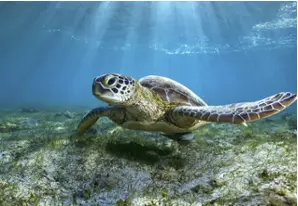
Green sea turtles are incredibly efficient marathon “swimmers.” The longest route ever traveled by one (she was a female, by the way) was almost 21,000km in 647 days.
That means she swam an incredible 32km every day. Their fin-shaped “paddles” help them reach speeds of up to 25 km/h while using their hind legs to “steer.”
Appearance
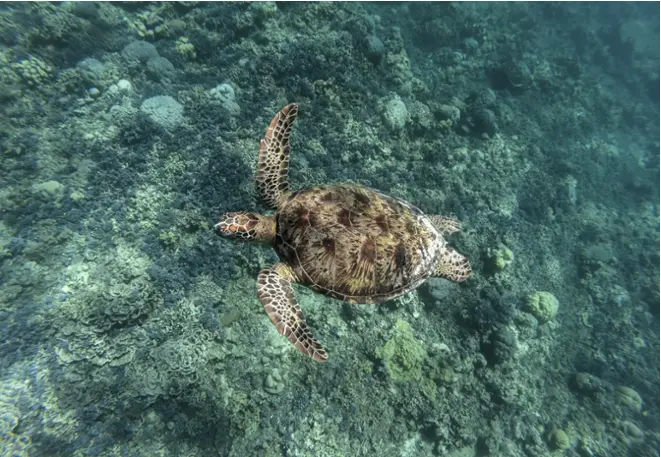
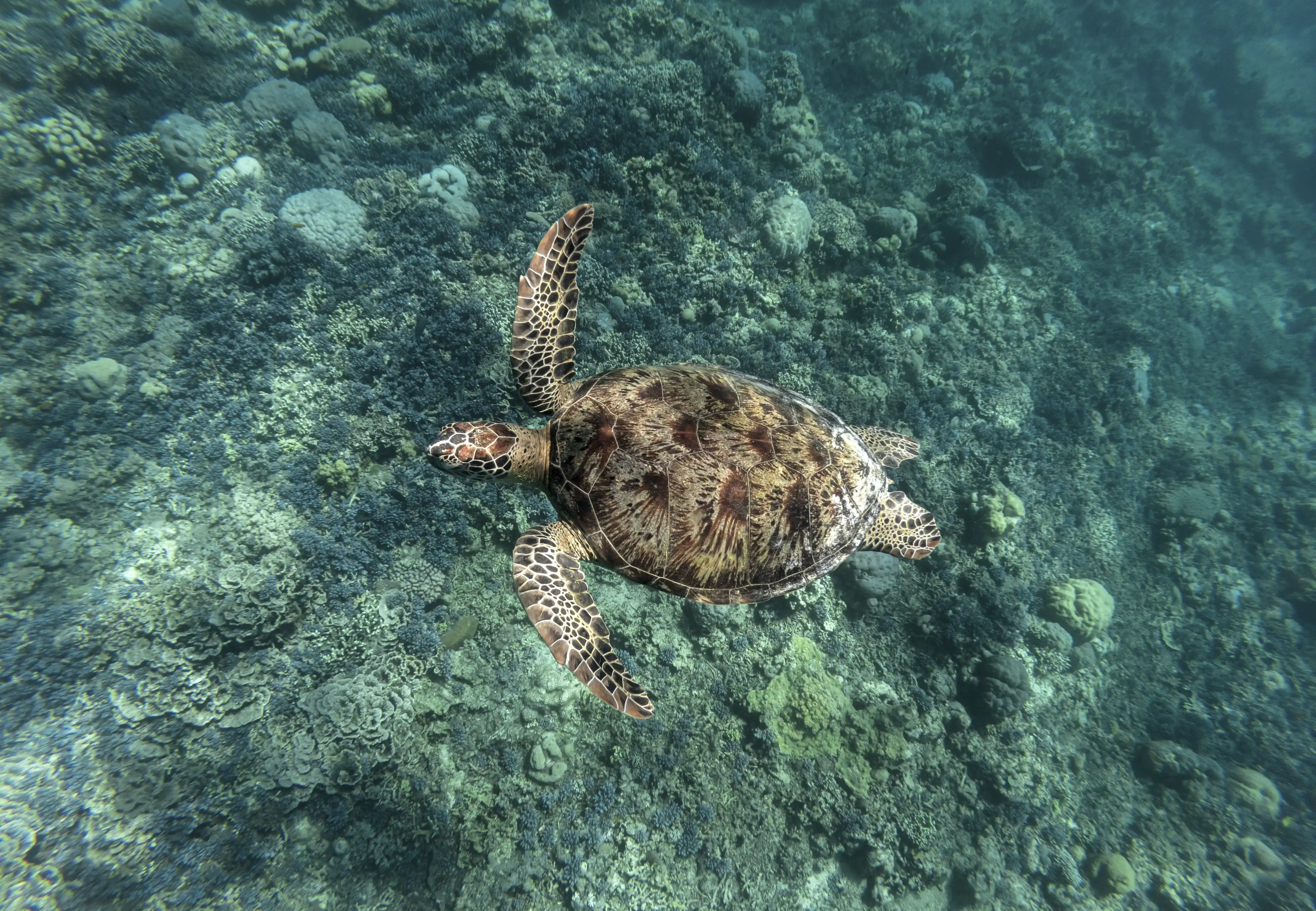
The green sea turtle can proudly claim to be the largest armored sea turtle. Its tank can be up to 1.5m long and weighs 300kg.
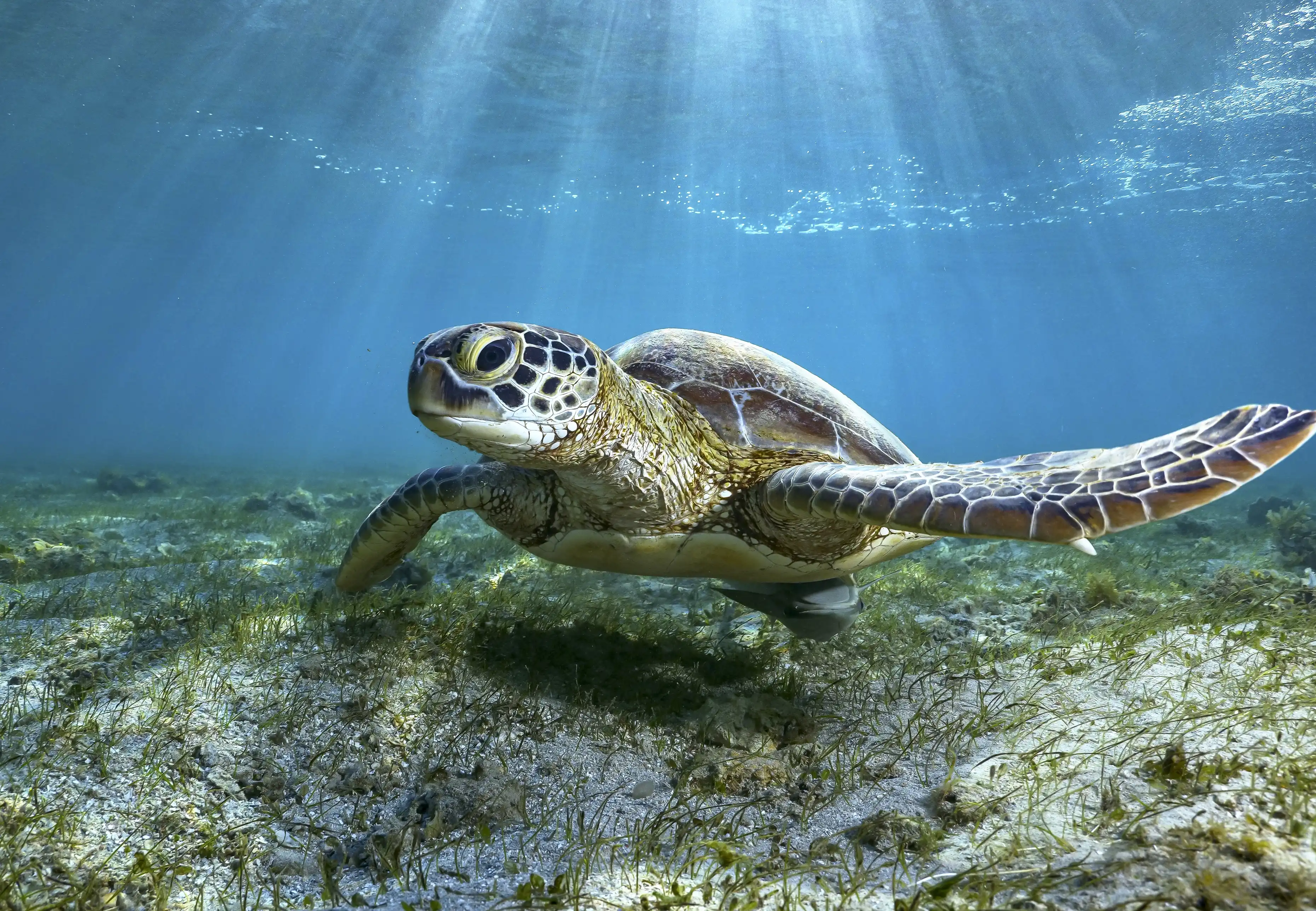
Its shell is colored on the upper side in various, mostly light shades of brown, with yellowish-green or black-brown areas. They are pale yellow on their belly.
Natural enemies
For baby turtles on land: birds, reptiles; in water: sharks
Dangerous/Venomous
The Green sea turtle is neither dangerous nor venomous.
Sketch
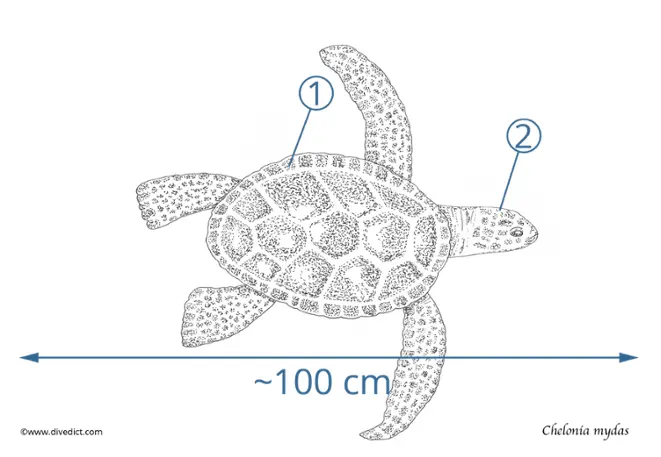
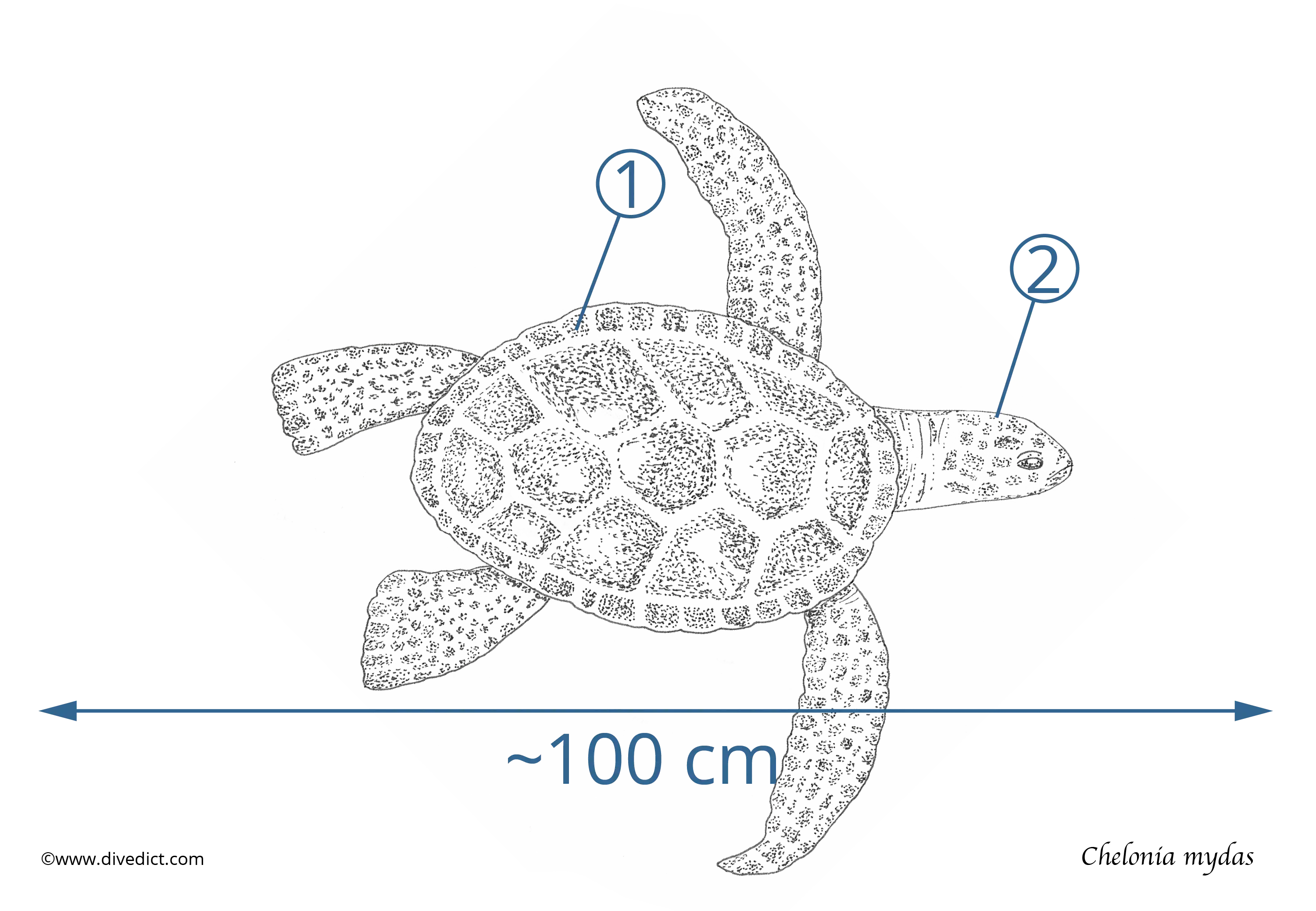
1. Spotted tank
2. Greenish skin
Pro tips
Green sea turtles eat exclusively vegetarian food: seagrass and algae. That is why its body (not its shell) also turns slightly greenish and has earned it its name. In the German language, it unfortunately also has the nickname “soup turtle” because it was intensively hunted for centuries and was used to prepare fish soup.
Individuals that occur in the western part of the Mediterranean have often hatched on the other side of the North Atlantic and migrated as young animals to the Mediterranean Sea. As adults, they tend to migrate back into the North Atlantic. Those individuals in the eastern Mediterranean waves hatched on the beaches there.
Even while they're growing in eggs, all turtle species don't have an easy life. The eggs are often dug too little deep into the sand and are threatened by many animals living on land but also by humans. When the baby turtles hatch, they use moonlight to find their way into the water. However, when there is too much artificial light near or on the beach, the little ones walk to the artificial light source and unfortunately never find their way into the protective waves.
The females return year after year to the beach where they hatched to lay their eggs. Mating is happening either already on the feeding ground, on the way to the nesting site, or even on the nesting beach. A nest can contain over 100 eggs, from which the young animals hatch 2 months later. By the way, the nesting season varies depending on the habitat, but always in the night.
Green sea turtles are loners and spend their youth in the open sea, while the adults have fun in lush seagrass beds near the coast.
Text: Carolina Leiter
Illustration: Dive Dict