
Pointed-snout wrasse
Symphodus rostratus




Special features
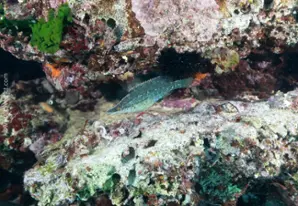
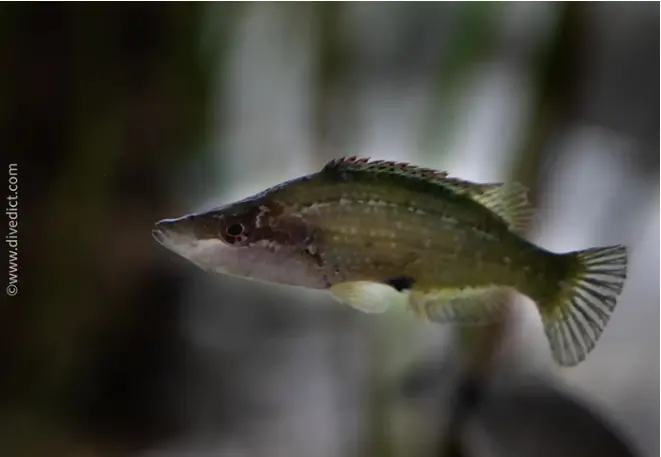
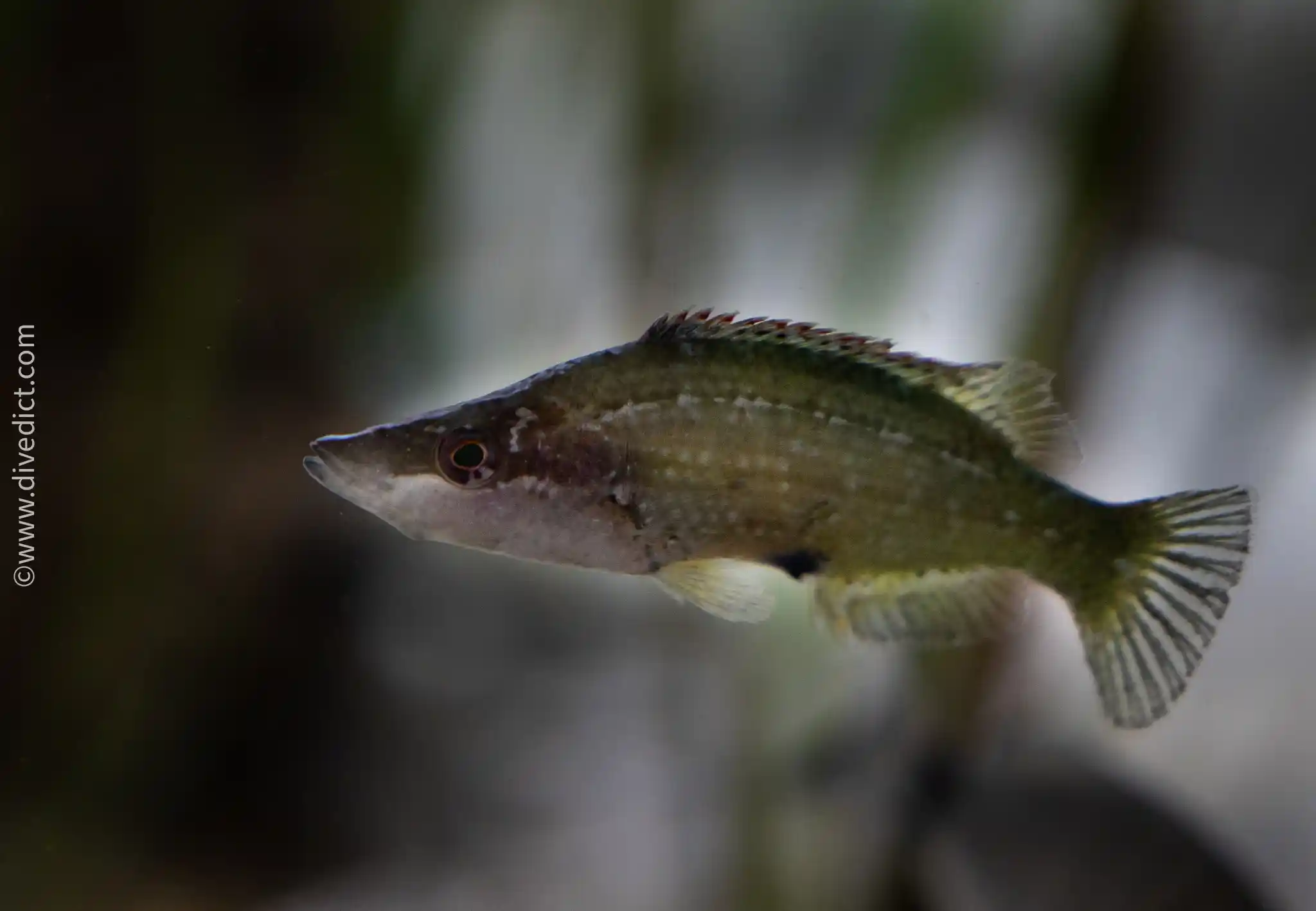
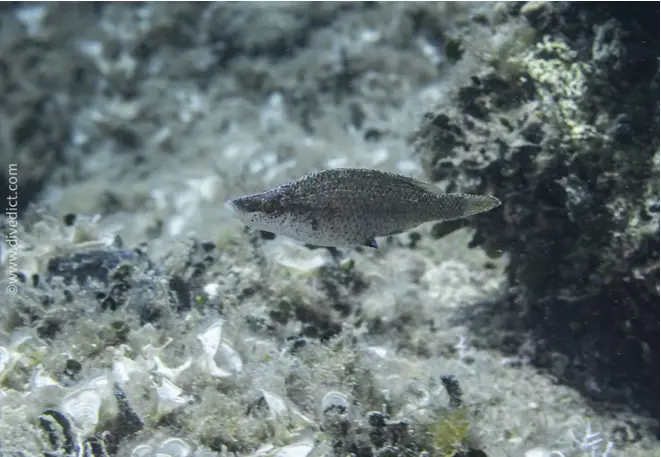
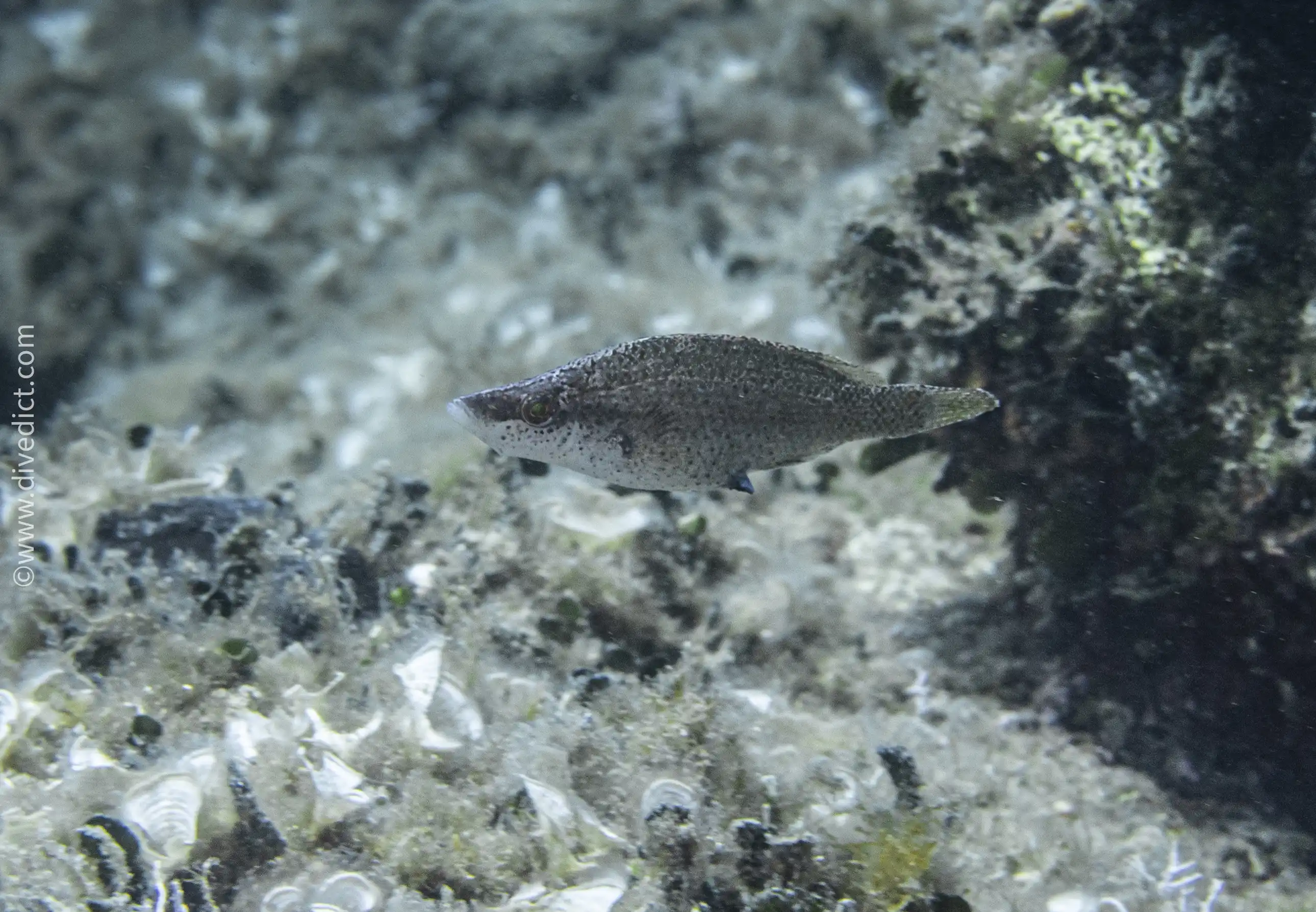
With this fish, the name says it all: before you even notice the little guy, his characteristically long, pointed snout first appears in the field of view.
Appearance
The pointed-snout wrasse has an elongated, high-backed physique with a distinctive dorsal fin.
Thanks to its long, tapered snout, this knee-high to a grasshopper gains a few centimeters of extra length.
With his large, round, and often colorful eyes on the side of the snout, he has a good view of his surroundings.
During mating season, this fish prefers rocky surfaces as a habitat, which means that its coloring is characterized by shades of gray.
Outside of mating season, it prefers to move on to green seagrass beds - of course in a matching greenish dress.
Natural enemies
Bigger fish
Dangerous/venomous
The snout wrapfish is neither dangerous nor venomous.
Sketch
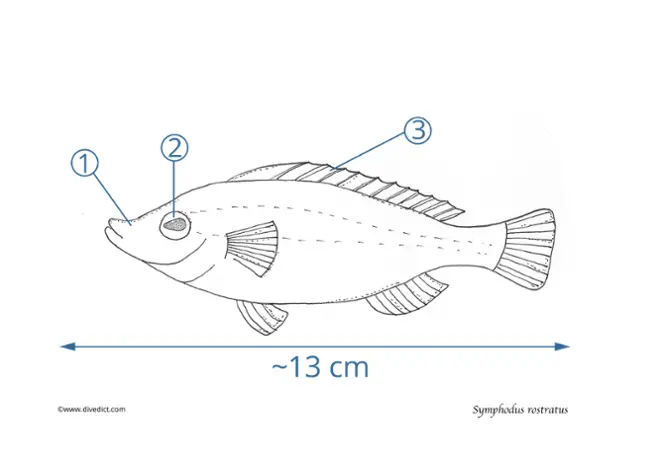
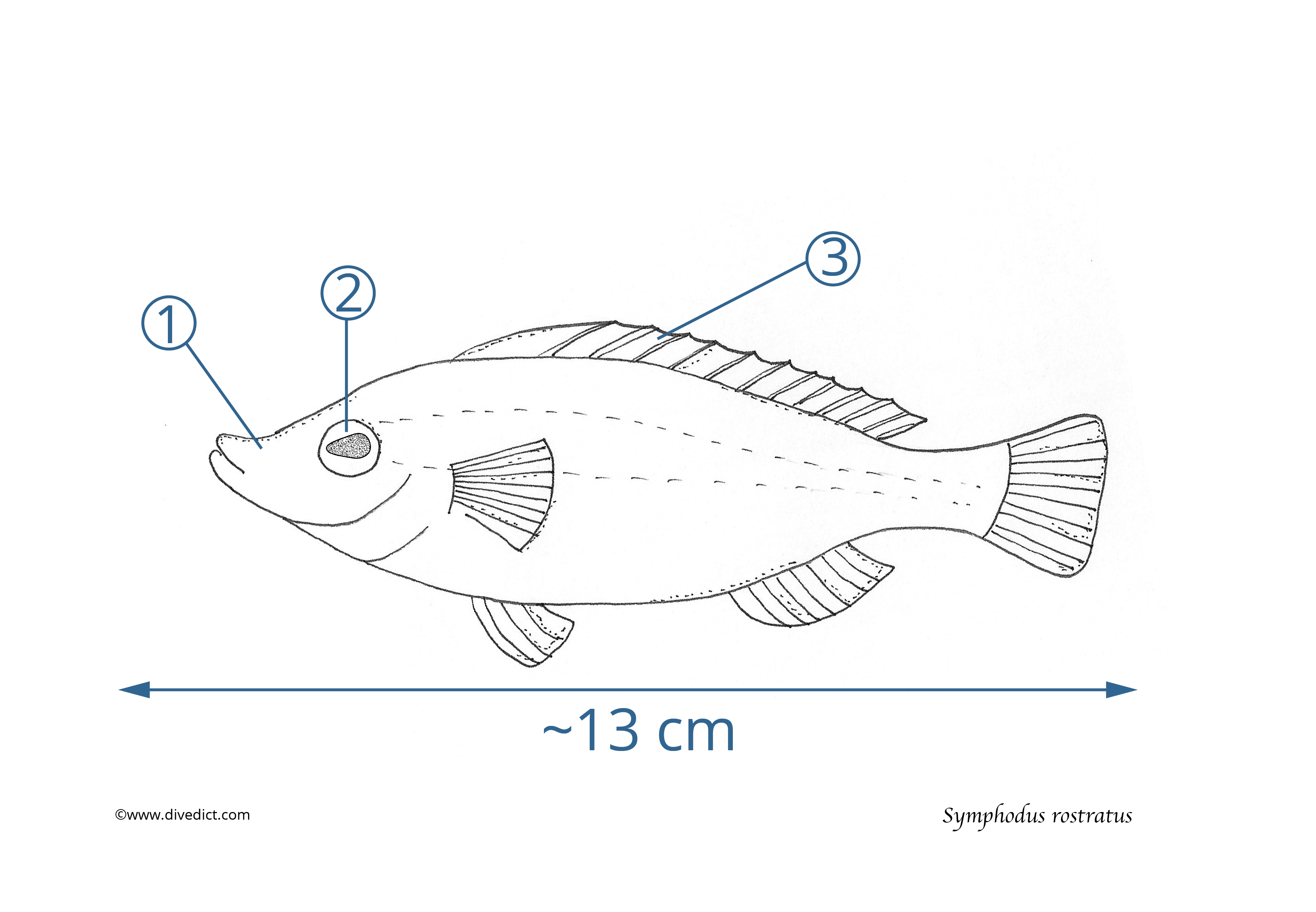
1. Indented forehead, pointed snout
2. Red iris
3. Distinctive dorsal fin
Pro tips
This curious fellow prefers to spend the whole day exploring and hunting. It likes to go on its adventures in a group with other wrasses- more crew members, more action, more loot!
If it decides to rest, it does so near the seabed, where it is perfectly camouflaged.
Between March and July, however, the thirst for adventure must take a break: During this time, the males must prepare the nests, which are built from pebbles and algae on rocky surfaces.
The young do not yet have a pointed snout. This only develops later with its help, the ever-hungry young fish can suck up smaller crabs on their own.
Text: Carolina Leiter, Felician Hosp, Pia Balaka
Pic: Felician Hosp, Sabine Probst
Illustration: Dive Dict