
Ocellated wrasse
Symphodus ocellatus




Special features
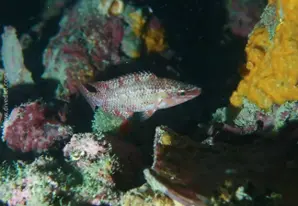
You can identify this species relatively easily because of its dark green spot bordered in red that is clearly visible on the gill cover.
The males build nests like birds, but instead of branches, they use algae.
Appearance
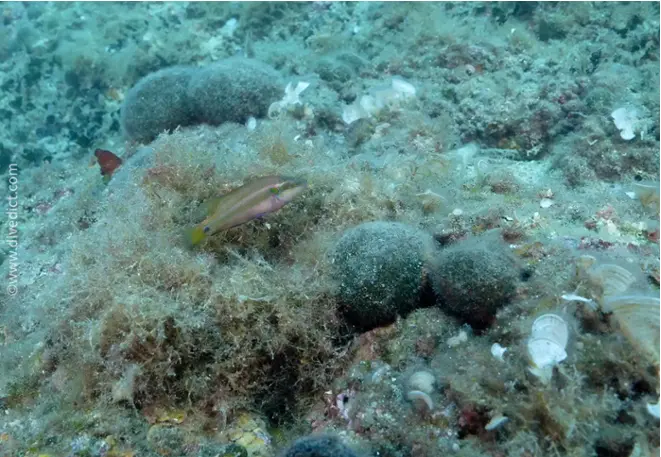
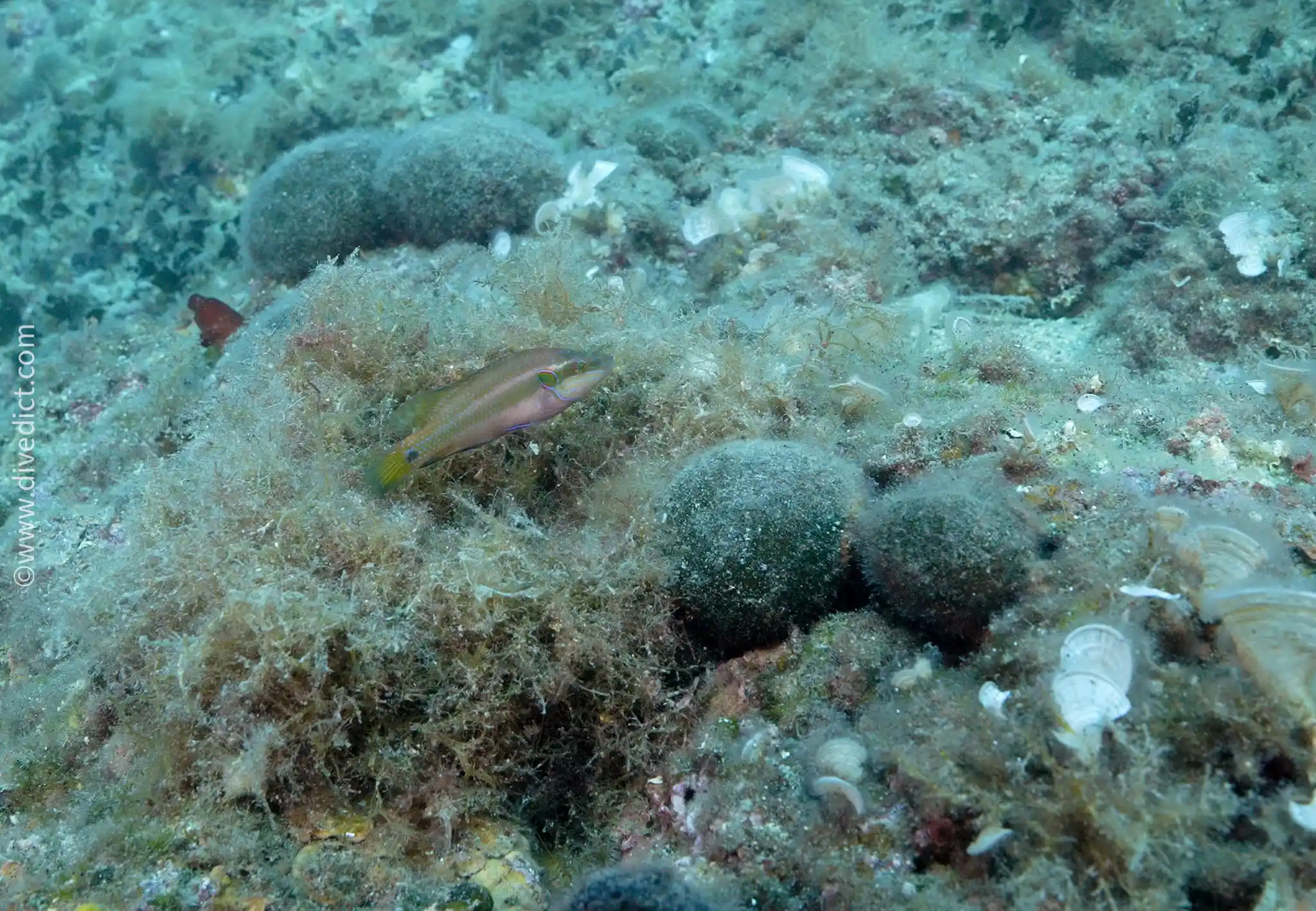
Also this wrasse is a very colorful fish, with the females being a bit more inconspicuous than the males.
The basic color is yellow to olive green, with wide stripes that run lengthwise.
In addition, there are intense blue and red dots and stripes all over the body, even on the eyes.
It has a dark spot on the base of the tail fin.
The body shape is elongated and slightly high-backed.
Natural enemies
Predatory fish
Dangerous/venomous
This species is neither dangerous nor venomous.
Sketch
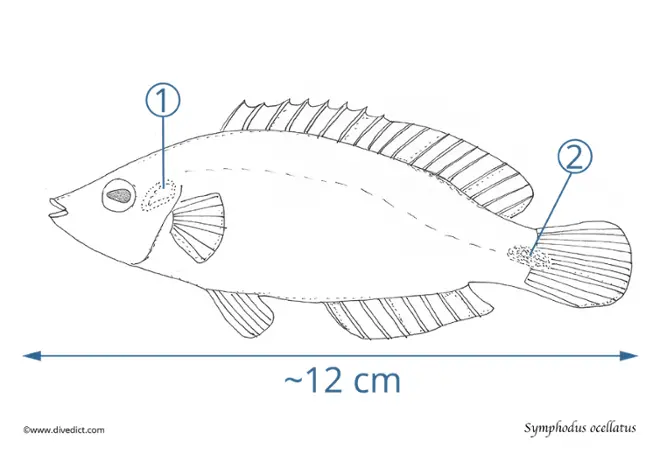
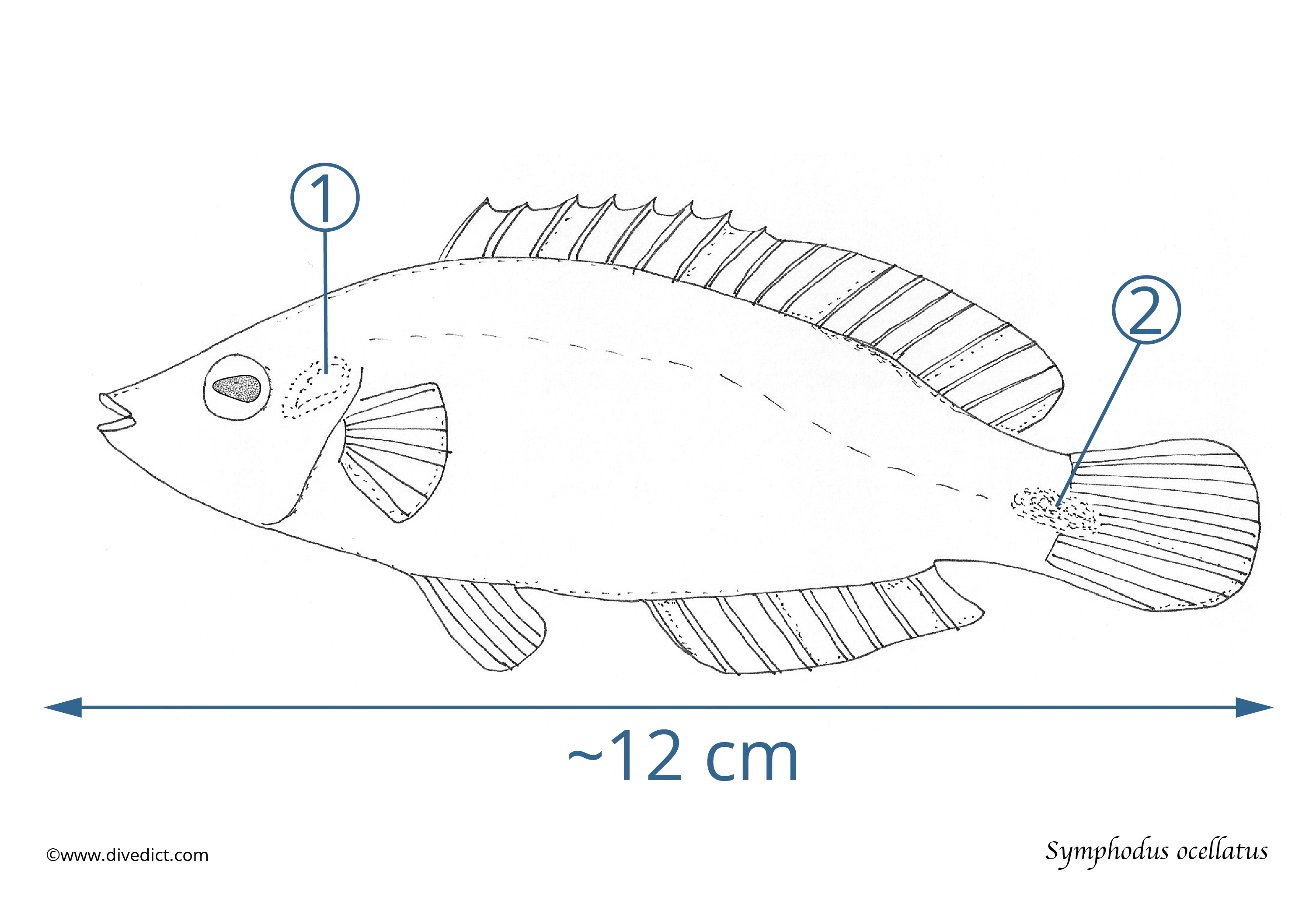
1. Eyespot
2. Dark spot on the base of the tail
Pro tips
This beautiful feller can be found in shallow water, on rocky ground, or in seagrass beds.
They live closely to the ground and usually travel in small groups.
They feed on small invertebrates such as worms, crabs, and snails.
The males are responsible for brood care and build a plate-shaped nest of cystoseira algae. In doing so, he chews up the algae beforehand.
He then vehemently defends the eggs.
Males grow faster than females.
Text: Carolina Leiter, Felician Hosp, Pia Balaka
Pic: Felician Hosp, Sabine Probst
Illustration: Dive Dict