
Indian Lionfish
Pterois miles
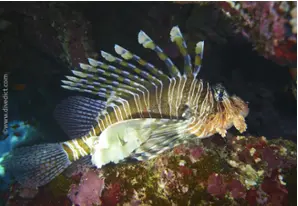




Special features
His appearance has made him a small celebrity, but do his fanned fins actually also have a use or are they really just for decoration?
Like everything that nature comes up with, it does not create anything without meaning and purpose. The lionfish uses its fanned pectoral fins to “fan” its prey near its mouth so that it can then be eaten more easily.
Since it often roams coral reefs, the fairly narrow ones are handy to fish out smaller prey that hides between coral arms.
Appearance
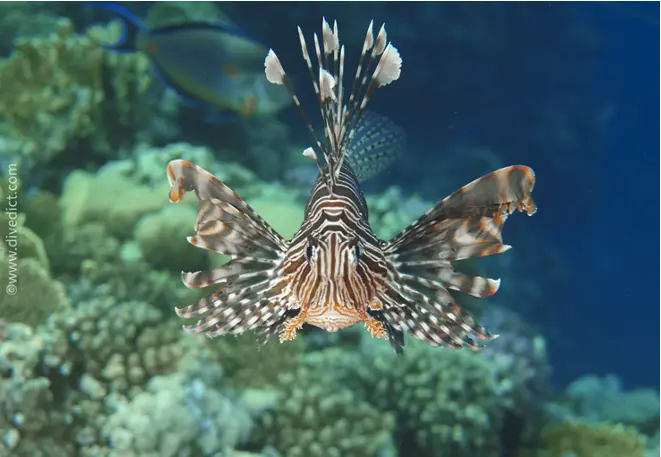
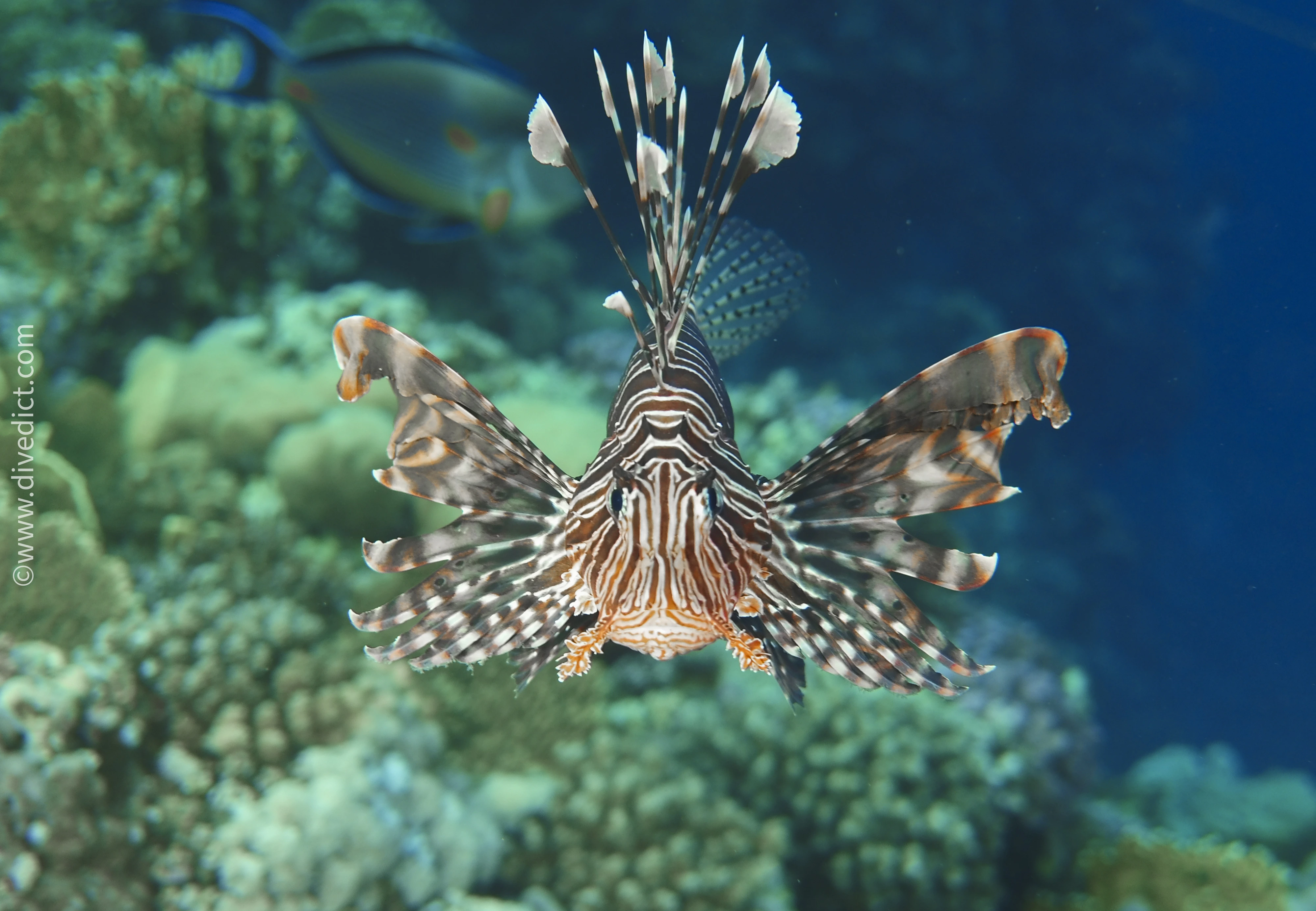
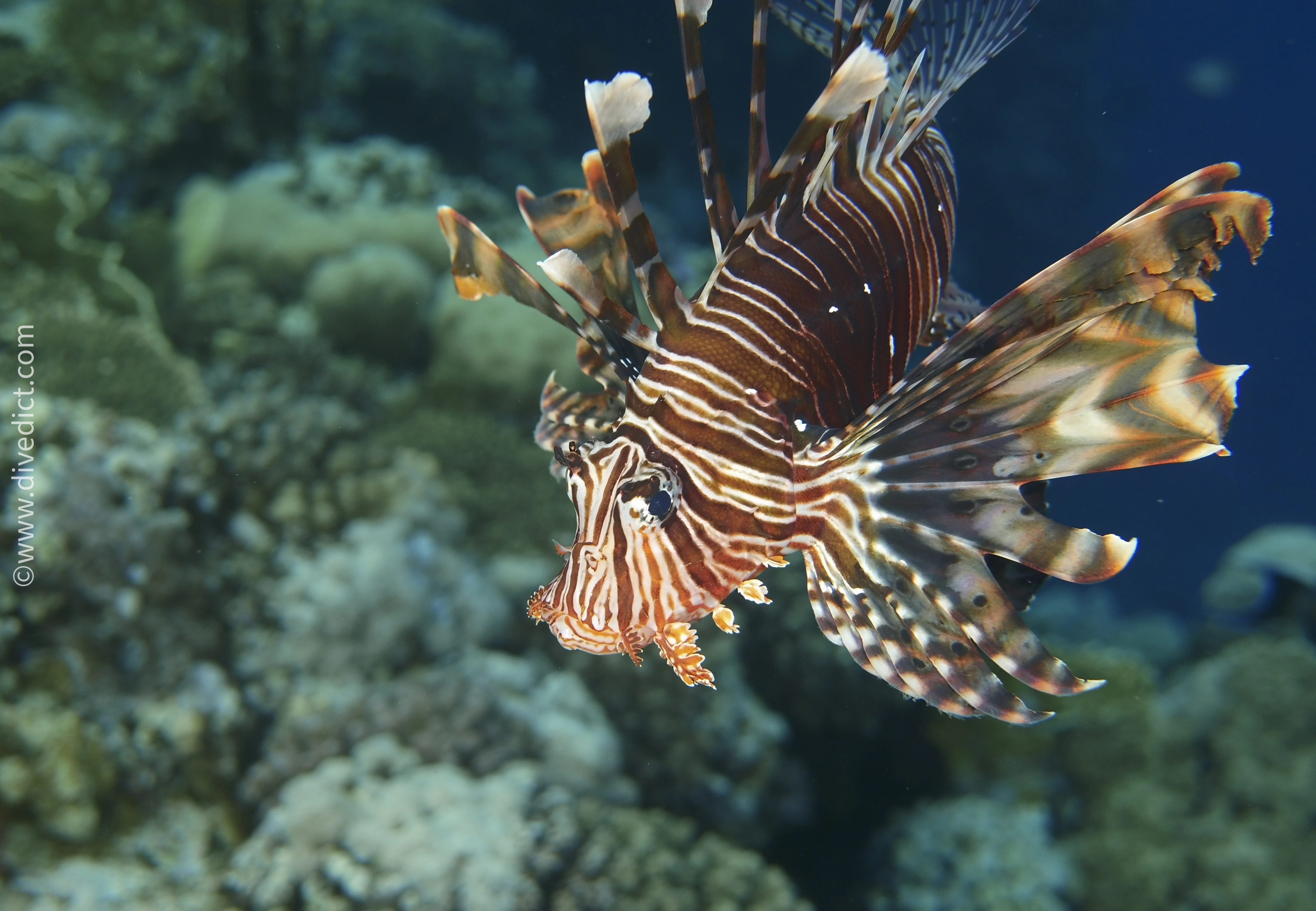
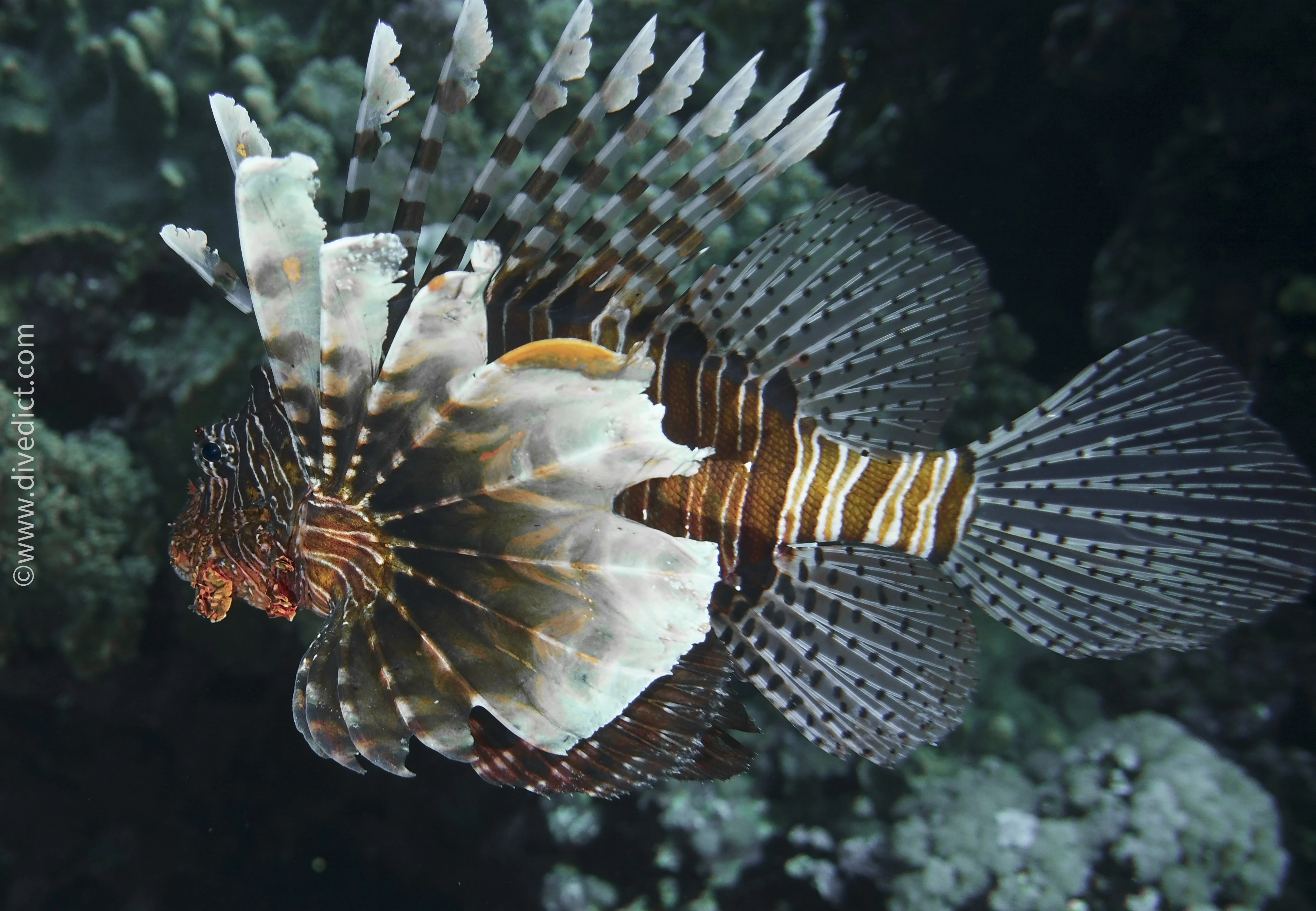
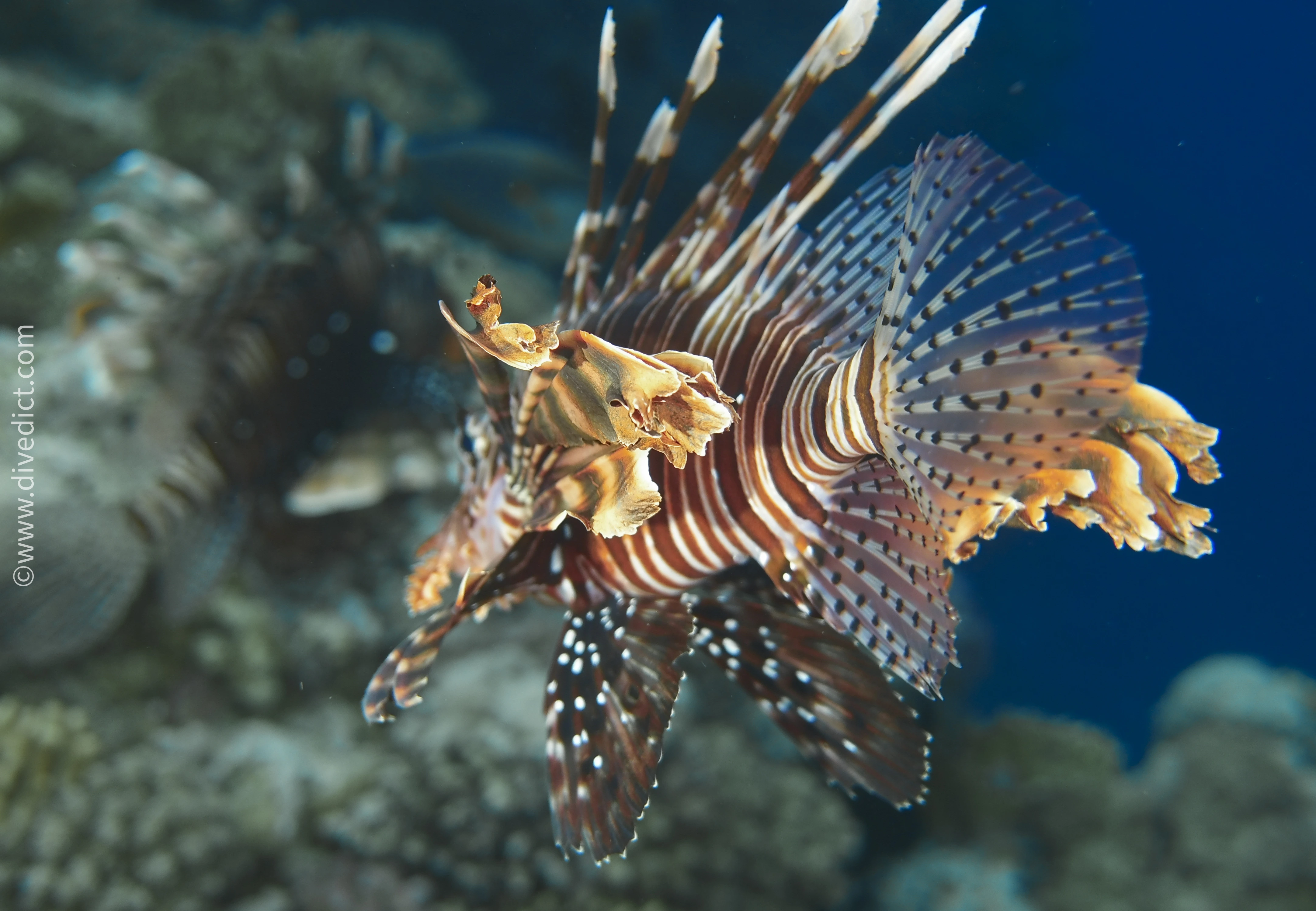
These beautiful loners are red to dark brown in color with narrow white vertical stripes.
The fin rays (which look feathery) of the dorsal and pectoral fins are extremely extended; in mature specimens (28 cm), the anal fins carry 7 rays.
Their coloration also adapts to their habitat; for example, when they are near a river mouth, they can be almost black in color.
Natural enemies
None. Due to its small number of natural enemies, this fish has successfully spread across the Mediterranean and Caribbean Sea as an invasive species.
Dangerous/Venomous
In their dorsal fins, which they can point forward and thus attack divers, they carry a venom that can be potentially very dangerous for us humans. Its stitches are extremely painful.
Sketch
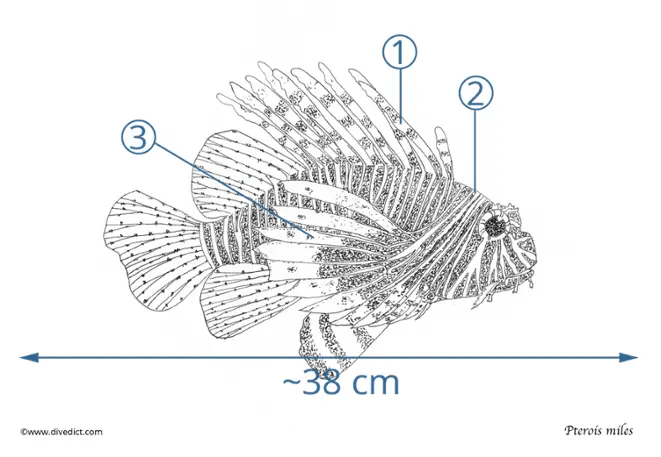
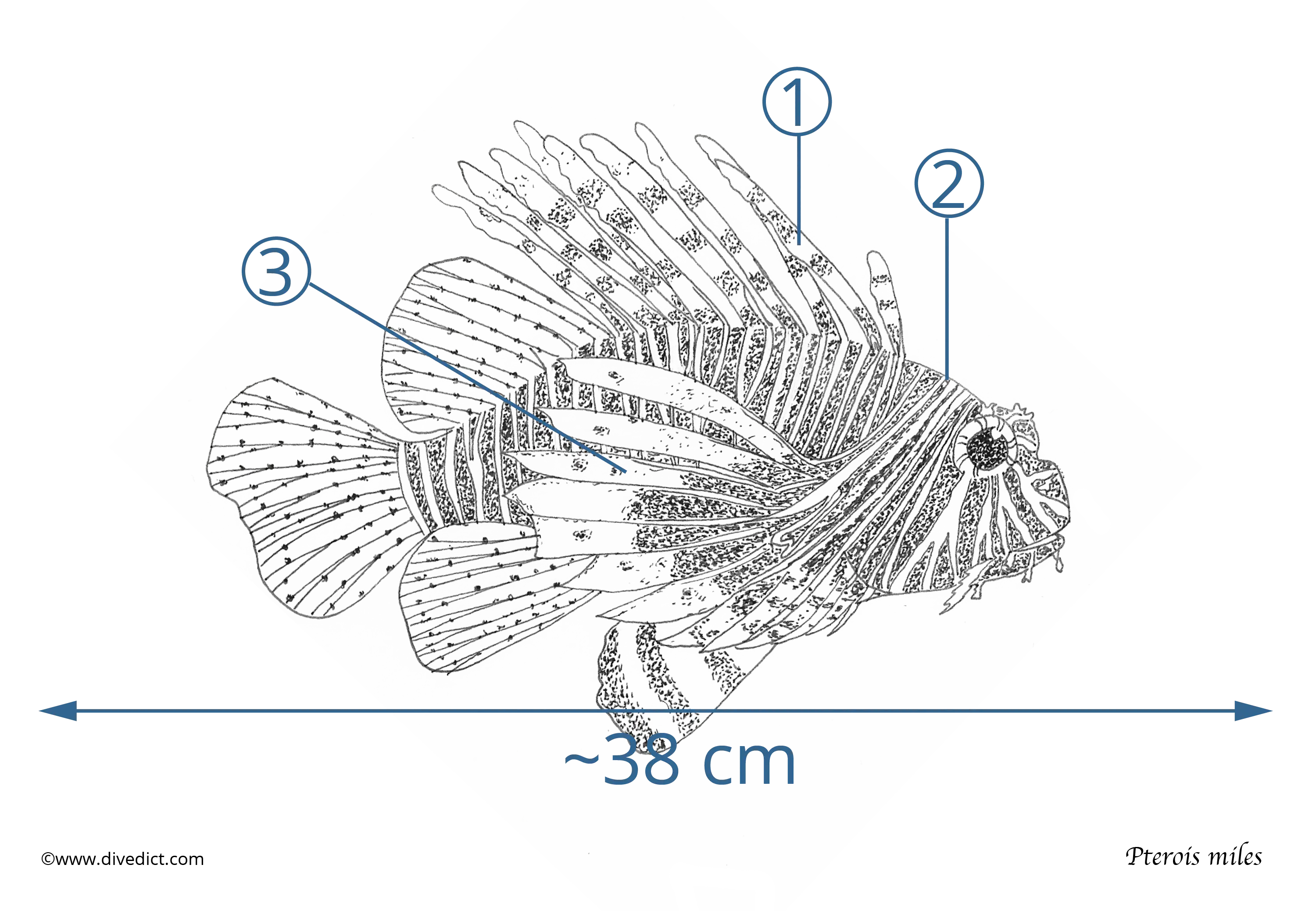
1. Toxic dorsal fin
2. Variable pattern and color
3. Characteristic, feather-like fin rays
Pro tips
Loner, glutton, prolet.
The Indian lionfish hides in caves, overhanging rocks, or wrecks during the day and sets off at sunset to hunt for fish, crabs, and shrimps in its territory.
They are often attracted by the light and movements of divers.
As far as reproduction is concerned, typical alpha male behavior can be observed here.
A male picks out 2-7 females, a second male approaches, and then they fight, sometimes even to the death.
Each female then lays 2000 — 15,000 eggs, which are embedded in a mucous membrane and are fertilized by the male.
After that, the paths of females and males go their separate ways again.
Bacteria then decompose the mucous membrane and, approximately 36 hours later, the free-swimming larvae hatch, which feed on zooplankton and grow into full-grown animals.
Indian lionfish reproduce monthly throughout the year.
It inhabits reef flats, lagoons, and seaweed-covered reefs. Typically solitary or found in small groups, it hovers in crevices, caves, or under ledges during the day. Its diet primarily consists of crabs and shrimps.
These fascinating bottom-dwelling carnivores are true masters of camouflage. With their elaborate flaps, tassels, and highly variable coloration, they blend seamlessly into their surroundings—most often coral reefs. This natural disguise not only helps them evade predators but also allows them to ambush unsuspecting prey, which includes fish, crustaceans, and cephalopods. Their hunting strike is lightning-fast, taking less than 15 milliseconds to capture their target.
Many of these species, lionfish and stonefish, possess venomous spines along their dorsal, anal, and pelvic fins, as well as small spines on their heads. Their venom can cause excruciating pain, vomiting, swelling, breathing difficulties, and fever in those who get stung. The best first-aid treatment is immersing the affected area in hot water (45°C for about 40 minutes) or using a hairdryer to apply heat. This helps break down the venom's proteins and relieve pain, which usually subsides within a few days.
Despite their dangerous reputation, these stealthy predators play an important role in the marine ecosystem—just be sure to admire them from a safe distance!
In the Mediterranean and the Caribbean, however, this very fish poses a massive threat to biodiversity. It does not belong there at all; it has invaded these regions and is spreading almost unchecked.
Text: Carolina Leiter
Illustration: Dive Dict
Pic: Felician Hosp