
Marbled electric ray
Torpedo marmorata




Special features
The Marbled electric ray is a predator who electrocutes his victims.
In fact, they can produce up to 200 volts of electric discharge at a time.
It can generate these through electrical organs that consist of special muscles: they are kidney-shaped and located at the base of the pectoral fins.
Sometimes you can even see them through the skin.
Appearance
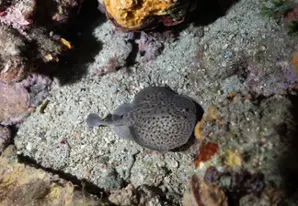
Similar to other rays, the body is widely flattened. The head is fused with the pectoral fins so that they look like a large, almost round disc.
The caudal stem is strong and carries two dorsal fins.
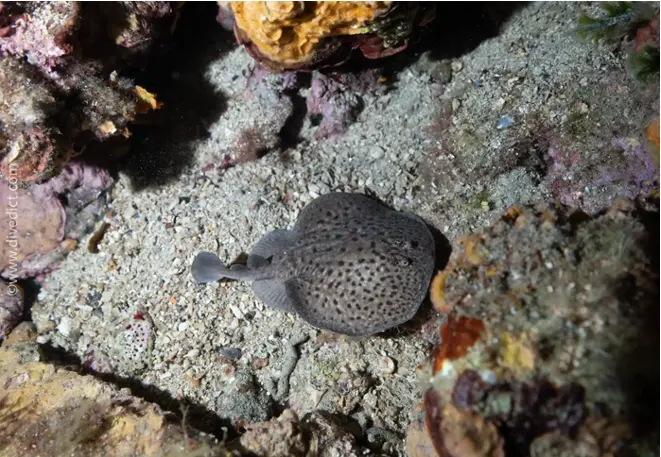
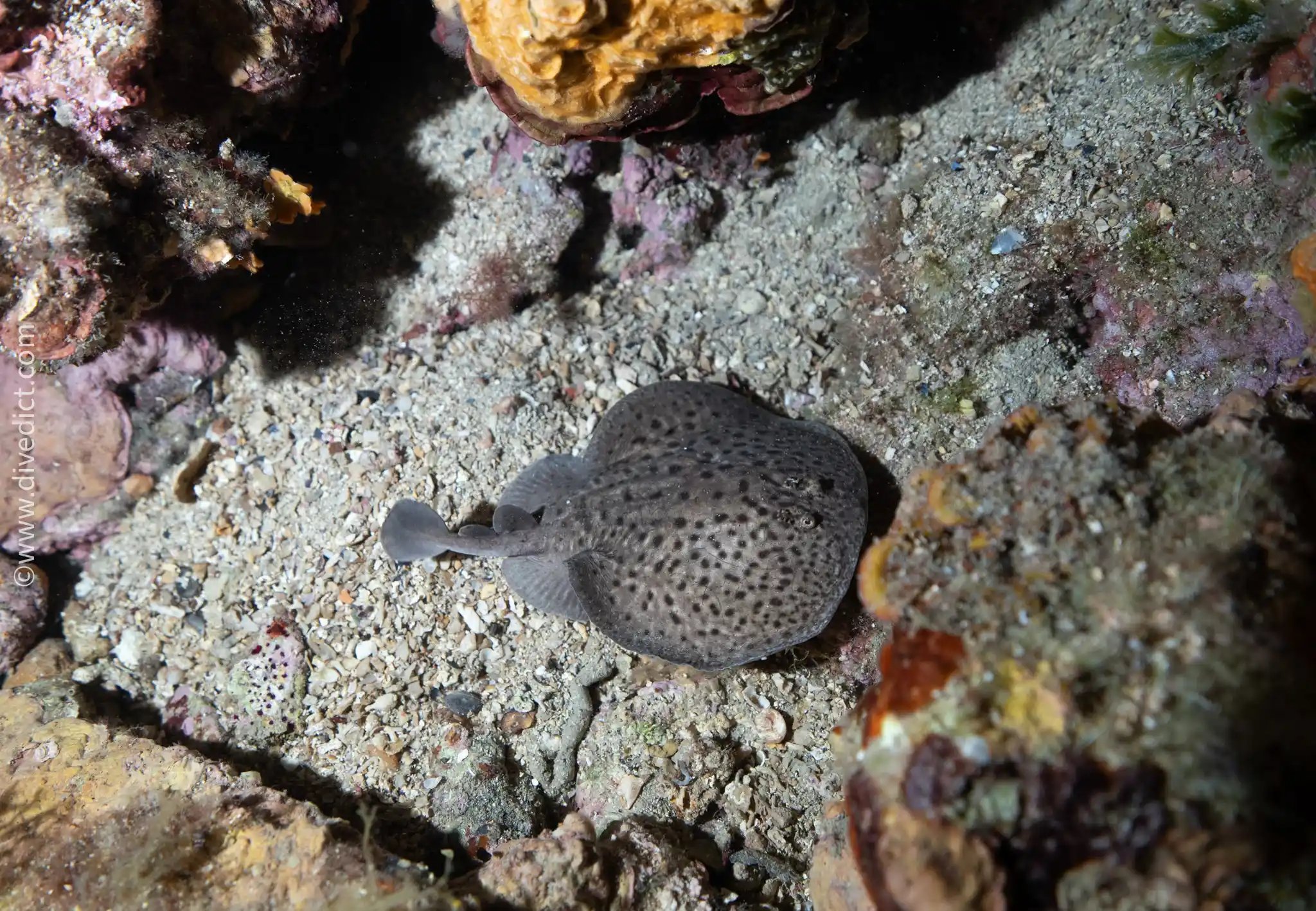
His belly is white, while the back is uniformly brown, with patterns that vary from roughly marbled to finely dotted.
It can be up to one meter long.
Natural enemies
None
Dangerous/Venomous
Since Marbled electric rays can give off electrical shocks, you should refrain from it.
Such an electric shock can feel like a strong fist punch and can knock you unconscious.
Sketch
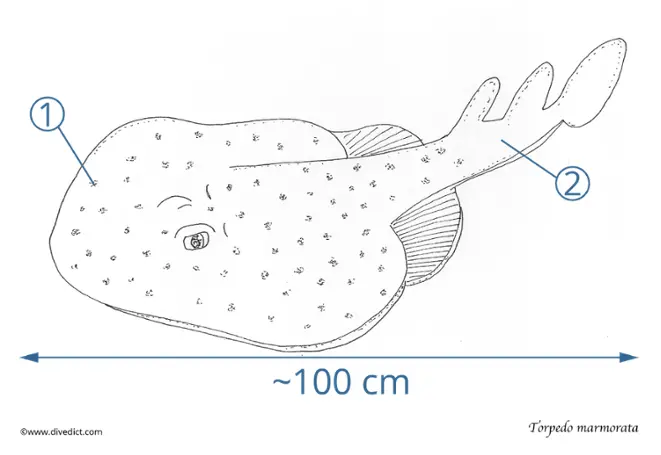
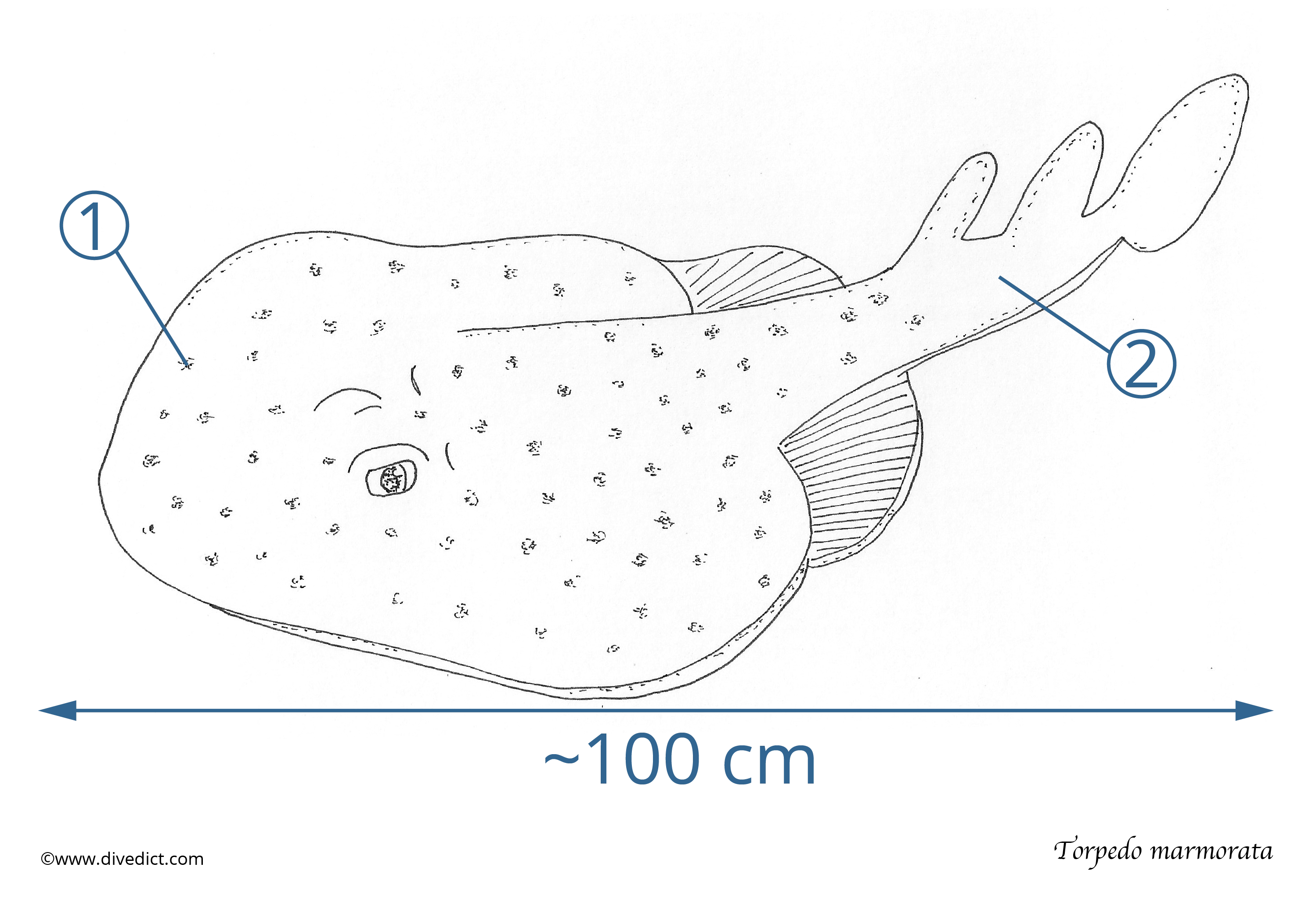
1. Head and pectoral fins are fused
2. Strong tail with two dorsal fins
Pro tips
The chances of spotting a Marbled electric ray are highest during night dives.
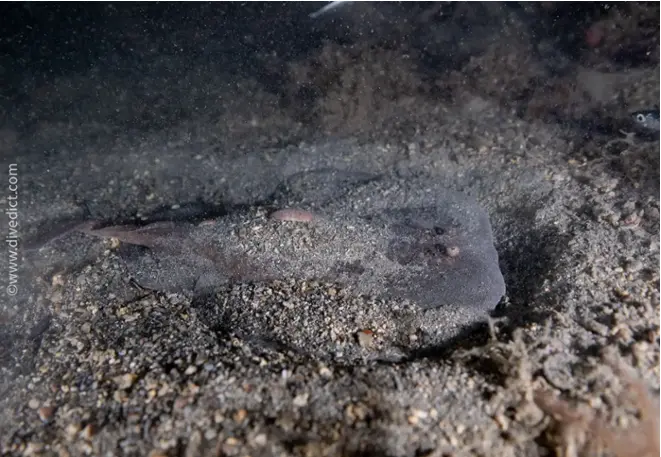
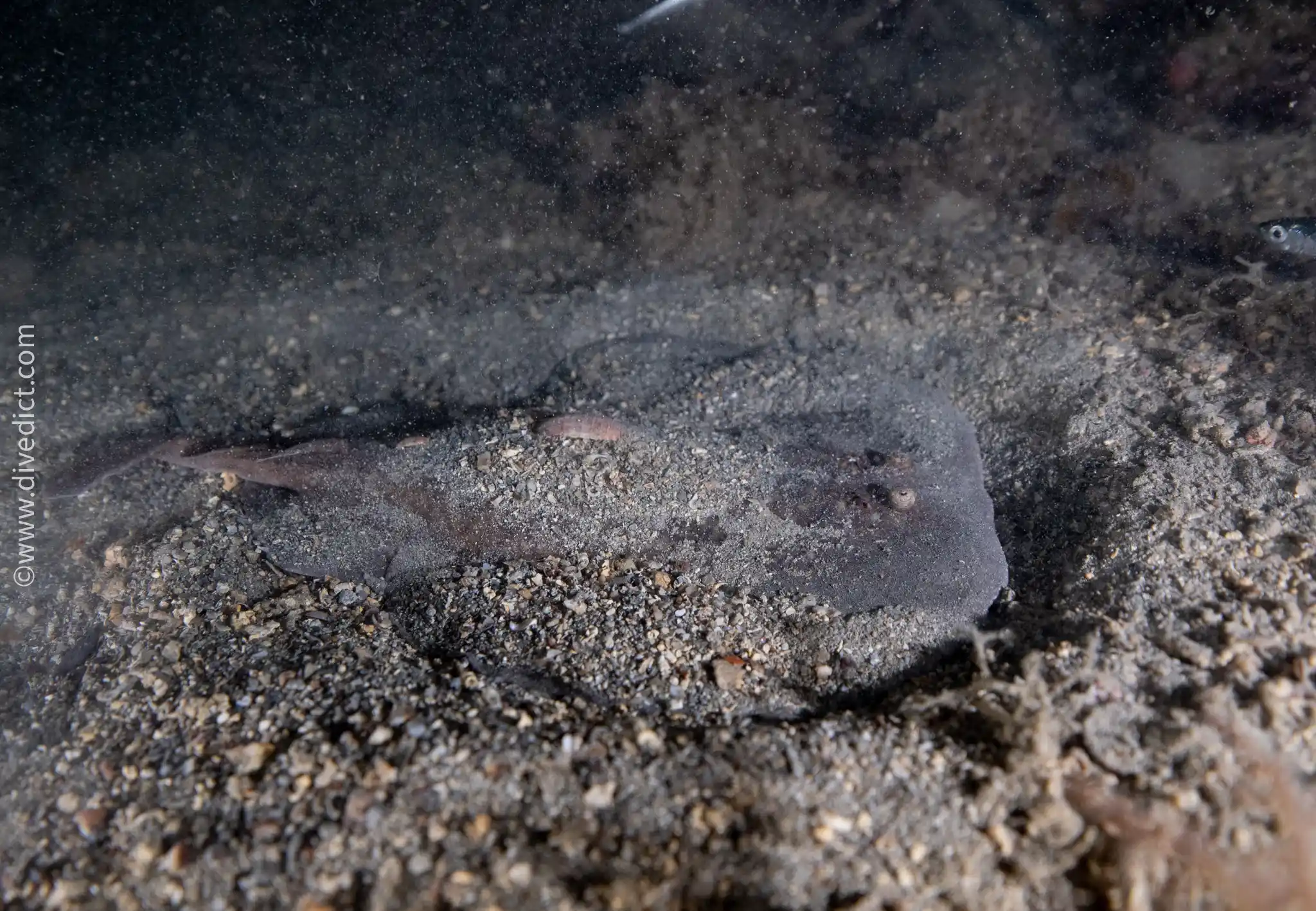
During the day, they lie buried in sand or mud, so that only the eyes and breathing openings look out. Thanks to his flat body and marbled skin, you can barely see him then.
To find him during the day, you need a lot of luck and patience.
During the night, it waits until small fish or crustaceans come by and then shock them and eat them with its 26 rows of teeth.
Their Latin species name, Torpedo, is derived from “torpinus,” which refers to the numbing effect of the animal’s electric shock.
Text: Carolina Leiter, Felician Hosp, Pia Balaka
Pic: Felician Hosp
Illustration: Dive Dict