
Picasso triggerfish
Rhinecanthus aculeatus




Special Features
Like all triggerfish, the Picasso triggerfish has the characteristic "trigger mechanism" on its back: the first spine that is locked by the second. This allows it to wedge itself into crevices or deter intruders.
However, its true uniqueness is its territorial behavior. It defiantly defends small patches of sand or pieces of coral, often against much larger fish. Intruders are warned with loud grunting sounds produced by muscle contractions in the swim bladder.
This "voice" is so distinct that divers can hear it underwater – an acoustic "stay away!"
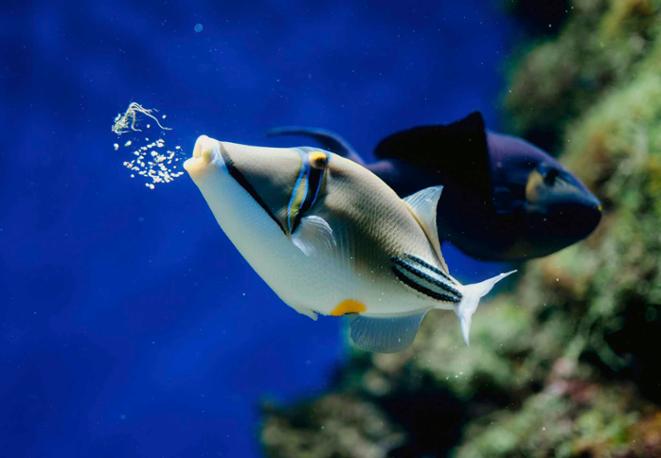
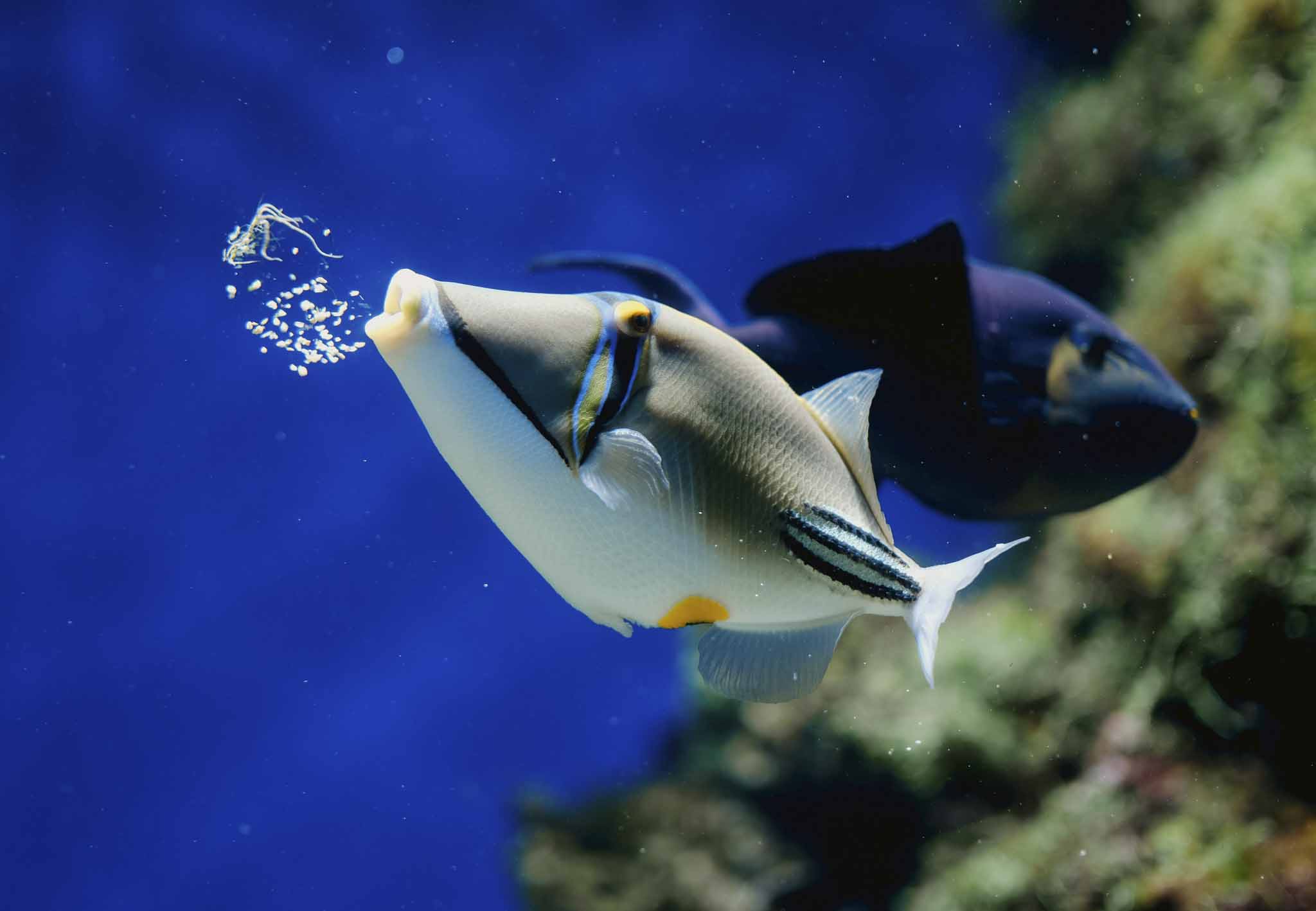
When foraging for food or building small depressions, it shoots sand out of its mouth with targeted bursts of water; a clever, powerful tactician of the reef.
Appearance
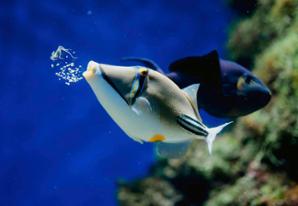
Its name is programmatic: The Picasso triggerfish looks as if an artist painted over its body with bold brush strokes. The striking pattern of blue, yellow, white, and black lines runs across its massive, wedge-shaped body. Each line is as precise as on a canvas.
The eyes are positioned high on the head and can move independently of each other, while the small but powerful mouth is equipped with typical, molar-shaped teeth. This allows it to easily crush hard-shelled prey.
The dorsal and pelvic fins are small but strong, ideal for maneuvering precisely. Particularly striking is the moon-shaped tail fin, with which it moves abruptly forward when fleeing or hunting. Despite its colorful appearance, it is perfectly adapted to the light plays of the reef – a master of camouflage in a sea of colors.
Natural Enemies
Large predators such as grouper and moray eels, occasionally sharks
Dangerous/Toxic
Not toxic, but very territorial; can become aggressive when threatened
Pro Tips
As pretty as it looks, it can be quite moody. Anyone who gets too close learns quickly that behind the artistic appearance lies a true character. Especially during the breeding season, Picasso triggerfish defend their nests with surprising determination.
Divers should treat the colorful beauty with respect; best to observe from a safe distance as it majestically glides over the sandy bottom, always ready to protect its territory.