
Yellow-brown Boxfish
Ostracion cubicus Linnaeus




Special Features
Ostracion cubicus prefers to live alone and spends most of its time in crevices and caves. It swims slowly and in a unique manner into these, which can be attributed to its special body shape. When it comes to eating, it is not picky. Whether algae, sponges, or worms; this omnivore is satisfied with many things. To search for food, this charming fish blows hidden treasures free from the sand.
Appearance
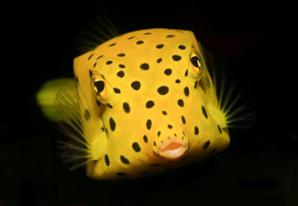
The yellow-brown boxfish lives up to its name. Its body is bony and quadrangular, resembling a box, which earned it the name "boxfish." The soft fins, which appear small in relation to the body, give the yellow-brown boxfish a cute and especially clumsy appearance.
Juvenile animals are usually bright yellow with black spots that are distributed all over the body. Adults, on the other hand, mostly take on a somewhat brownish, ochre coloration and their spots are significantly lighter, up to white.
Natural Enemies
Large predatory fish and sharks
Dangerous/Toxic
The yellow-brown boxfish is not dangerous to humans, but can lead to the notorious ciguatera fish poisoning if consumed. Skin contact can cause mild redness.
Pro Tips
Ostracion cubicus swims slowly due to its body structure and can usually be easily photographed, however, its agility should not be underestimated! Young animals especially like to stay in crevices and caves.
While it is largely harmless to humans, it is not so for fishy companions; boxfish produce a toxin that is released into the environment under stress and can lead to paralysis or death for nearby fish. Therefore, keeping this species in an aquarium presents a significant challenge.
Text: Zettel Carina