
Long-snouted seahorse
Hippocampus guttulatus




Special features
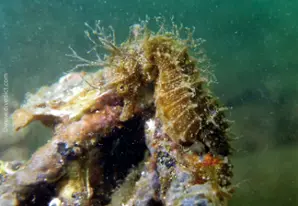
For this species, it is the males who are responsible for hatching the eggs.
They have a bag-like fanny pack, almost like a female kangaroo.
The females do not have this fanny pack and, apart from that, they are also distinguished from the males by a shorter tail.
Appearance
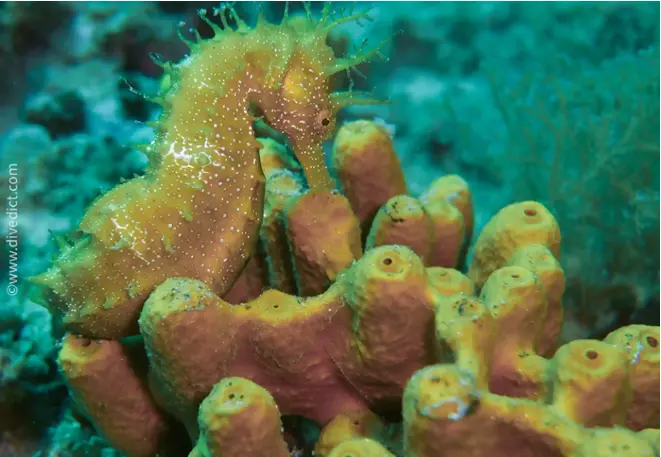
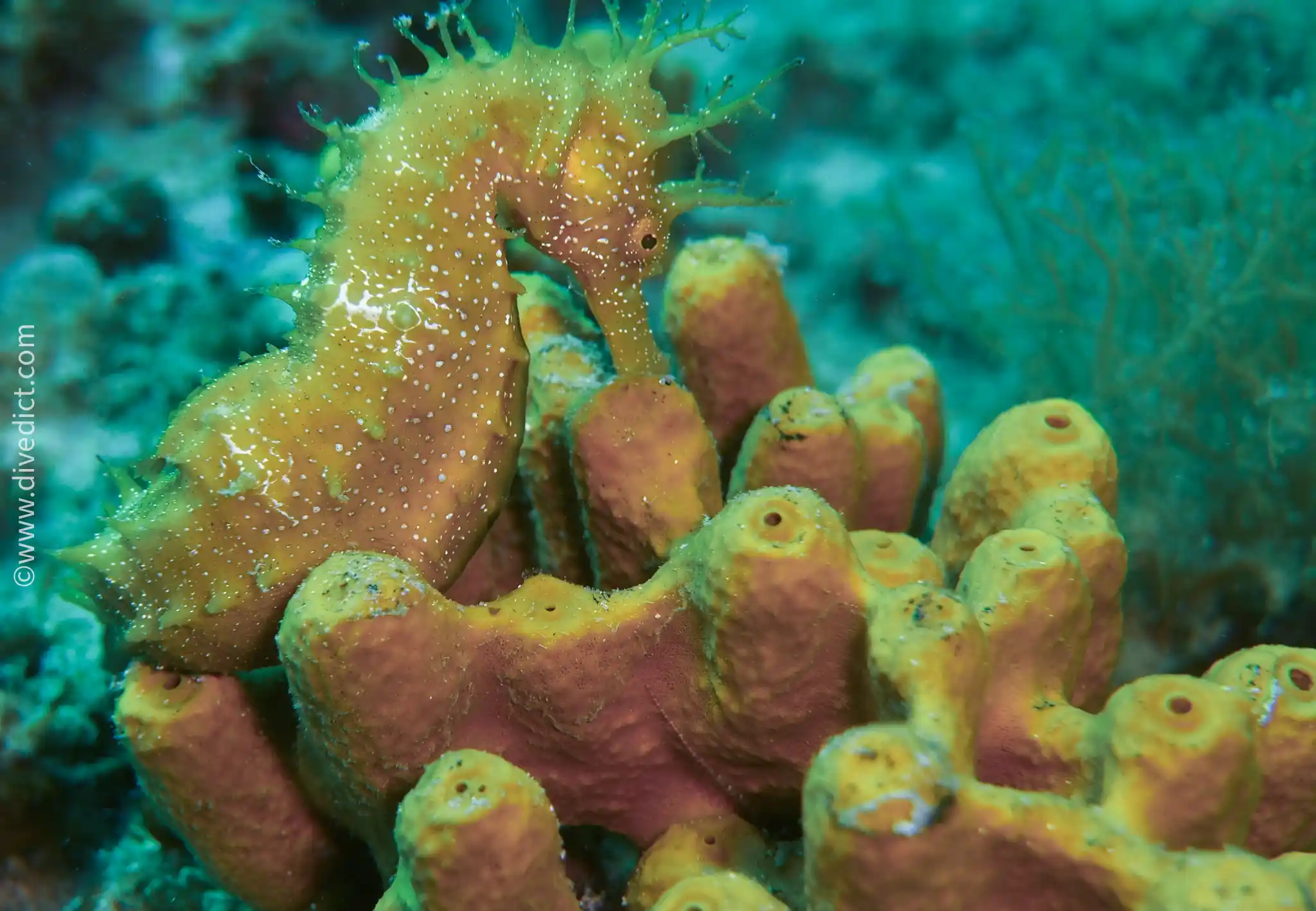
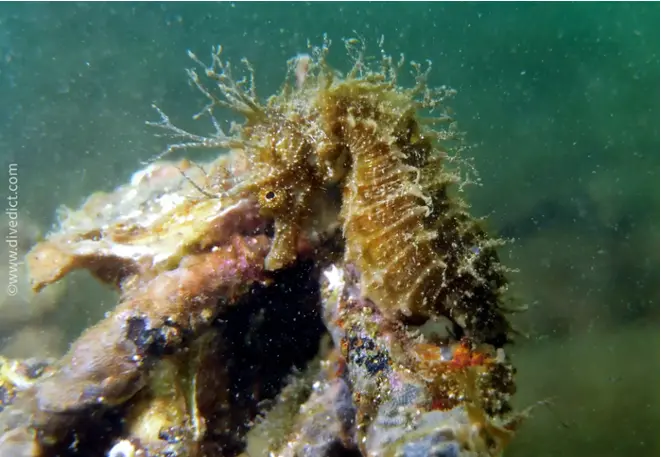
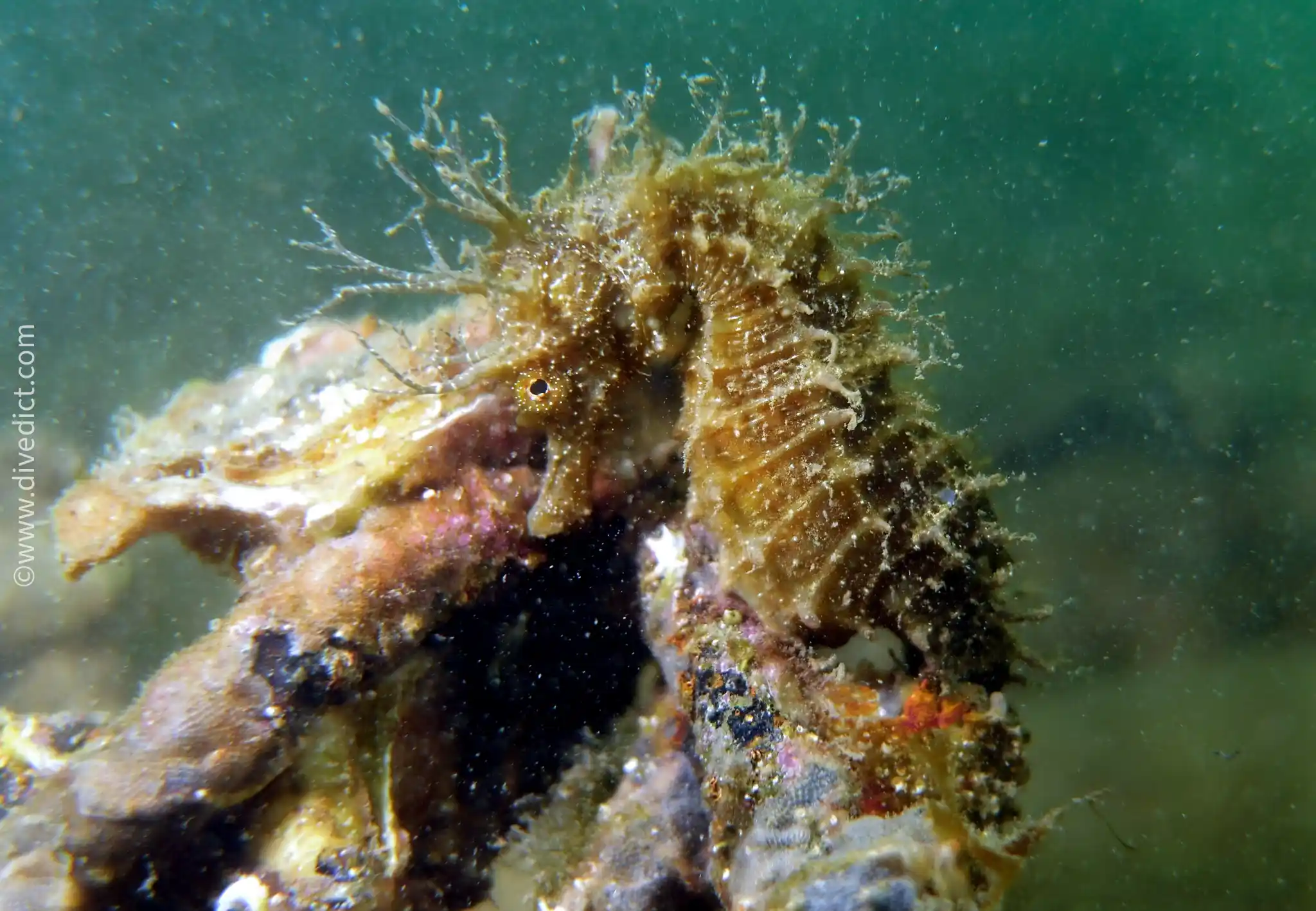
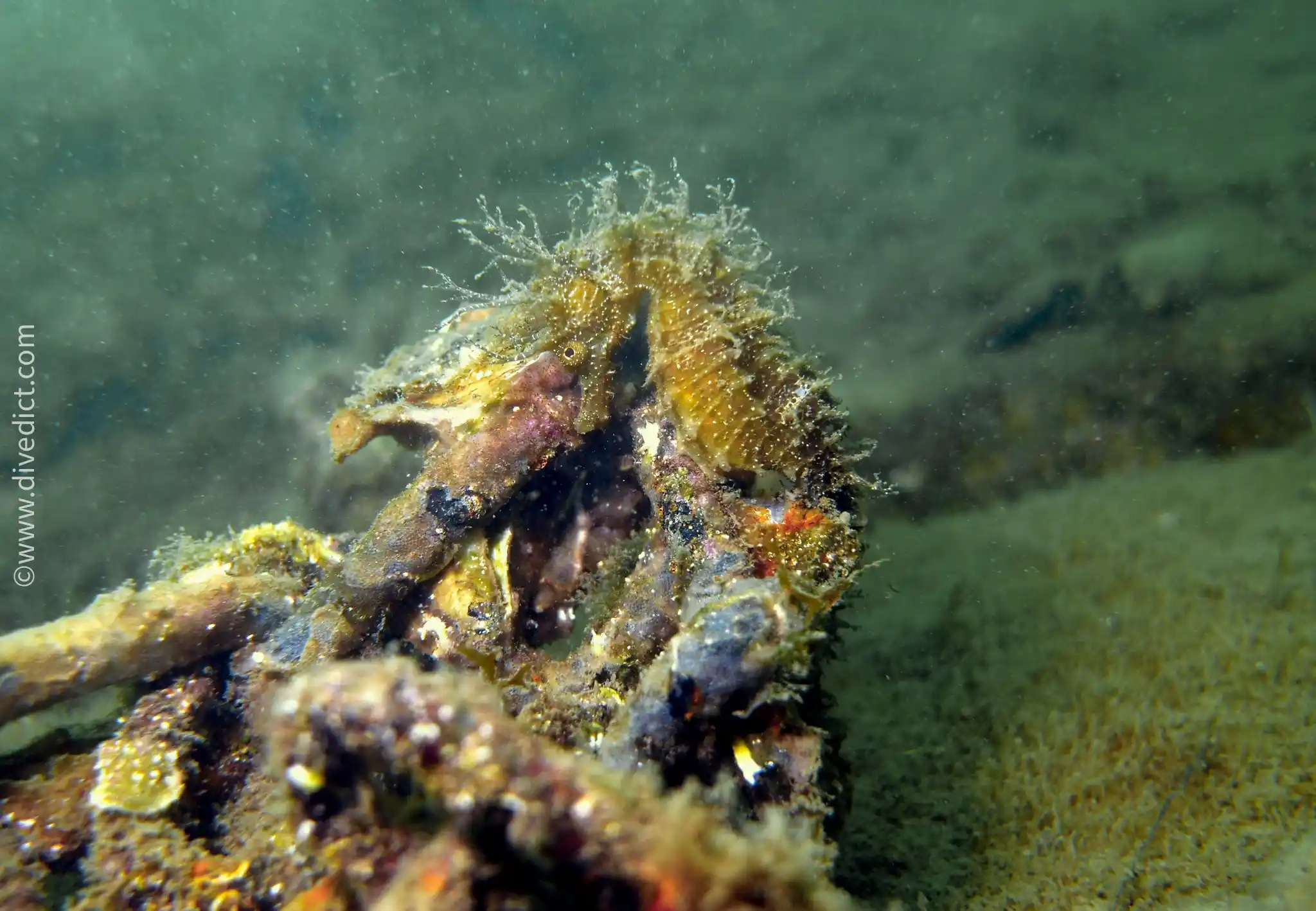
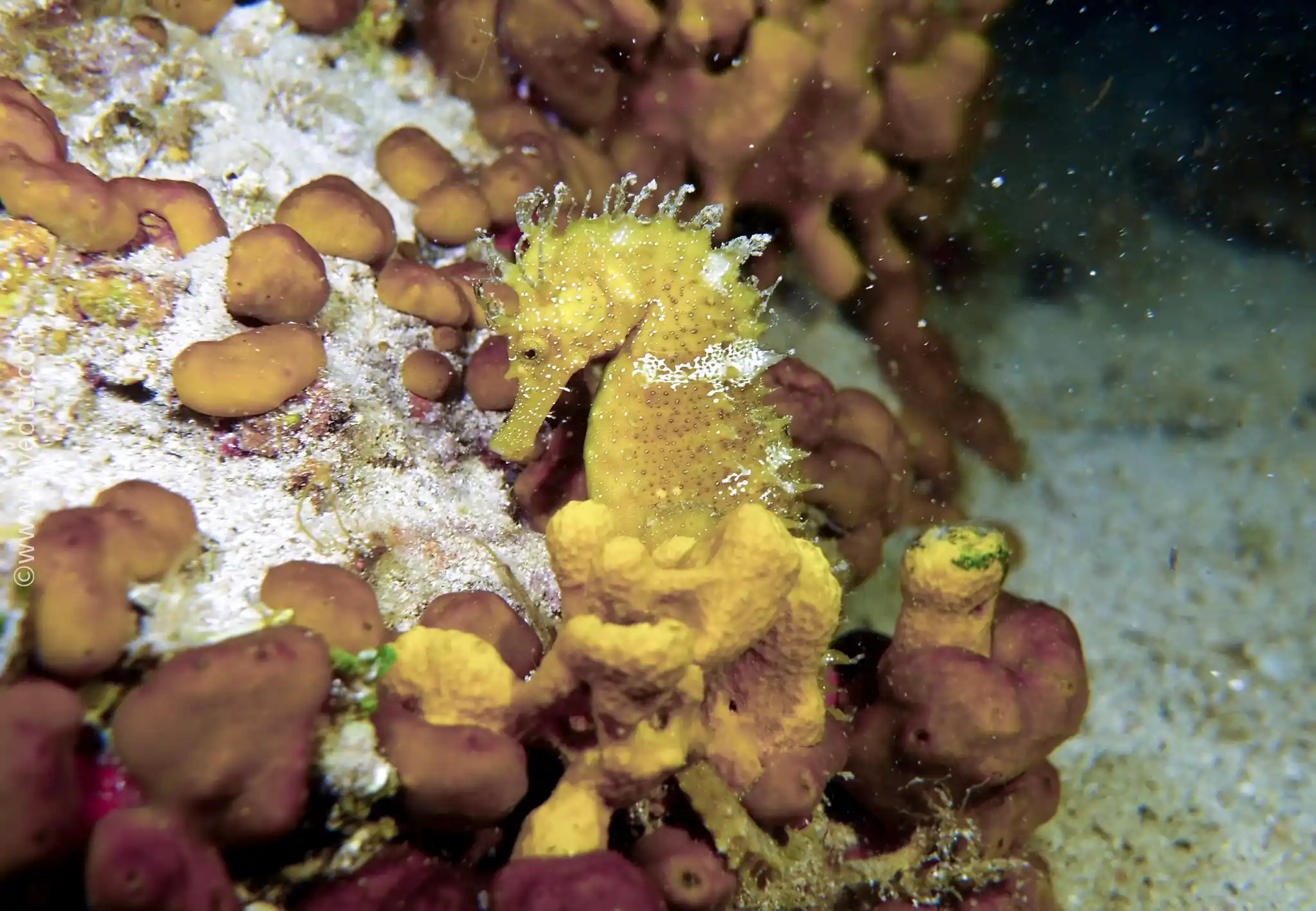
Its base color ranges from yellowish-green to reddish-brown and it becomes 18cm.
His leathery appendages help him to better camouflage.
Their knotty, bumpy surface is caused by the bone plates under their skin.
With the help of his dorsal fin, he manages to maintain an upright posture and stabilizes himself with the pectoral fin.
Like a chameleon, they can move their eyes in all directions independently of each other.
Natural enemies
Predatory fish
Dangerous/Venomous
The Long-snouted seahorse is neither dangerous nor venomous.
Sketch
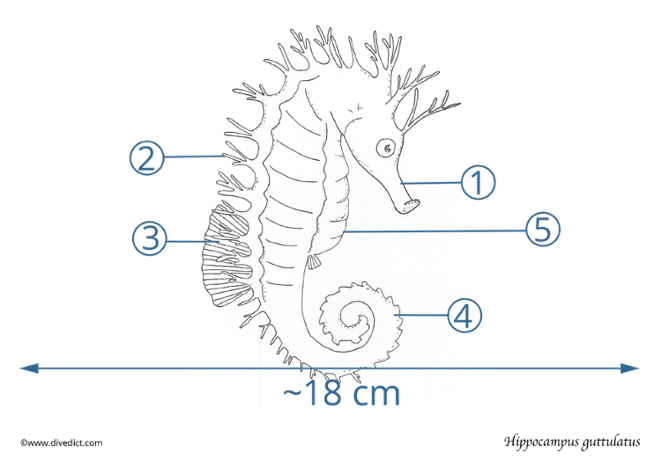
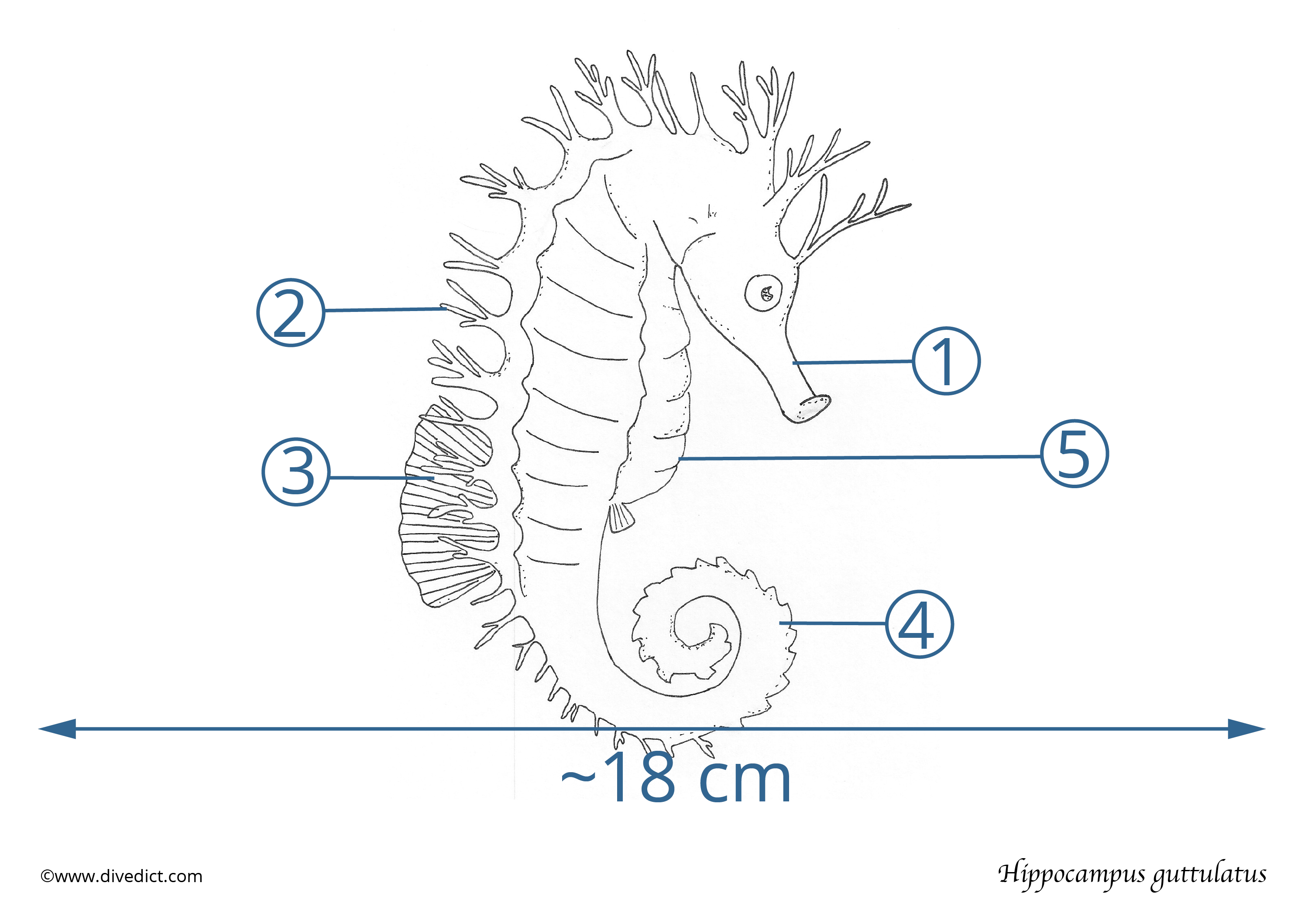
1. Long snout
2. Leather-like appendages
3. Dorsal fin
4. Nodular-crunchy surface
5. Waist bag (for males)
Pro tips
Divers are particularly lucky when they can observe the breeding ritual of Long-snouted seahorses.
A couple entwines each other with their tails and starts a dance that can last up to eight hours.
The dance ends when the female lays up to 1500 eggs in the male's fanny pack.
The male then has the task of protecting them for four to five weeks.
At just 1.6cm in size, the young animals are then left to survive on their own.
With their snout, they suck up crustaceans, larvae, and fish eggs just like with a pipette.
Text: Carolina Leiter, Felician Hosp, Pia Balaka
Pic: Felician Hosp
Illustration: Dive Dict