
Blackspotted rubberlip
Plectorhinchus gaterinus




Special Features
The Blackspotted rubberlip belongs to the family of the so-called grunts and there's a good reason for that: It can actually produce sounds that resemble a soft grunt or creaking. These sounds are not made by vocal cords, but by the rubbing of special teeth in the back of the throat. The vibrations generated are transmitted through the skeleton to the swim bladder, which acts like a resonating body. You can sometimes even hear this while diving!
These fish grunt mainly when they feel threatened, for example, when caught by humans or when a predator comes too close. The sound could serve as a deterrent or warn other fish.
Appearance
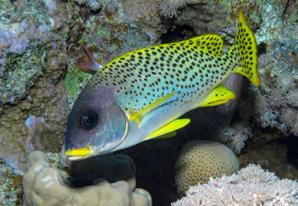
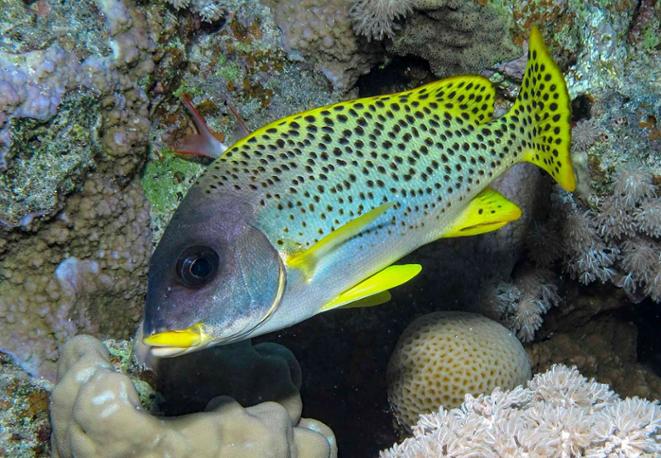
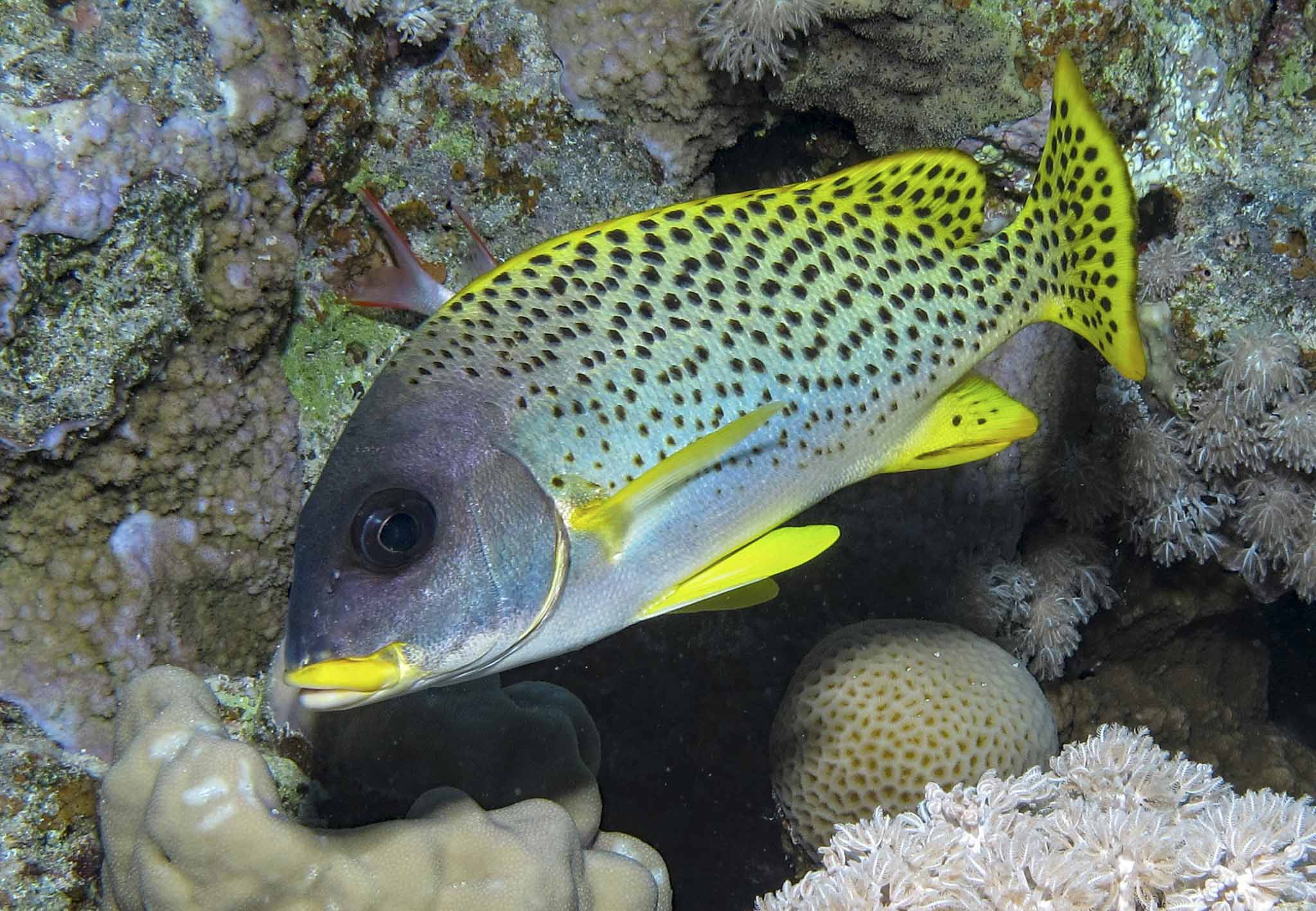
This tropical sea dweller with the scientific name Plectorhinchus gaterinus lives up to its name: It actually has sweet-looking, thick lips and is covered all over with dark spots as if someone had dabbed it with a brush. Juveniles look quite different from adults; they have stripes instead of spots!
Natural Enemies
Groupers, moray eels, sharks, predatory birds
Dangerous/Toxic
The Blackspotted rubberlip is neither dangerous nor toxic.
Pro Tips
Often you can see them during the day in small schools near coral reefs or rock formations, where they glide calmly through the water. If you’re lucky, you might even observe them during their "cleaning service" while snorkeling or diving. They love to be pampered by cleaner fish!