
Dusky grouper
Epinephelus marginatus




Special features
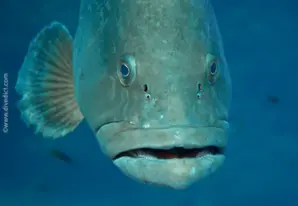
Each Dusky grouper individual is decorated with its very own unique spot arrangement.
However, when the fish dies, it disappears as if it had never been there.
Appearance
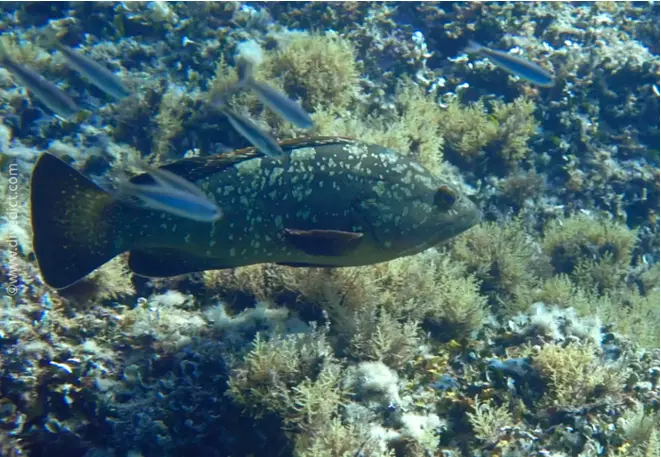
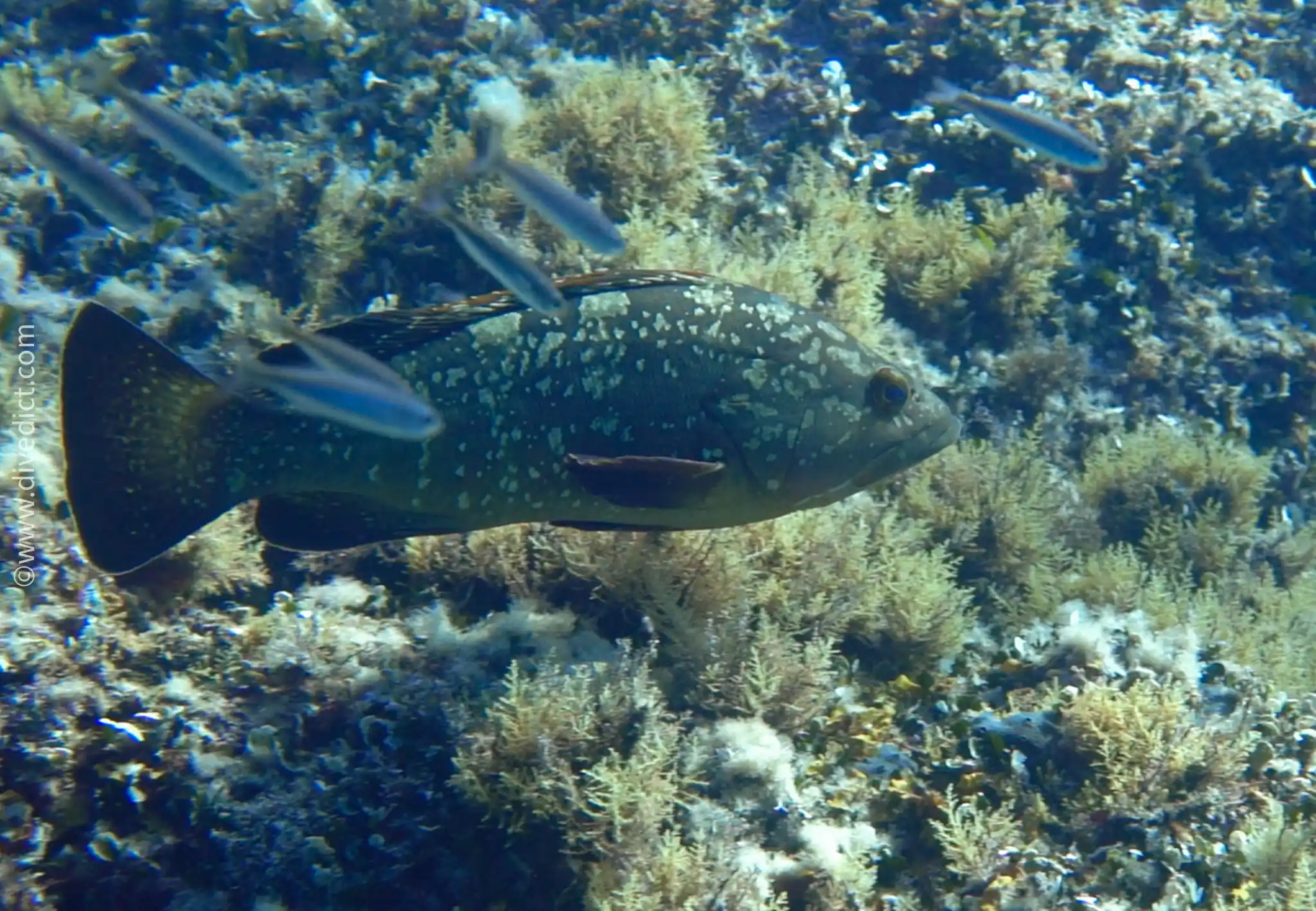
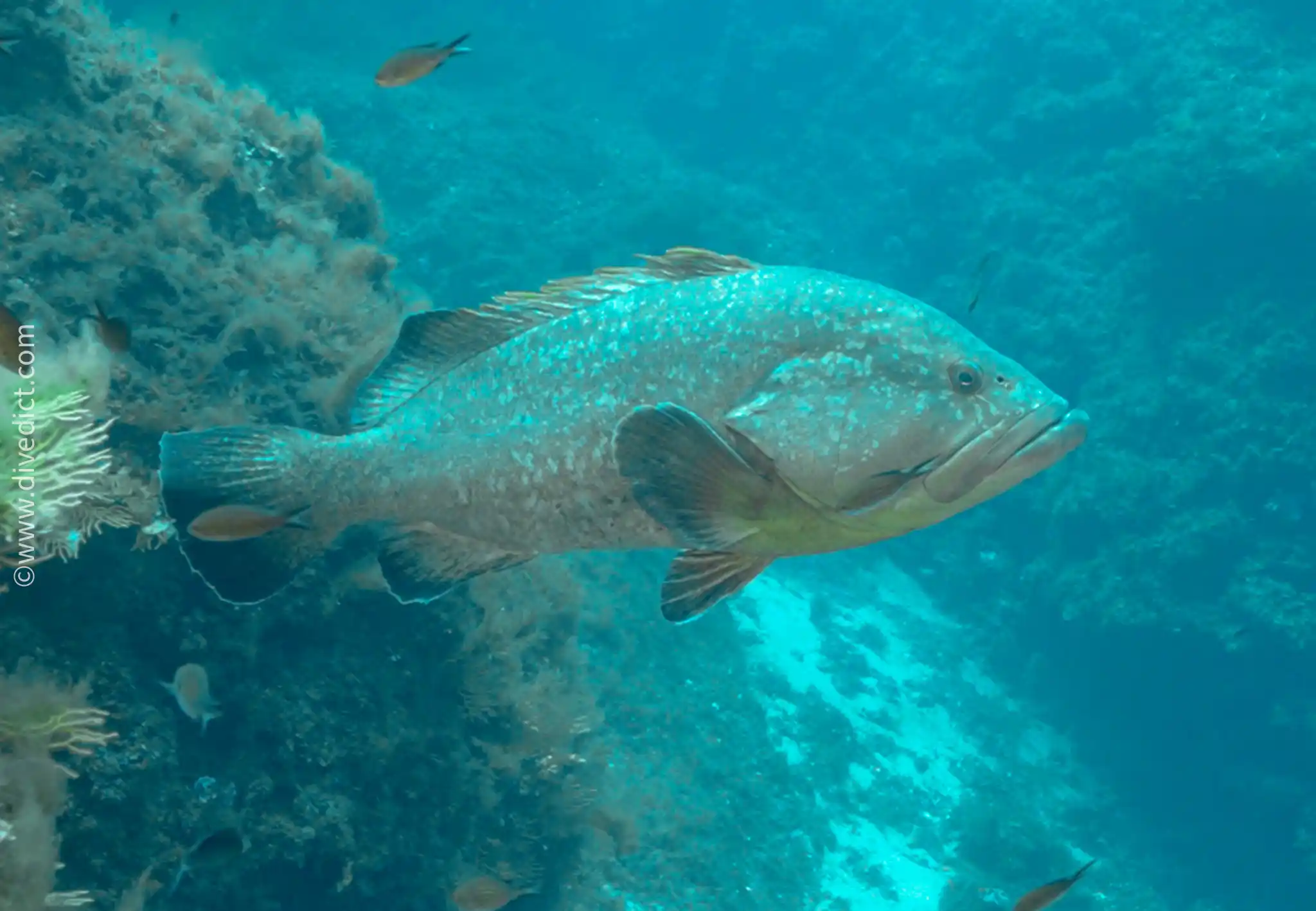
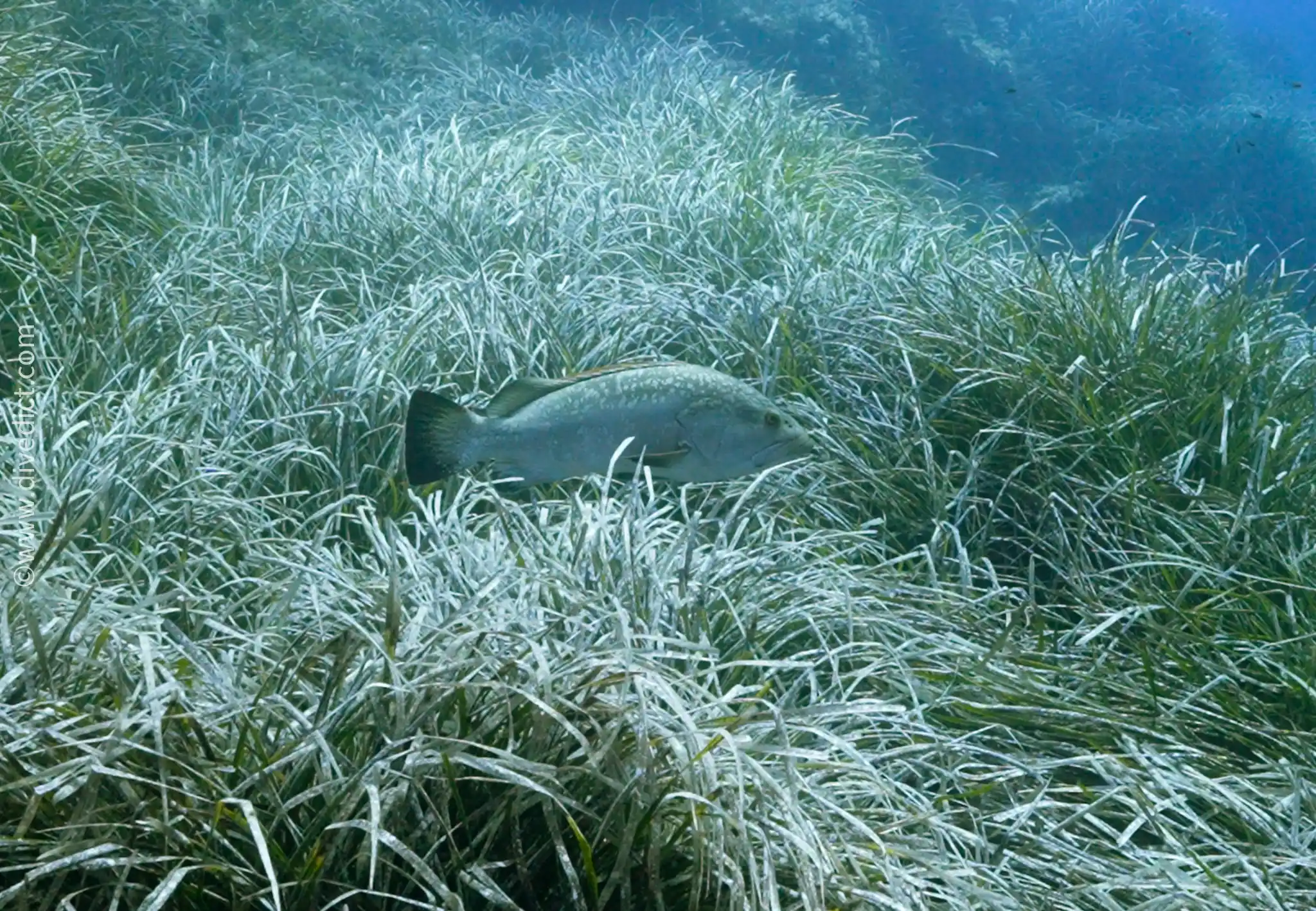
You can immediately recognize it by its massive, oval body, which can be 1 - 1.50m long.
The base color of adult animals is usually chocolate brown with prominent white to greenish spots.
The young animals are often greenish and yellow-spotted.
The first part of the continuous dorsal fin consists of spiny rays, actually 11, while the anal fin is only decorated with 2-3 of them.
The chest and ventral fins have no spines, are rounded like a spatula, and in contrast to the other groupers, the tail remains roundish even in adults.
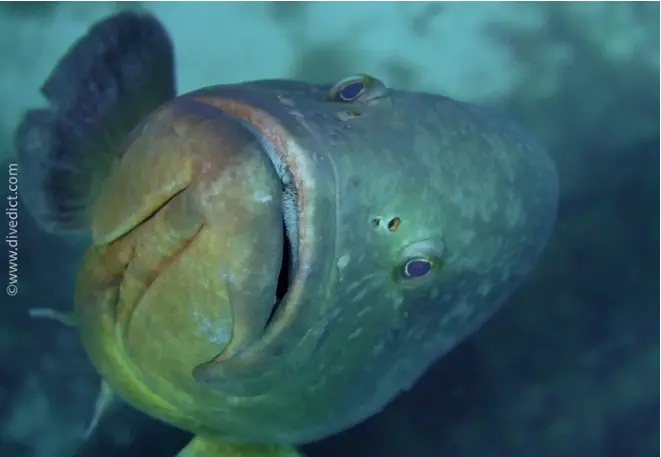
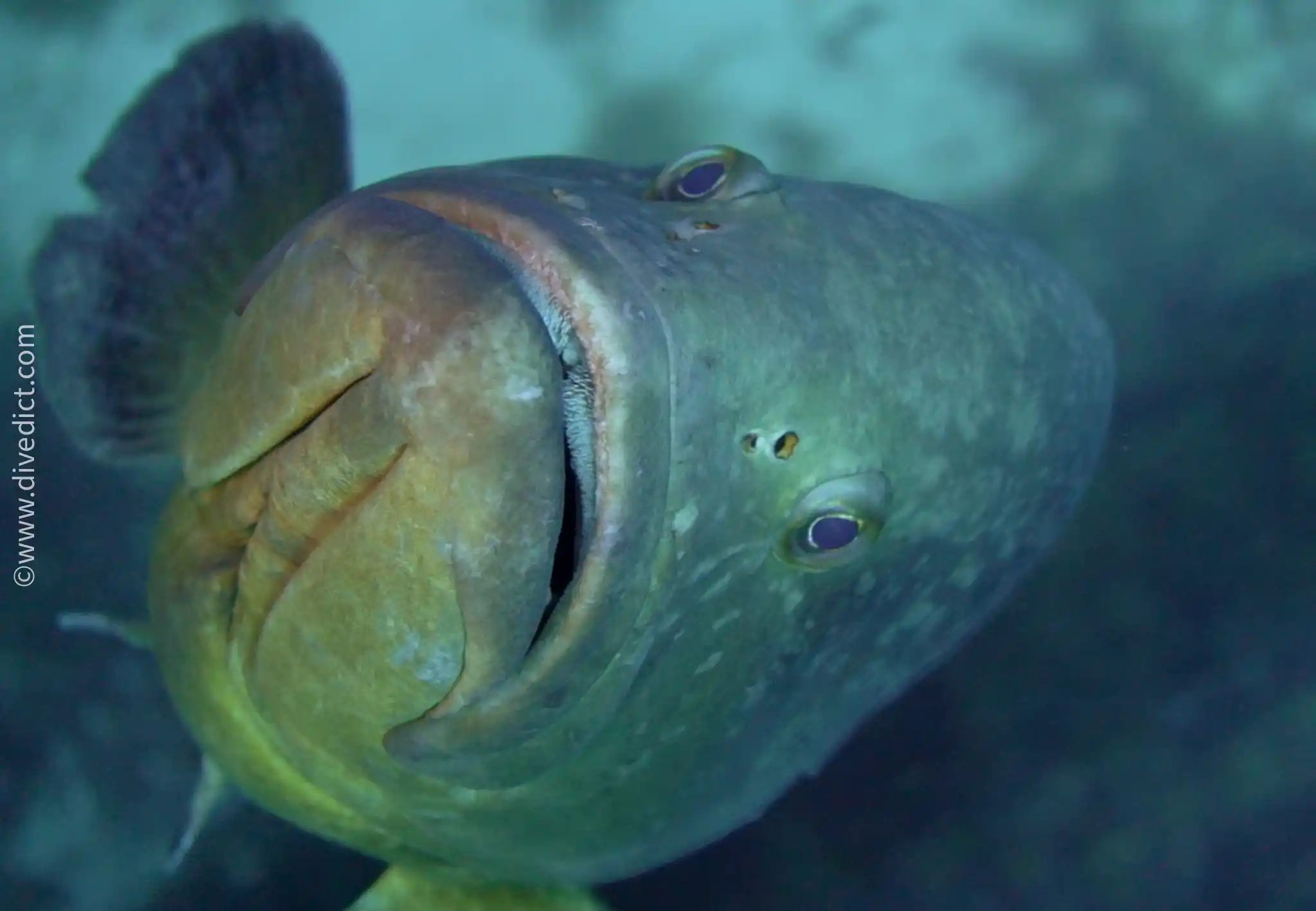
Since it likes to swim around with his mouth open, you can also take a glimpse at his teeth.
On both jaws, we see 4 canines on the front, followed by further, smaller, hook-shaped teeth, and further on the inside of the mouth are two rows of small bites.
These quiet giants can weigh up to 90kg and live a proud 50 years.
Natural enemies
Sharks
Dangerous/Venomous
Brown grouper is neither dangerous nor venomous.
Sketch

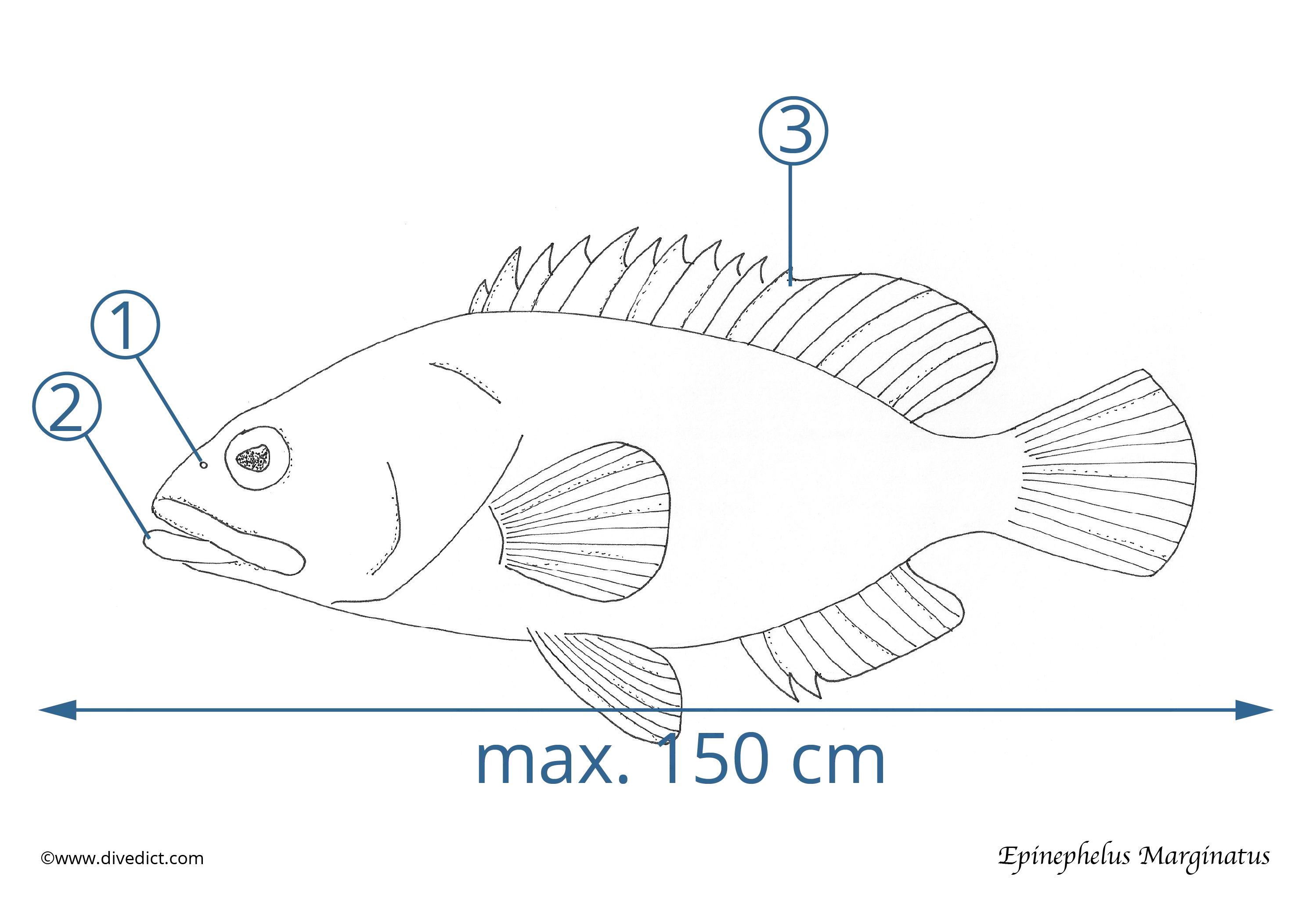
1. Head curved downwards
2. Thick lips, mostly open mouth
3. Continuous dorsal fin with spiny rays
Pro tips
It is certainly one of the biggest and most popular fish in the Mediterranean.
Since transmitters were attached to some individuals, it was discovered that they are very location-loyal creatures.
Once they find a territory with several shelters, one of which they always use as a sleeping den, and with a good hunting area nearby, the will keep them for years.
They lead a solitary life.
Only during mating season (July - September) do they form small groups consisting of one or two males and a few females.
If the females are in surplus or a male dies unexpectedly, the older ladies change sex in the interest of the species.
The eggs, which are fertilized in the open sea, are then entrusted to the currents.
Females become sexually mature at approximately five years of age or when they are 50cm tall. By the age of 12 and a body size of approximately 75cm, they can change their sex if necessary.
From its size and bulky shape, you might not guess that it is fast, but it can certainly push forward quickly and catch fish that are actually faster and more agile than him.
However, chases aren't really his thing after all.
In addition to fish, his favorite foods include cephalopods and crabs.
Unfortunately, many people also like to see Dusky groupers on their plates.
Once upon a time, this species was widespread in the Mediterranean, but due to excessive fishing, the population has been declining everywhere.
The whole thing took on such proportions that in some countries, for example in the Principality of Monaco, both industrial and sport fishing of Dusky groupers were banned by law.
By the way, the genus Epinephelus derives from the Greek word “epinefes”, “cloudy”, with reference to the often indefinite and changing facial expressions of these fish, while the Latin term “marginatus”, “with a border”, refers to the fins with their clear edges.
Text: Carolina Leiter, Felician Hosp, Pia Balaka
Pic: Felician Hosp, Sabine Probst
Illustration: Dive Dict