
Golden grey mullet
Chelon auratus




Special features
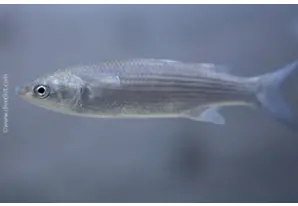
The Golden grey mullet is the smallest type of mullet, but nonetheless, it is difficult to tell them apart from other mullet species.
It carries its name because of the yellow-gold spot on its gill cover.
Appearance
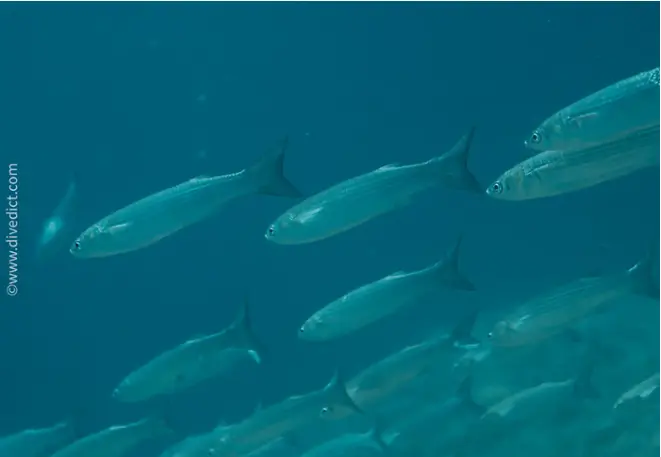
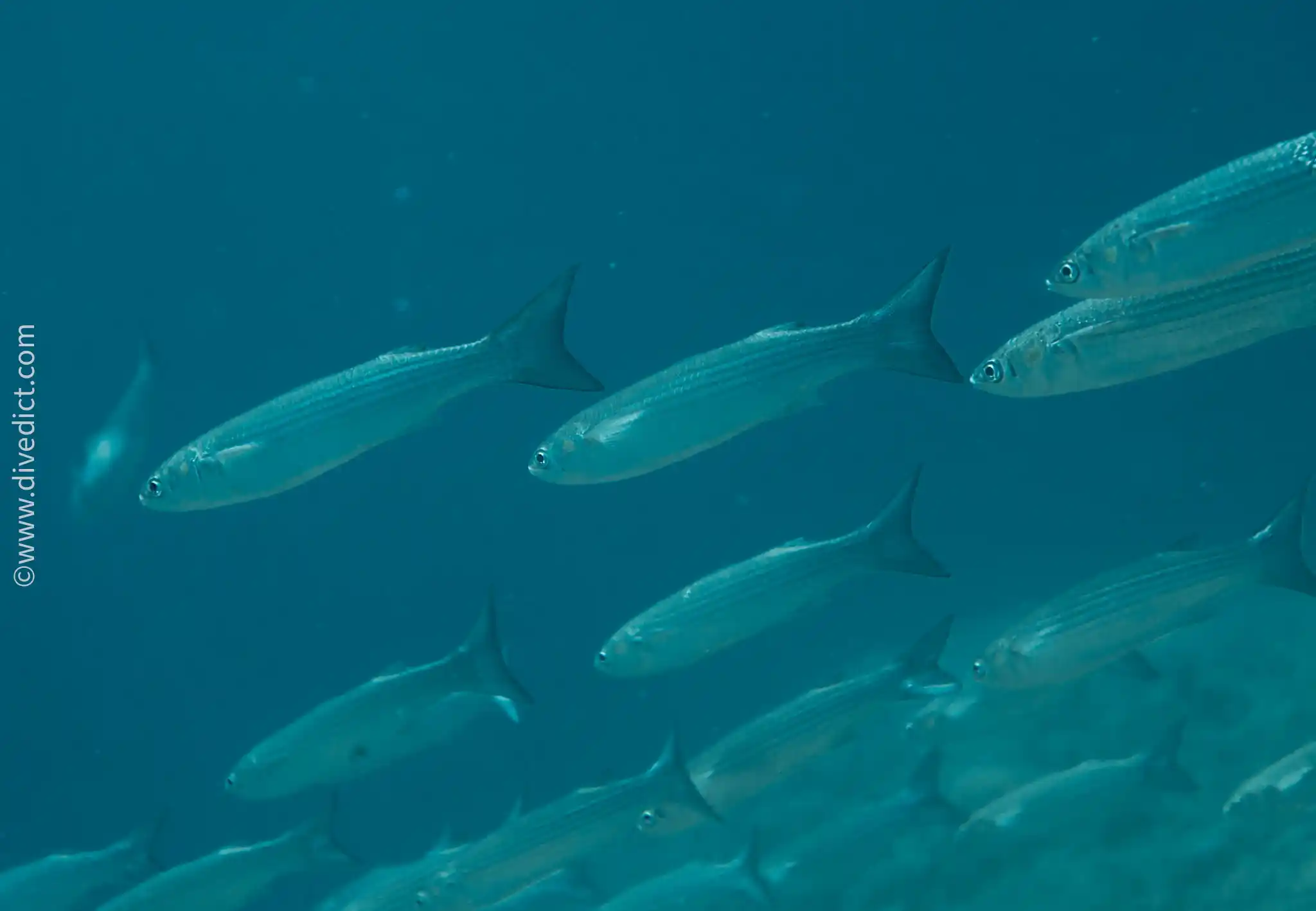
The Golden grey mullet is a fish as it is in the book: It has an elongated, spindle-shaped body, two short dorsal fins and large, shiny silvery scales.
The head is elongated and the lips and teeth are small. Their body size fluctuates between 30 and 60cm.
Natural enemies
Bluefish (Pomatomus saltatrix)
Dangerous/Venomous
The golden mullet is neither dangerous nor venomous.
Sketch
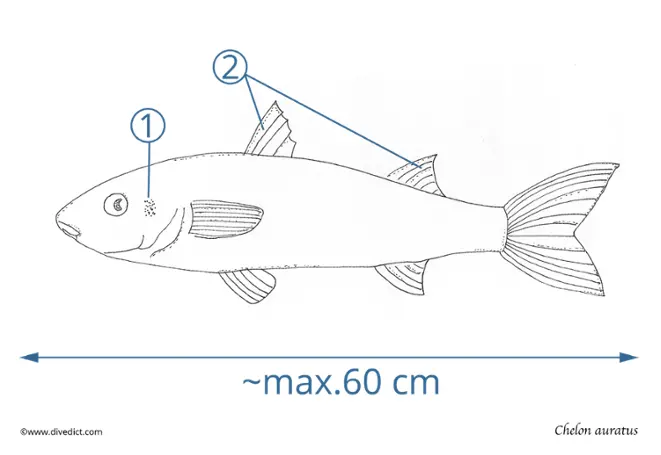
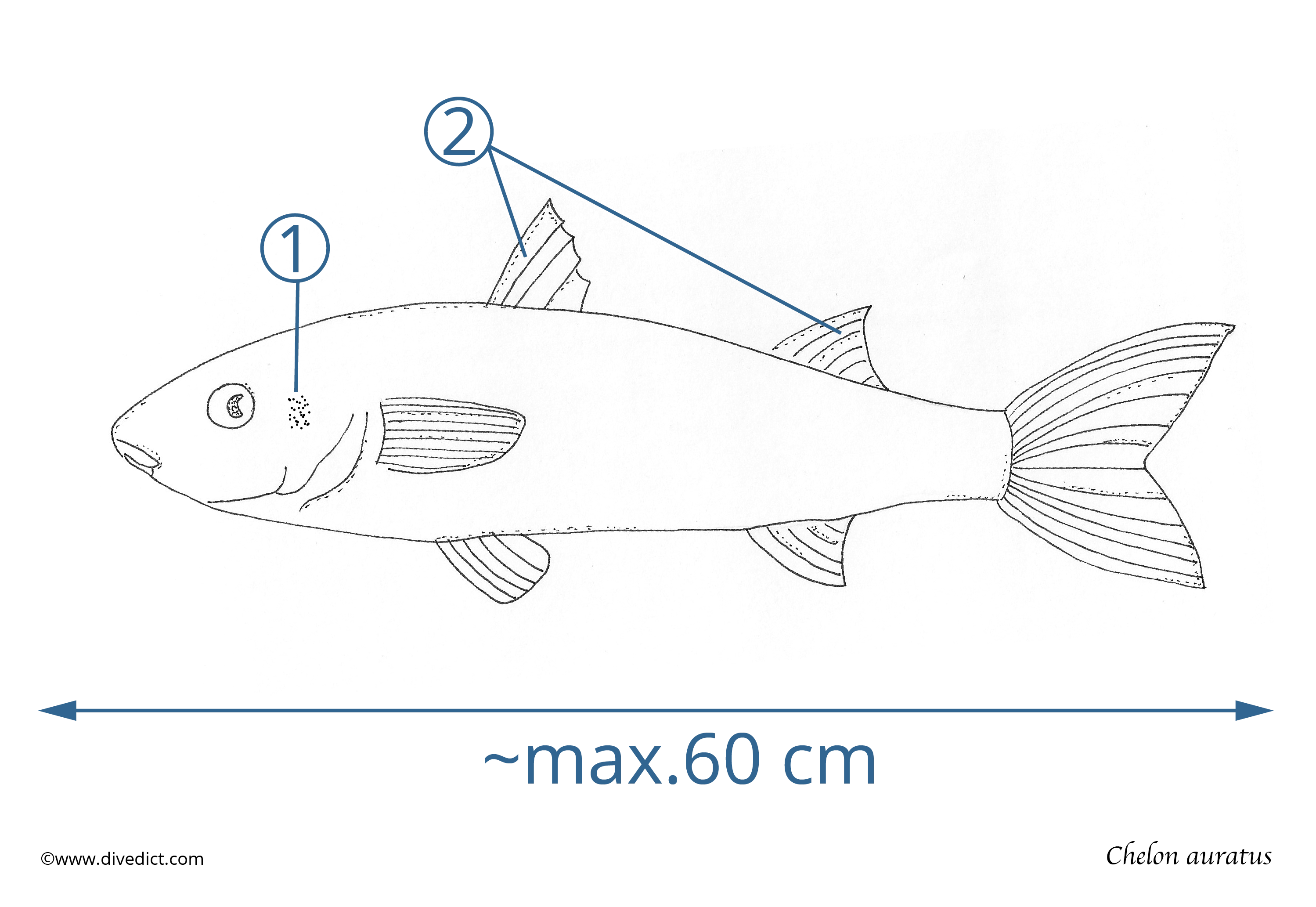
1. Yellow-gold spot on gill cover
2. Separate, delicate dorsal fins
Pro tips
If you search for the Golden grey mullet, you will find it in shallow, muddy coastal areas, where it digs in the ground in small schools and searches for dug-in invertebrates.
Throughout their life, they stay in many different habitats, as they are not particularly picky.
They can be found in the sea, but also in brackish water and freshwater, and even in polluted areas such as harbors or closed bays.
During the mating season from July to November, the adult Golden grey mullets form flocks to find a suitable place to lay eggs.
Young animals spend their first winter and spring near the coast, lagoons, and estuaries they are protected from predators.
Text: Carolina Leiter, Felician Hosp, Pia Balaka
Pic: Felician Hosp
Illustration: Dive Dict