
Clearfin lizardfish
Synodus dermatogenys




Special features
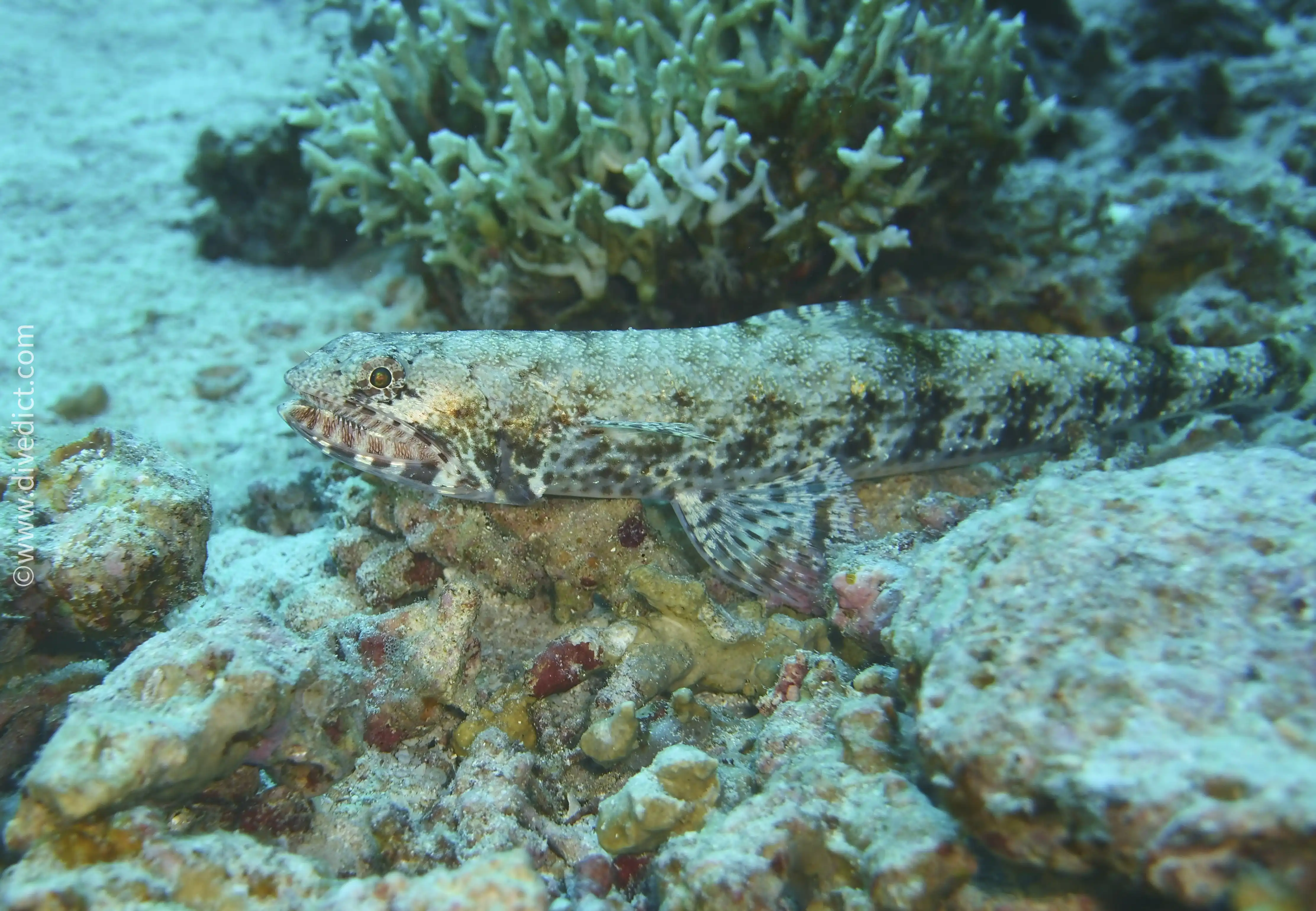
Likes to support his body with his pectoral fins to proudly hold his head high.
Appearance
Its bright, cylindrical body is decorated with eight to nine dark side spots. His many sharp teeth can usually be easily recognized by holding his mouth slightly open.
Natural enemies
Predatory fish
Dangerous/Venomous
The sand lizardfish is neither dangerous nor venomous.
Sketch

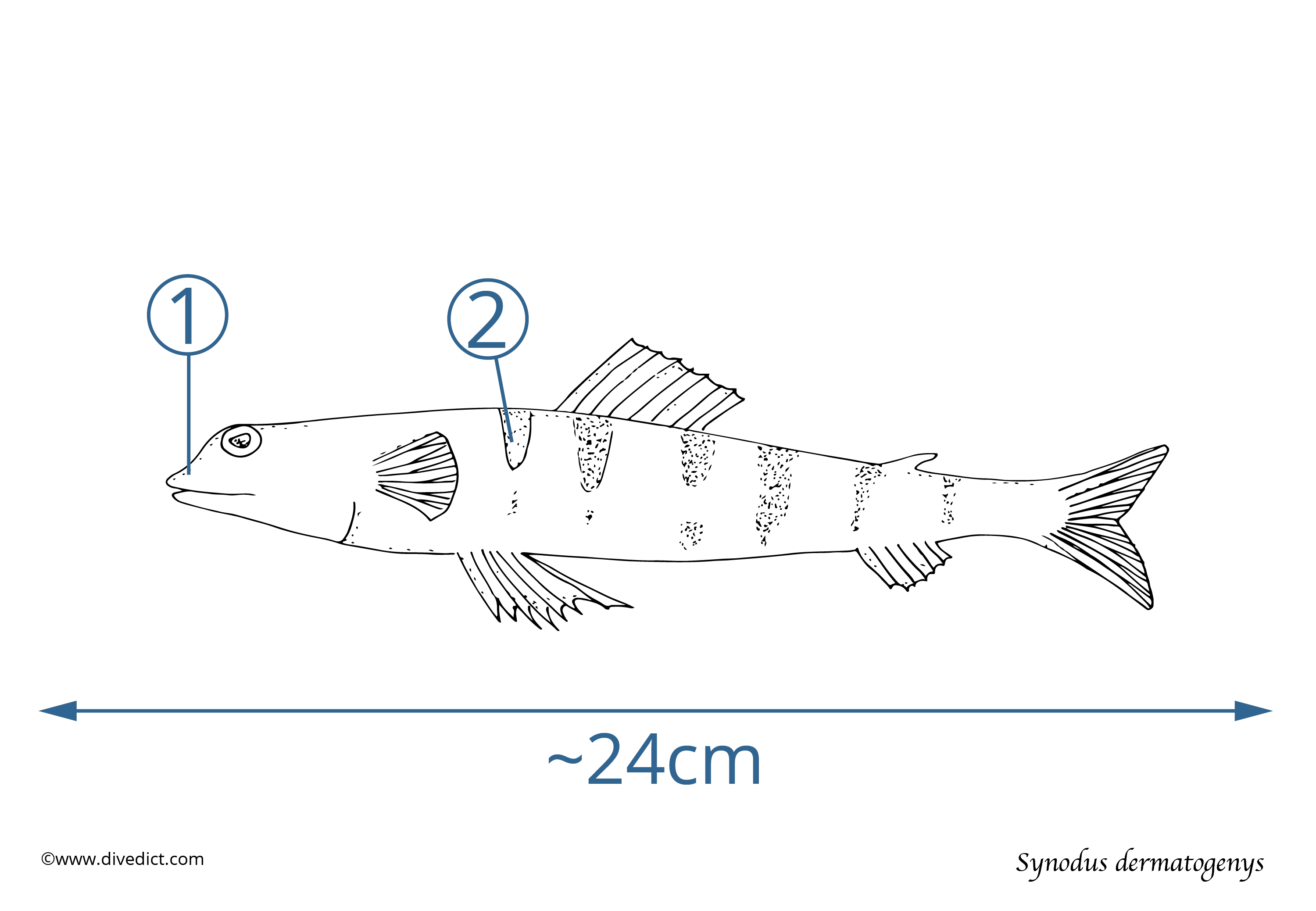
1. Pointed snout
2. Dark stripes
Pro tips
They are common in lagoons and outer reefs, where they lurk individually, in pairs, or in small groups on sand or debris for prey. Sometimes they're buried in the sand down to the eyes and nostrils. When prey passes by, they push forward at lightning speed and devour it whole. Sometimes they climb up a few meters vertically to surprise and devour their prey from below.
Although they are lurking hunters, they change positions every few minutes.
They let considerate divers get quite close to them, flee quickly at the last moment and settle in lurking position a few meters away.
The different species are difficult to distinguish from each other underwater because they all look very similar.
Text: Carolina Leiter
Pic: Felician Hosp
Illustration: Dive Dict