
Flying gurnard
Dactylopterus Volitans




Special features
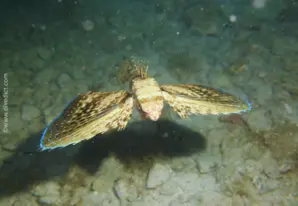
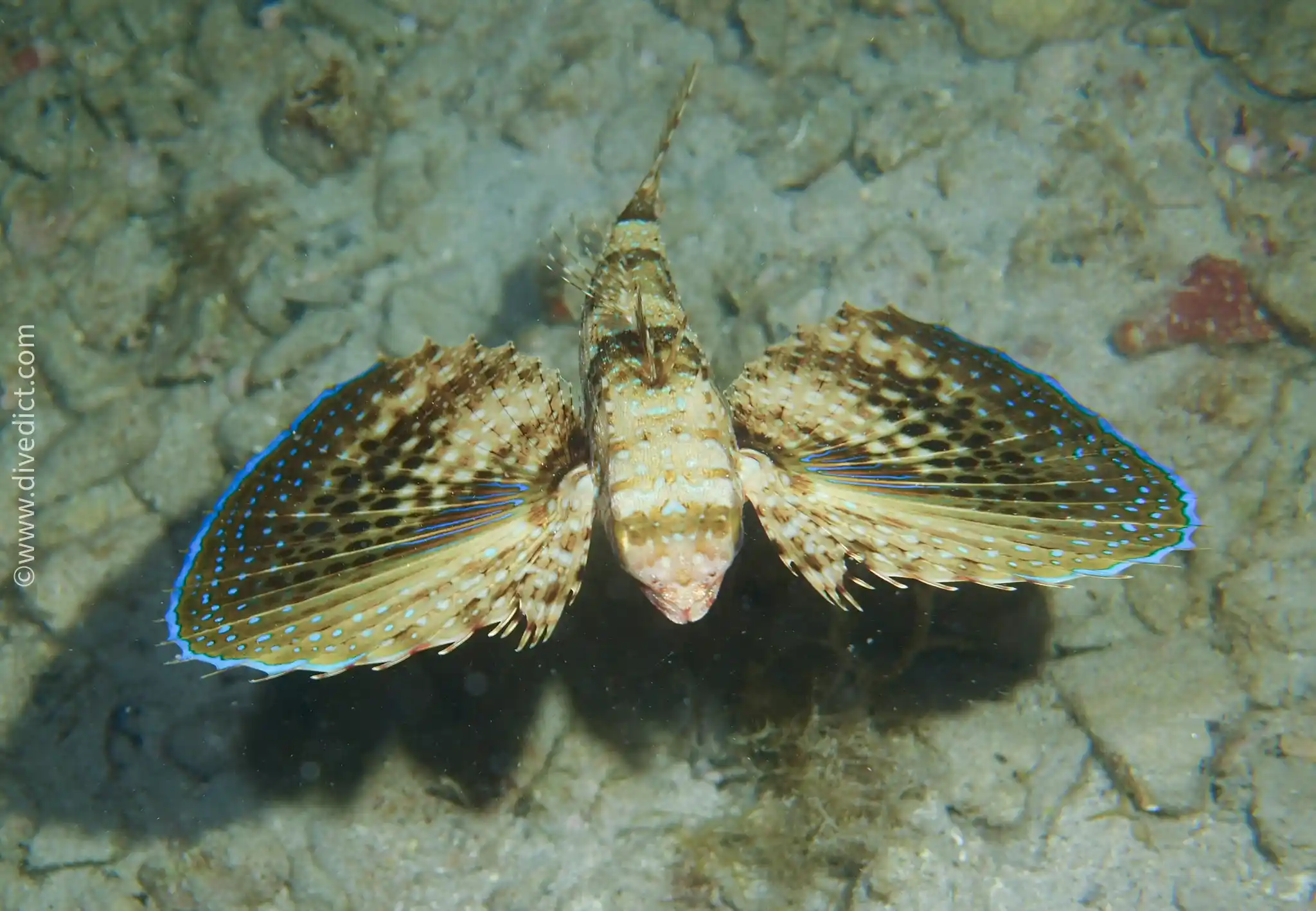
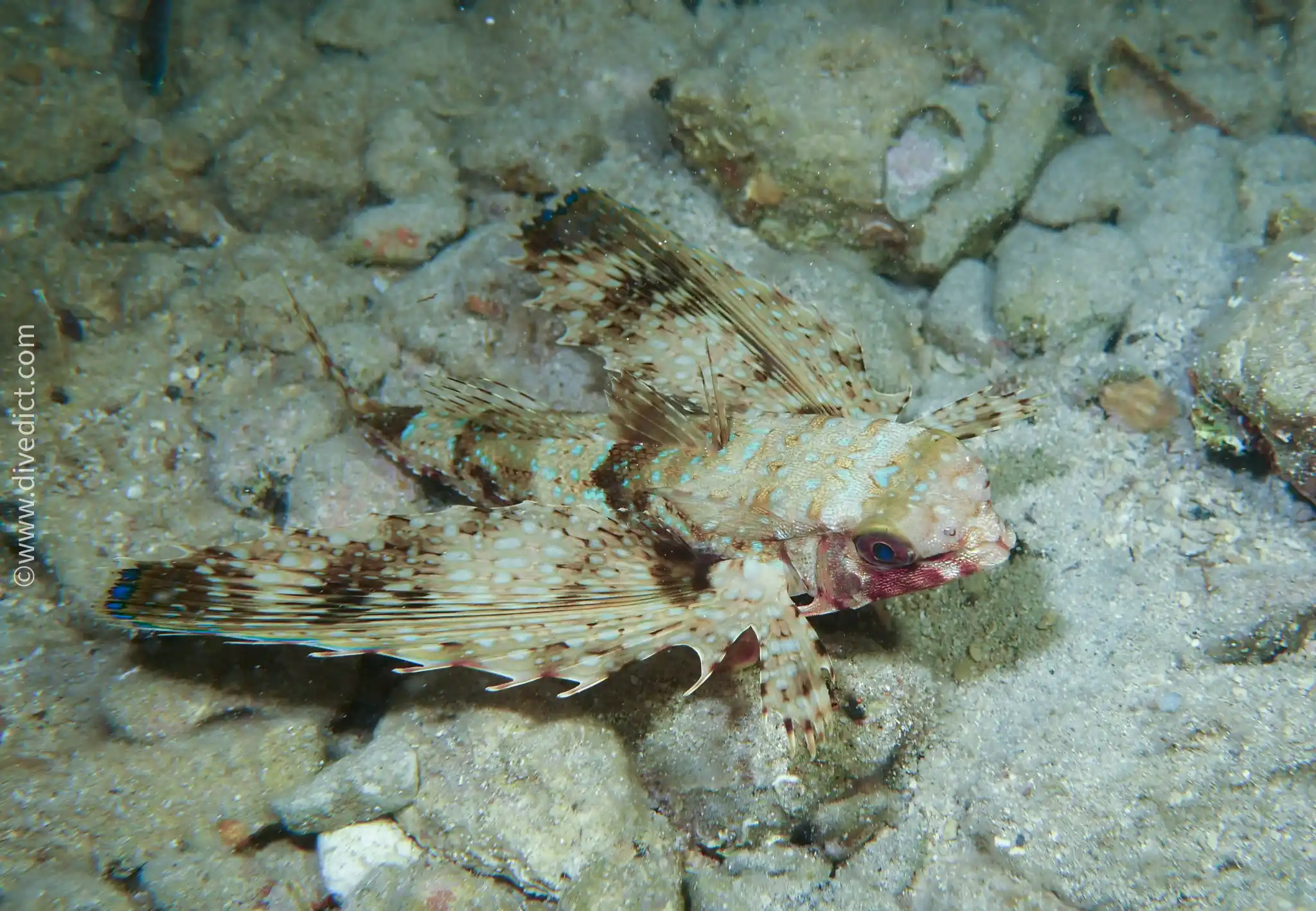
It was thought that the Flying gurnard could fly out of the water with its wing-like pectoral fins.
Though, this is a myth, as he actually prefers the seabed as his home.
With its “wings”, it glides elegantly across the ocean floor or scares off enemies.
Appearance
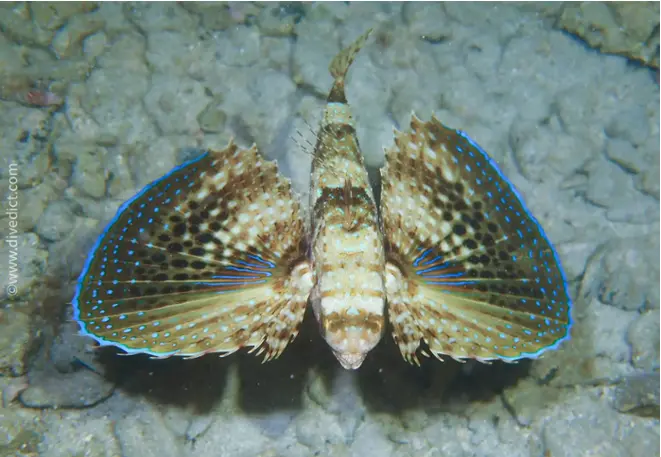
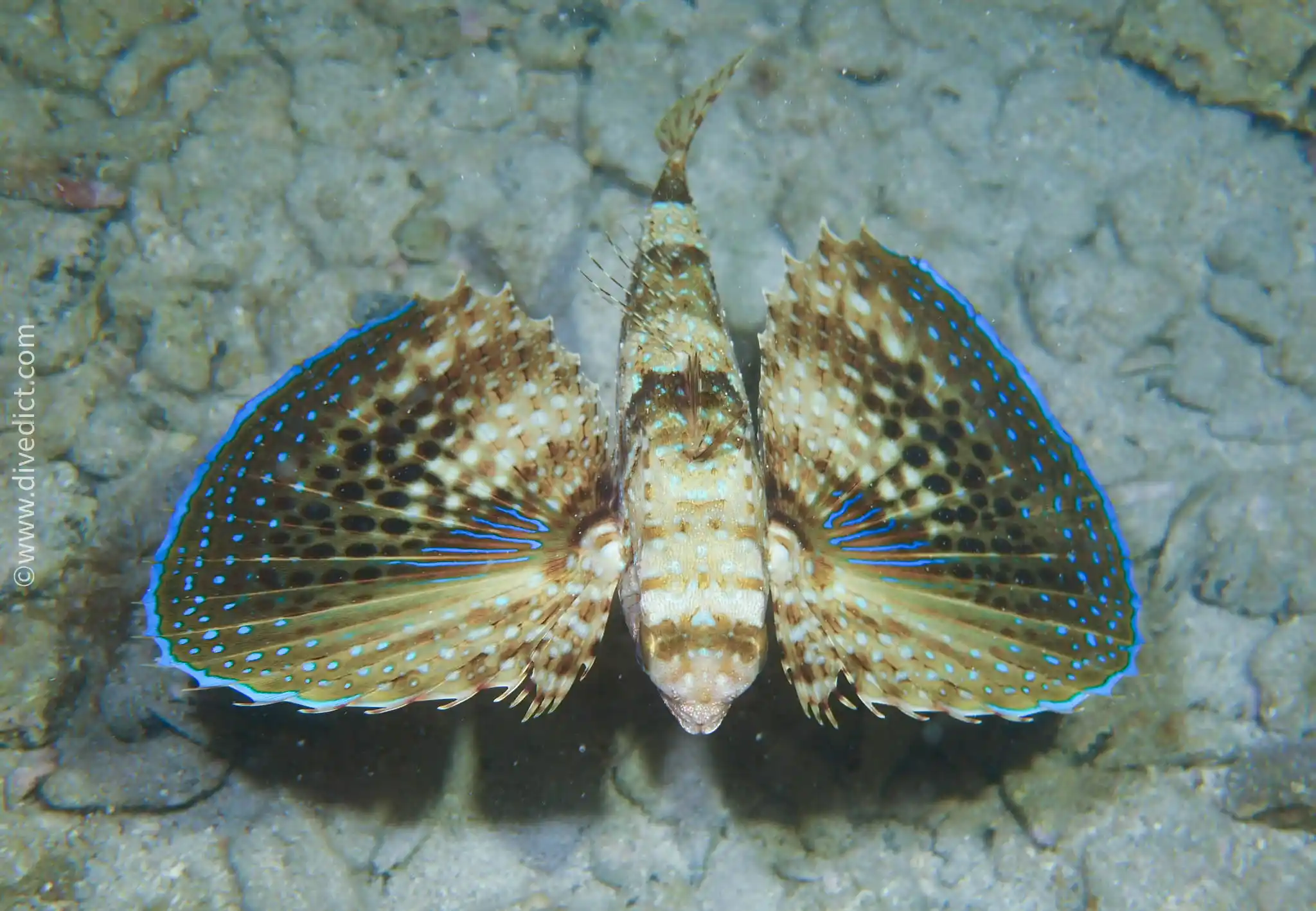
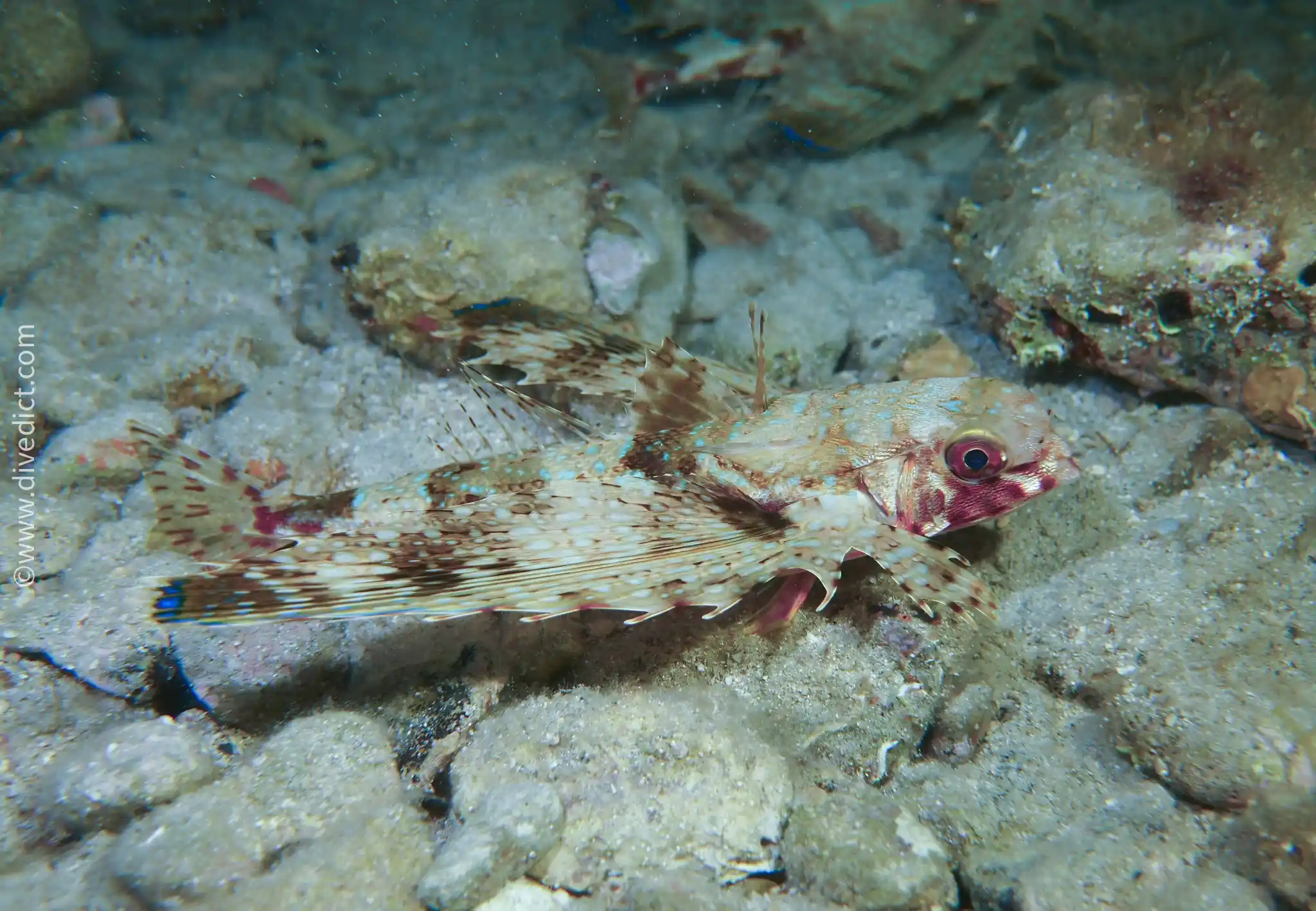
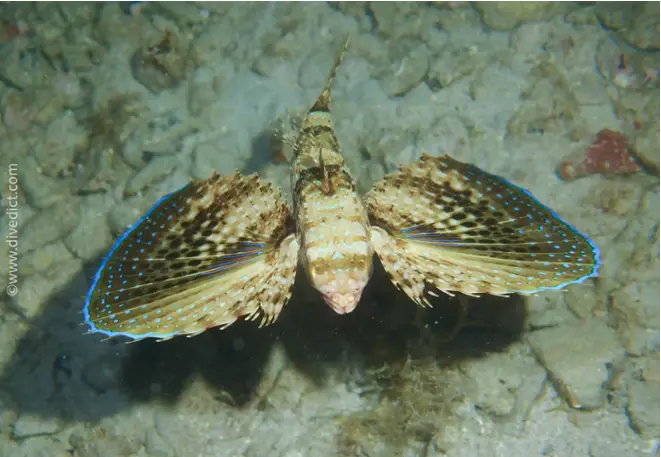
The strikingly large pectoral fins, which are reminiscent of wings, are decorated with blue spots and stripes at the tips.
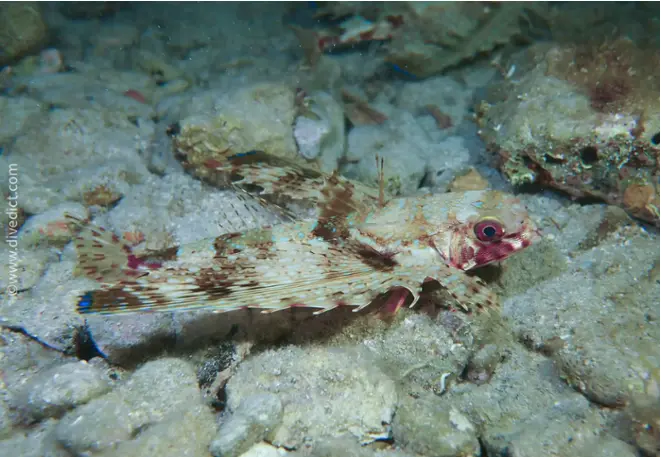
His square-shaped head with remarkably large eyes is characterized by a steep, flat forehead.
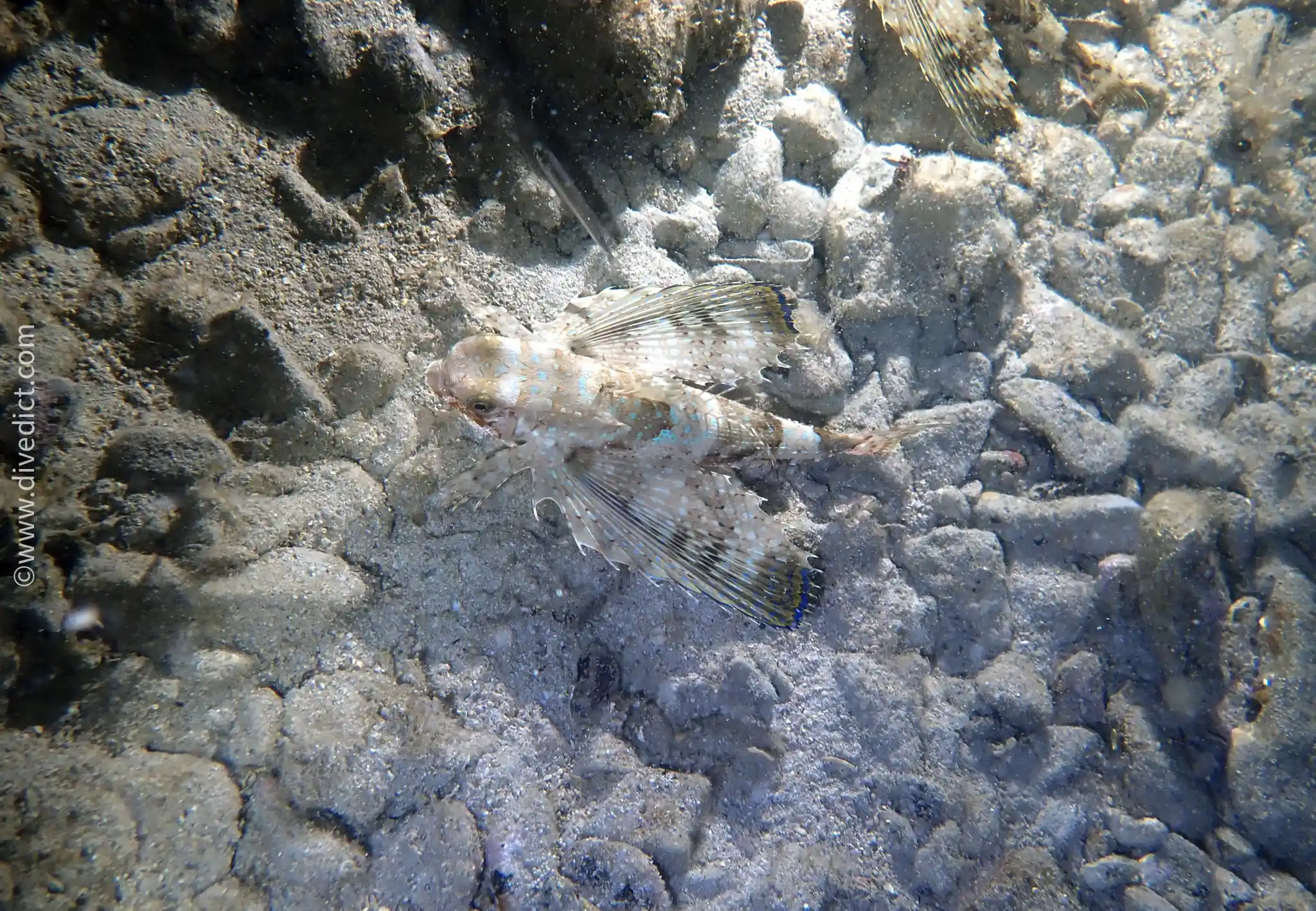
His “wings” are nice to look at, but he usually uses his smaller and more discreet fins on his stomach to move around.
Thanks to its sand-colored and slightly spotted body, its appearance blends smoothly with its habitat.
Natural enemies
Predatory fish
Dangerous/Venomous
This species is neither dangerous nor venomous.
Sketch
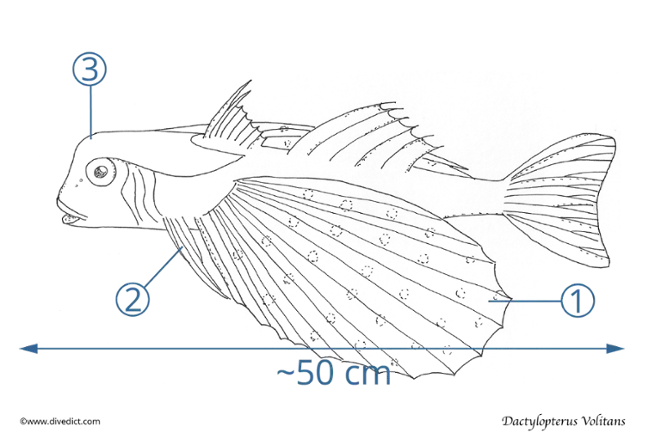
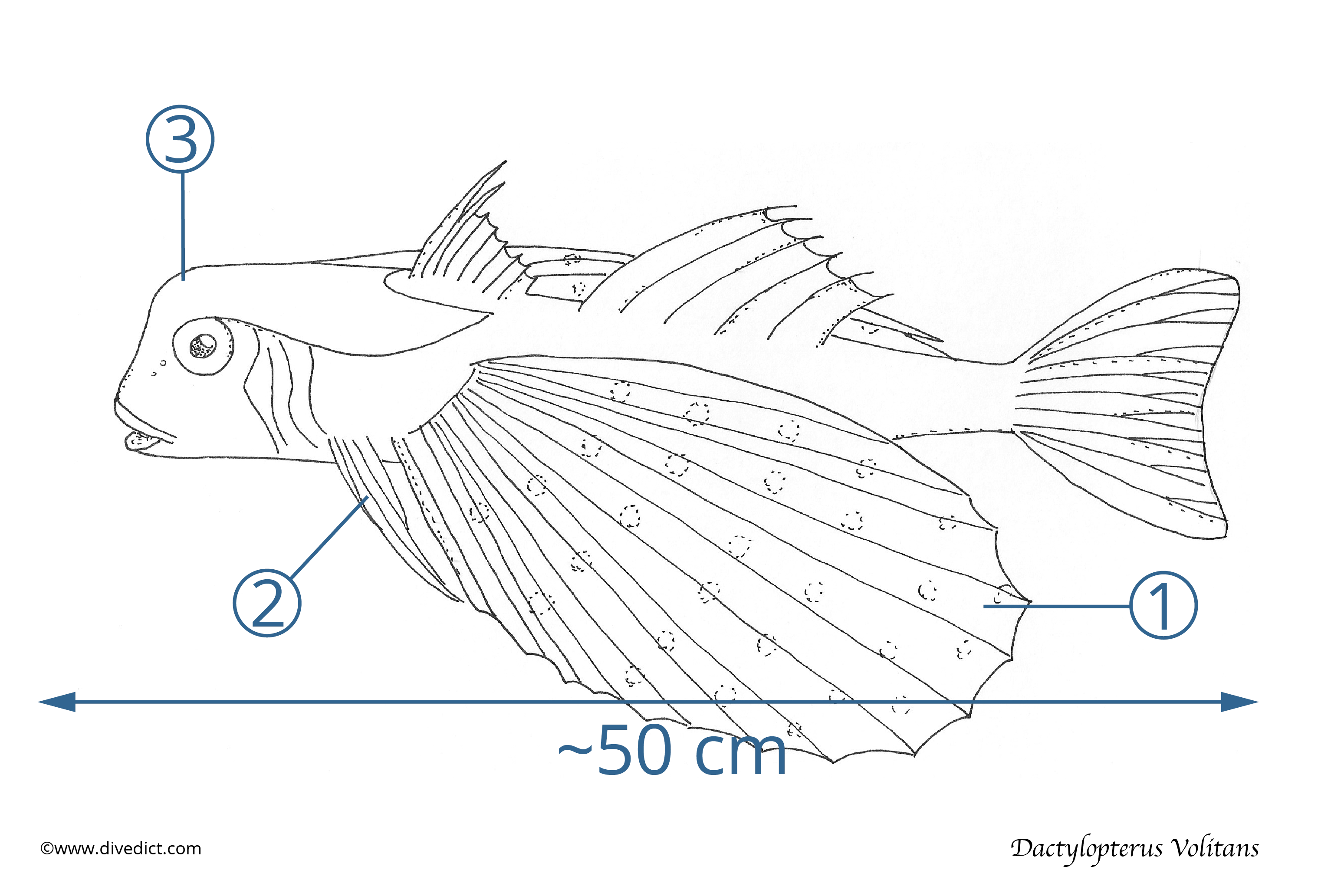
1. Wing-like pectoral fins
2. Tactile organ
3. Square forehead
Pro tips
When Flying gurnards feel threatened, they scare their enemies by spreading their winged pectoral fins. This gives them a few seconds to flee.
Contrary to their name, Flying gurnards are most likely to be found near the bottom of the sea, preferably at night, and equipped with a flashlight so that their shadow makes it easier to recognize them on the sandy bottom.
They may even spread their "wings", but this behavior shows they feel threatened, so don't stay around them for too long!
Flying gurnards are hunters of small fish, crabs, mollusks, and worms.
They mate in summer, causing the eggs to drift through the accumulation of oil droplets on the surface.
Text: Carolina Leiter, Felician Hosp, Pia Balaka
Pic: Felician Hosp
Illustration: Dive Dict