
Wide-eyed butt
Bothus podas




Special features
The species name “podas” derives from Greek and means foot.
The long-eyed butt also looks a bit like that.
The German name “Weitaugenbutt” also says it all, because the eyes are very wide apart — especially for males.
Appearance
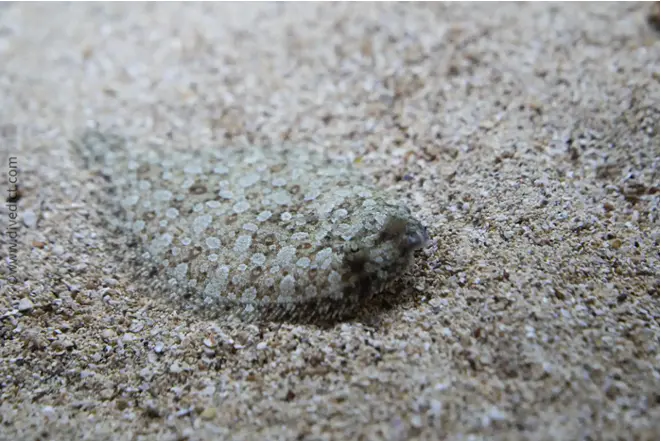
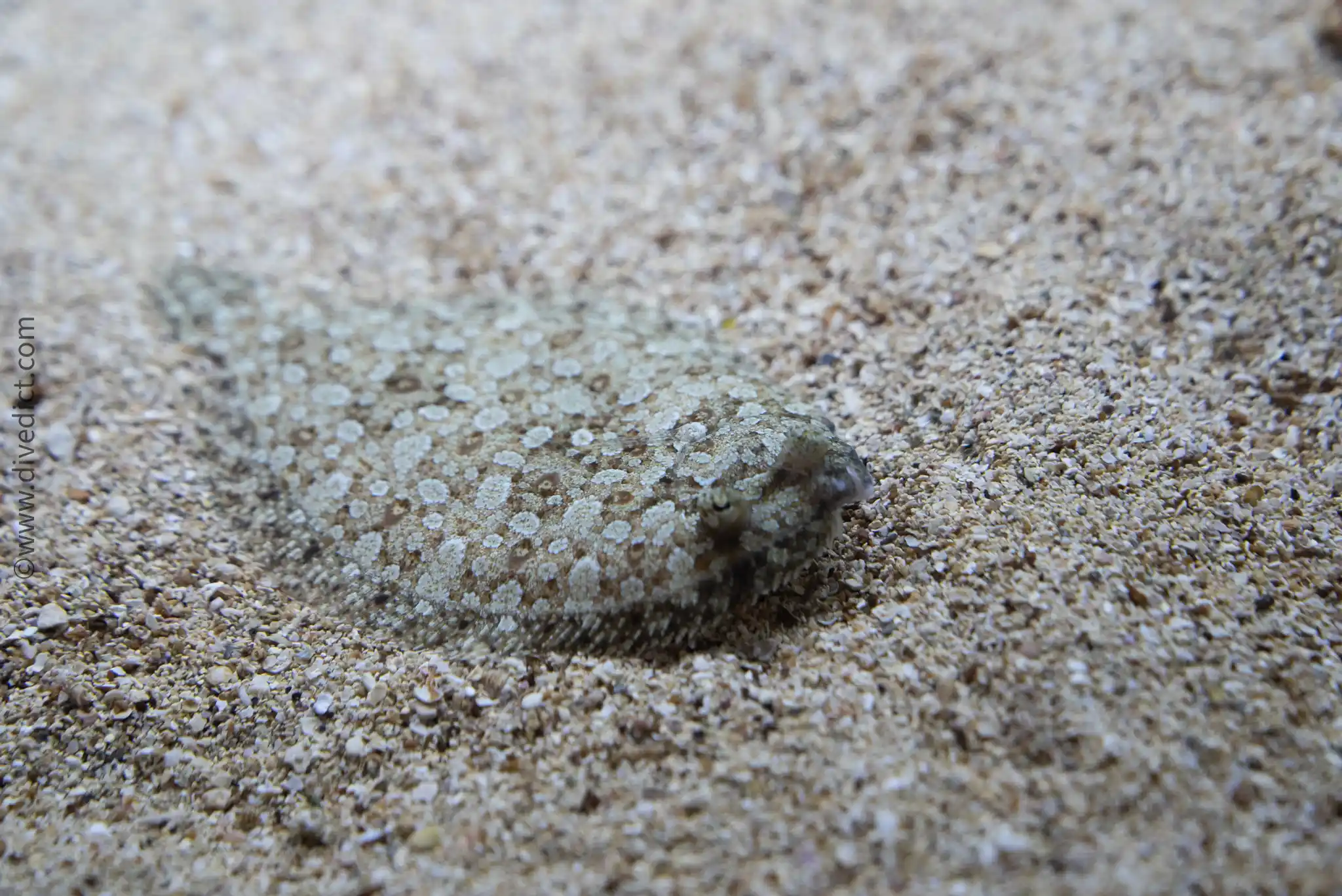
Similar to other flatfish, the body of the adult animals is very flat and oblong-oval.
The eyes are asymmetrical to the small mouth at a large distance.
Flatfish first hatch from their eggs as symmetrical (normal-looking) fish. As soon as they are old enough, they go through a metamorphosis, a major change in their body shape. One eye moves to the other side of the body, which now represents the top of the fish.
The wide-eyed butt can grow up to 45cm, but it usually only reaches 13cm.
Natural enemies
Bottlenose dolphin (Tursiops truncatus)
Dangerous/Venomous
The wide-eyed butt is neither dangerous nor venomous.
Sketch
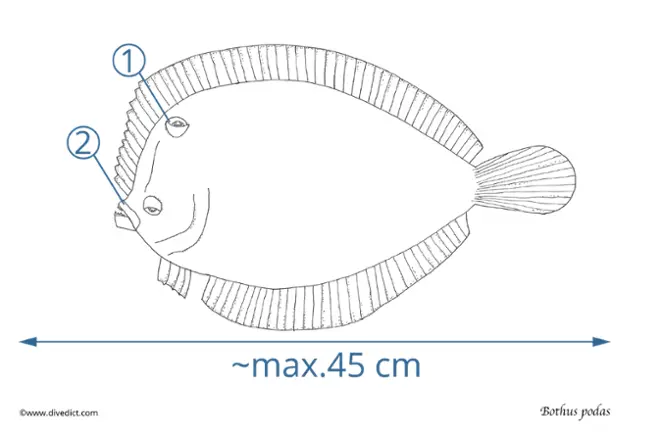
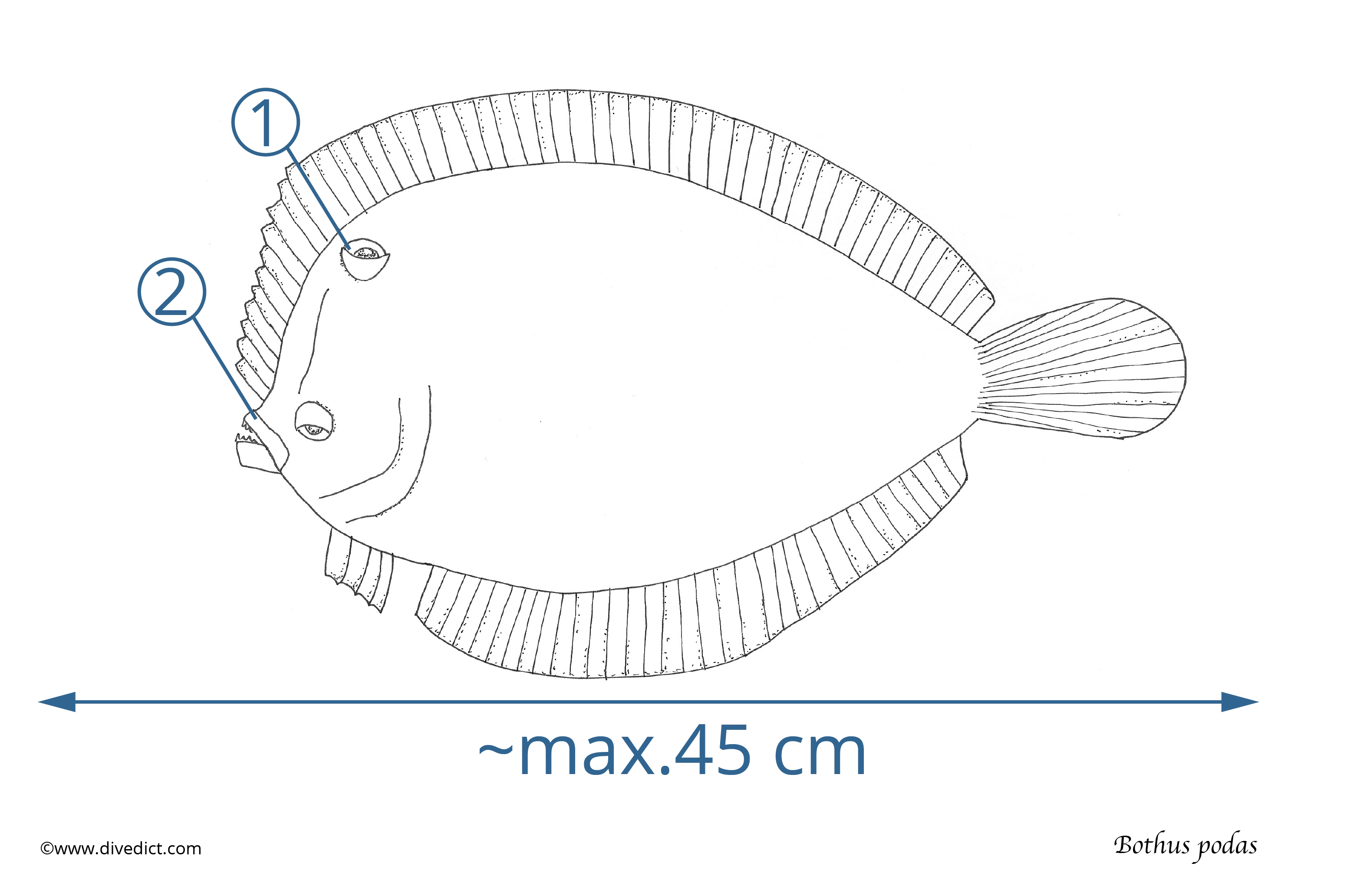
1. Asymmetric eyes with a large distance
2. Sharp teeth
Pro tips
The wide-eyed butt is a camouflage expert because it has special pigment cells in its skin that can change color. It is not as fast as the octopus, which can change color in a matter of seconds, but takes around half an hour to do so.
It thus merges with the sandy ground, into which it also likes to dig into.
Then only his eyes look out so that he can see potential attackers and small animals that he eats.
Unlike other fish, it does not have a swim bladder so that it can stay on the ground. In winter, it retreats to greater depths of up to 350 m.
Therefore, you will rarely find it during the cold season.
Between May and August, when temperatures are warmer, it reproduces and can also be found in shallow water.
He is a loner, but is found in large numbers of individuals.
Text: Carolina Leiter
Pic: Felician Hosp
Illustration: Dive Dict