
Greater forkbeard
Phycis phycis
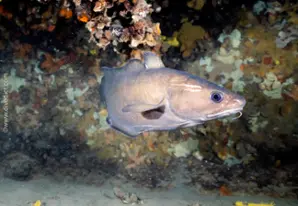




Special features
No, Greater Forkbeards didn't get its name from gourmets, for whom it ended up on the fork as a treat for their palate.
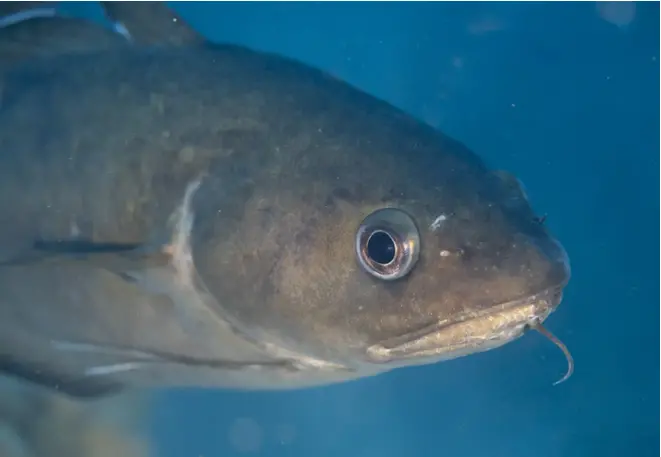
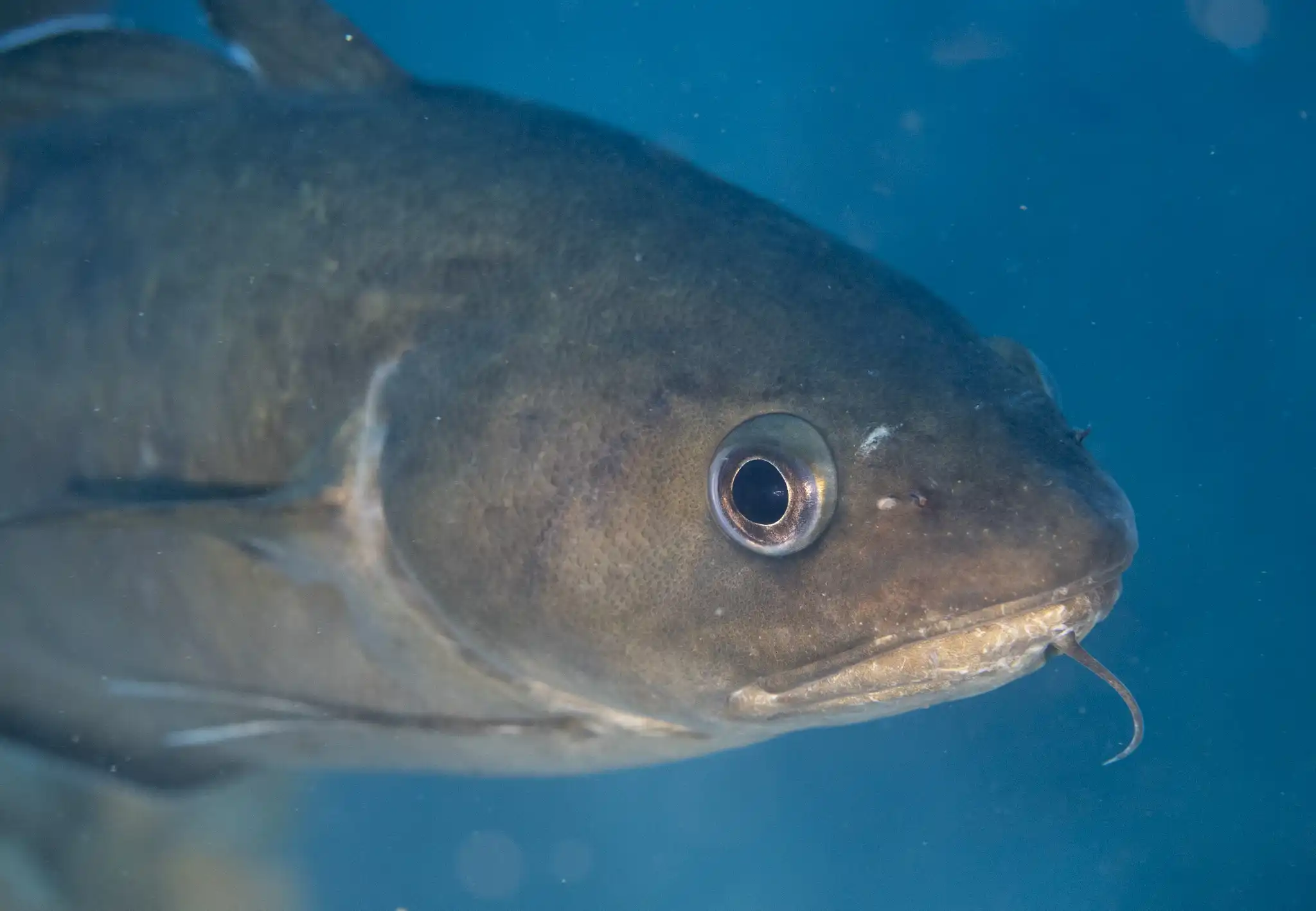
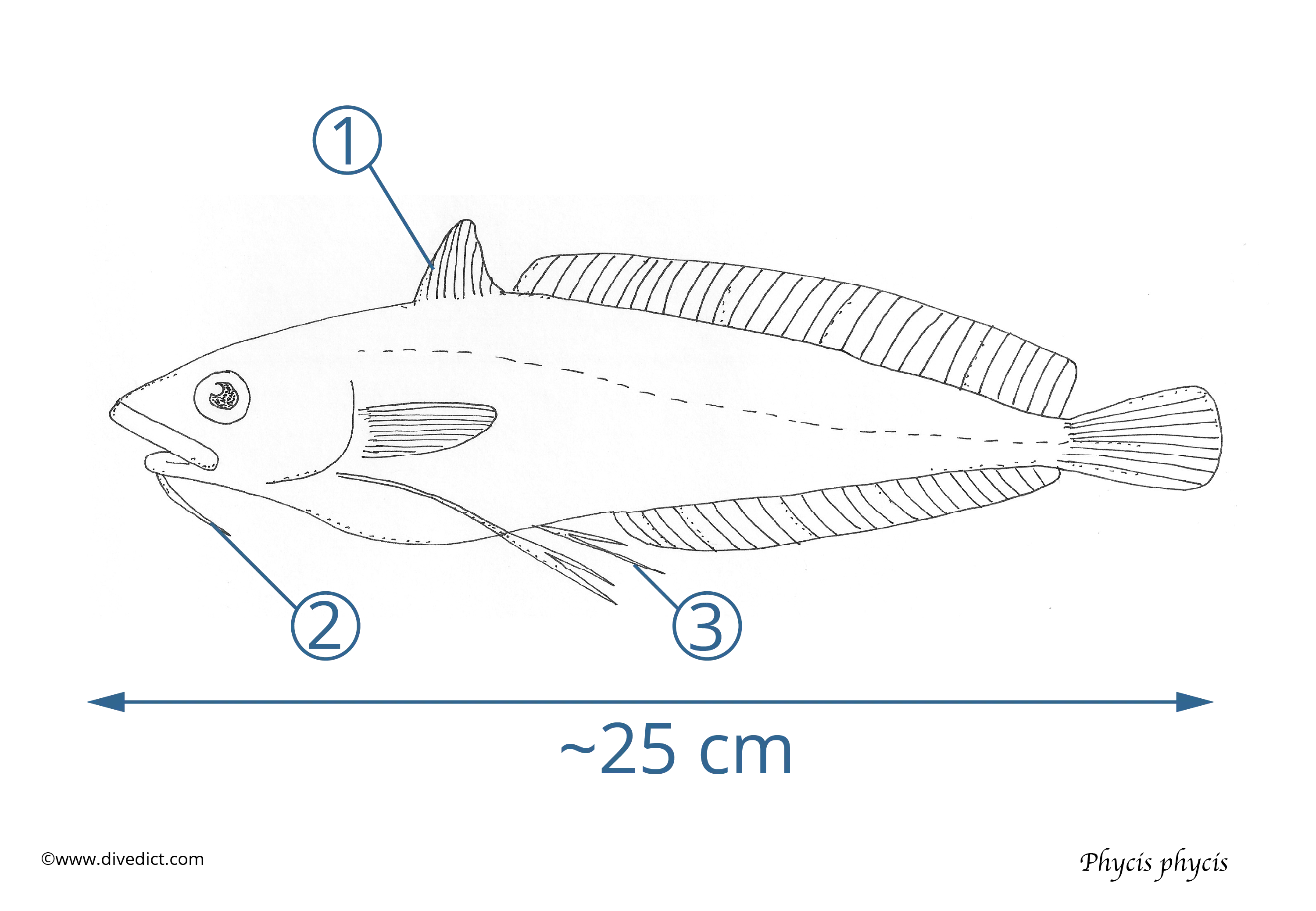
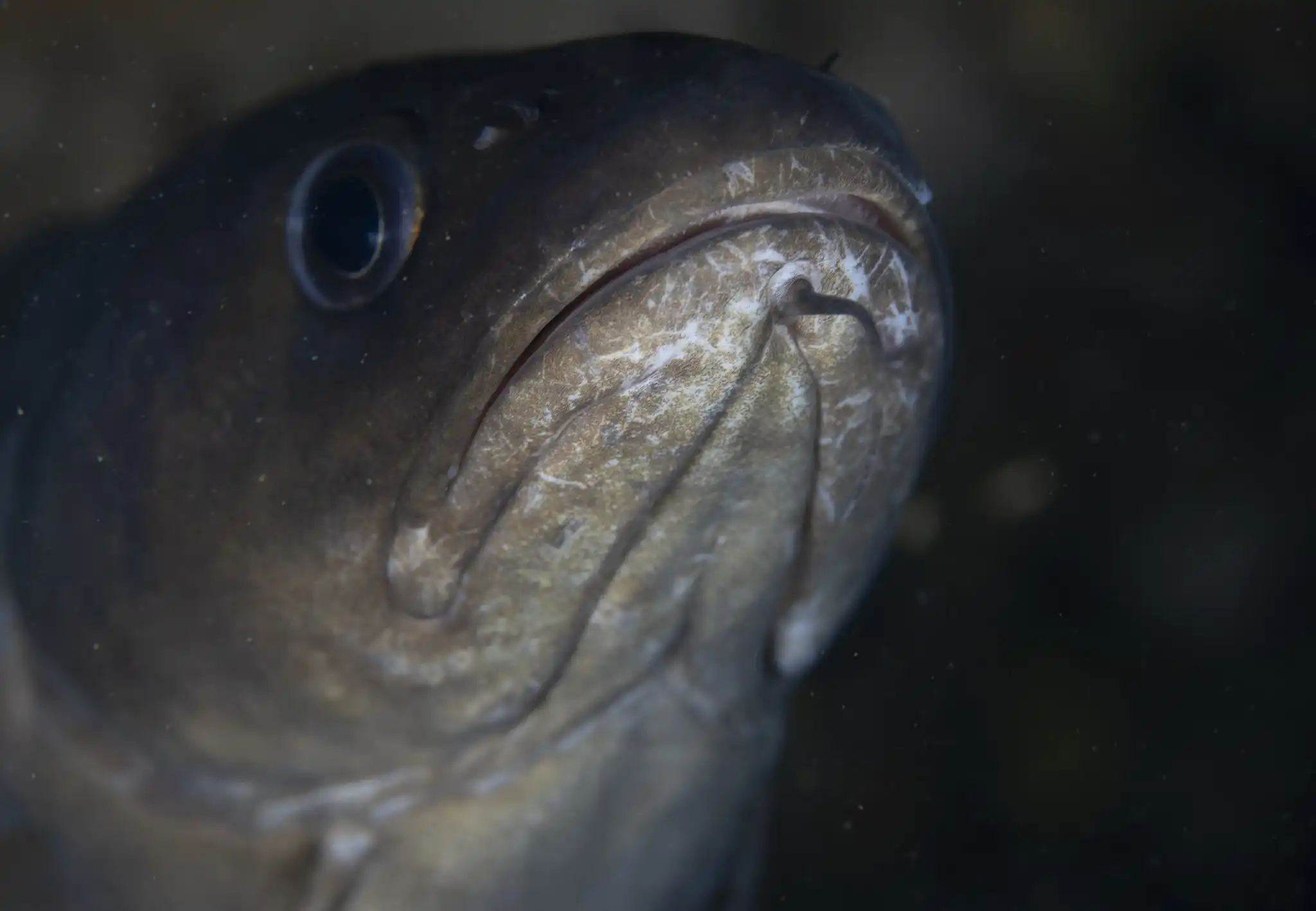
One look at his whiskers is enough and you'll be taught otherwise. They are clearly bifurcated at the ends, which is something you don't see in any other animal.
Appearance
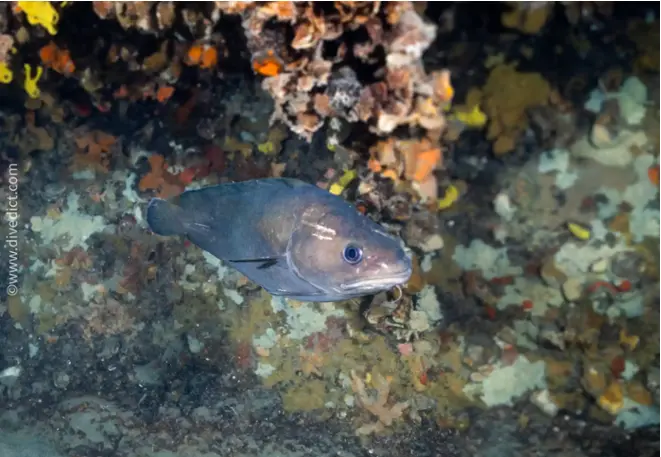
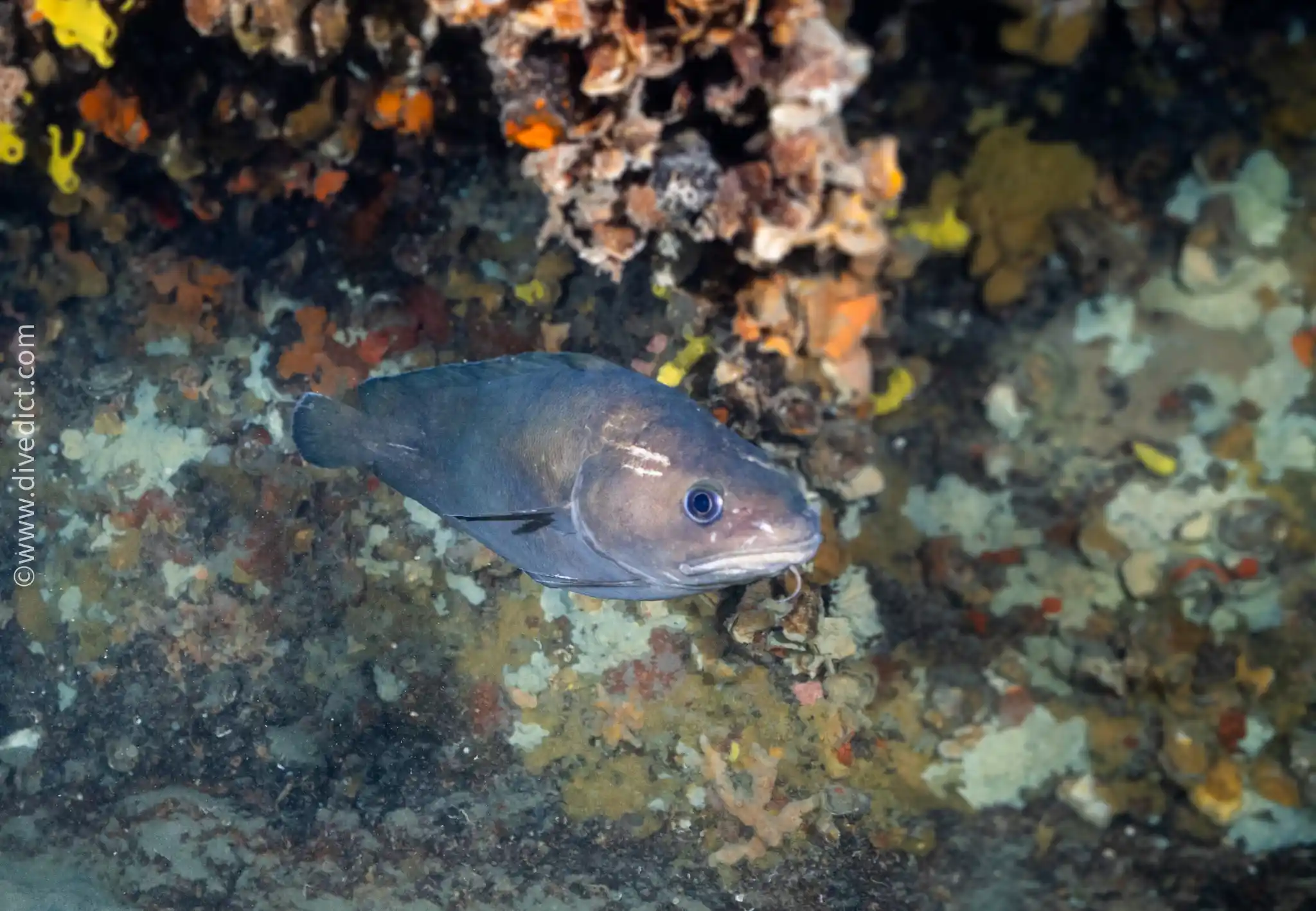
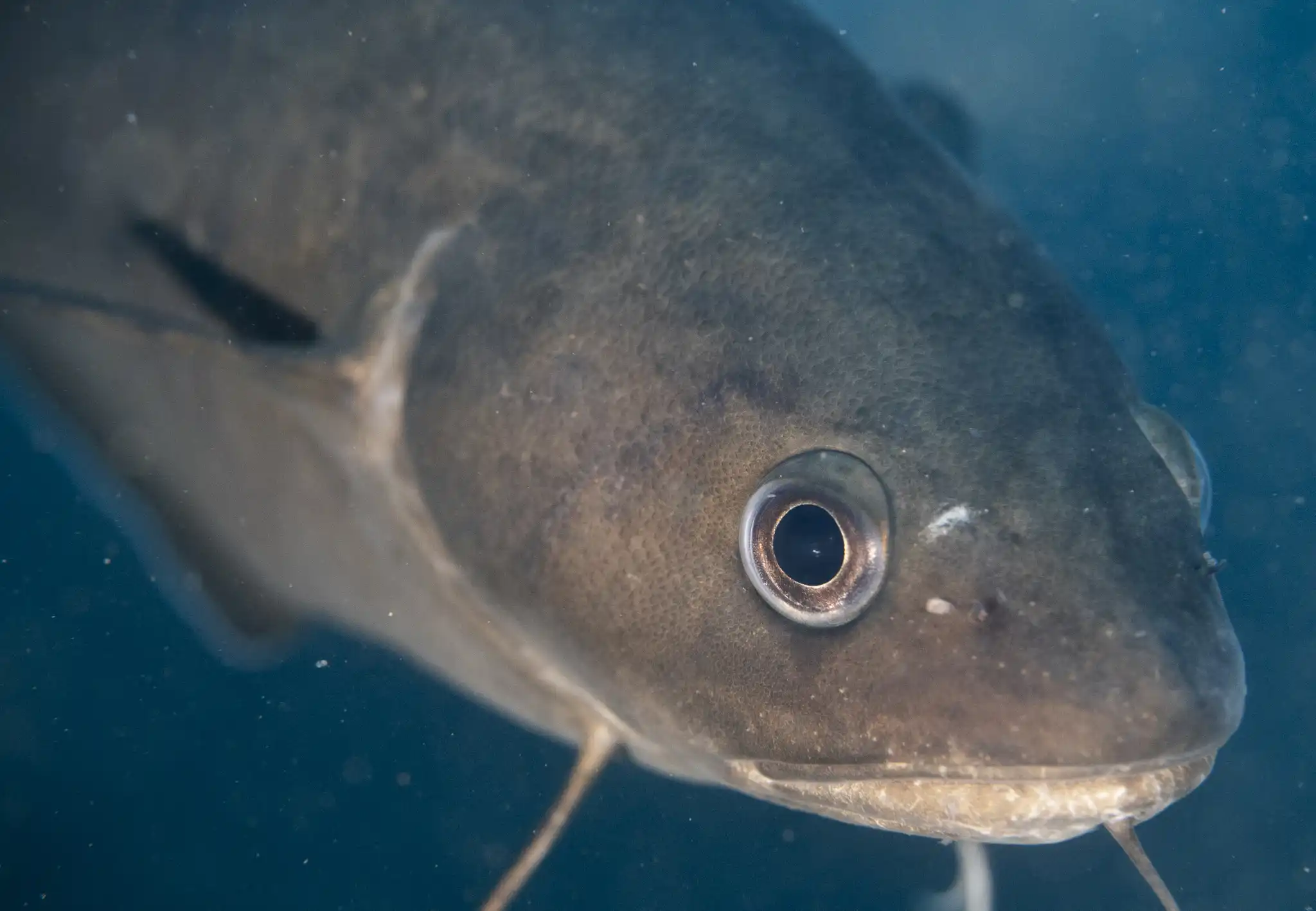
In dark brown, shimmering blue-purple from time to time, it glides through the depths with graceful wave movements. Some individuals are decorated with subtle darker spots.
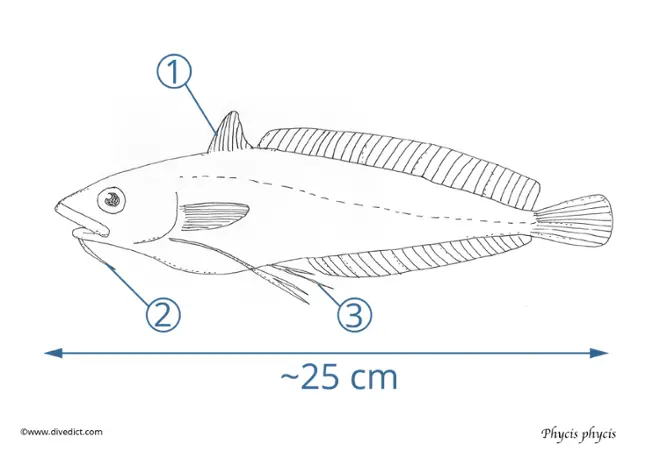
A first small and a long second dorsal fin elegantly runs its body up to the triangular caudal fin.
The ventral fins also run continuously in a wavy form.
If you look closer, you can see that their tips are also bifurcated and often decorated in white.
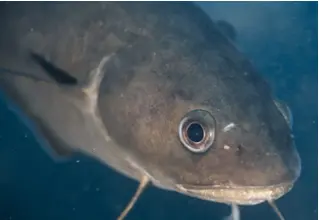
On his lower jaw, which is usually lighter in color than the rest, he always has exactly one long hair (a fish moustache, so to speak).
The adult animal can be between 25 and 65cm tall.
Natural enemies
Sharks, predatory fish
Dangerous/Venomous
Dark Fork Cod is neither dangerous nor venomous.
Sketch
Pro tips
You usually only meet this quiet deep-sea guard at 20m, where he completely retreats during the day in caves, crevices, and wrecks.
At dusk, he sets out to raid smaller fish and invertebrates.
His forked whiskers are equipped with millions of sensory cells, which he can use to track down his prey even in soft soil.
It is rarely seen by divers; with its dark color, it is perfectly camouflaged both under rocks and at night and can traverse its tracks unnoticed through the shadows.
In our experience, however, he is the true stowaway of wrecks. He is also caught there during the day drifting through the remains of the cabins.
Unfortunately, this species is no longer said to be present in the easternmost areas of the Mediterranean Sea.
Apart from the season (January-May), there is nothing much known about their mating behavior.
This Dark Majesty apparently doesn't want to end up under a microscope.
Text: Carolina Leiter
Pic: Dive Dict
Illustration: Dive Dict