
Bi-banded bream
Diplodus vulgaris




Special features
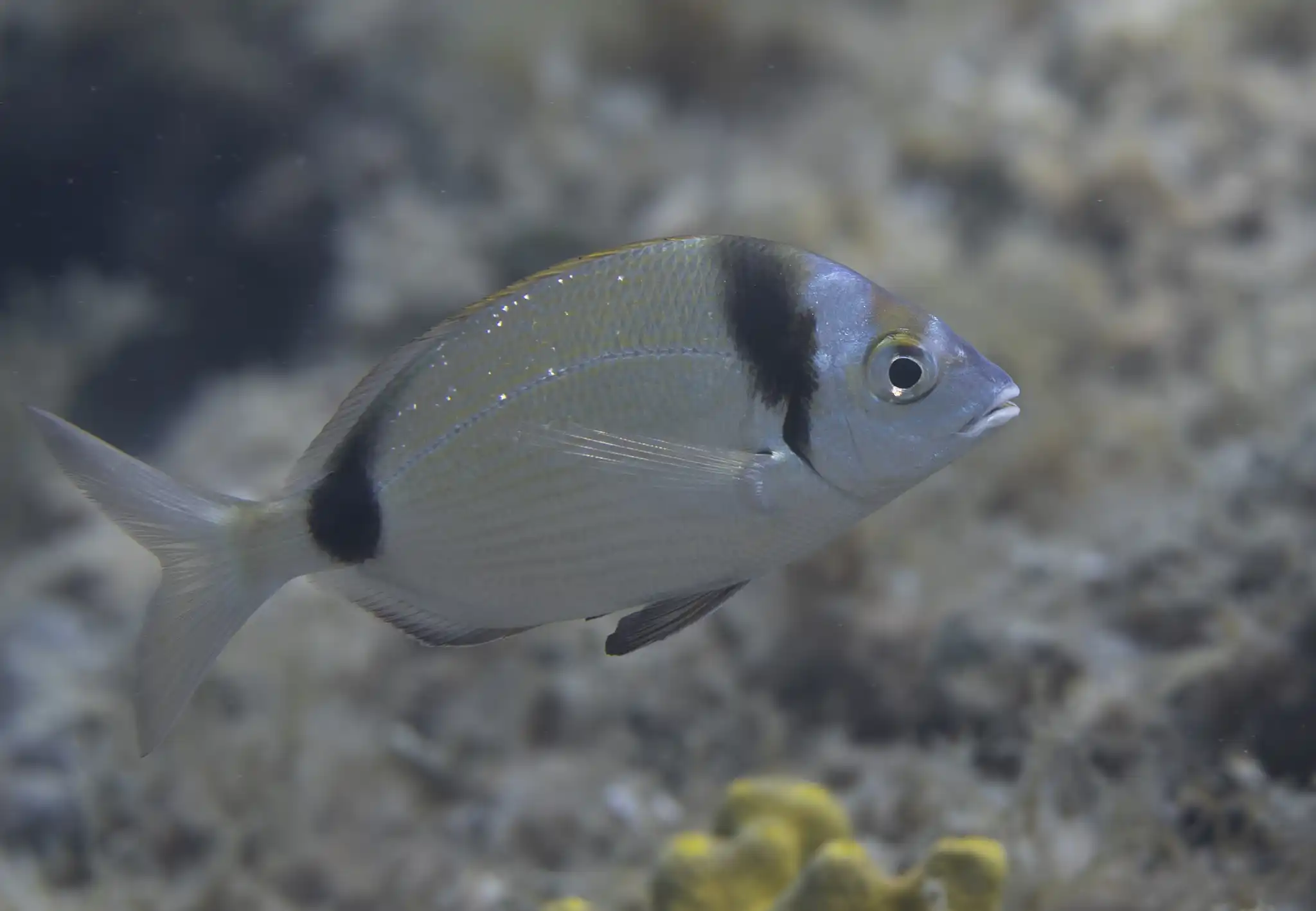
It is the most easily identifiable bream.
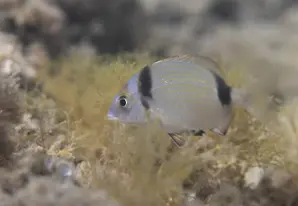
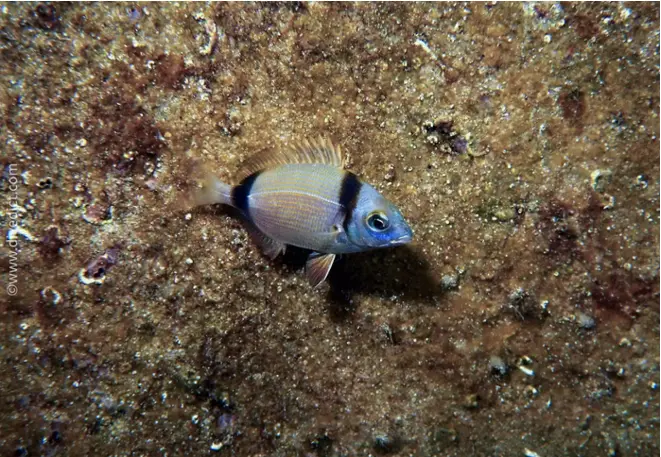
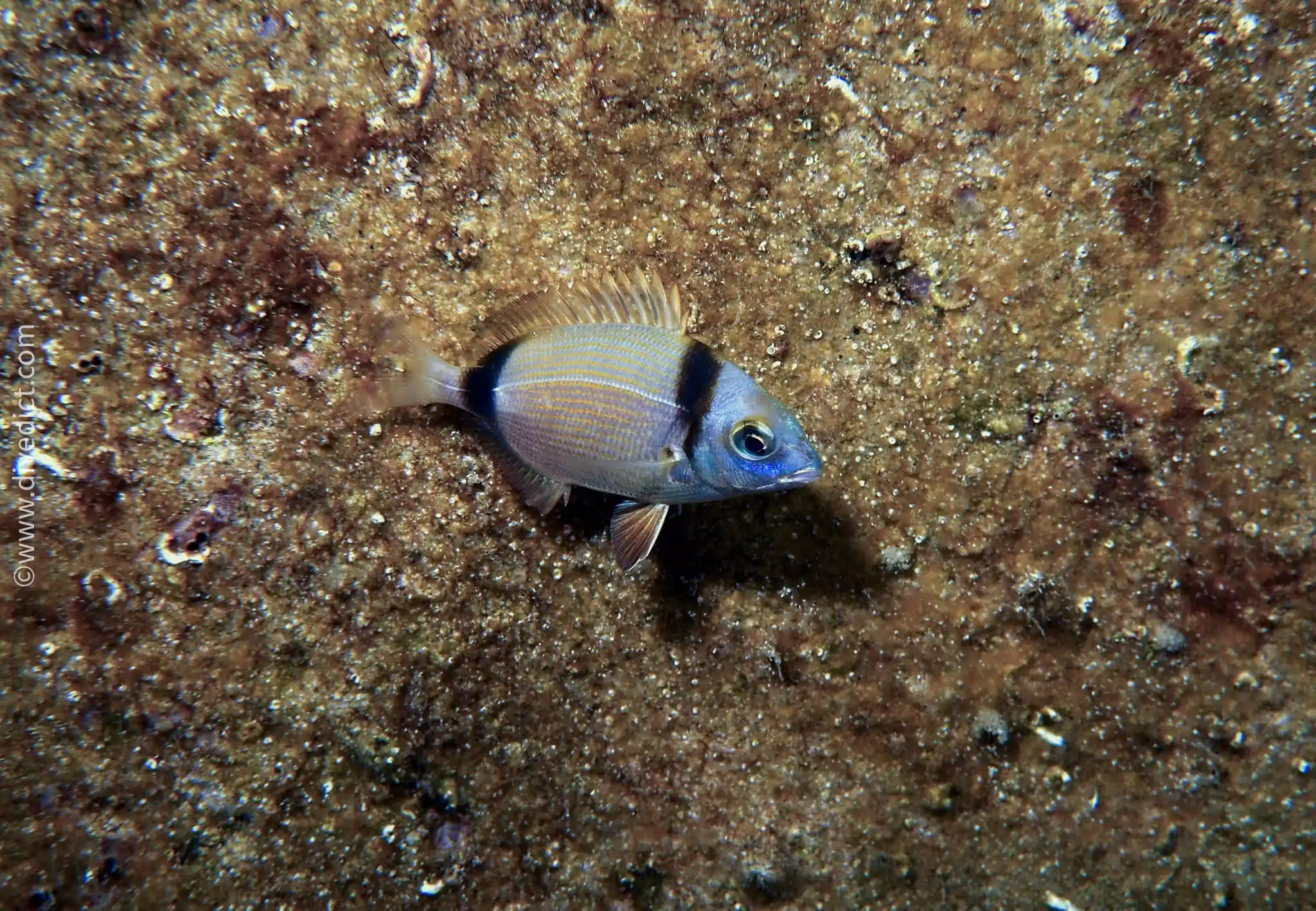
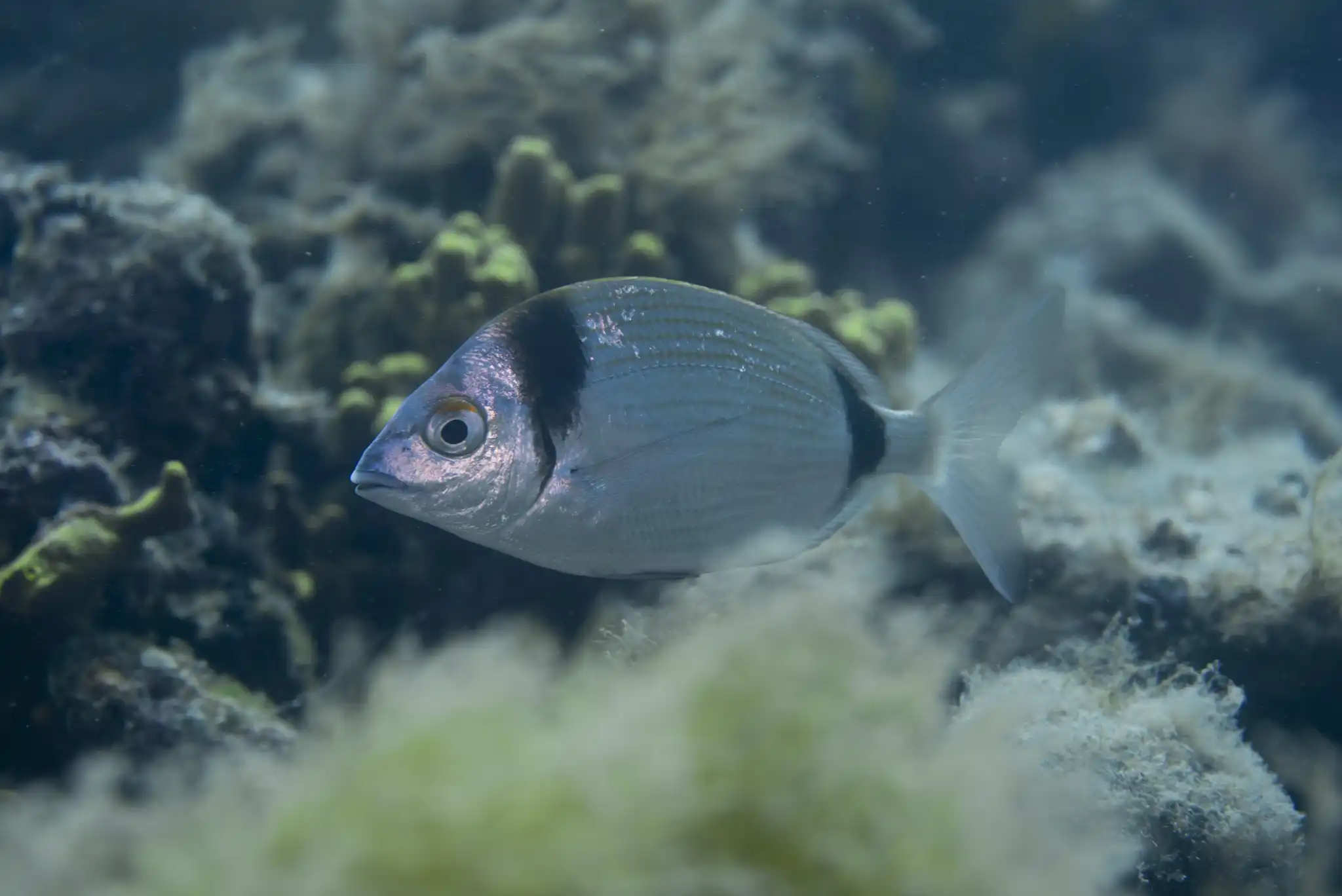
As the name already suggests, the two-banded bream has two black bandages: one in the back of the neck and one in front of the tail fin.
Appearance
Similar to other sea breams, two-banded bream has an oval, flat, high-backed body.
In addition to the two black bands, golden lines run horizontally along the scales, which are easier to see in younger animals.
It has a continuous dorsal fin that looks jagged when set up.
Natural enemies
Predatory fish
Dangerous/Venomous
Two-banded bream is neither dangerous nor poisonous.
Sketch
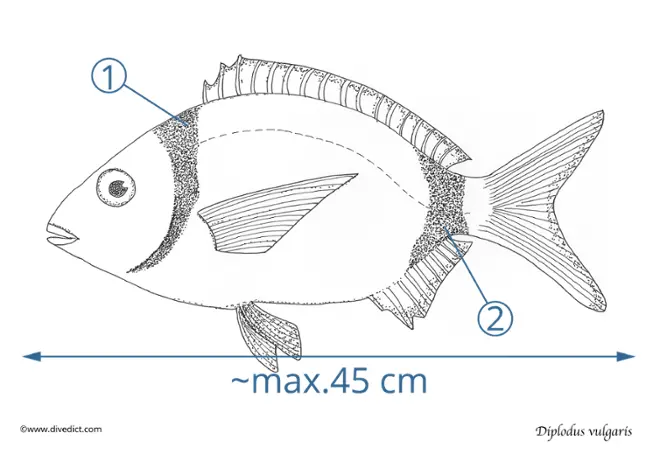
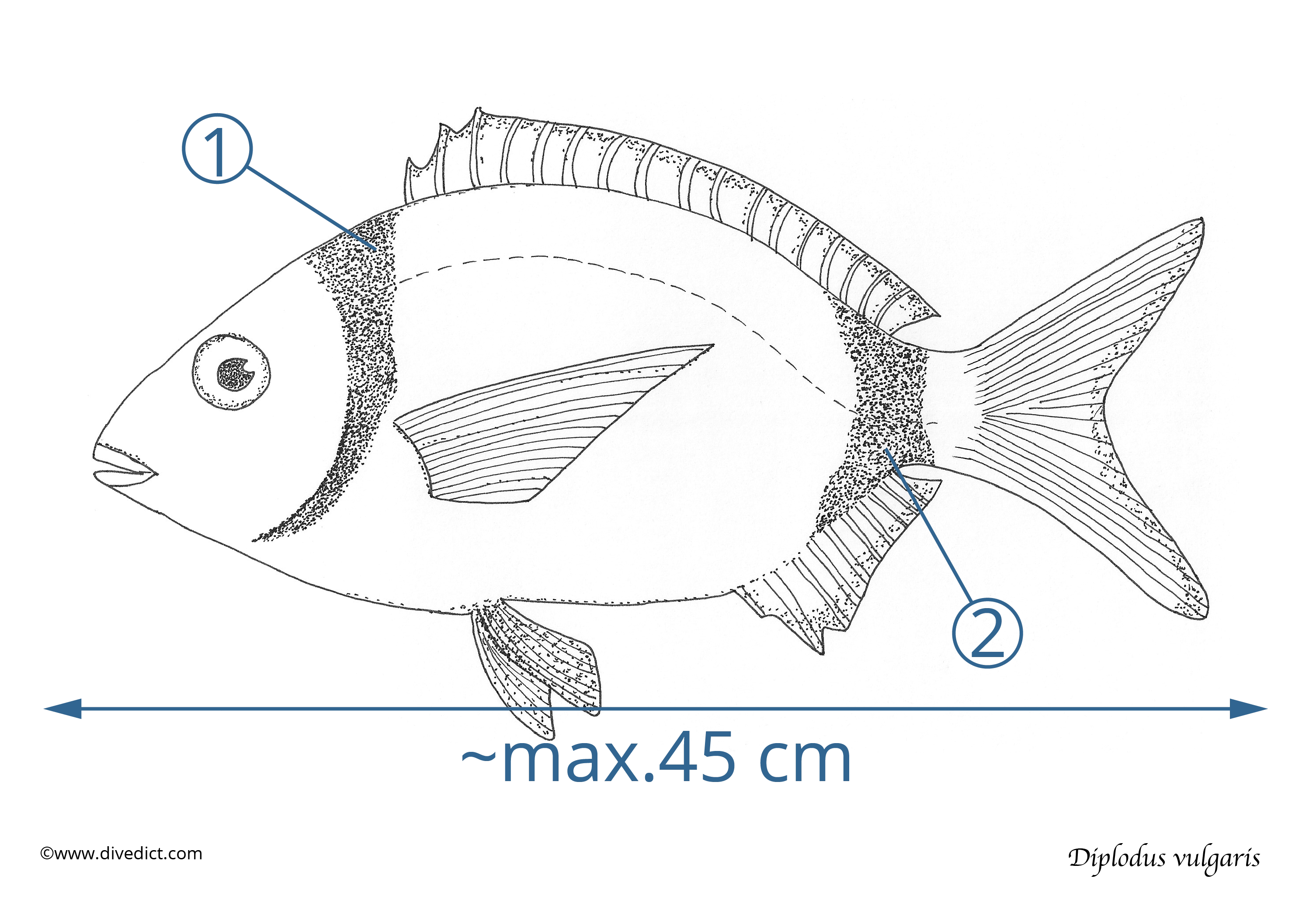
1. Black neckband
2. Black tail fin bandage
Pro tips
While diving, you often encounter young, shy two-banded bream in the seagrass meadow. They hide here from big predators.
The oldest animals are more daring and swim along sandy and rocky surfaces. They are also often found in groups with other sea breams (Sparidae).


Text: Carolina Leiter, Felician Hosp, Pia Balaka
Pic: Felician Hosp
Illustration: Dive Dict