
Blue spiny starfish
Sargocentrum rubum




Special features
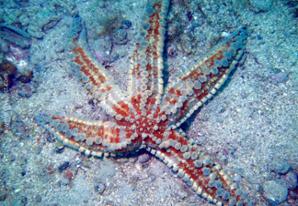
If a Blue spiny starfish loses an arm, the arm does not die off but evolves into a new, autonomous individual. Almost as if by magic, a new disc and up to 9 new arms are formed from one lost arm.
Appearance
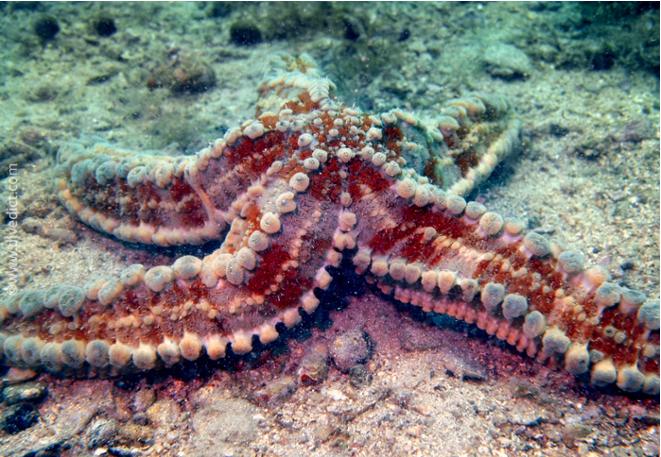
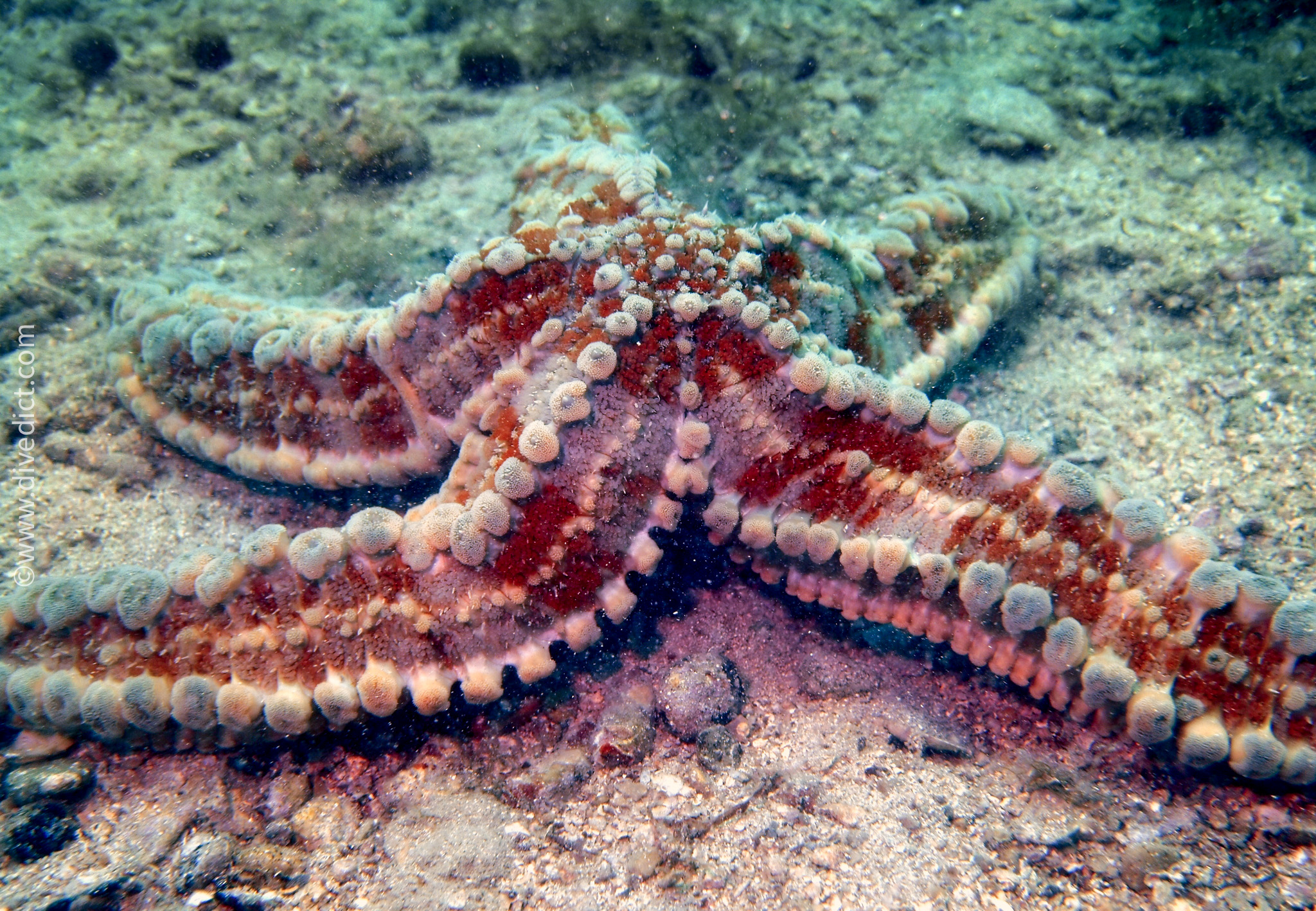
As the name suggests, the Blue spiny starfish carries spines on the top of its body; they are irregularly arranged on the disc and neatly placed in rows on the arms.
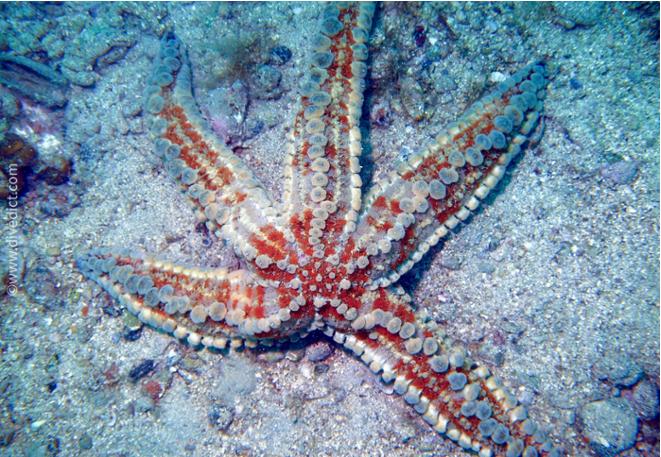
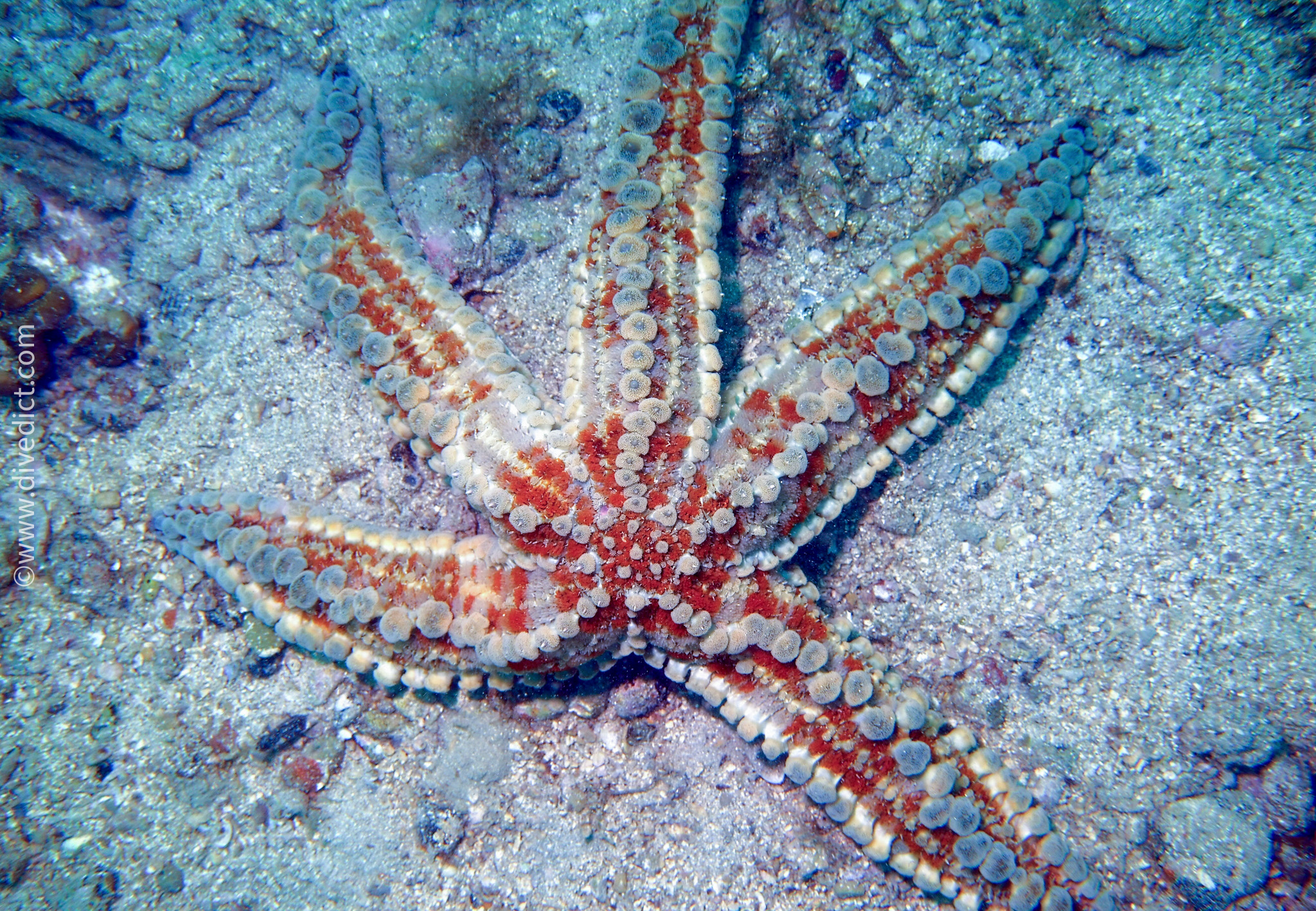
You can find this starfish in almost all colors: from white to red to brown or blue with yellow, with blue or brown spots.
Natural enemies
Other starfish, cephalopods
Dangerous/venomous
The Blue spiny starfish is neither dangerous nor venomous.
Sketch
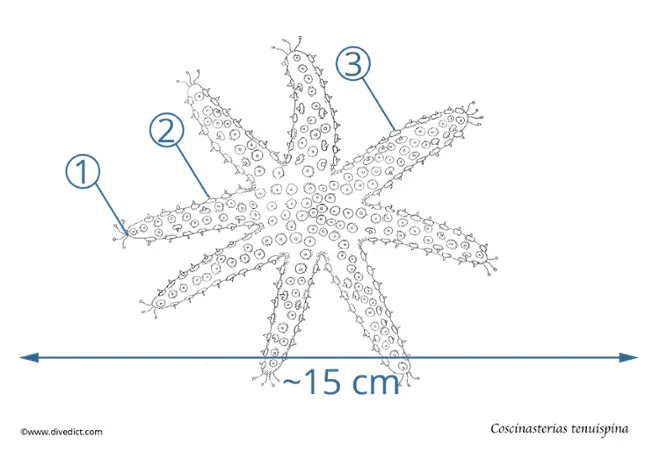
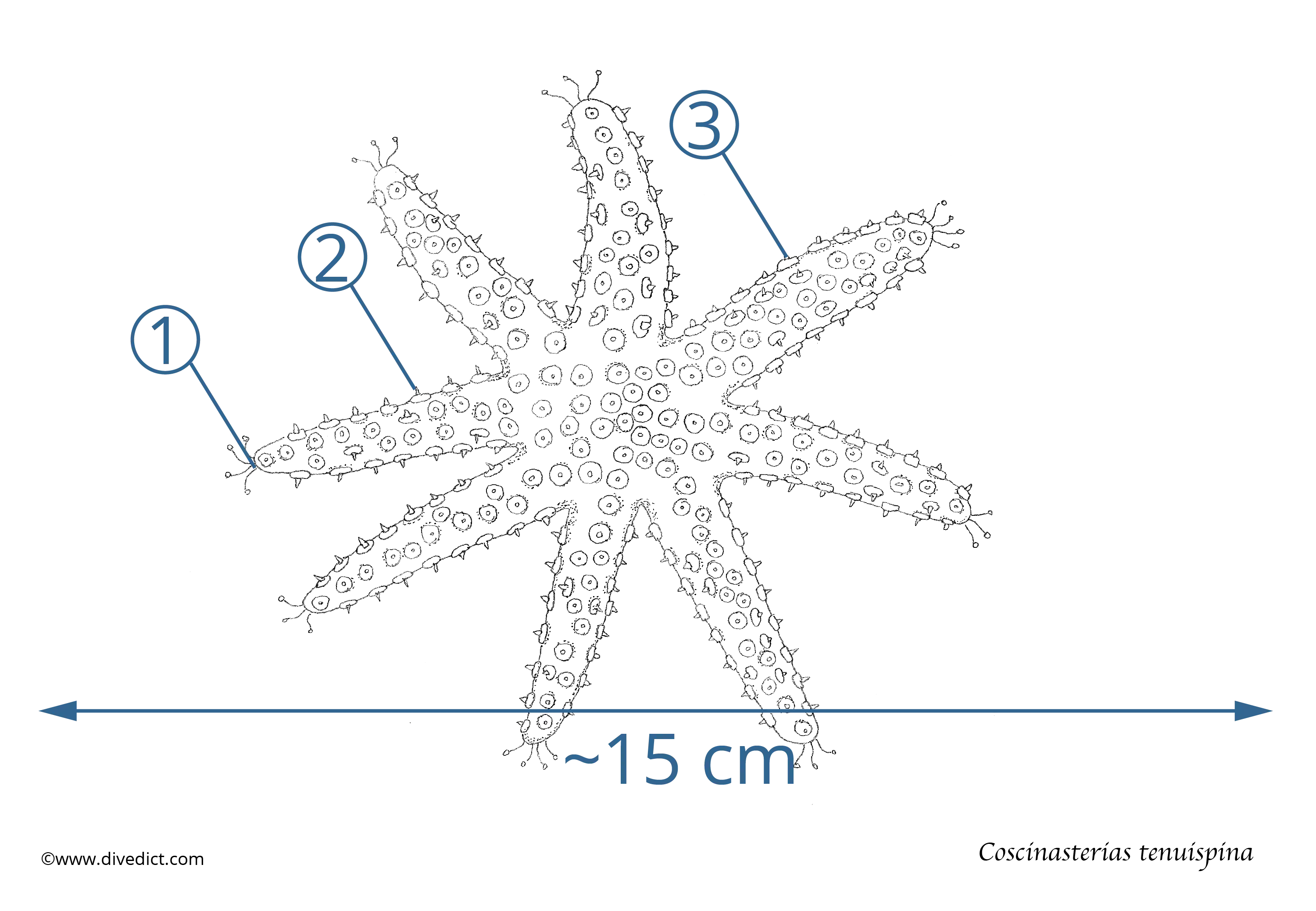
1. Tiny tentacles
2. Thorns
3. 5 - 10 arms
Pro tips
With its many arms, it looks a bit as if it were from another time or another planet. And it, in fact, is from another time: it is a relic of the Tethys!
It feels at home all over the Mediterranean and is always reproducing diligently.
This multi-armed starfish is a predator and omnivore. It particularly likes to push other echinoderms or mussels into the chewing apparatus.
As far as reproduction is concerned, the starfish practices the best of both worlds: it reproduces sexually in winter and asexually in summer.
In the process of asexual reproduction, the disc divides in half, and the resulting two parts grow the remaining arms anew and thus two new independent individuals have been created.
By the way, there are significantly more females of this species in the Mediterranean, while in Brazil, for example, there are only males and reproduction takes place asexually all year round.
Text: Carolina Leiter
Illustration: Dive Dict
Pic: Felician Hosp, Sabine Probst