
Snake-locks anemone
Anemonia sulcata




Special features
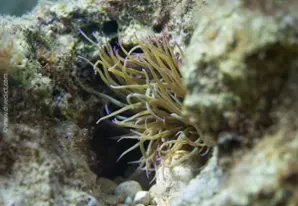
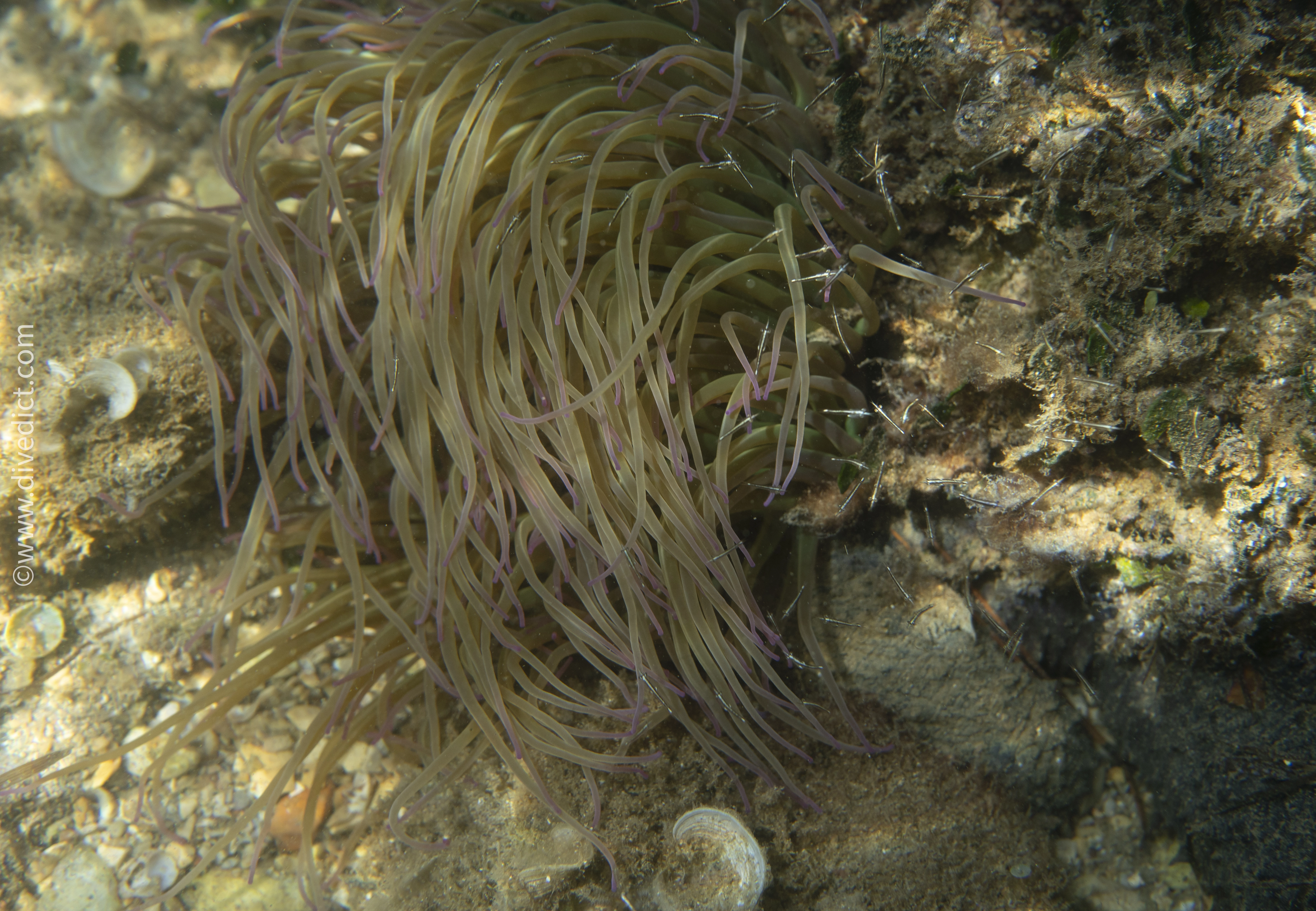
It provides shelter and home to a variety of animals that are immune to her nettles.
These include Leptomysis mediterranea, Inachus phalangium, and Gobius bucchichii.
Appearance
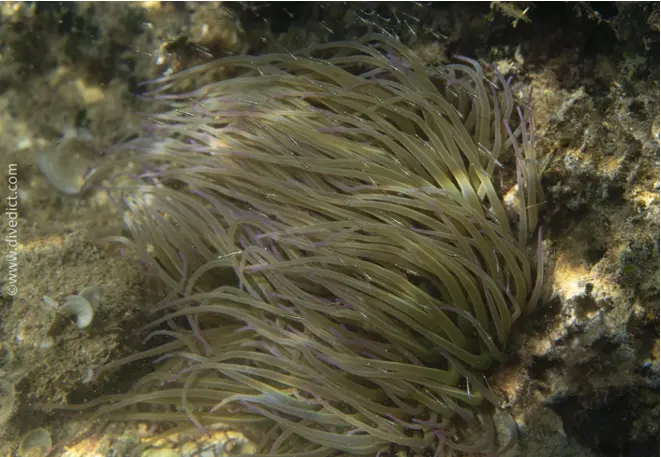
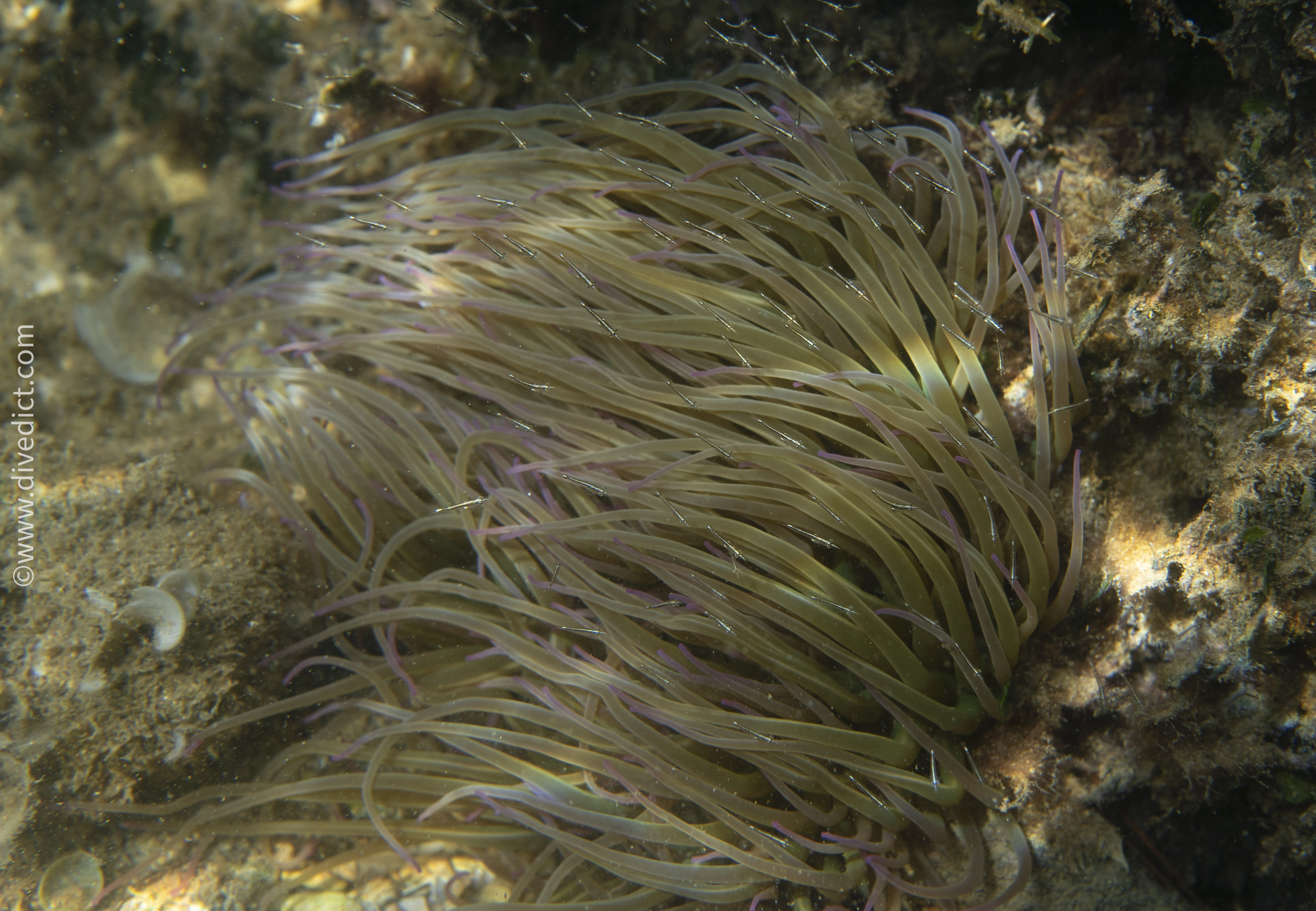
Snake-locks anemones are 20cm tall, and have 384 tentacles of 15cm each.
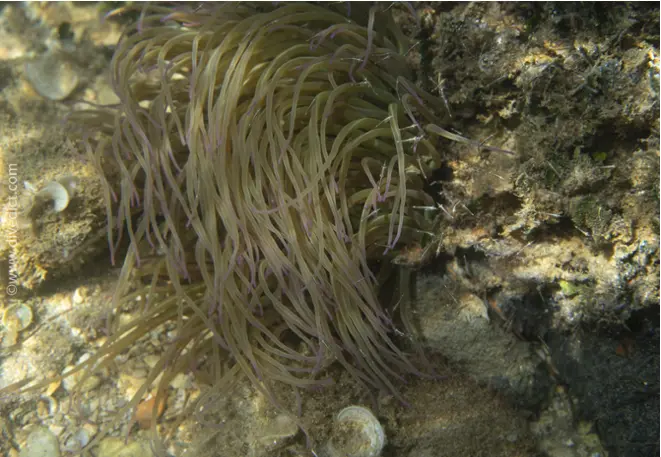
Their body coloration is variable: Sometimes their tentacles are greenish or pink due to symbiotic algae and the tips purple.
In deeper areas where they do not live in symbiosis, they are uniformly gray.
Thanks to their foot disc, they are firmly anchored to the ground.
Natural enemies
Nudibranchia
Dangerous/Venomous
When in contact, the Snake-locks anemone can nettle strongly.
The tentacles can also be easily torn off and thus lead to even greater entanglements.
So don't touch it!
Sketch
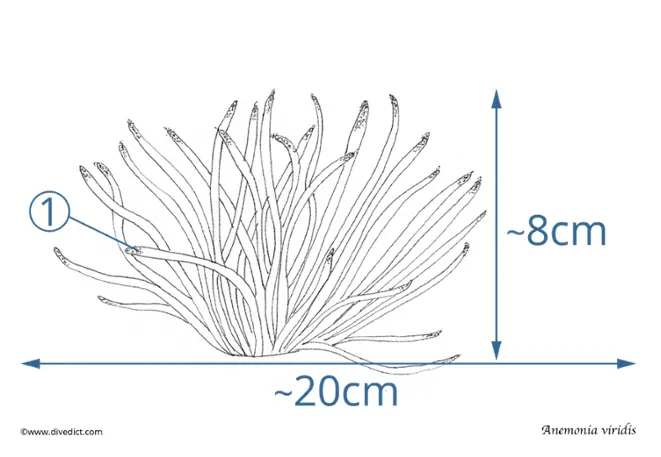
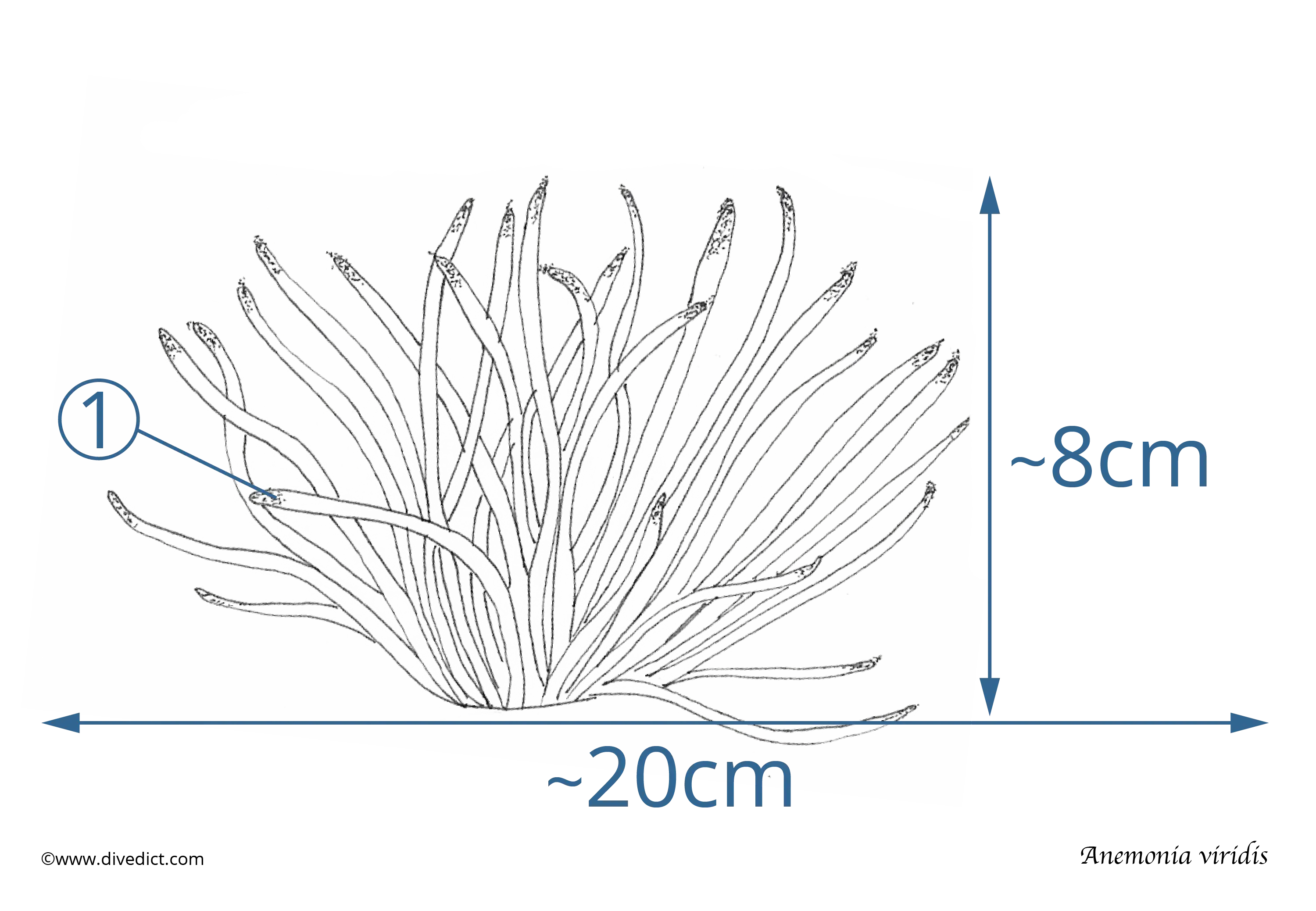
1. Pink to purple tips
Pro tips
They form colonies that can reach a few square meters in sheltered bays and harbors.
They can even withstand heavily polluted water well.
It particularly likes to grow on sunny rocky soil and is therefore usually found in shallow, coastal water.
When you see one, take a closer look at its center, that's where the other small animals hide.
The Snake-locks anemone sits tight and waits so that it can use its tentacles to paralyze and eat prey swimming past, which consists of small fish, mollusks, and crabs.
In the areas where it finds home, its diet is often enriched with pollutants. However, it is able to excrete or neutralize these toxic trace elements and integrate them into its own body.
Text: Carolina Leiter
Illustration: Dive Dict
Pic: Felician Hosp, Sabine Probst