
Cylinder anemone
Cerianthus membranaceus
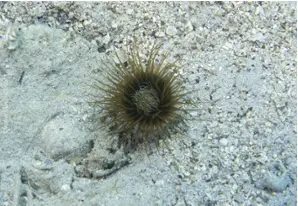




Special features
Her cylinder is intended as a permanent home, but when disturbed from below, for example by a burrowing sea urchin, the cylinder anemone can catapult out of its cylinder and move to another location.
There, it simply creates a new cylinder.
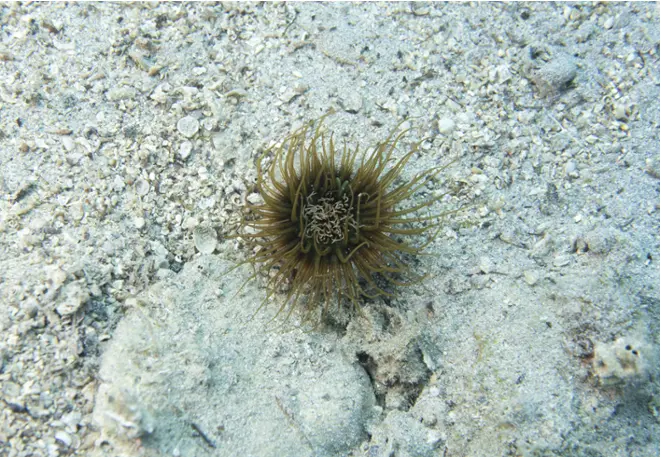
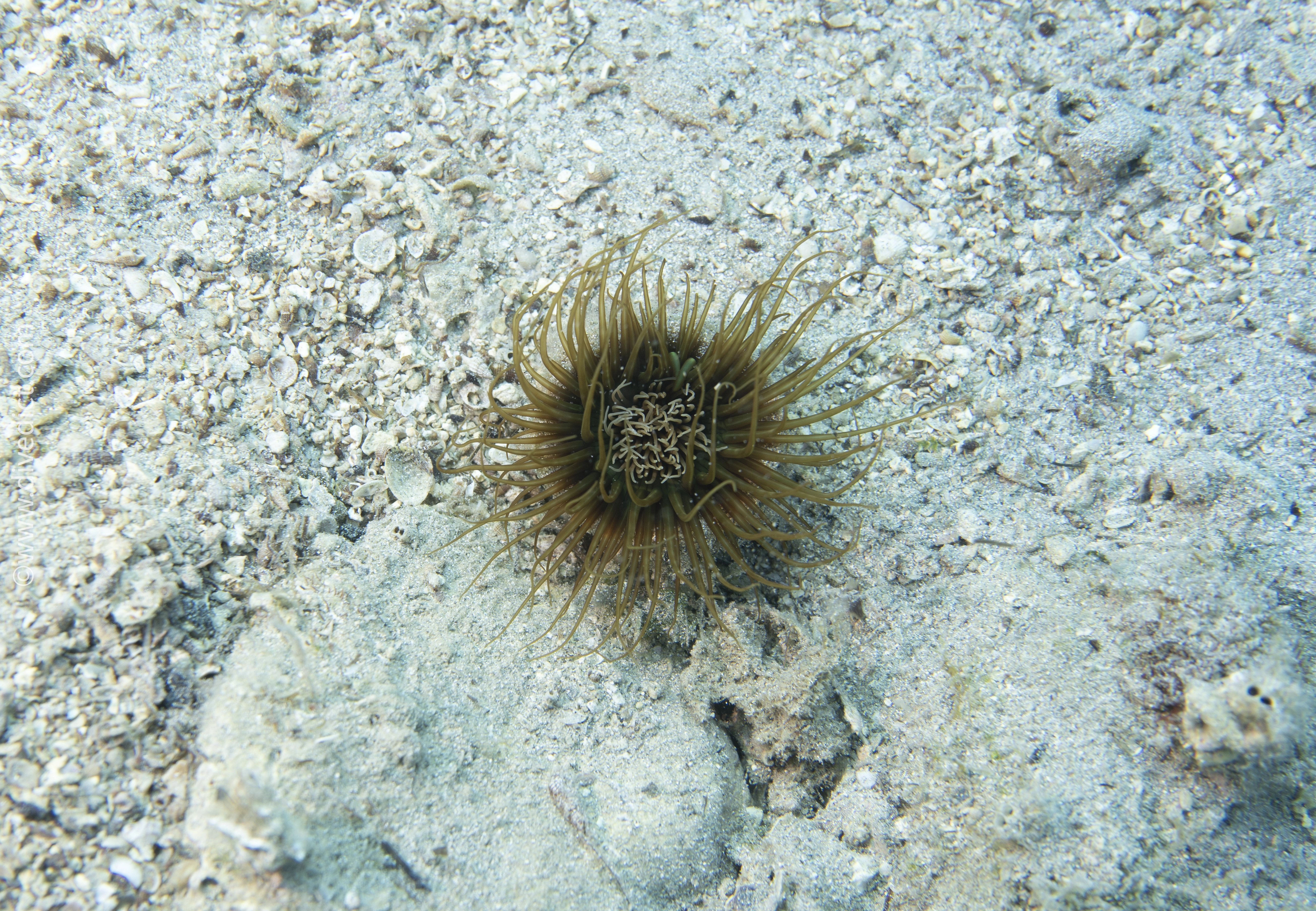
Appearance
It is not difficult to guess where the name of the cylinder anemone comes from: namely from the cylindrical tube from which its tentacles sprout.
This cylinder can be up to 40cm high and is buried deep into the sediment.
It has two rows of long tentacles, which can appear in all colors, from white and yellow to green, brown, purple, and black.
The outer tentacles are tried and tested with stinging cells and are used to catch prey (small fish and plankton).
The inner tentacles are shorter and transport food to the mouth in the middle.
The outer side of the cylinder is often inhabited by tubeworms and other animals.
Natural enemies
Nudibranchia
Dangerous/Venomous
Cylinder anemones have netting tentacles.
Sketch
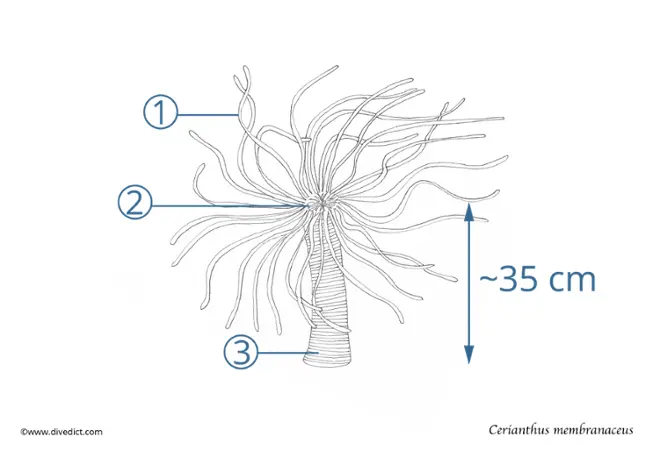
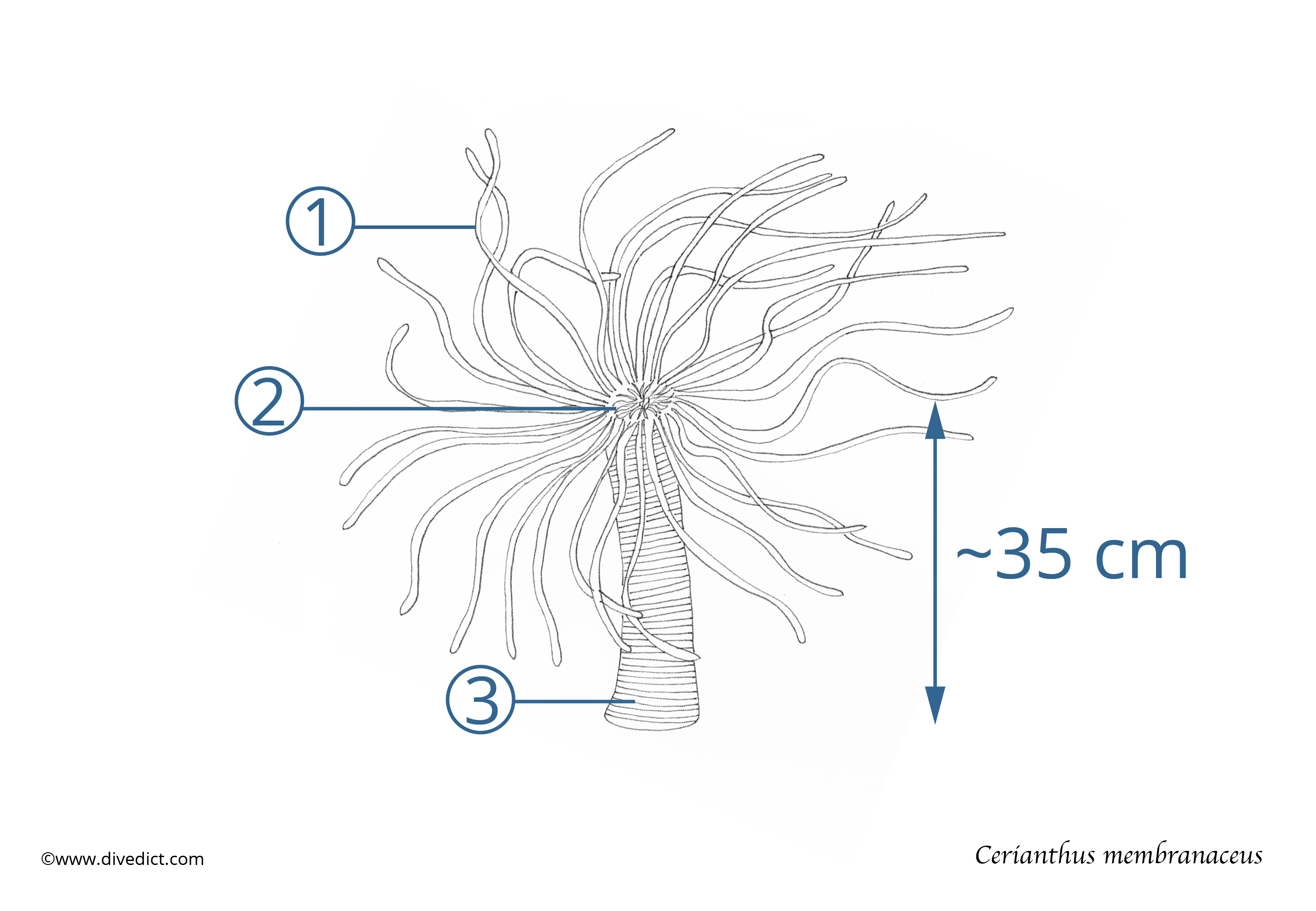
1. Outer tentacles
2. Inner tentacles
3. Cylinder-shaped tube
Pro tips
Cylinder anemones are all too happy to build their own foundations at the entrance to sea caves.
In case of danger, they retreat into their cylinder tubes at lightning speed.
By the way, this tube consists of hardened mucus, expelled nettle capsules, and grains of sand.
They start their lives as males and become females throughout their 50-year life span.
One reason for their long survival is their ability to call polluted waters (those with high nutrient levels) their home without any problems.
Text: Carolina Leiter
Pic: Felician Hosp, Sabine Probst
Illustration: Dive Dict