
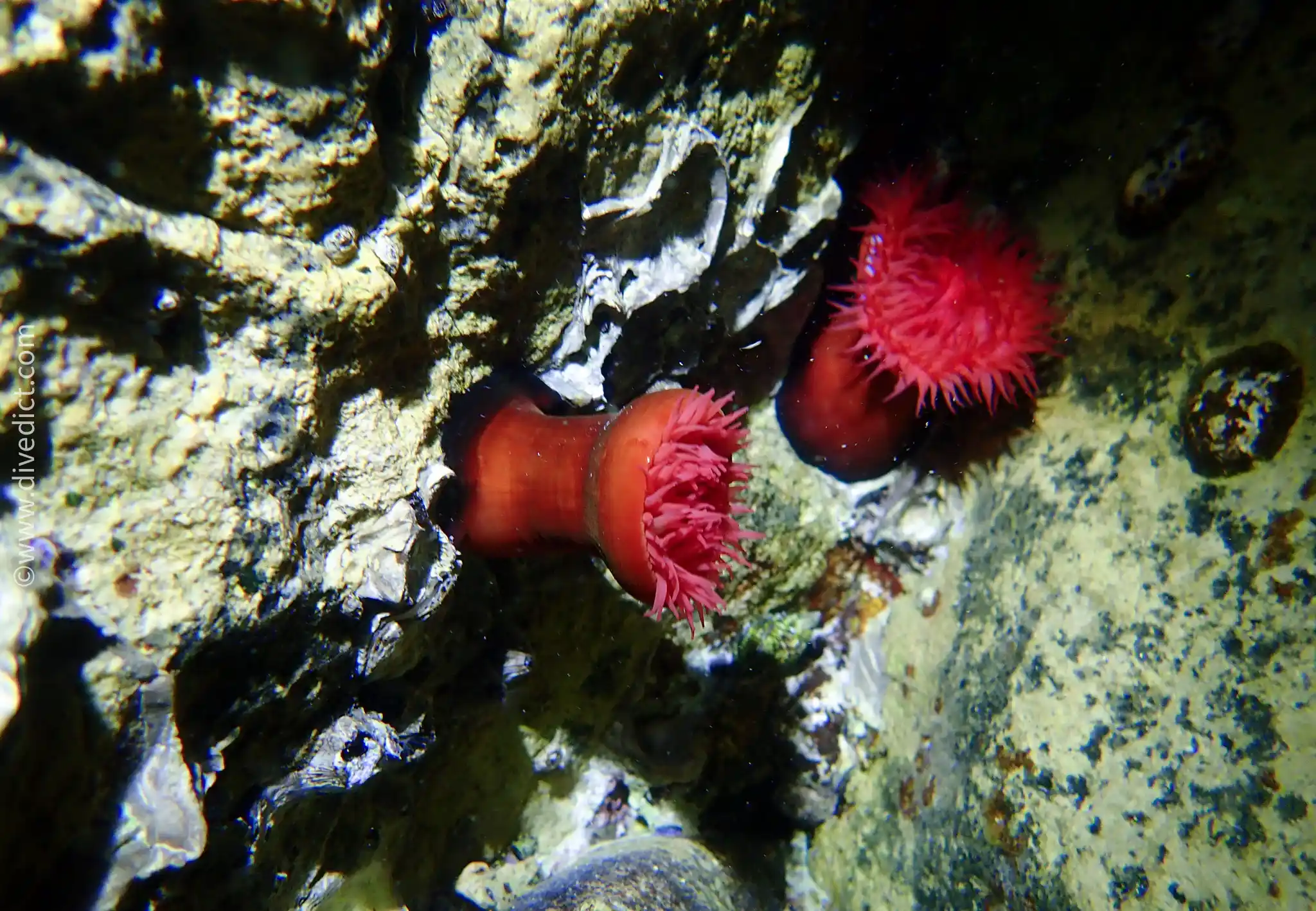
Beadlet anemone
Actinia equina




Special features
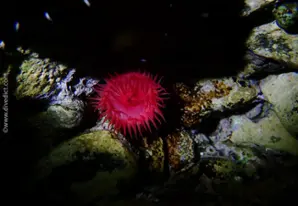
Beadlet anemones are perfectly adapted to the difficult living conditions in the intertidal zone — they can survive there for up to 60 years.
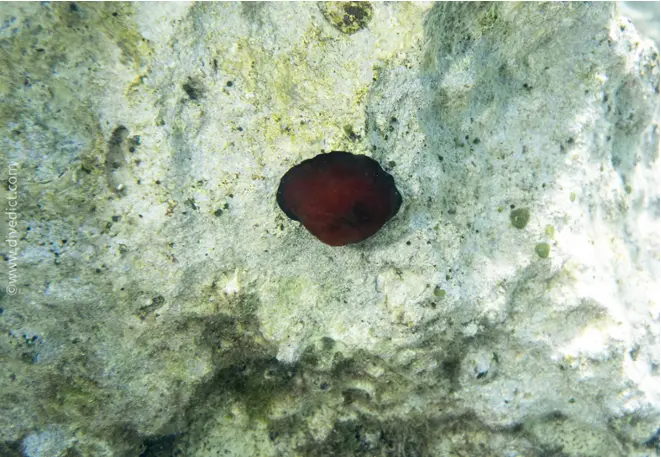
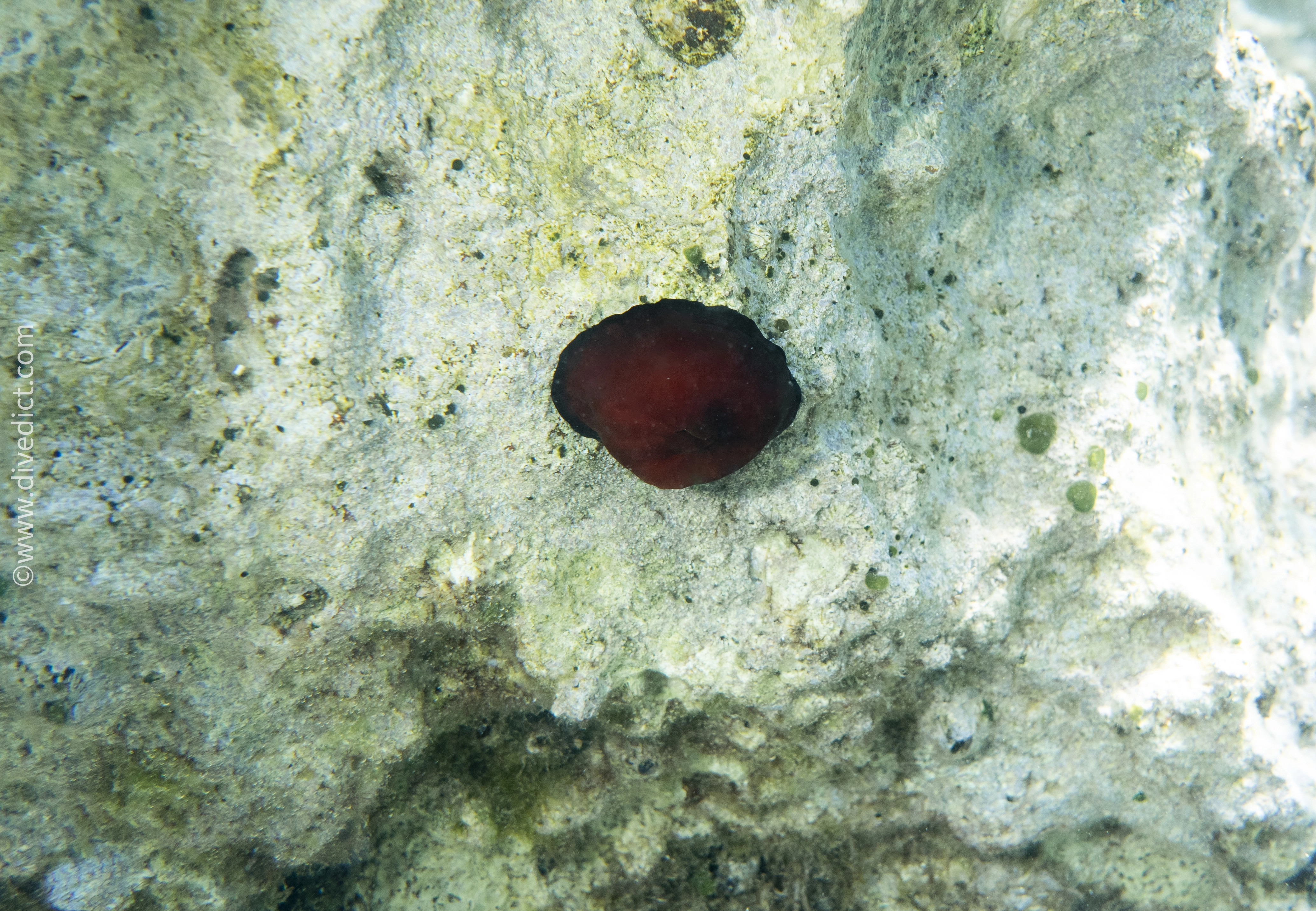
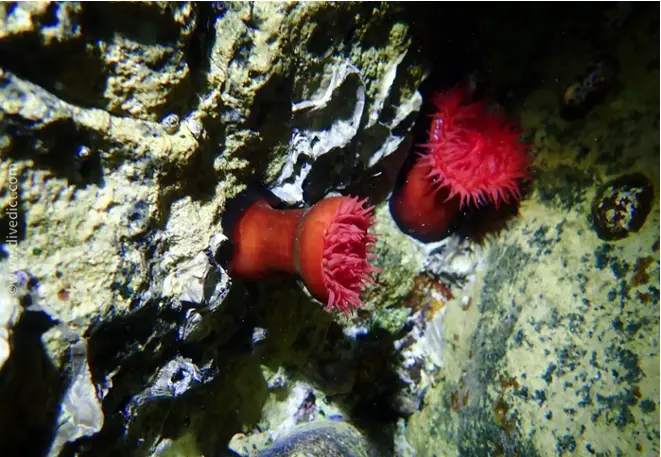
When it pulls in its tentacles, it can easily withstand the dry phases during low tide thanks to its water-storing slime. Doing so, it looks a bit like a small tomato though.
By the way, freshwater (rain for example) cannot harm it at all.
It feeds on small fish, crabs, and molluscs.
Appearance
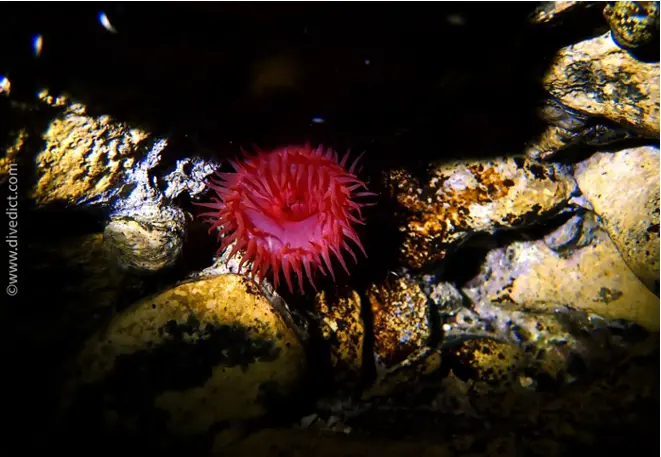
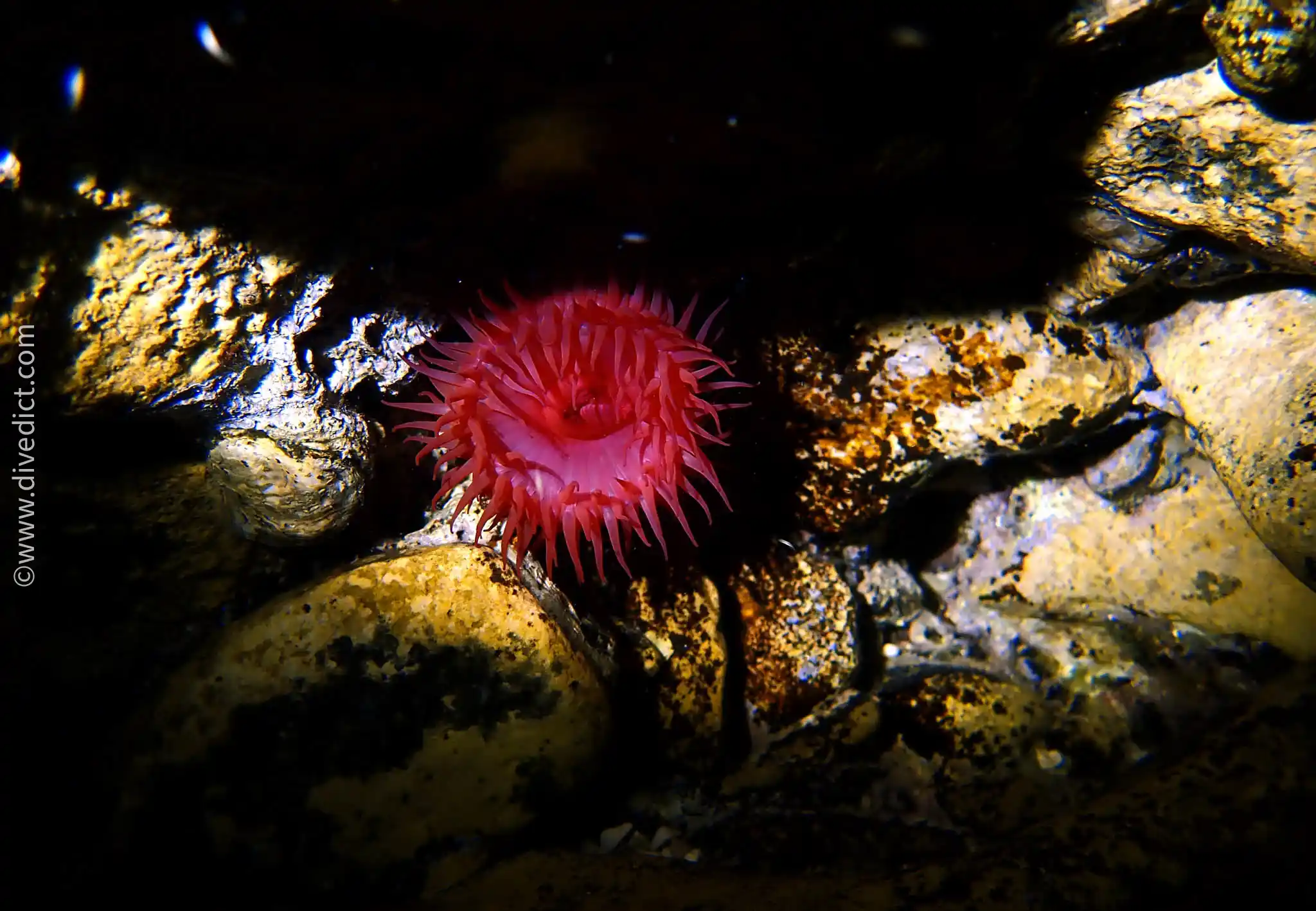
The Beadlet anemone is actually impossible to miss: bright red and with a crown of tentacles.
It grows up to 6cm tall and sits firmly on the ground with an adhesive disc.
Her head is decorated with 192 tentacles, which can be up to 2cm long.
Natural enemies
Breams, crabs, birds
Dangerous/Venomous
On the edge of its tentacle crown, they have so-called marginal sacs, which are blue-violet and can strongly nettle. So don't touch it!
Sketch
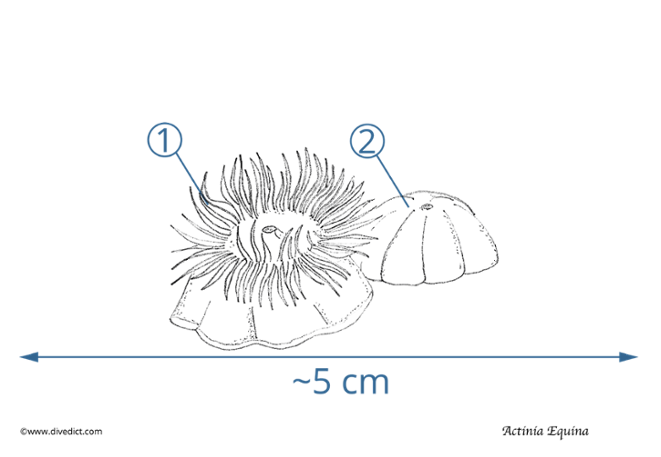
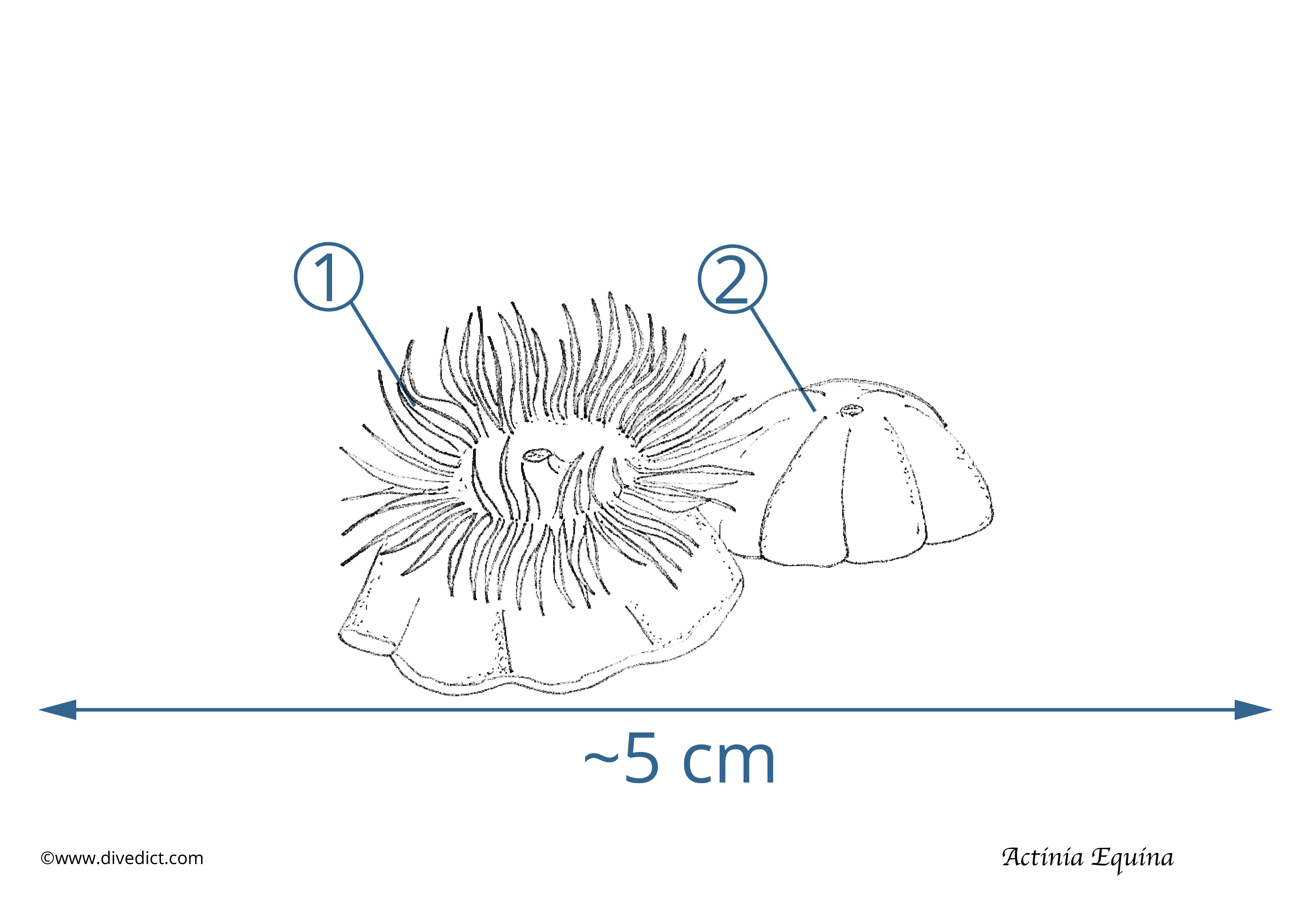
1. Tentacle crown
2. Adhesive disc
Pro tips
If you want to spot Beadlet anemones, you should look for rock recesses, crevices, and caves in the lower tidal zone — occasionally you can also find them exposed to the sun.
By the way, the common German name is due to the first descriptor Linnaeus, who compared this animal with the unerect penis of a human or domestic horse.
Sometimes you really don't want to know what's going on in people's heads...
Pic: Felician Hosp, Sabine Probst
Text: Carolina Leiter, Pia Balaka
Illustration: Dive Dict