
Yellow tube sponge
Aplysina aerophoba



Special features
Seahorses love yellow tube sponges. They are perfectly camouflaged and can curl their tails comfortably around the sponges.
Appearance
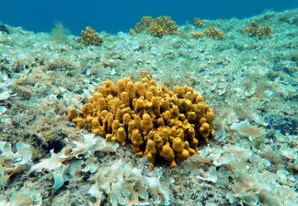
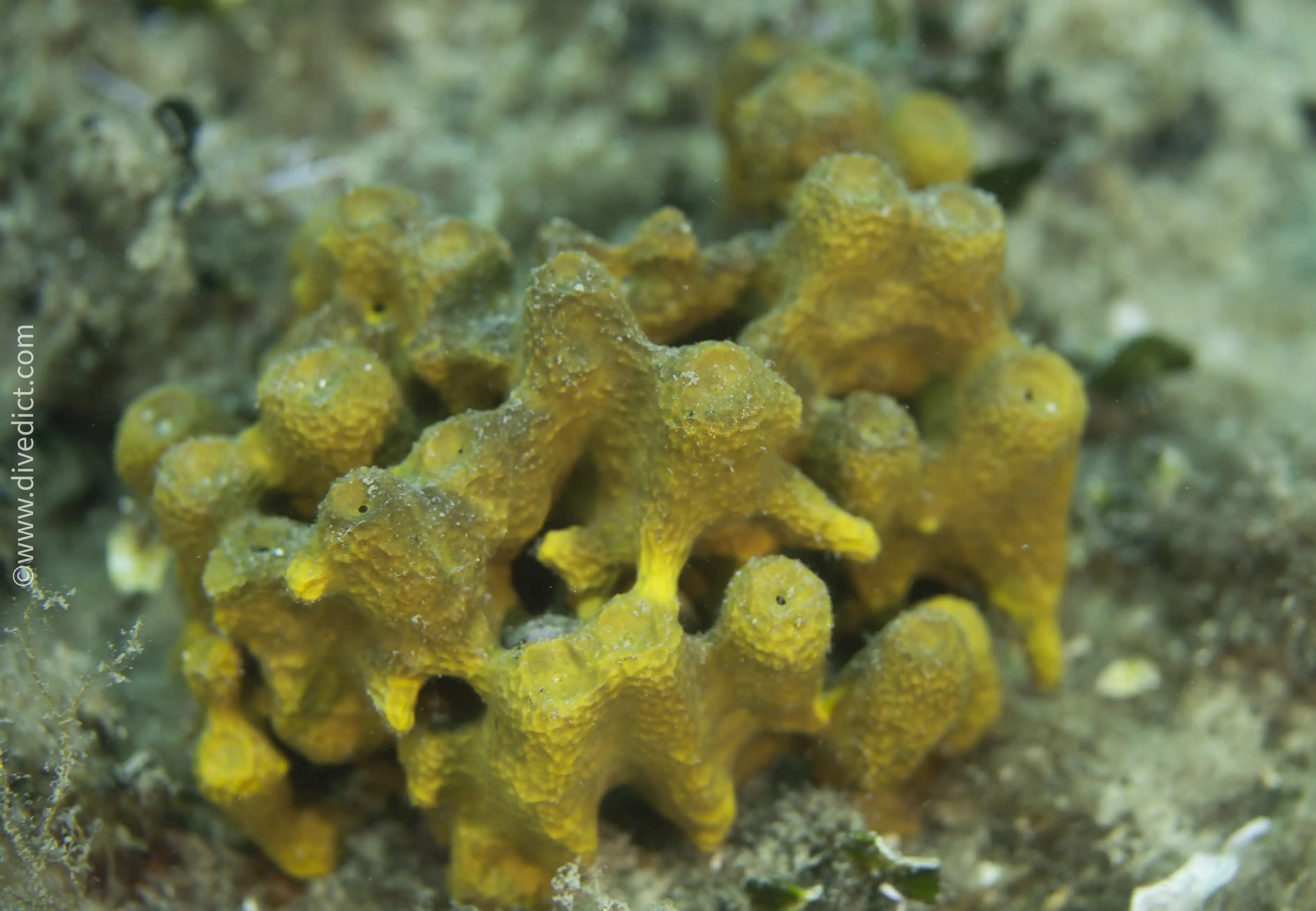
Compared to other sponges, Yellow tube sponges are massive structures.
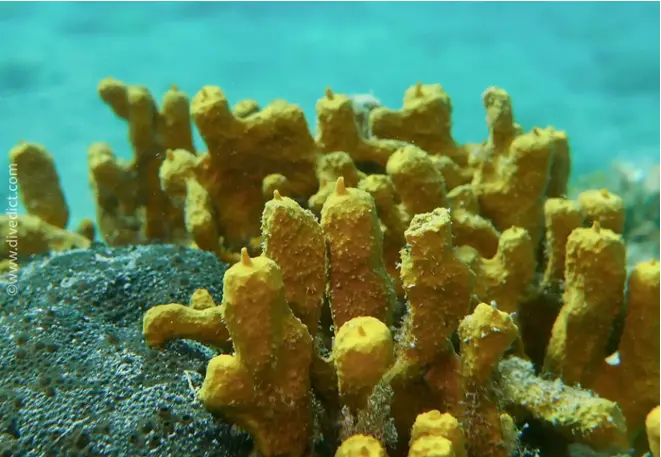
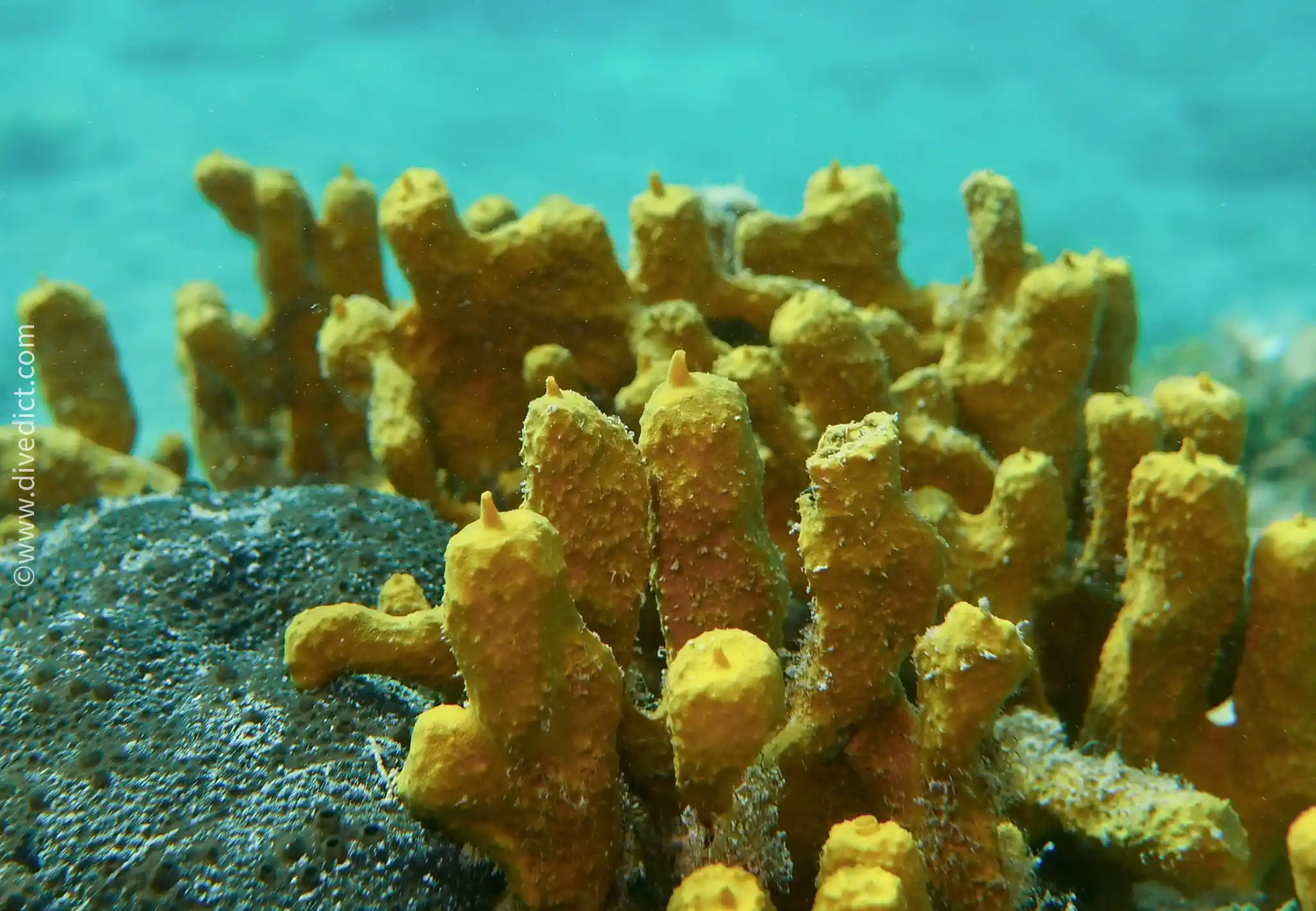
They grow in short cylindrical shapes between 20cm and 50cm tall. Looking closely, you will see large outflow openings at their ends.
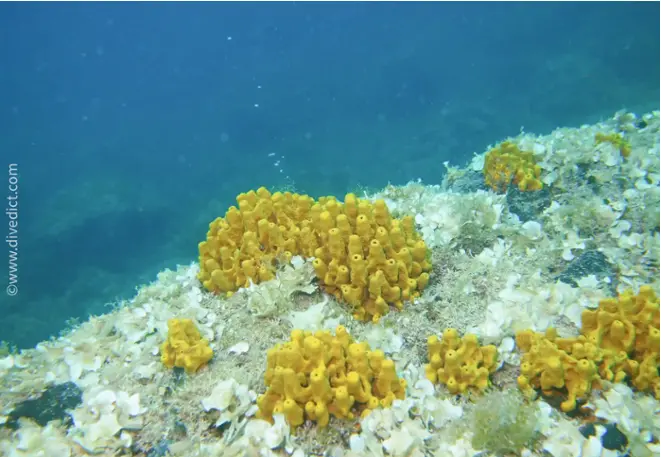
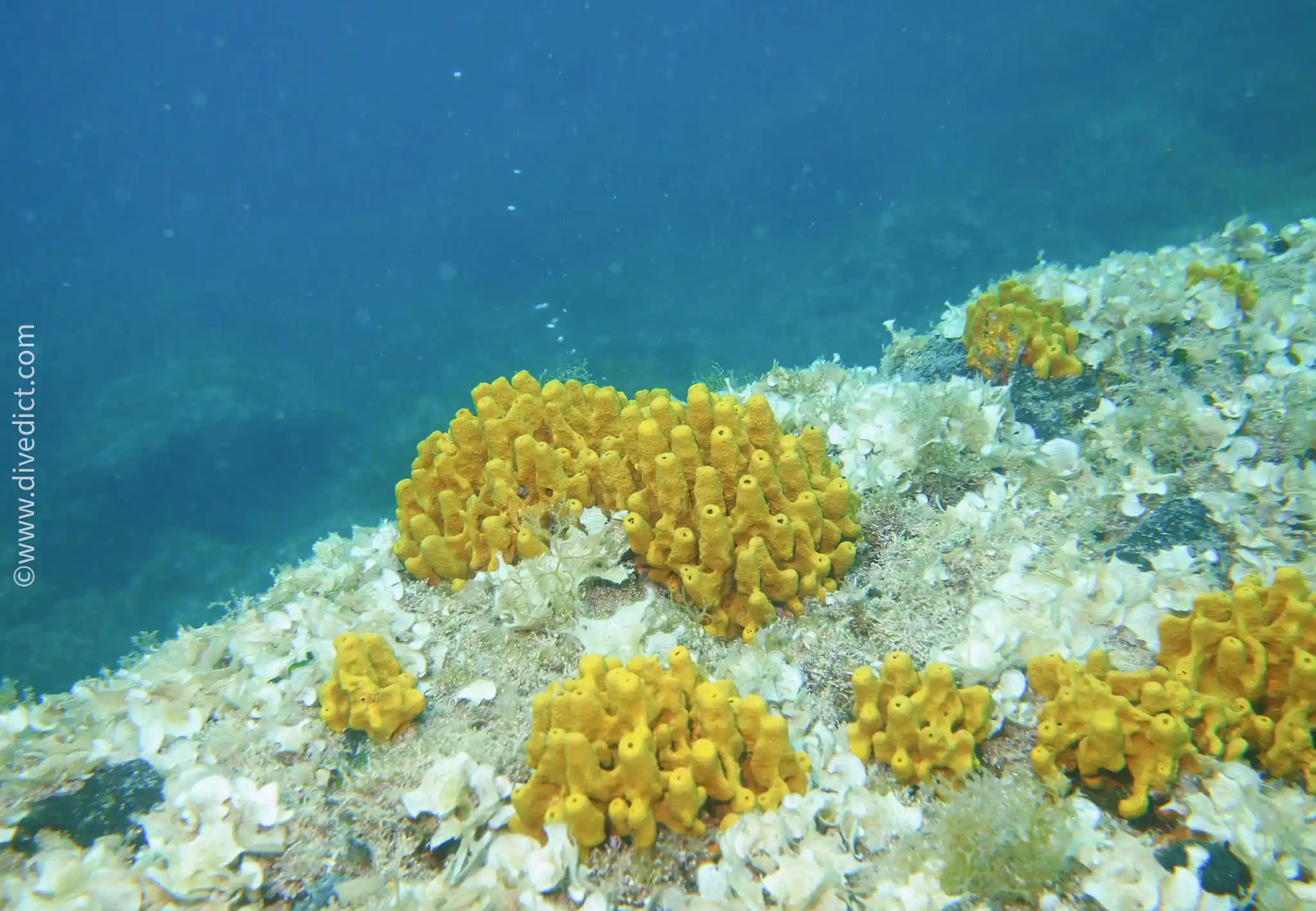
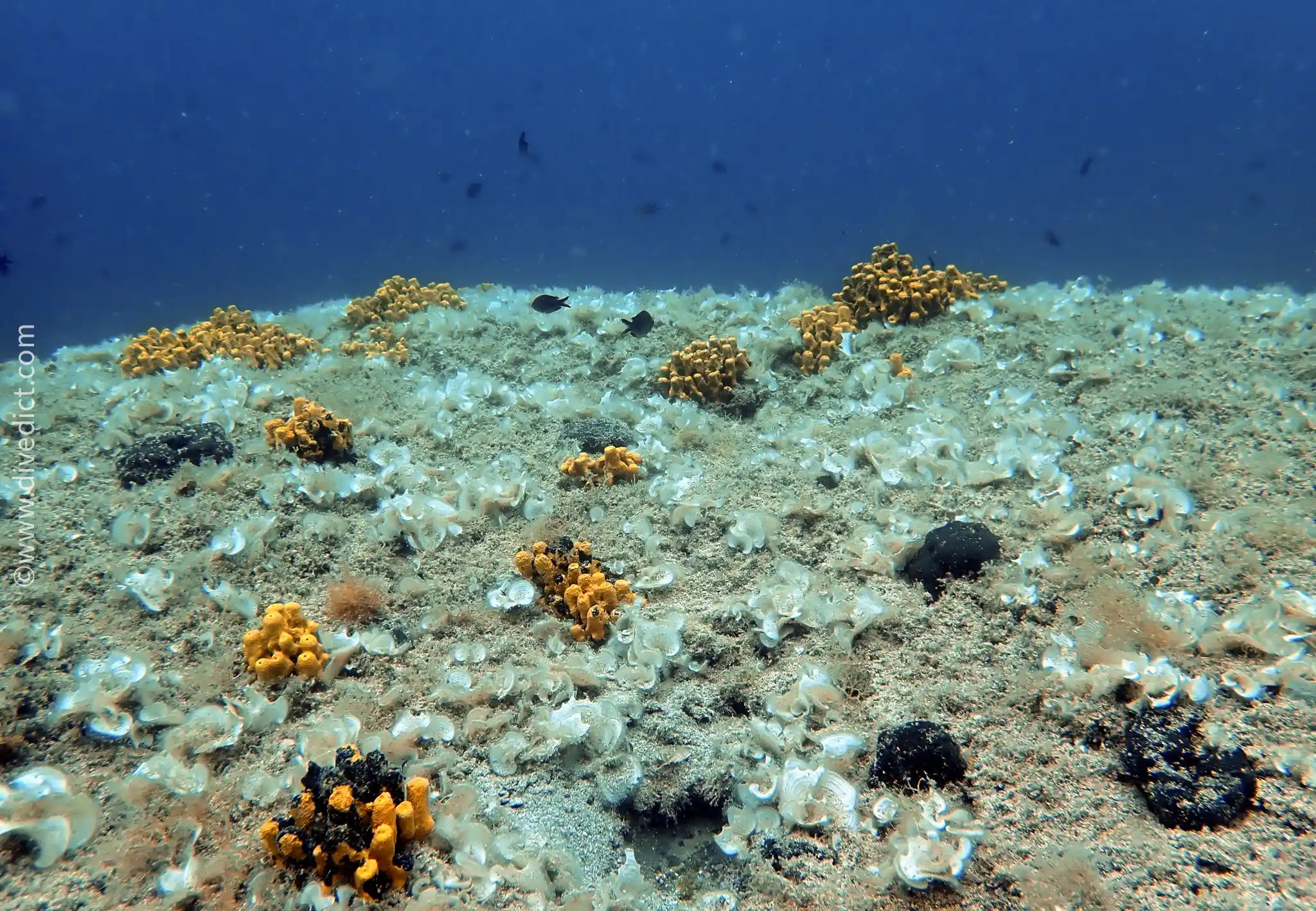
In certain places, they can form dense colonies that spread over one meter.
Even though its surface looks wrinkled, it is slimy smooth and sulfuric yellow to greenish yellow.
Natural enemies
Pisces
Dangerous/Toxic
Yellow tube sponges are neither dangerous nor poisonous.
Sketch
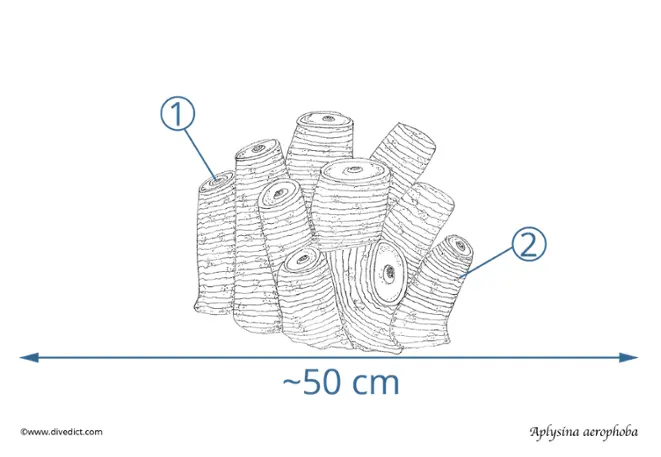
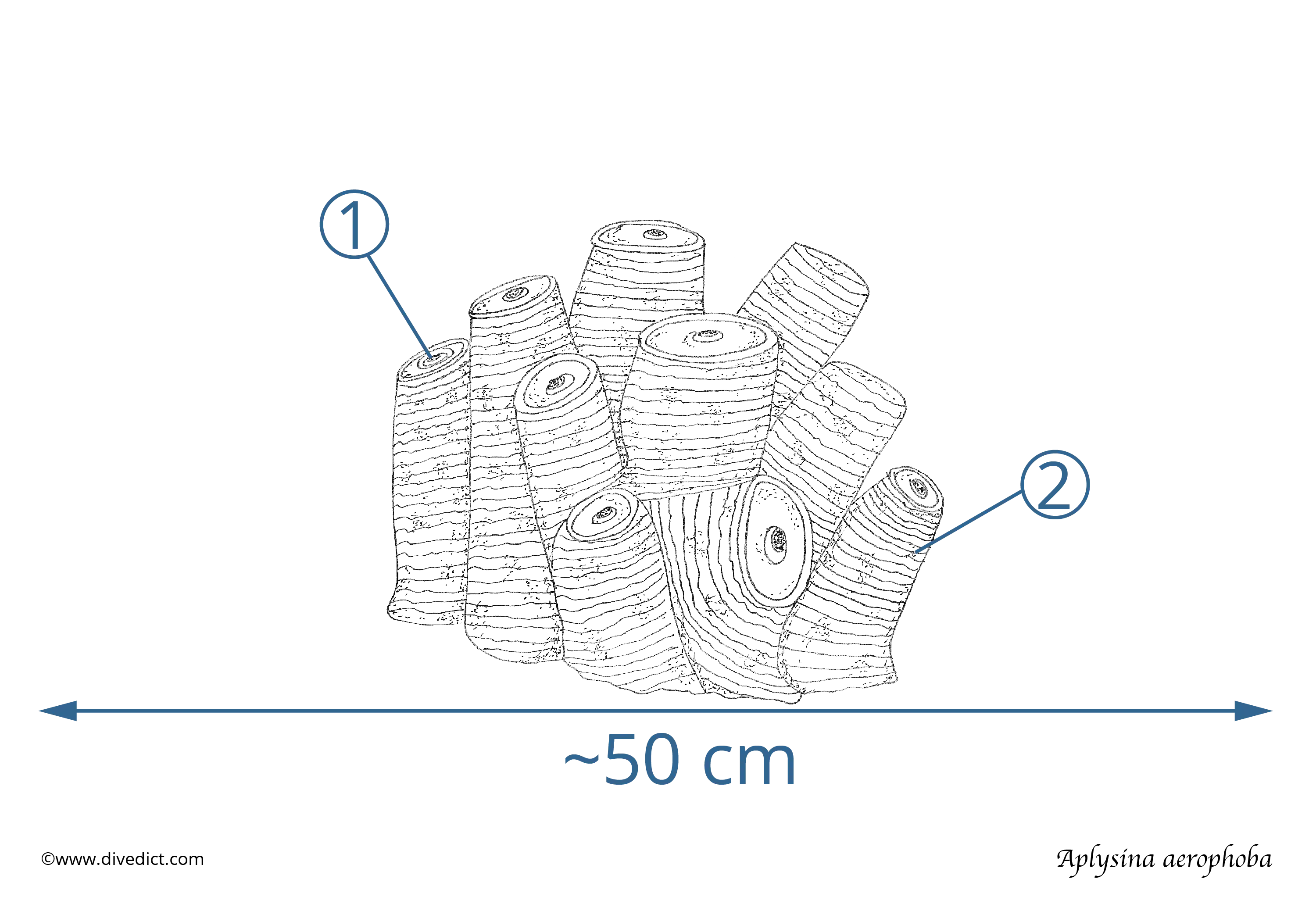
1. Outflow openings
2. Short, bulky, cylindrical outgrowths
Pro Tips
Its Latin species name translates to “fearing the air.” Why? Because it turns black as soon as it is removed from the water.
This color change is caused by the homogentisic acid, which the sponge produces to protect itself from being eaten by predators.
However, there is one snail, namely the Tylodina perversa, which can not only digest the poison of the sponge but can also use it as protection itself.
Gold sponges eat micro-organisms, i.e. phyto- and zooplankton. Food residues and germ cells are expelled again via the outflow openings.
The fertilization takes place inside the sponge, the free-swimming larvae are released into the water and settle down after some time to form new colonies.
Text: Carolina Leiter
Pic: Felician Hosp, Sabine Probst
Illustration: Dive Dict