
Antler sponges
Axinellidae




Special features
Most antler sponges live in symbiosis with algae.
When the antler sponges are exposed to sunlight, the algae produce sugar in their skin.
Appearance
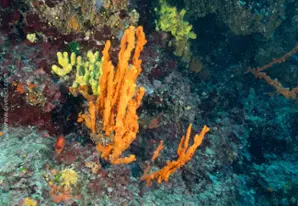
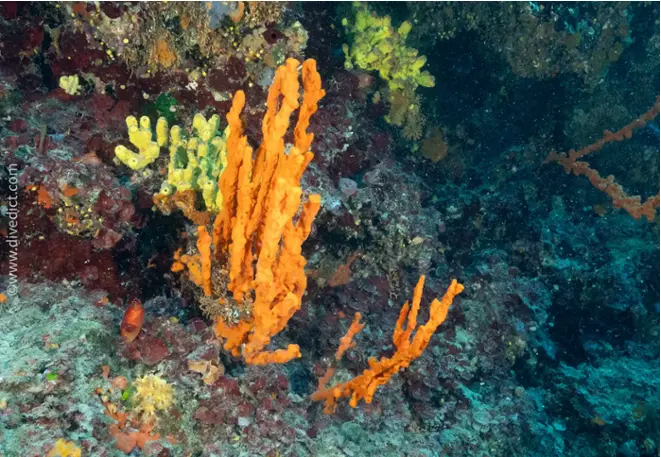
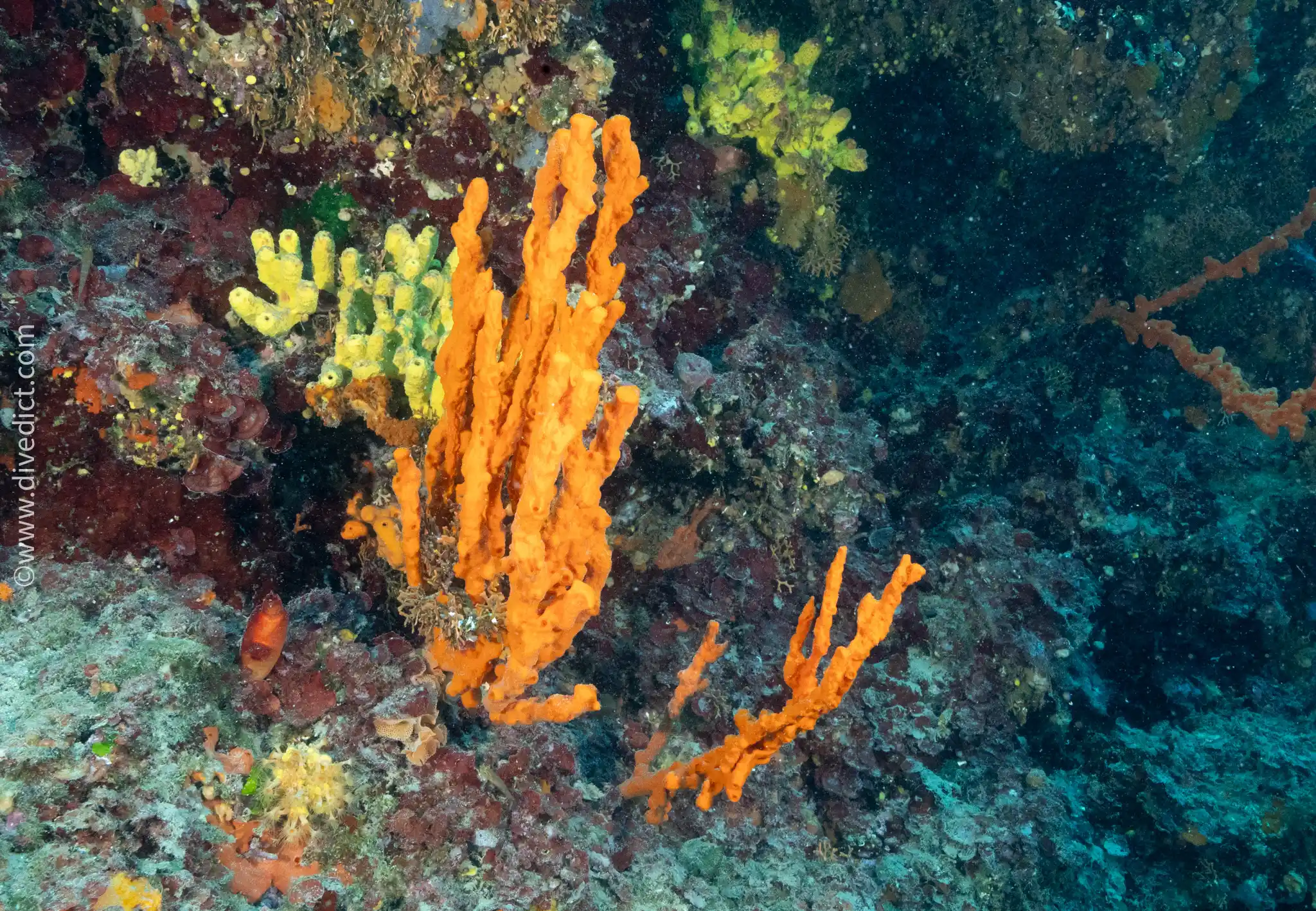
At first glance, they look like coral sticks, but in fact, they are sponges.
This special sponge family forms branches and fans that grow like shrubs or harrows.
They usually appear yellow or orange with a rough or velvety surface.
The outflow openings are tiny and evenly distributed; sometimes you can't even see them with the naked eye.
Natural enemies
Pisces
Dangerous/Toxic
Antler sponges are neither dangerous nor poisonous.
Sketch
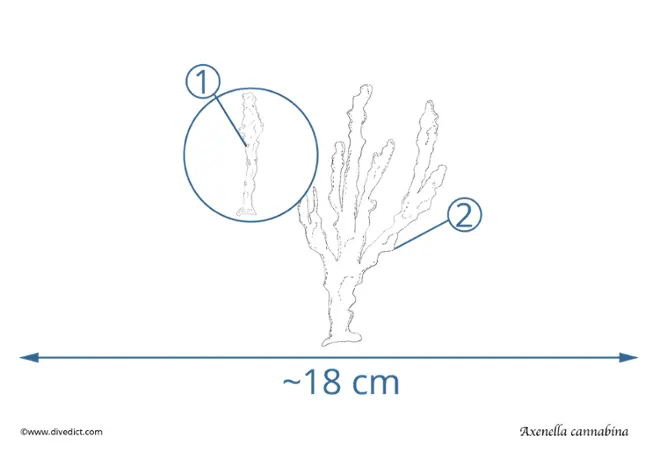
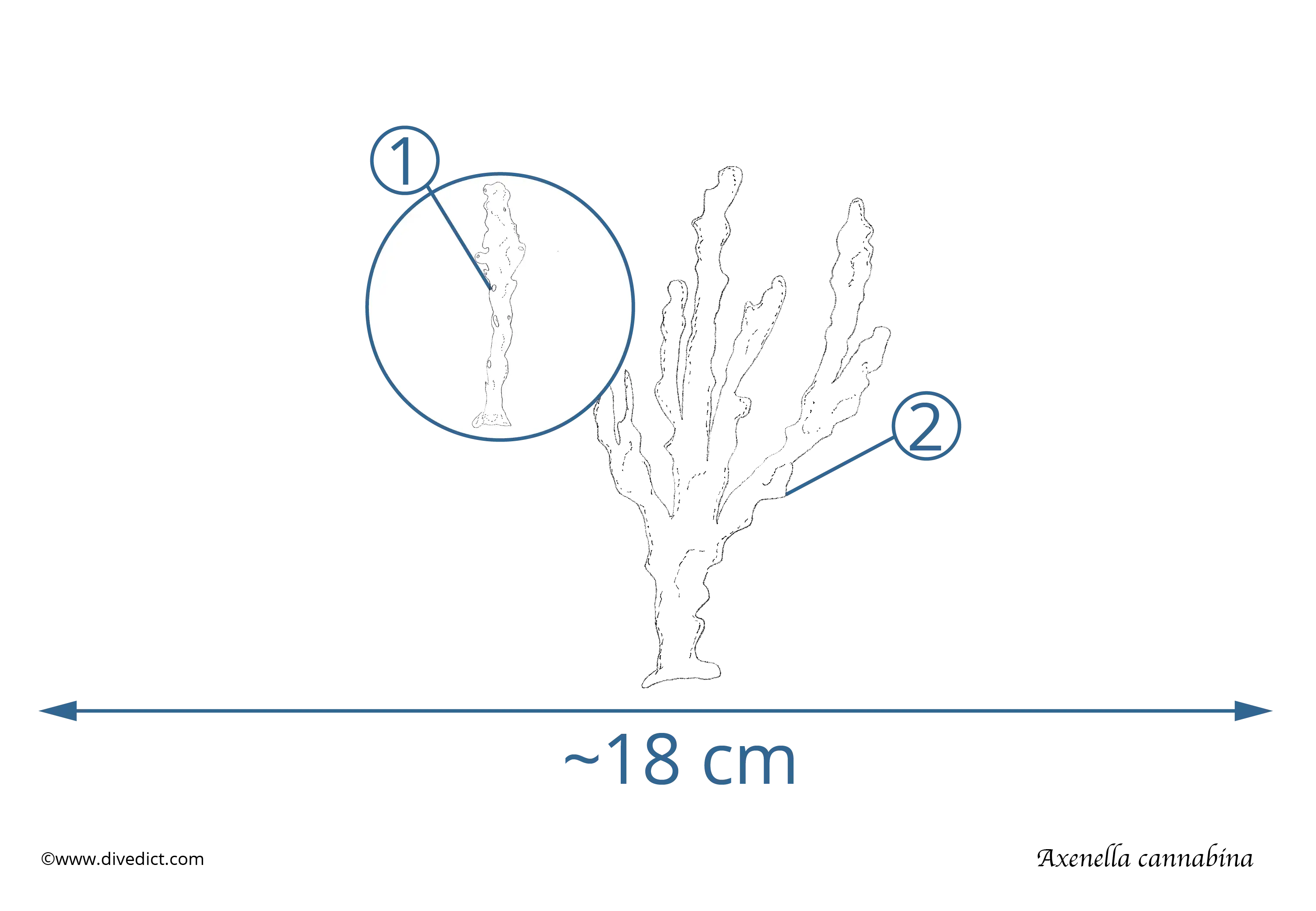
1. Outflow openings
2. Branched branches
Pro Tips
Antler sponges grow on rocky soil in shady areas such as caves or crevices, from shallow water to greater depths.
Crustal anemones particularly like to use antler sponges to better catch particles in the water. This doesn't seem to particularly bother the sponges, but other animals and algae that could grow on them are not tolerated.
Text: Carolina Leiter, Pia Balaka
Pic: Felician Hosp, Sabine Probst
Illustration: Dive Dict