
Neptune grass
Posidonia oceanica



Special features
In the Mediterranean and nowhere else — the inconspicuous Neptune grass is actually an endemic species in the Mediterranean.
Real representatives of the plant kingdom are a rarity in the algae-dominated sea.
However, this flowering plant is so successful that it forms its own habitat, the seagrass meadows.
With its dense network of rhizomes, it strengthens sandy seabeds and produces large amounts of oxygen, 1 to 14 liters per square meter per day.
The only relative grows in Australia and has the scientific name Posidonia australis.
Appearance
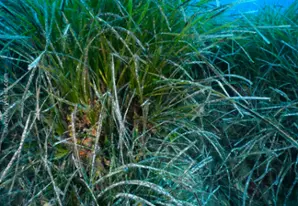
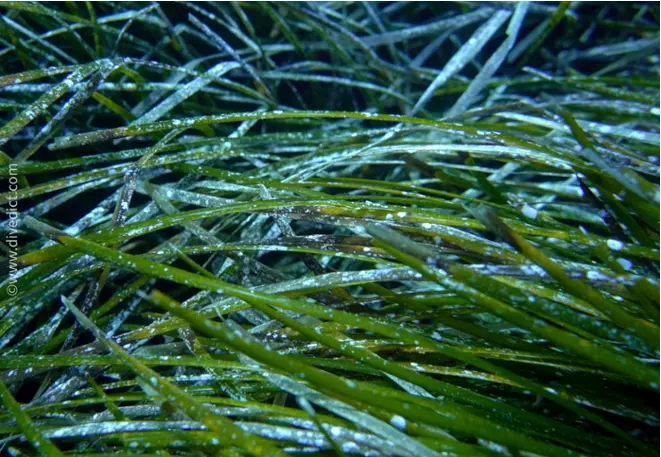
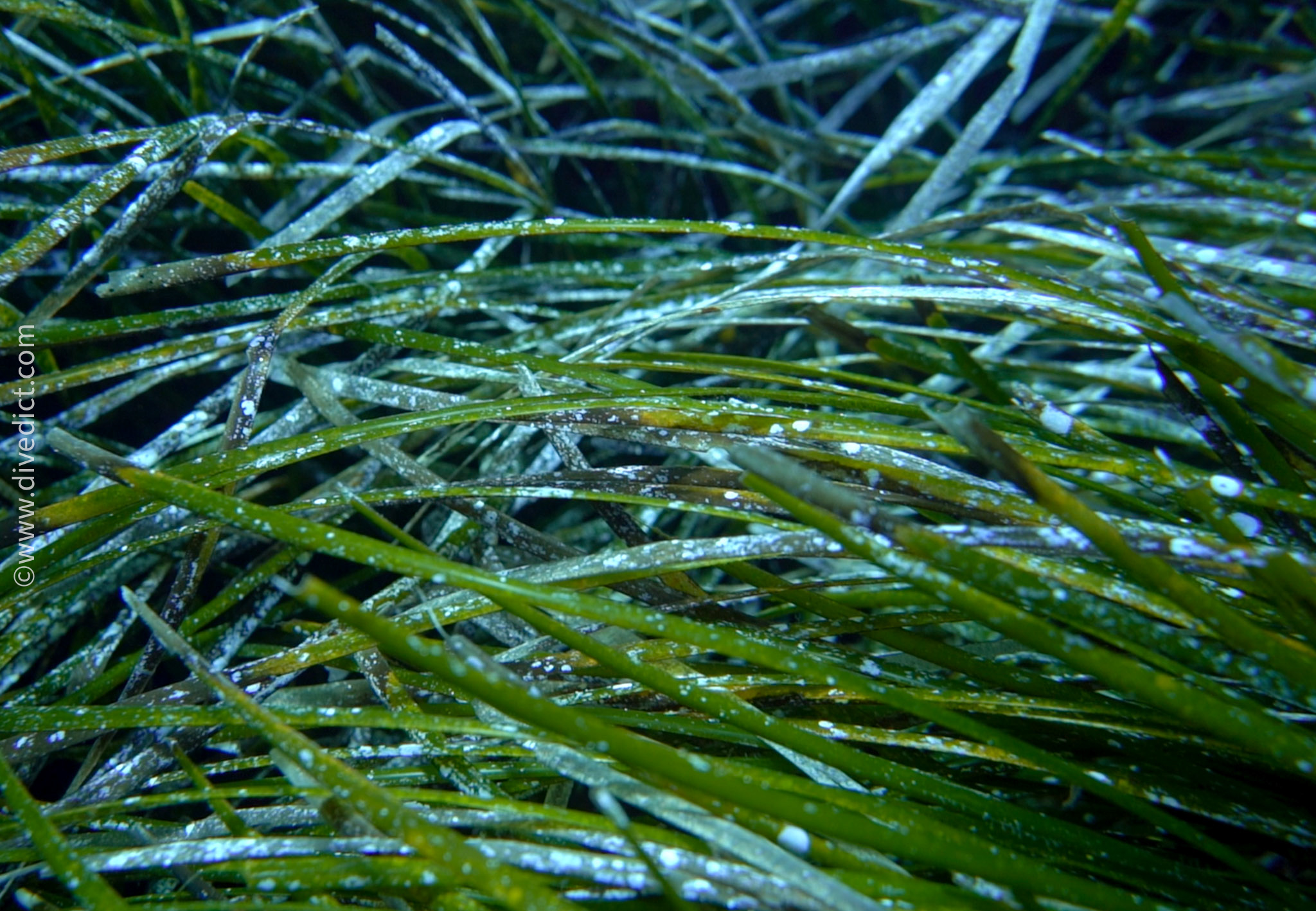
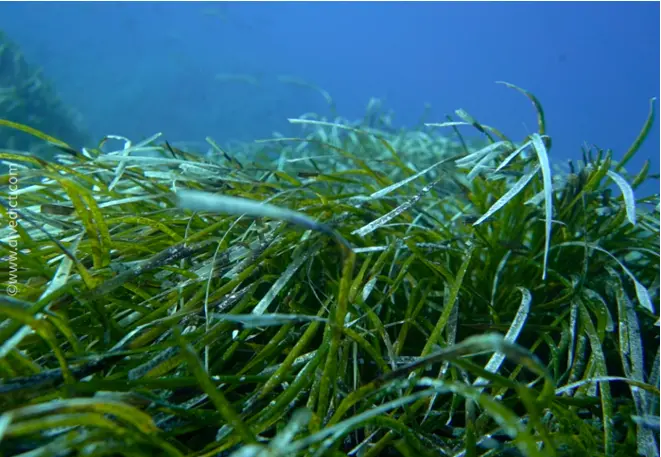
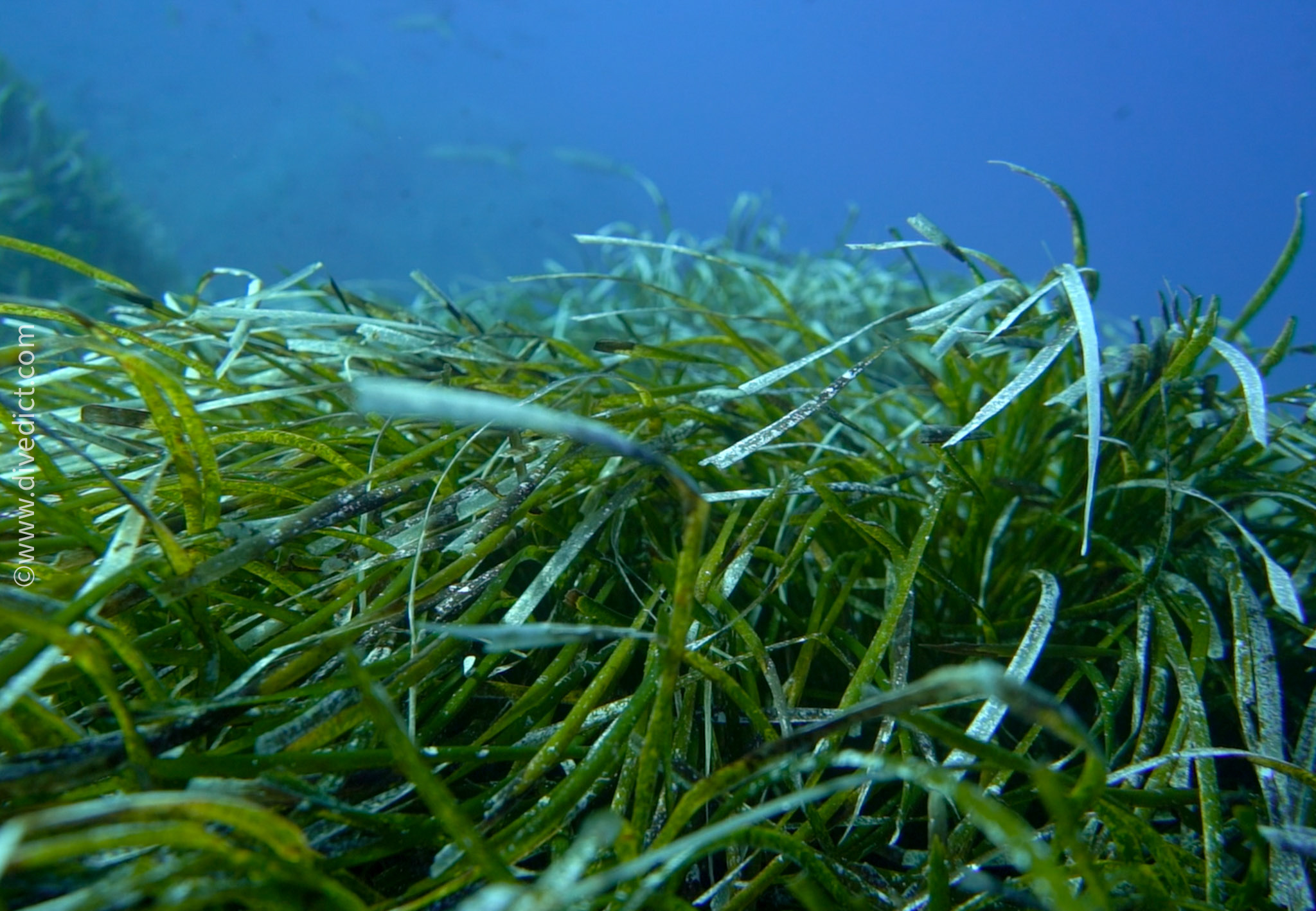
Neptune grass looks a lot like our common grass on land.
It has flattened, ribbon-shaped, long leaves that grow up to 120cm long and 1cm wide.
If you look closely, you can see 13-17 delicate parallel nerve lines, which reveal them as a real plant.
Four to six, sometimes up to ten leaves are clustered together.
During the flowering period in early summer, it forms a flower landscape of up to 15cm long with green petals, and the fruits are egg-shaped.
The flowers are very difficult to see between the leaves because they also look green and inconspicuous.
Natural enemies
No natural enemies, but man-made threats: construction, industry, tourism, mining, fishing, aquaculture, salinity fluctuations, increased water temperature, shipping traffic, wastewater, water pollution
Dangerous/Toxic
Neptune grass is neither dangerous nor toxic. If you act very clumsy, the silicate-containing leaves may cut you like paper.
Sketch
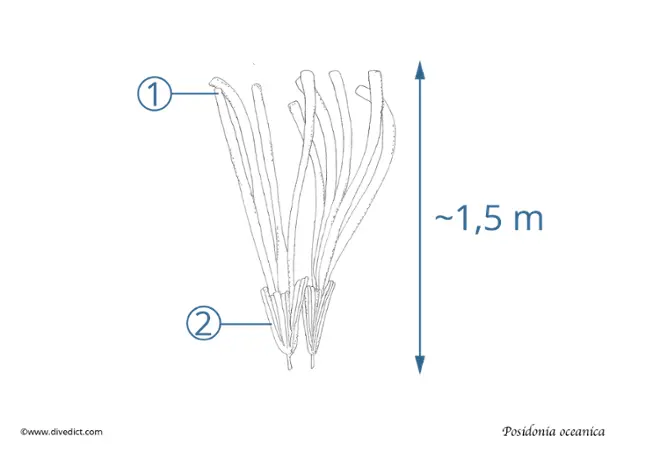
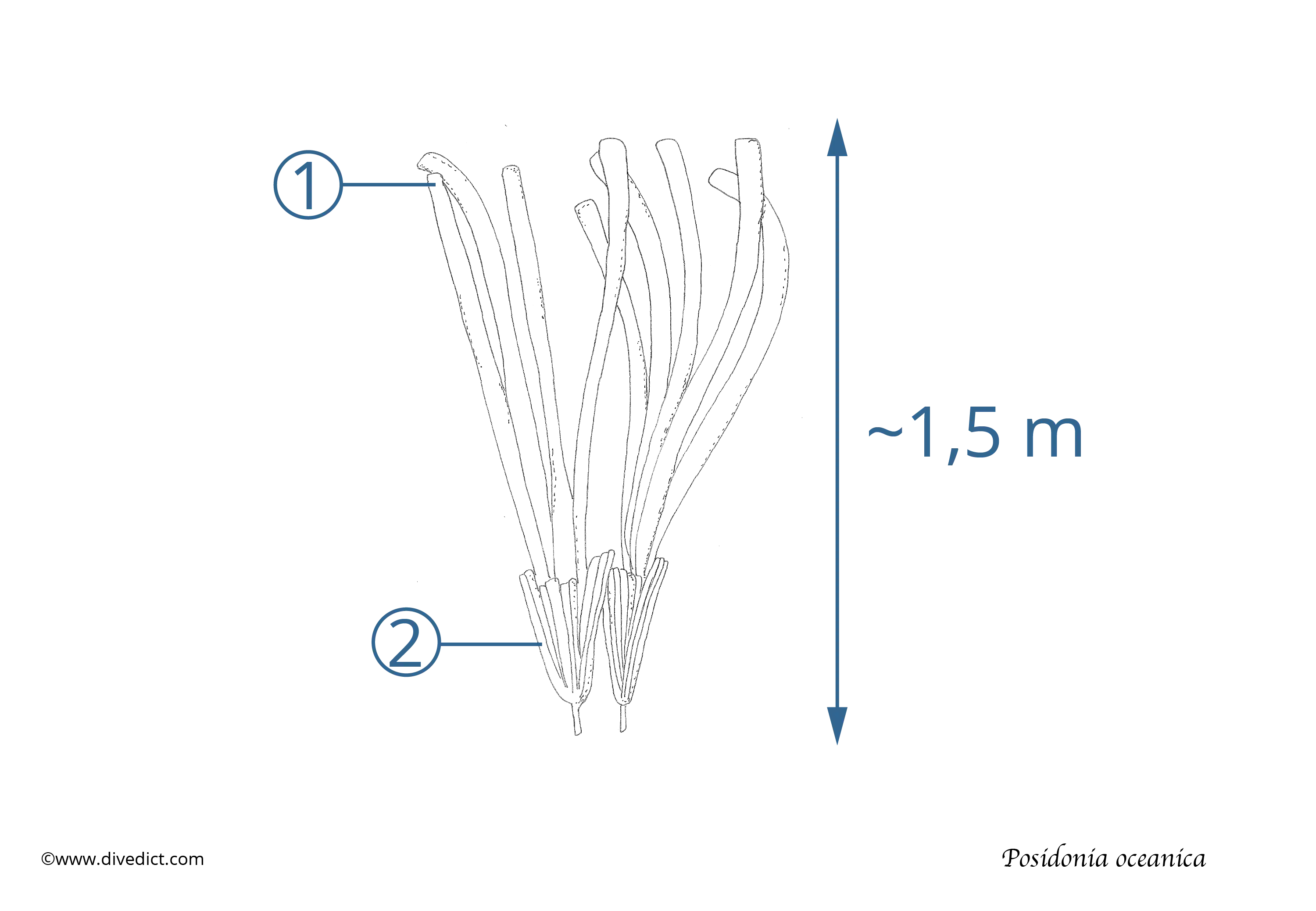
1. Ribbon-shaped, long leaves
2. Root shoot
Pro tips
Neptune grass can proudly claim to be a relic of the Tethys, which covered almost all of Europe 200 million years ago.
By the way, the largest and oldest seagrass meadow grows between the Balearic islands of Formentera and Ibiza: it is an incredible 8km long and over 100,000 years old. It was therefore also named a UNESCO World Heritage Site in 1999.
Neptune grass also plays an extremely important role in the ecosystem: in addition to oxygen production, which is, by the way, about 5 times greater than that of the rainforest, seagrass provides home and shelter for over 400 species of algae and several thousand native animal species. Young animals find protection from enemies and tides, and its wide root maze strengthens the sediment.
It particularly likes to grow in slightly sheltered locations with fine sand and good circulation, sometimes even on boulders. The vertical depth extension (i.e. the length of the roots) depends on hydrodynamics and the amount of light. As a result, entire reefs can form in sheltered bays and shallower areas, which grow just below the water surface. When the water is clear, you can find small areas of seagrass even at a depth of 50m because the sunlight needed for photosynthesis penetrates these depths.
However, the species is in sharp decline due to water heating, dying at 20°C; anchoring ships and coastal barriers affect it as well as water pollution. A single motor yacht can destroy up to one hectare of seagrass in one day. This is an ecological disaster because Neptune grass provides a breeding ground for many fish, snails and other animals, and protects the coasts from erosion. As a result, beaches are not eroded by waves.
Text: Carolina Leiter
Pic: Dive Dict
Illustration: Dive Dict