
Yellow scroll coral
Turbinaria reniformis



Special Features
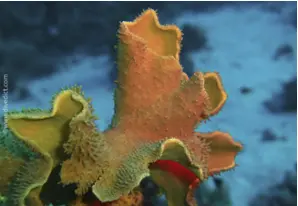
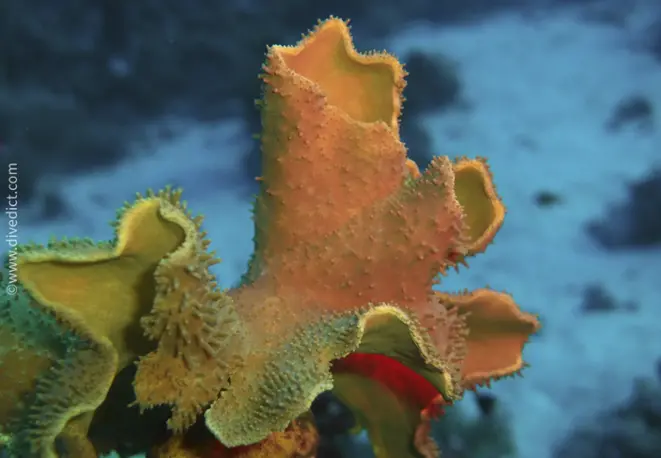
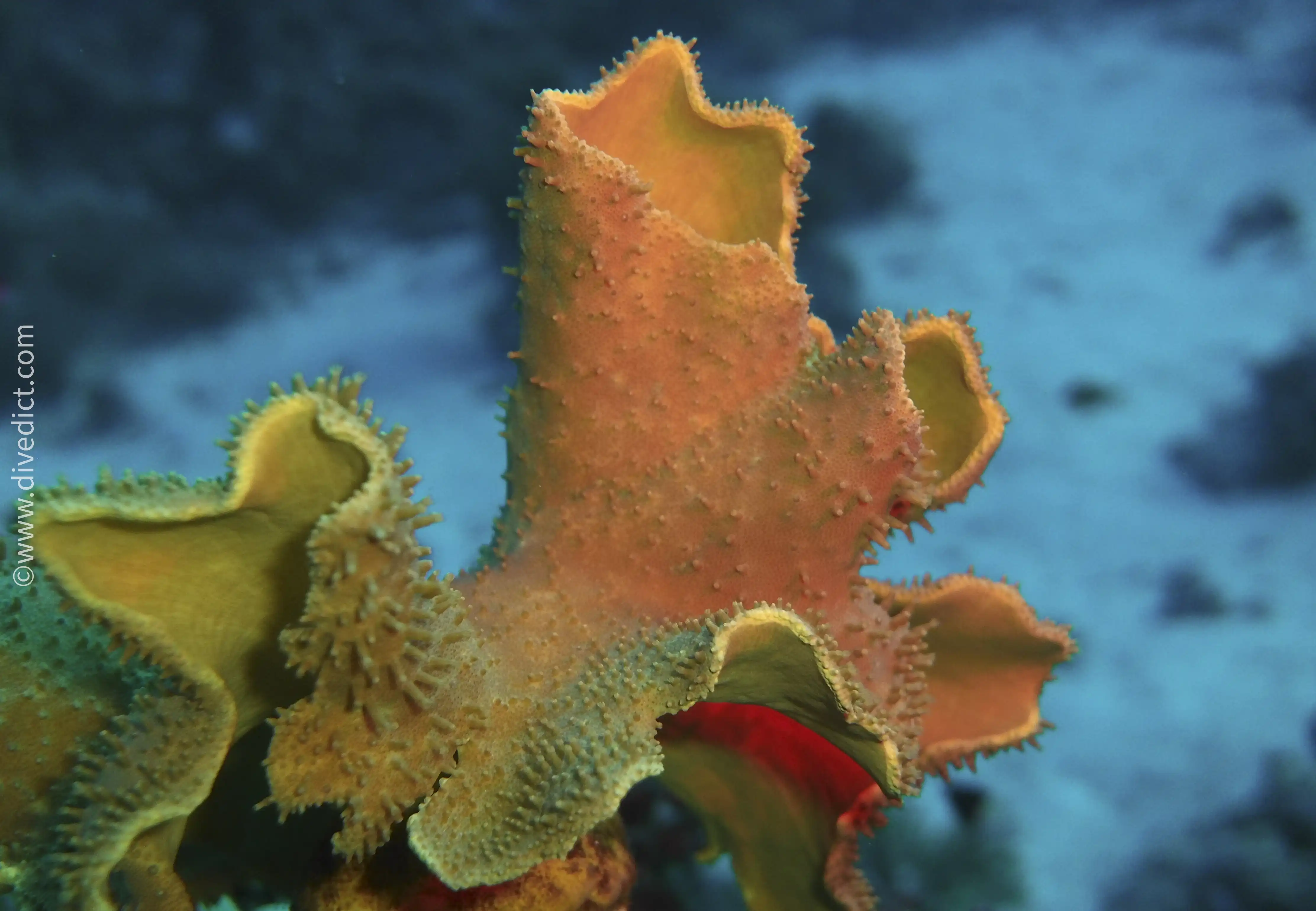
Turbinaria reniformis is a stony coral from the family Dendrophylliidae. It is particularly known for its bowl-shaped or undulating, leaf-like structures that provide a large surface area for light absorption.
Appearance
The colonies typically form horizontally oriented, plate- or cup-shaped structures with distinctly wavy edges. The color varies from greenish to brown to yellowish. The polyps sit on the upper side of the structure and are visible as fine hairs when the coral is open.
Natural Enemies
Certain coral-eating fish, sea urchins, and also parasitic snails can cause damage.
Dangerous/Toxic
Not dangerous or toxic to humans.
Sketch
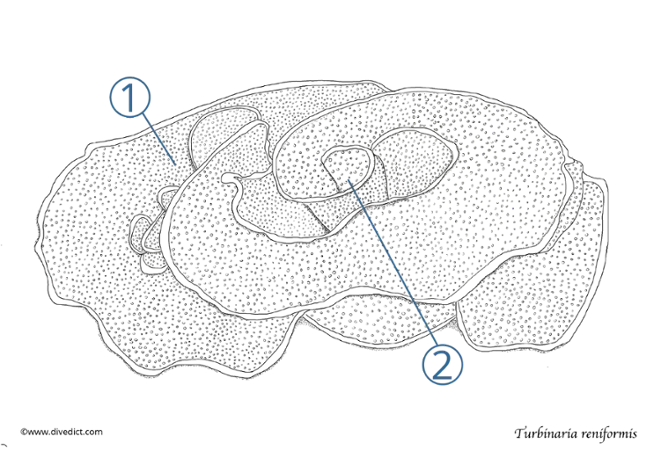
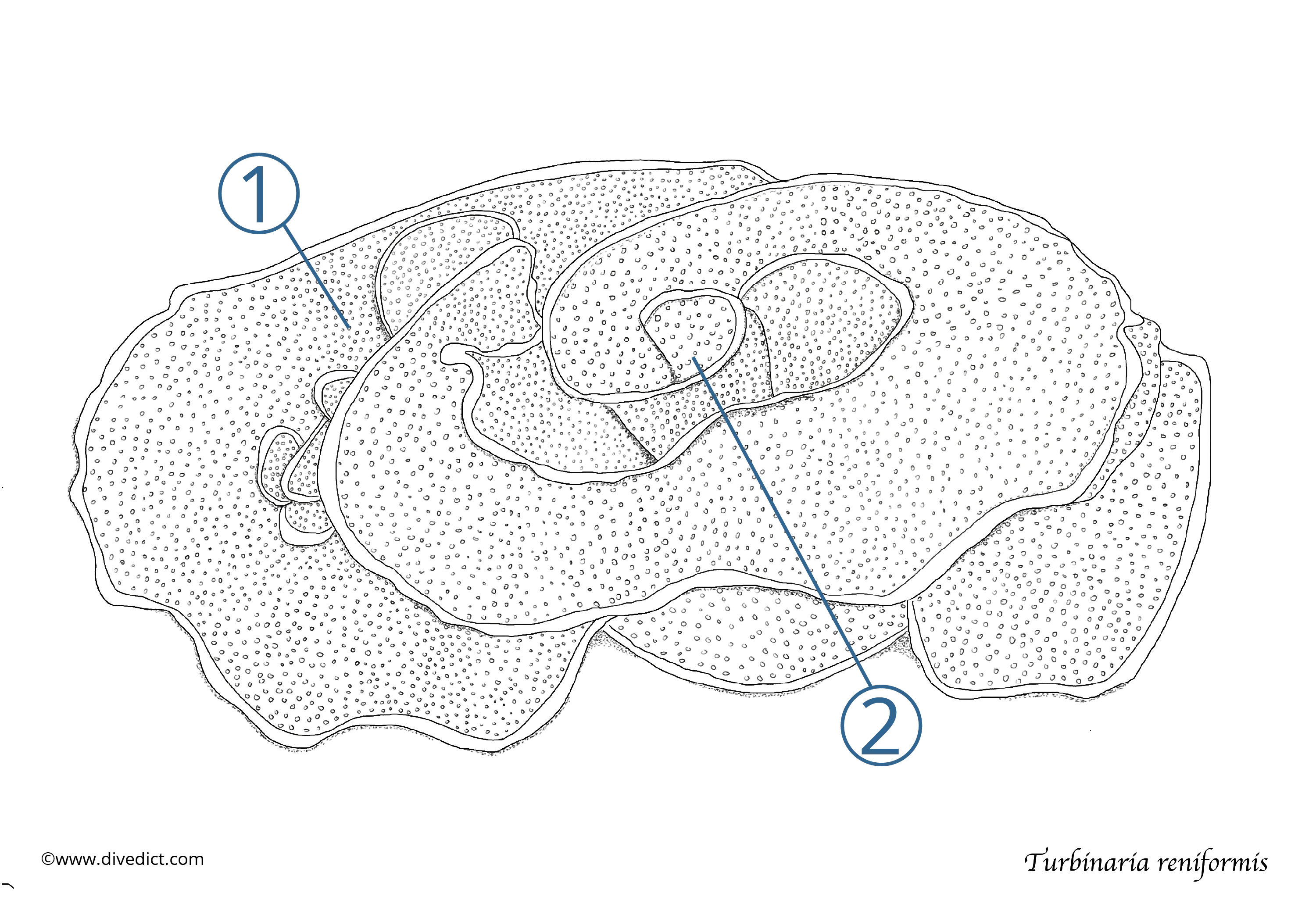
1. bowl-shaped structure
2. polyps
Pro Tips
Best observed on sunny days in shallow reef areas – look out for the plate-shaped structures that usually align horizontally.
When you dive into backlight, the edges of the coral often appear translucent – ideal for impressive underwater photos. Do not touch the coral; although it appears robust, even light contacts can injure the polyps.
The large colonies provide habitat for small reef fish and shrimp; with a little patience, interesting microhabitats can often be observed. These corals prefer to grow in areas with strong currents, so pay attention to your buoyancy and current to avoid unintentionally drifting against them.
Text: Dive Dict
Pic: Felician Hosp
Illustration: Dive Dict