
Acropora humilis
Acropora humilis




Special features
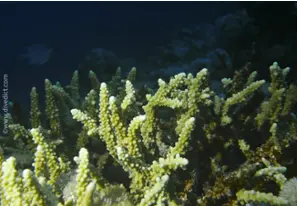
Thanks to their strong anchoring, they are sturdy and important reef builders.
Appearance
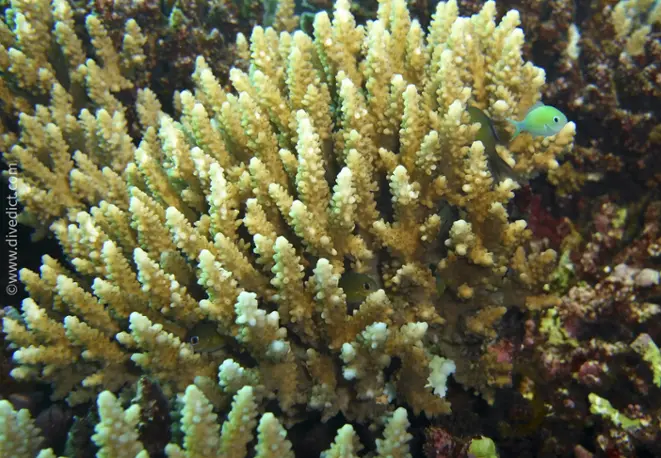
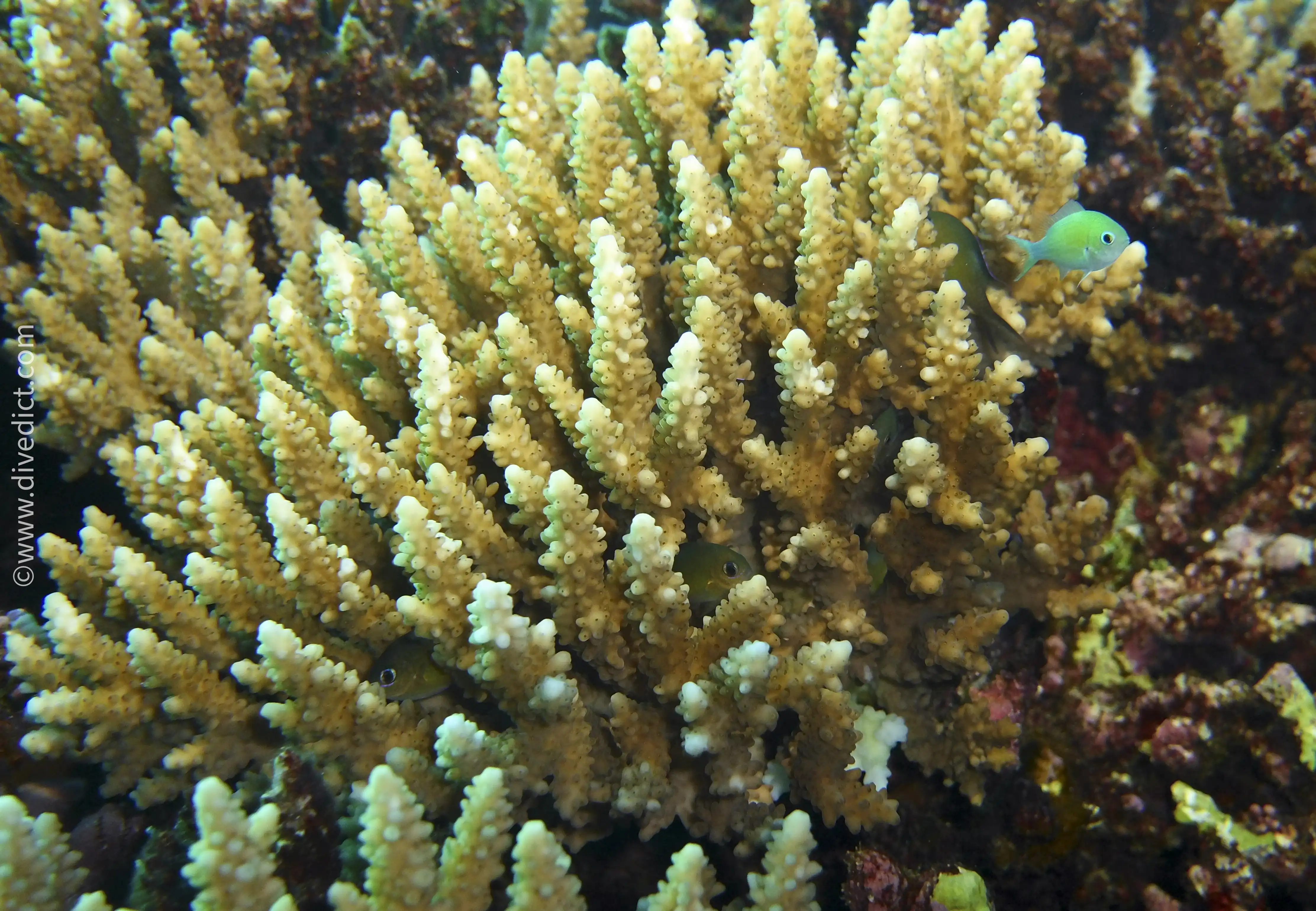
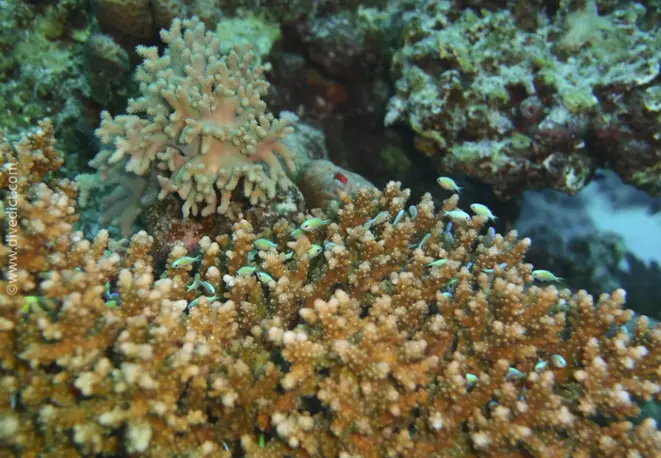
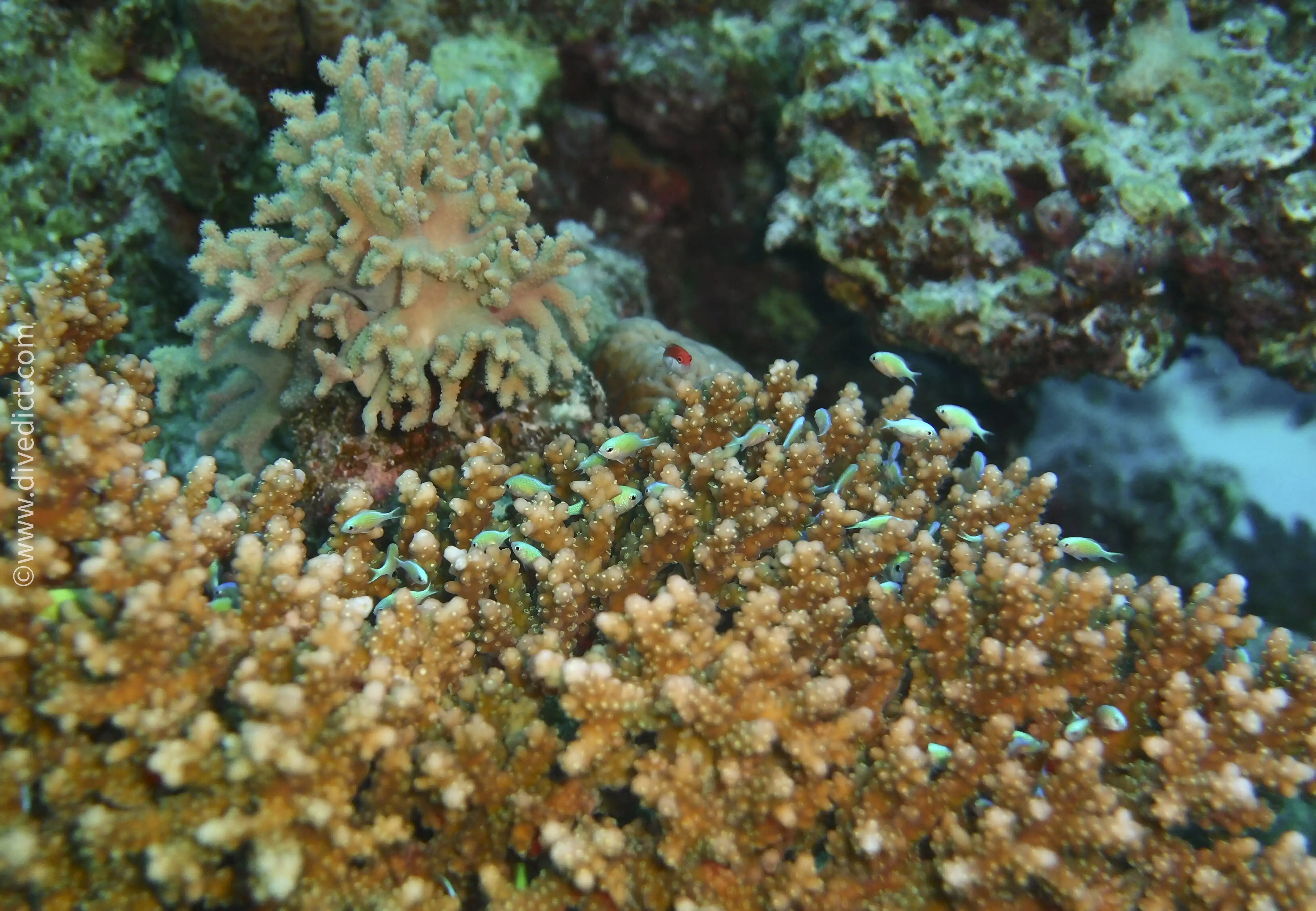
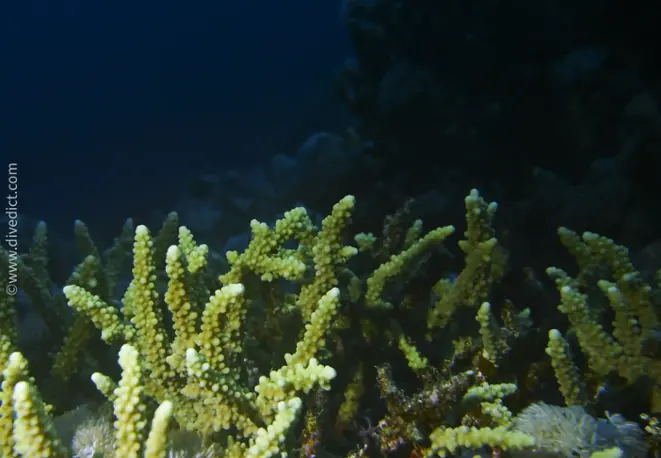
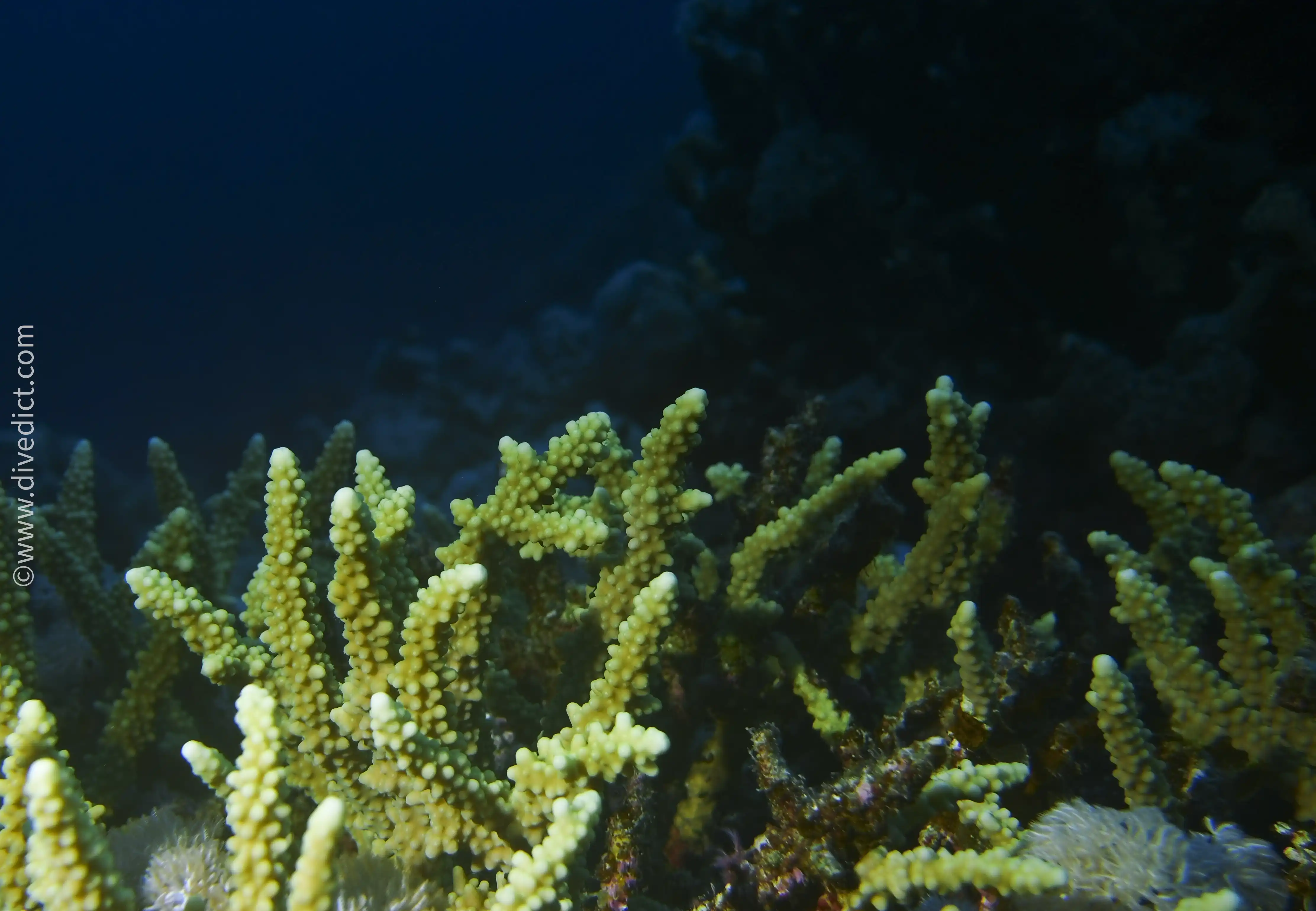
These corals usually don’t grow larger than 40 cm across, but don’t let their size fool you—they pack a punch. Anchored firmly to a central base, they spread out their broad, flat surfaces to soak up as much sunlight as possible. Their branches feature large axial corallites surrounded by smaller, neatly arranged ones, almost like blossoms on a twig.
Their color range is as diverse as the reef itself: brown, blue, pink, yellow-green, or creamy white—there’s a shade for every underwater mood.
Natural enemies
Fish
Dangerous/Venomous
The squat antler coral is neither dangerous nor venomous.
Sketch

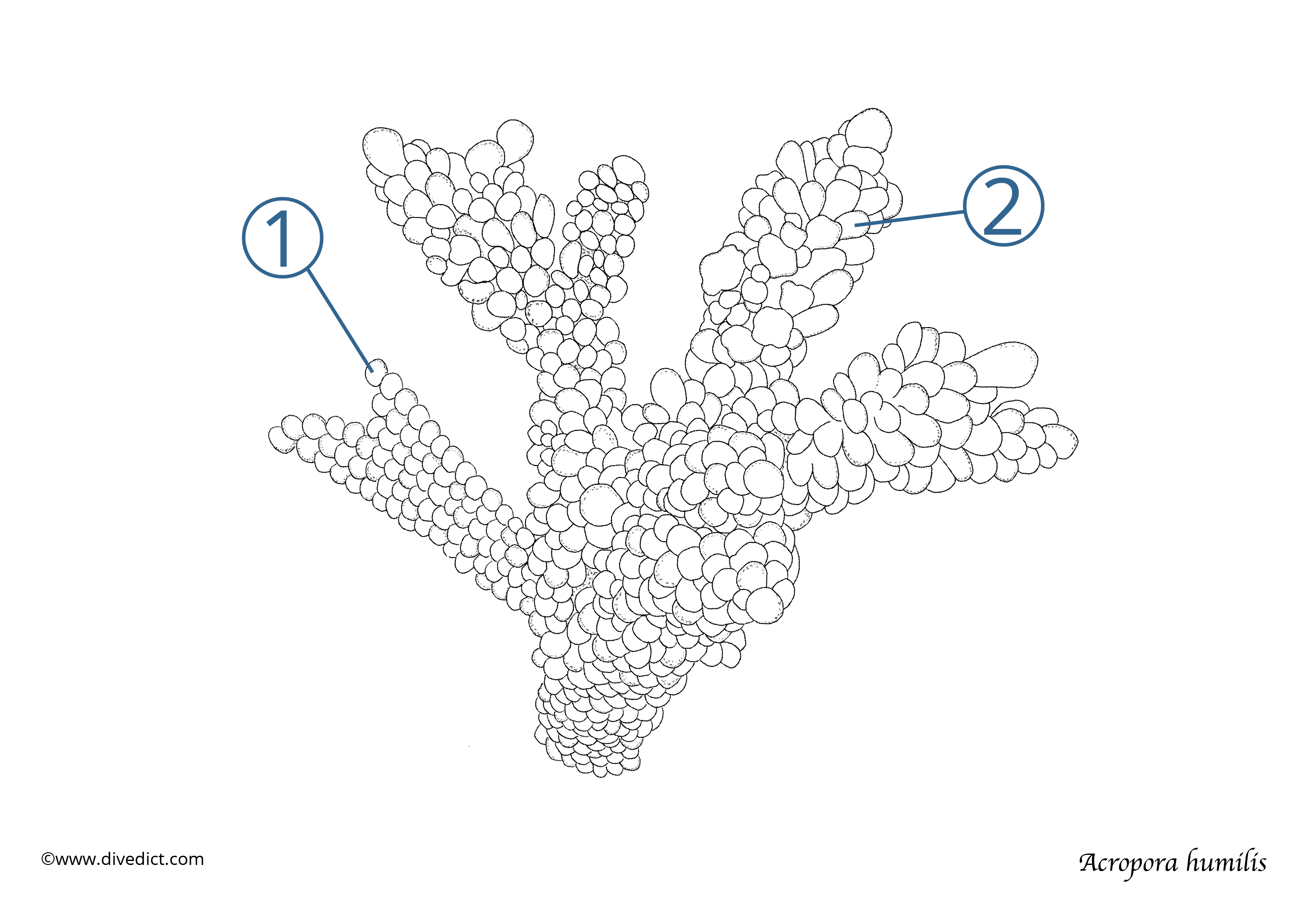
1. round form
2. polyps
Pro tips
Like many reef-builders, their polyps live in close symbiosis with zooxanthellae—tiny algae that provide the coral with energy from sunlight. These corals are incredibly widespread and occur in large numbers, making them key players in reef ecosystems.
You’ll spot them in the intertidal zone, on reef flats, along reef edges, and upper reef slopes. In shallow zones, colonies are often exposed during low tide—an unforgettable sight. Despite their modest size, they are important reef builders and contribute significantly to the structure and biodiversity of tropical reefs.
Text: Carolina Leiter
Pic: Felician Hosp
Illustration: Dive Dict