
Flabellinidae
Aeolidida



Special features
Flabellinidae are the thieves of the snail world: They feed on cnidarians, storing their stinging capsules in their spectacular skin appendages to use them for their own defense.
In the process, they swallow the stinging capsules without triggering them and transport them to their digestive gland, whose extensions reach into their skin appendages.
Appearance
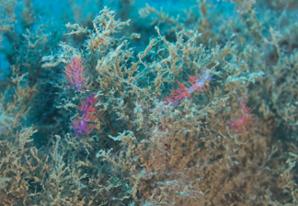
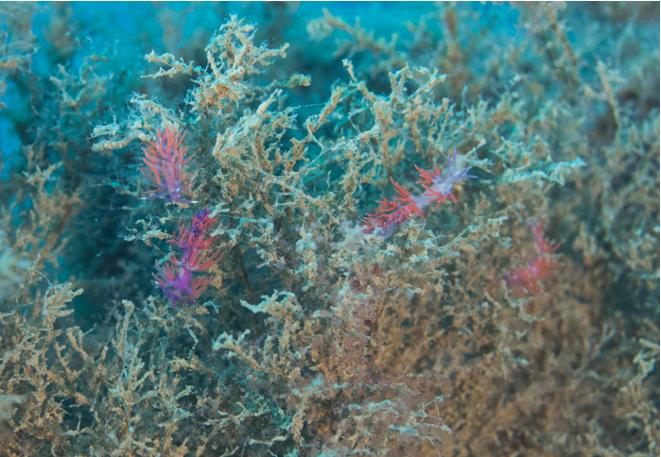
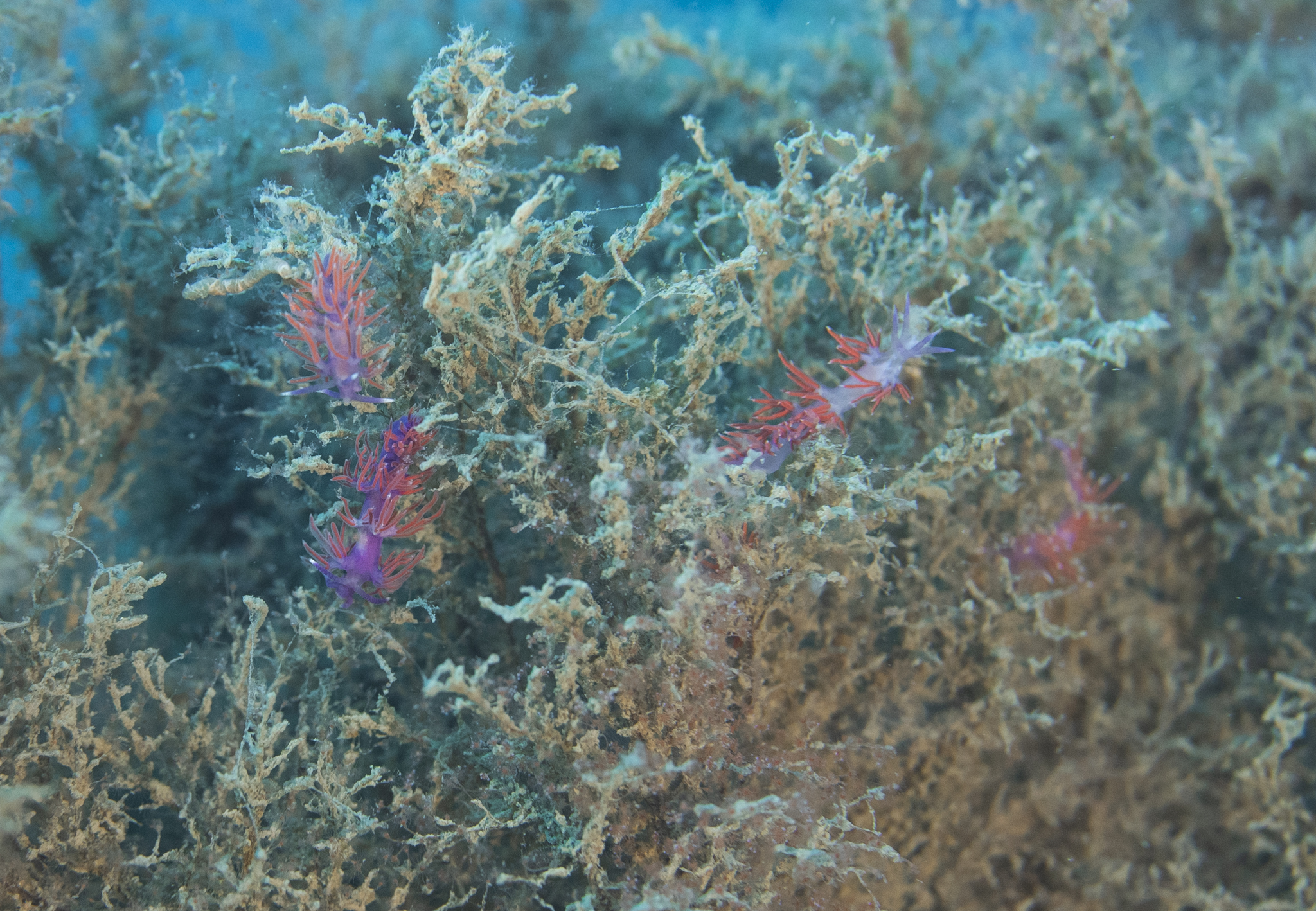
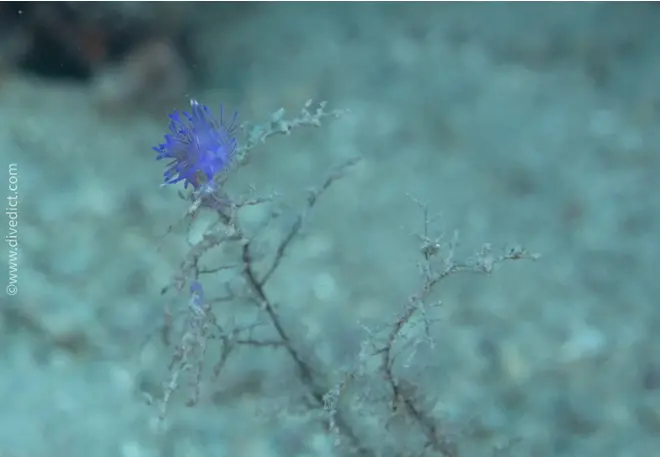
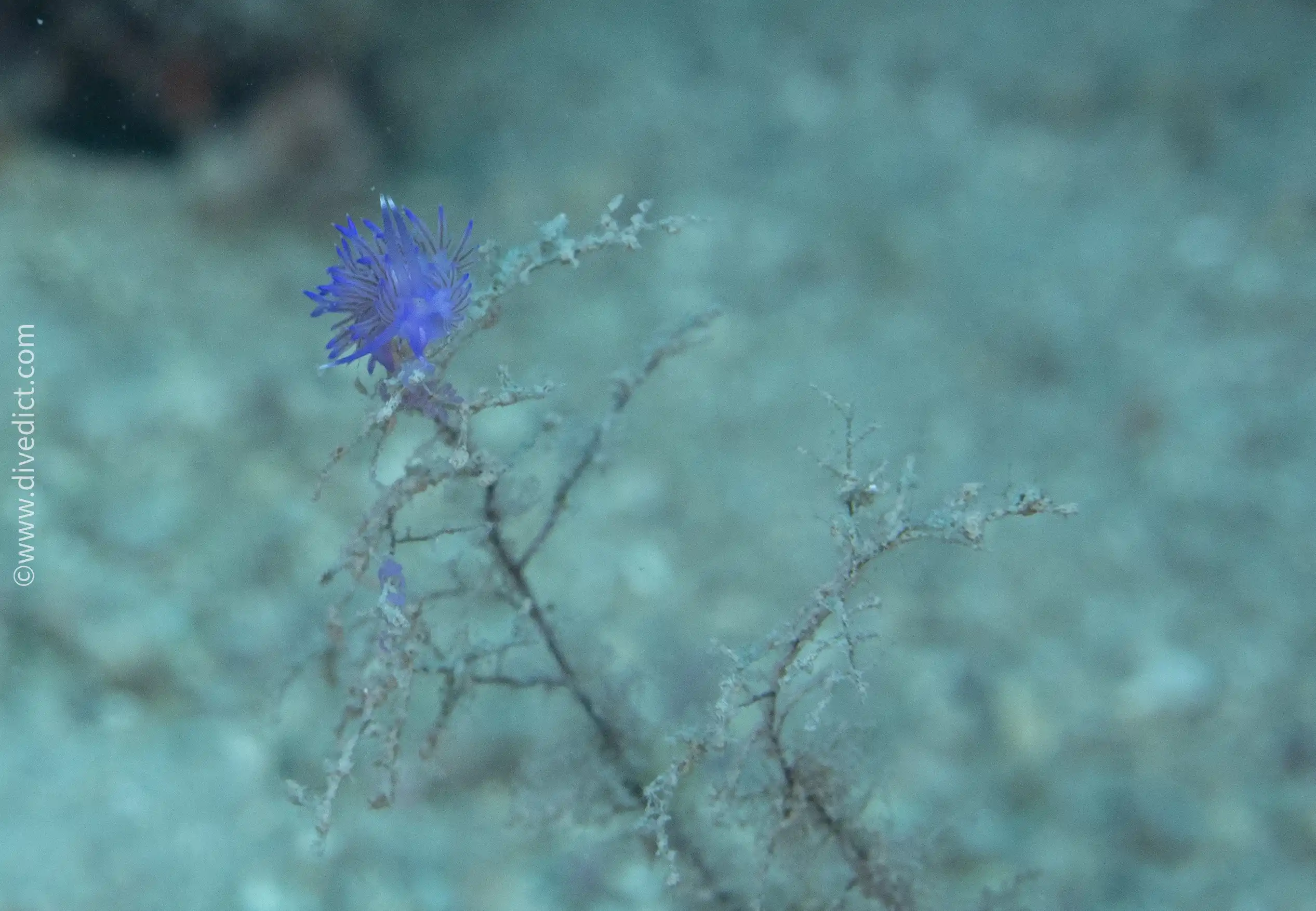
Thread nudibranchs look like they’re from outer space:** Their soft bodies are covered in brightly colored skin protrusions called cerata. However, they remain tiny, typically just a few centimeters in length.
They belong to the nudibranchs, meaning they have no shell. Instead, they have a pair of long head tentacles and a pair of oral tentacles. Despite their soft bodies, they possess a sturdy radula and jaws.
Different species can be distinguished by their coloration.
Natural enemies
Predatory fish
Dangerous/Venomous
With nettle capsules in their skin appendages, they defend themselves against predators.
Sketch
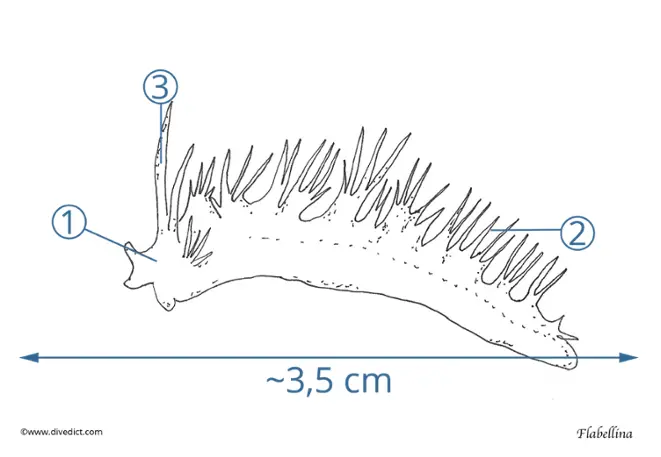
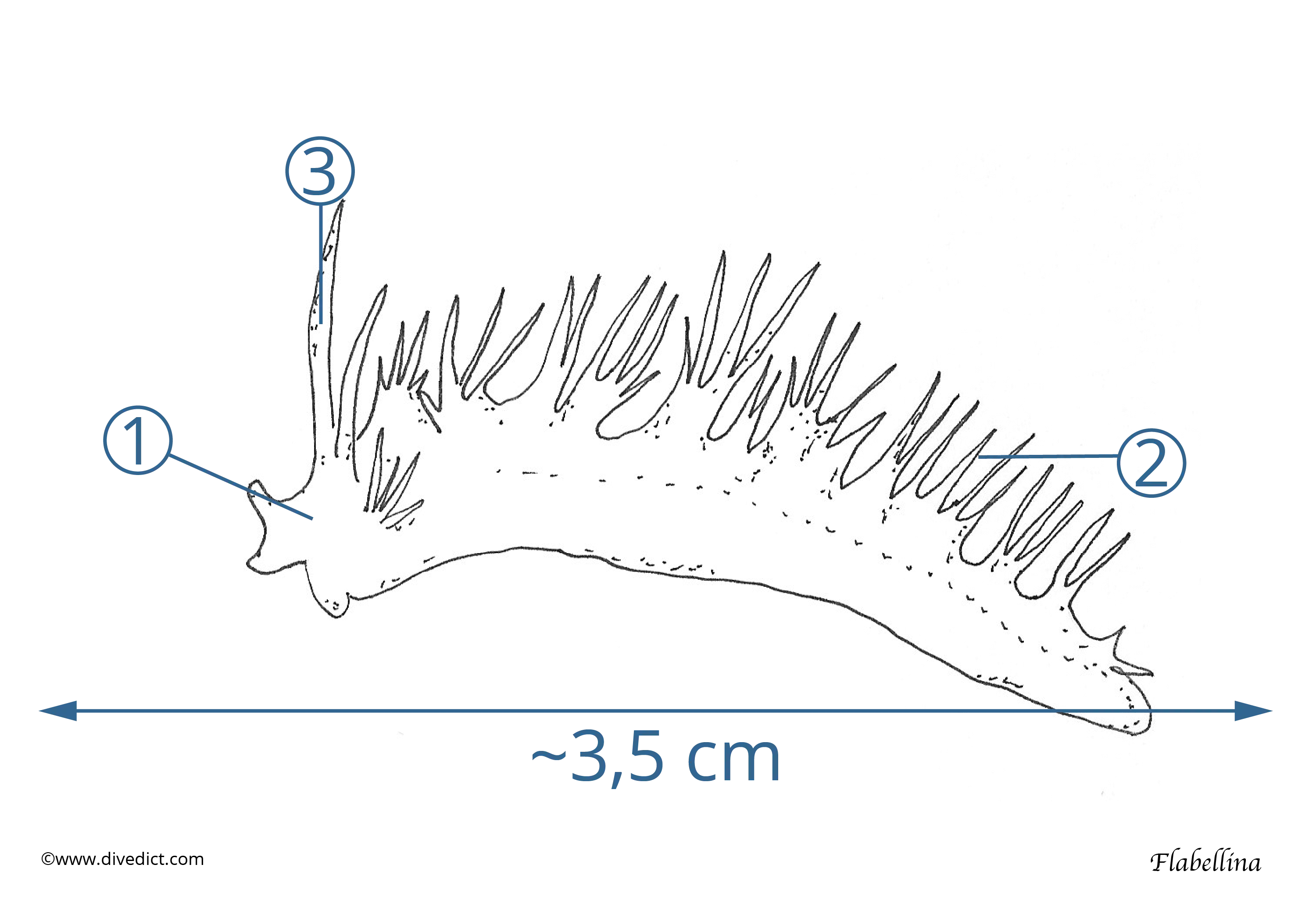
1. Firm jaw
2. Cerata
3. Long antennae
Pro tips
Thread nudibranchs primarily graze on sessile cnidarians such as hydrozoans.
These hermaphroditic creatures are capable of self-fertilization. They then lay thousands of eggs in colorful strands, which some species wrap around their food hydroids.
Without a doubt, they are one of the most beautiful and mesmerizing tiny creatures in the Mediterranean.
Text: Carolina Leiter, Felician Hosp, Pia Balaka
Illustration: Dive Dict
Pic: Felician Hosp, Sabine Probst