
Loggerhead turtle
Caretta caretta




Special features
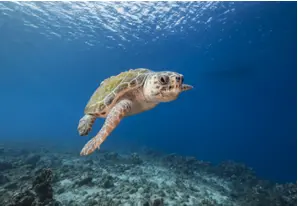
The loggerhead turtle can proudly claim to be the most numerous sea turtle in the Mediterranean.
Their characteristic feature? The massive head and powerful jaw, with which it can even crack hard-shelled prey such as snails and mussels.
Appearance
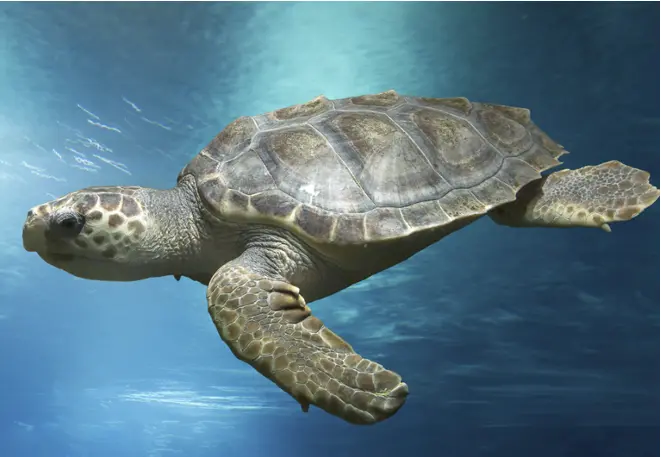
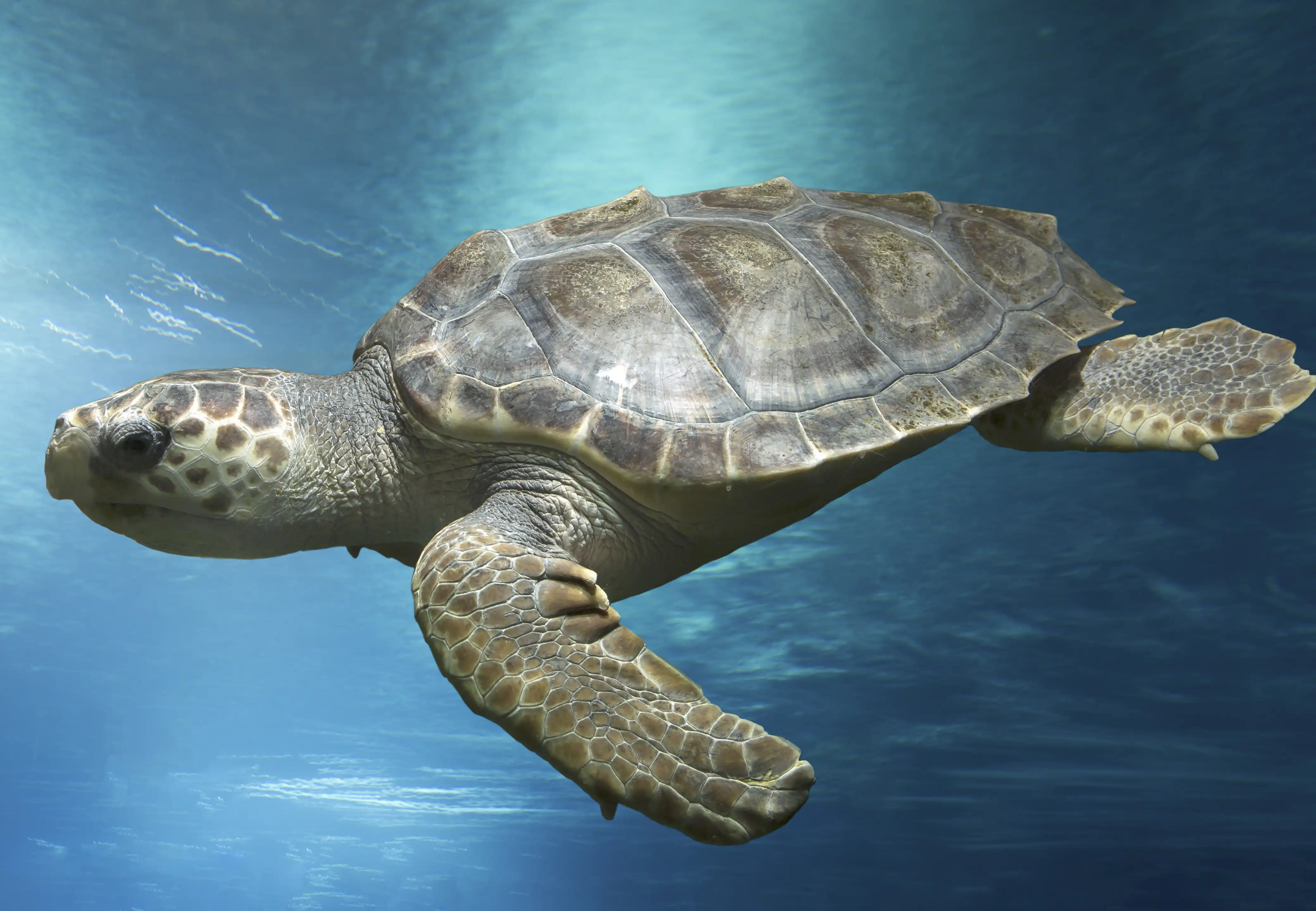
The loggerhead turtle looks like the classic turtle that you know from picture books, films, or postcards: The newly hatched young animals are dark brown to black, when they grow up, their skin and shell often become reddish brown and as an adult animal their belly shell turns yellow-brown.
They can grow into real colossi, with 1.2m long back armor and up to 110kg dead weight. In order to distinguish between males and females, you should take a closer look at the length of the tail and the claws, which are significantly longer in males.
By the way, the Hawksbill turtle also exists, but the loggerhead towers over it with a more massive head, strong jaw, and a pair of ribbed shields on the shell, namely five instead of just four.
Natural enemies
For baby turtles on land: birds, other reptiles; in water: sharks
Dangerous/Venomous
The loggerhead turtle is neither dangerous nor venomous.
Sketch
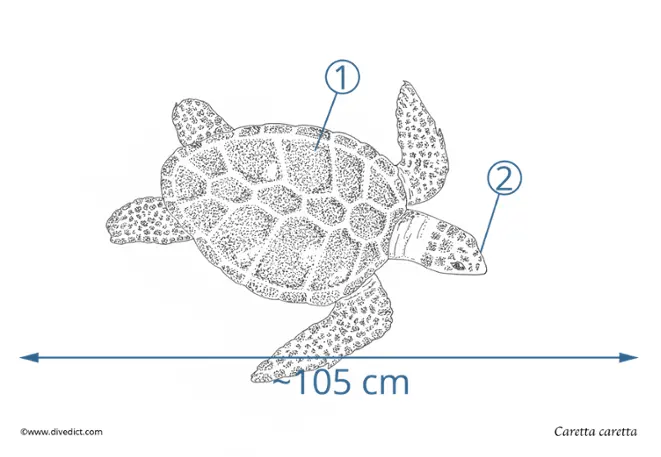
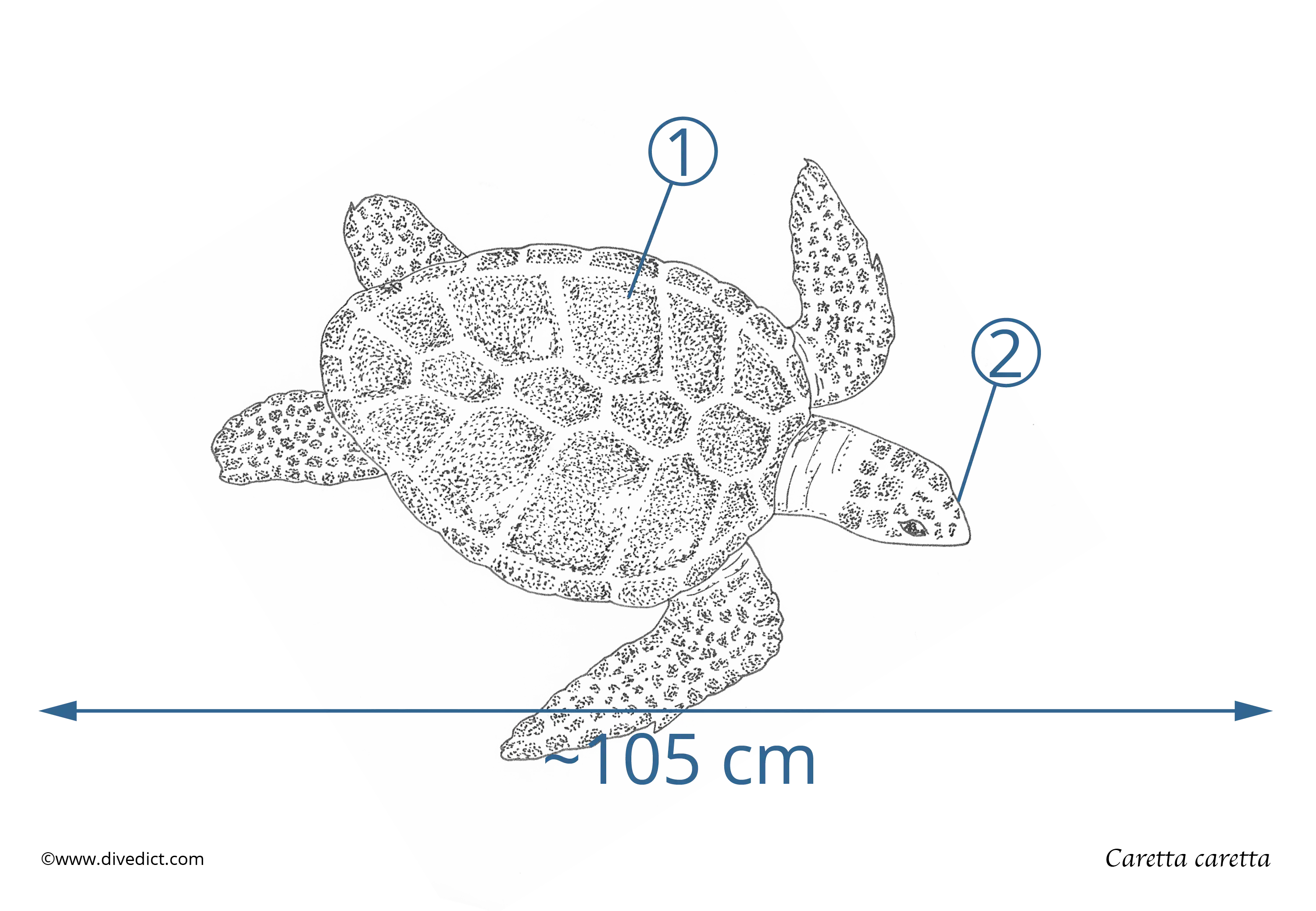
1. Five pairs of ribbed shields
2. Massive head with a strong jaw
Pro tips
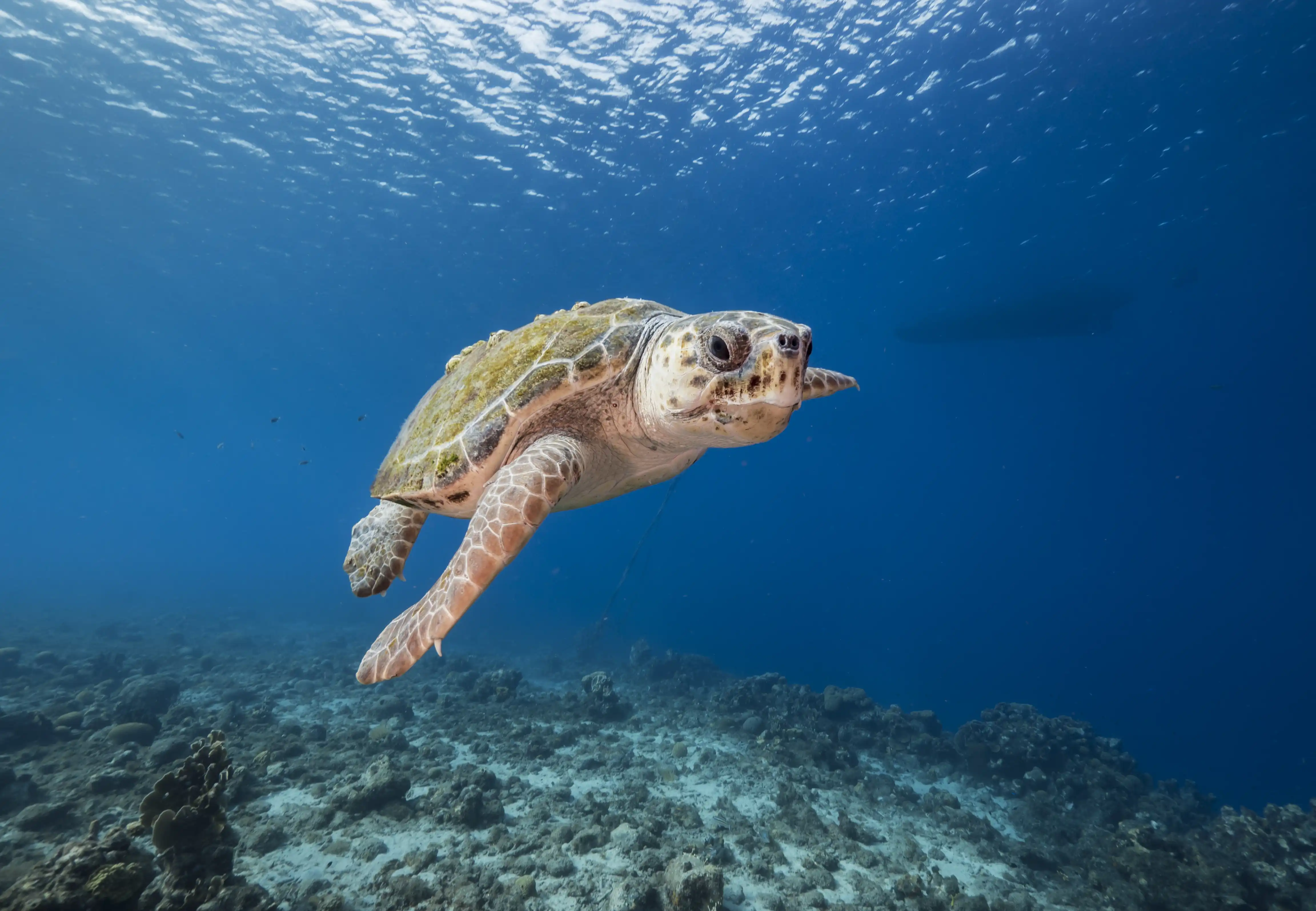
Sea turtles have roamed the oceans for more than 110 million years, yet their continued existence is increasingly threatened by human activity. Of the seven species found worldwide, only two breed in the Mediterranean: the Loggerhead turtle (Caretta caretta) and the Green turtle (Chelonia mydas).
The northern Adriatic is an important habitat for Loggerhead turtles, as the shallow waters and the rich food supply offer ideal conditions. According to the World Conservation Union (IUCN, 2015), the species is classified as “not endangered” (LC) in the Mediterranean, while it has “severely endangered” (VU) status worldwide. It is estimated that more than 20,000 individuals live in the Adriatic Sea. Yet sea turtles face numerous man-made threats every day, including illegal hunting, intensive fishing, oil pollution, light pollution, uncontrolled coastal development, marine litter, and harmful fishing methods.
Individuals that occur in the western part of the Mediterranean have often hatched on the other side of the North Atlantic and migrated as young animals to the Mediterranean Sea. As adults, they tend to migrate back to the North Atlantic.
Those individuals in the eastern Mediterranean waves hatched on the beaches there.
Even while still being inside the eggs, turtles don't have an easy life. The eggs are often dug too little deep into the sand and are threatened by many animals living on land but also by humans. When the baby turtles hatch, they use moonlight to find their way into the water. However, when there is too much artificial light near or on the beach, the little ones walk to the artificial light source and unfortunately never find their way into the protective waves.
Text: Carolina Leiter
Illustration: Dive Dict