
Common dolphin
Delphinus delphis





Special features
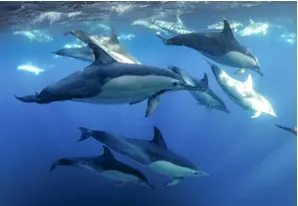
He is the agile and active acrobat among dolphins, who somersaults in the air and has fun in bow waves from ships or even fin whales.
Appearance
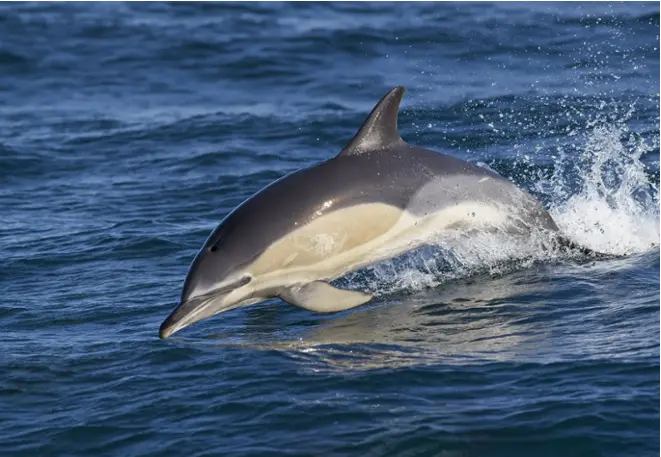
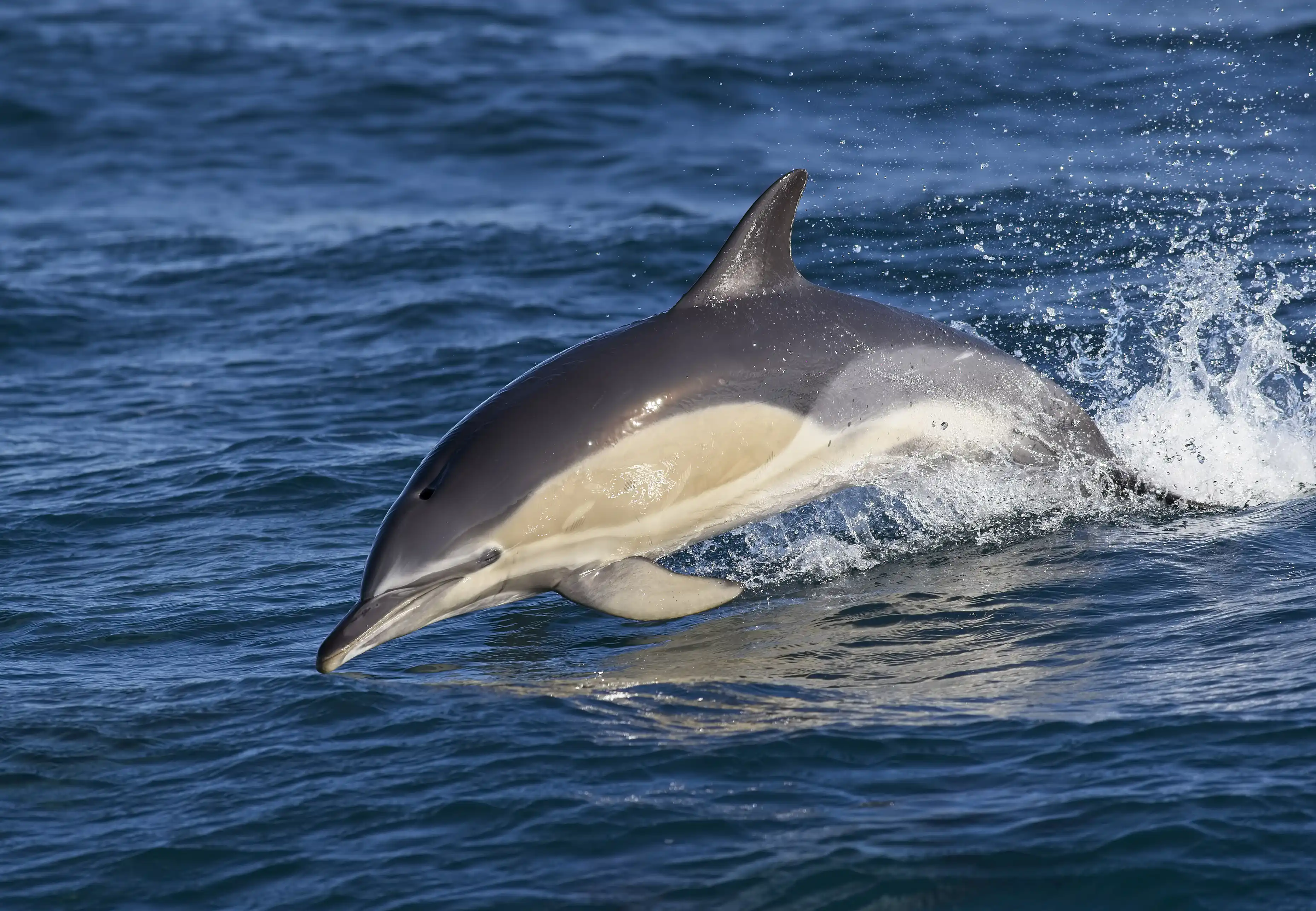
From head to back fin, he wears a dark gray cloak, behind the fin it turns light gray.
On the flanks, it is light yellow to light brown from head to dorsal fin level.
There is a characteristic, thin black stripe from the lower jaw to the pectoral fin.
Its beak is decorated with very individual patterns, and its ventral side is bright on every copy.
Thanks to the dark border, his eyes stand out wonderfully from the light-colored part of the head.
Young animals can be recognized by a significantly paler coloration than that of adults.
Calves weigh between 20 and 35kg at birth, while adult animals weigh between 70 and 100kg.
Natural enemies
None
Dangerous/Venomous
The common dolphin is neither dangerous nor venomous.
Sketch
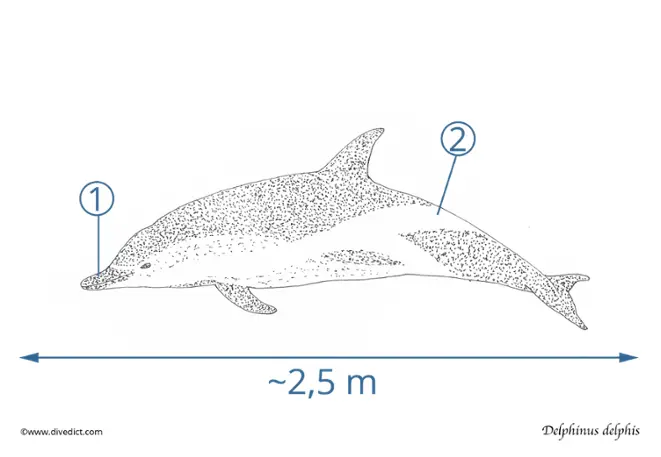
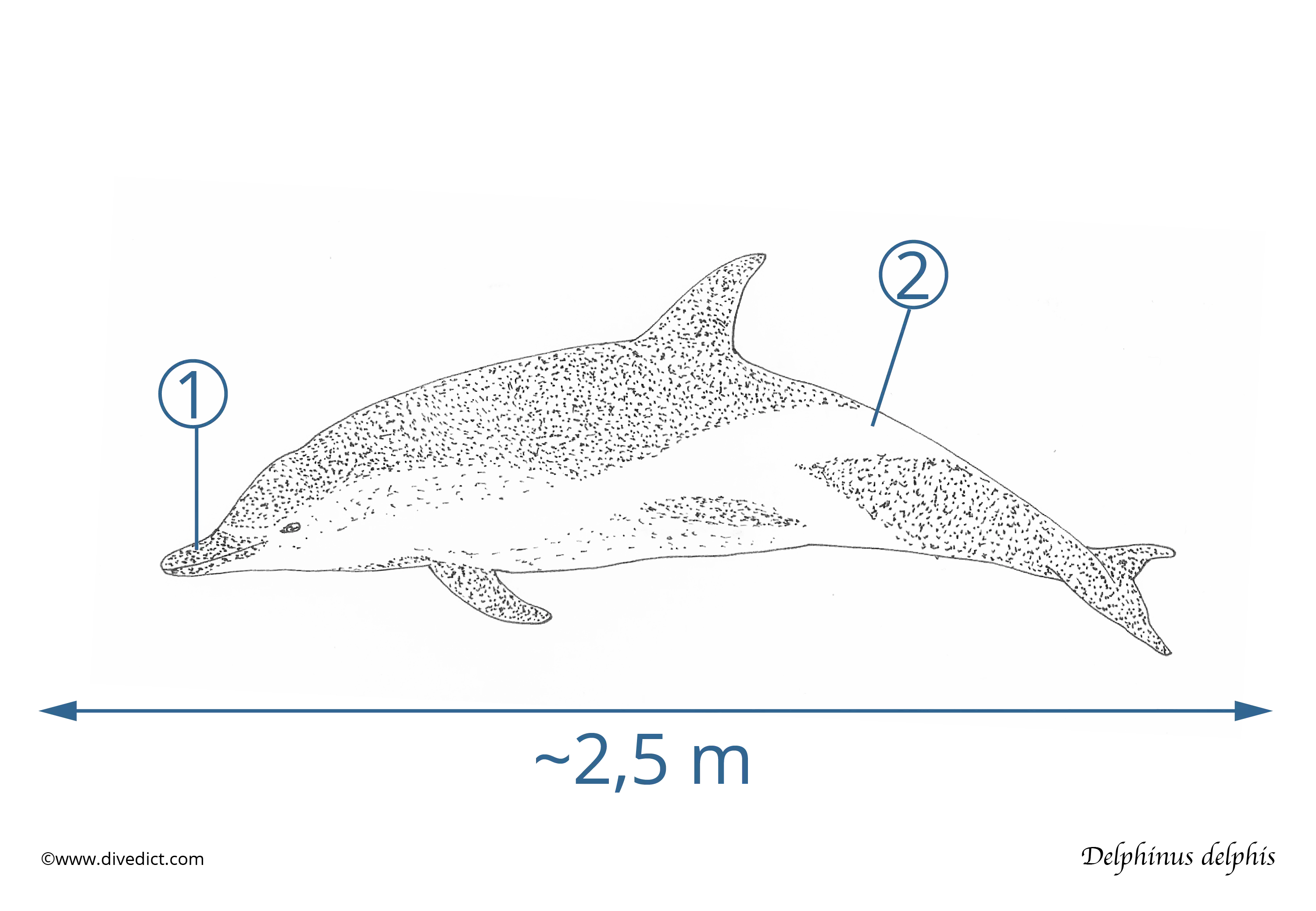
1. Individual pattern on the beak
2. Bright patterns
Pro tips
The common dolphin is considered the archetype of all dolphins, but its population is declining in the Mediterranean and Northeast Atlantic. Its stock is endangered by fishing (in which it often ends up as by-catch), plastic, and sound pollution.
He is very sociable and runs around in schools of up to thousands of individuals on the high seas. It was observed that school size increases with increasing distance from the coast.
They are not afraid to leave their familiar territory and follow their prey or warm currents seasonally.
At night, they mainly hunt sardines and anchovies, but in deep-sea areas, vertically migratory lanternfish (Notoscopelus kroyeri) and cephalopods (squid relatives), which come towards the surface at night with the zooplankton layer, also get caught between their bites.
During the day, these guys enjoy themselves in bow waves from ships or fast-swimming whale species, such as fin whales.
They can stay underwater for up to 8 minutes but usually do so only between 10 seconds and 2 minutes. They can also dive up to 300m deep, but they usually float around 30m.
As far as reproduction is concerned, it is the females who mature earlier than the males, namely at the age of 8, the males are only ready two years later. There are offspring every 2 to 3 years and the female gives birth to a calf which is weaned after one year but usually remains under the mother's protection for an additional year.
Text: Carolina Leiter
Illustration: Dive Dict