
Napoleon Wrasse
Cheilinus undulatus



Special Features
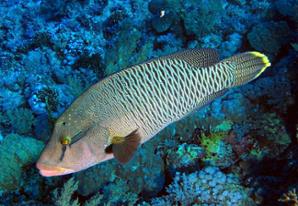
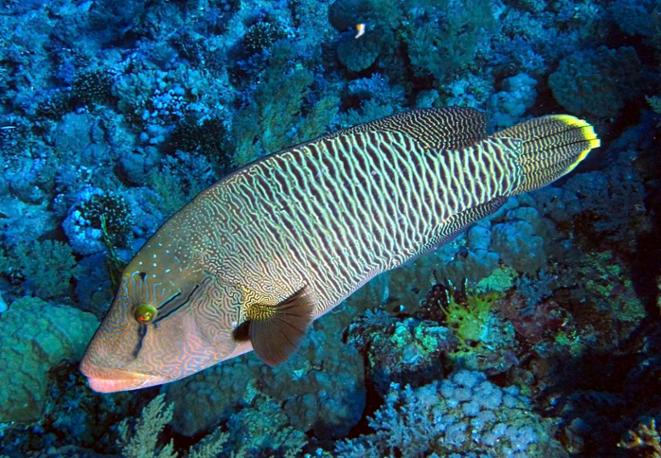
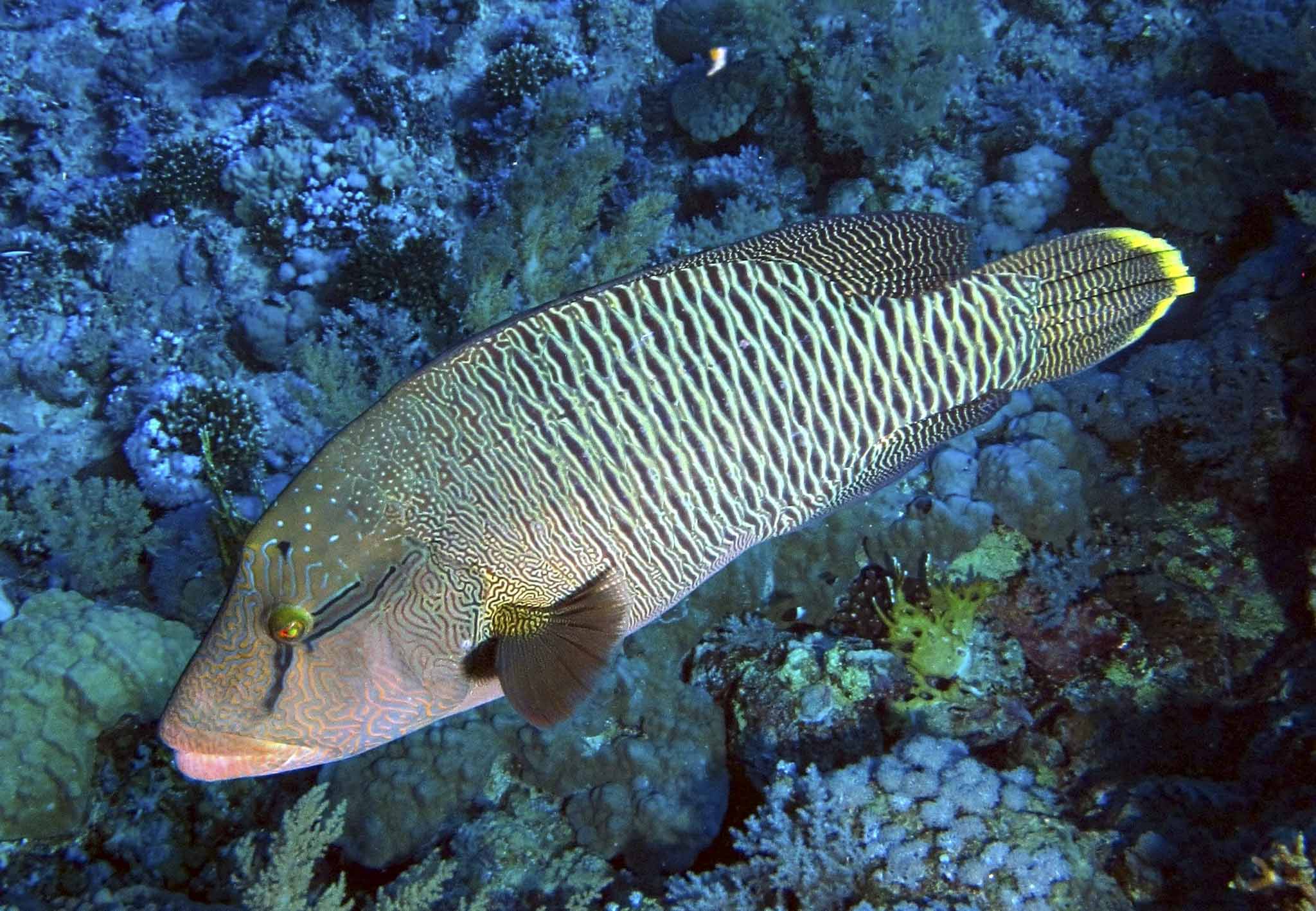
The Napoleon Wrasse owes its name to its distinctive forehead hump, which resembles the legendary Napoleon hat. This impressive reef inhabitant is remarkable not only for its appearance but also for its ability to change sex during its lifetime: from female to male. A fascinating gentle giant of the coral reefs!
Appearance
The Napoleon Wrasse can grow up to two meters long and has a massive body. Particularly striking is the large hump on its forehead, which is pronounced in older males. Its body is covered with bright blue-green scales that show wavy lines. It has large, powerful fins and a strong mouth, with which it cracks shells and other hard coverings.
Natural Enemies
The adult Napoleon has few natural enemies apart from humans. For young fish, sharks and moray eels can pose a threat.
Dangerous/Toxic
The Napoleon Wrasse is neither dangerous nor toxic.
Pro Tips
The Napoleon Wrasse is incredibly curious and sometimes approaches divers quite cautiously: a real highlight when snorkeling or diving! If you want to spot it, look for large, colorful fish with a distinctive forehead hump near coral reefs. Unfortunately, this impressive fish is heavily threatened by illegal cyanide fishing and overfishing. Therefore, it is important to dive responsibly and protect nature.