
Greater Weever
Trachinus draco



Special features
Although the Greater Weever looks harmless, it is actually a little devil and is one of the most dangerous inhabitants of the Mediterranean.
He adorns his head wearing his front dorsal fin like a crown, which has venomous spikes. Also, its gill lids have tiny venomous spines.
Appearance
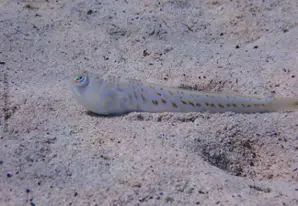
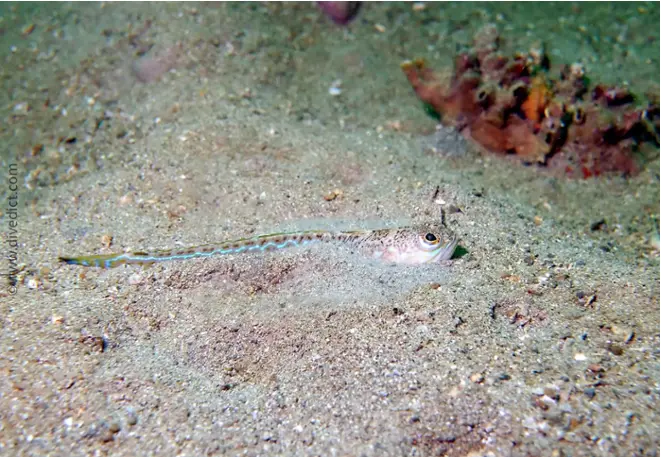
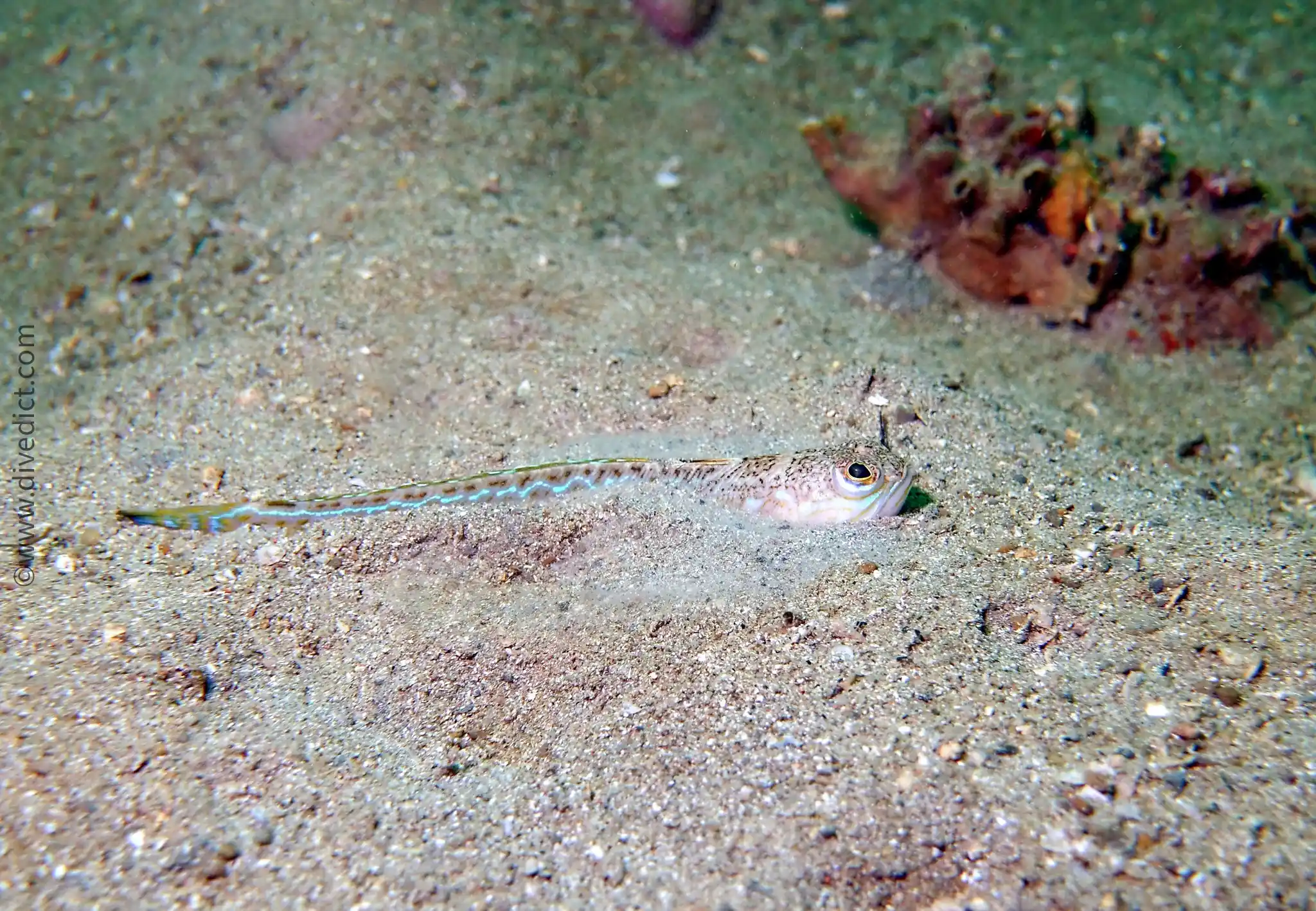
It looks as though the Greater Weever always has his broad head raised, making him seem almost arrogant and snooty. In addition, he also has downward lips that give him a grim facial expression.
Most of its body is on the ground, only its head is lifted with the help of its delicate pectoral fins.
Its base color is sand-colored with green-yellow to brown lines and light blue marbling. Behind the front dorsal fin (the venomous one) the second dorsal fin spreads over his entire body.
Natural enemies
Thornback rays (Raja clavata)
Spiny dogfish (Squalus acanthias)
Dangerous/Venomous
The Greater Weever is highly venomous.
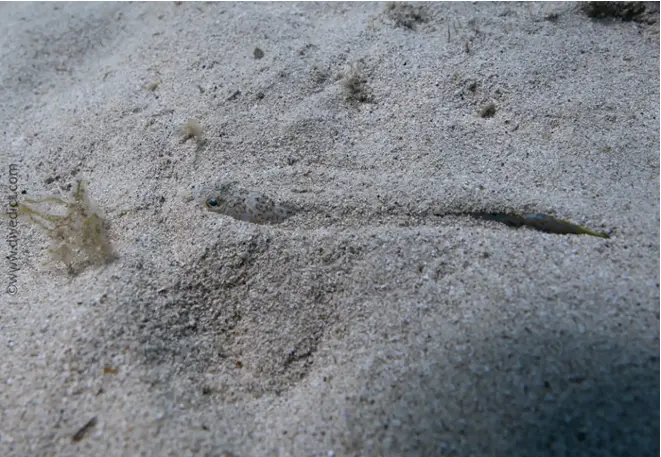
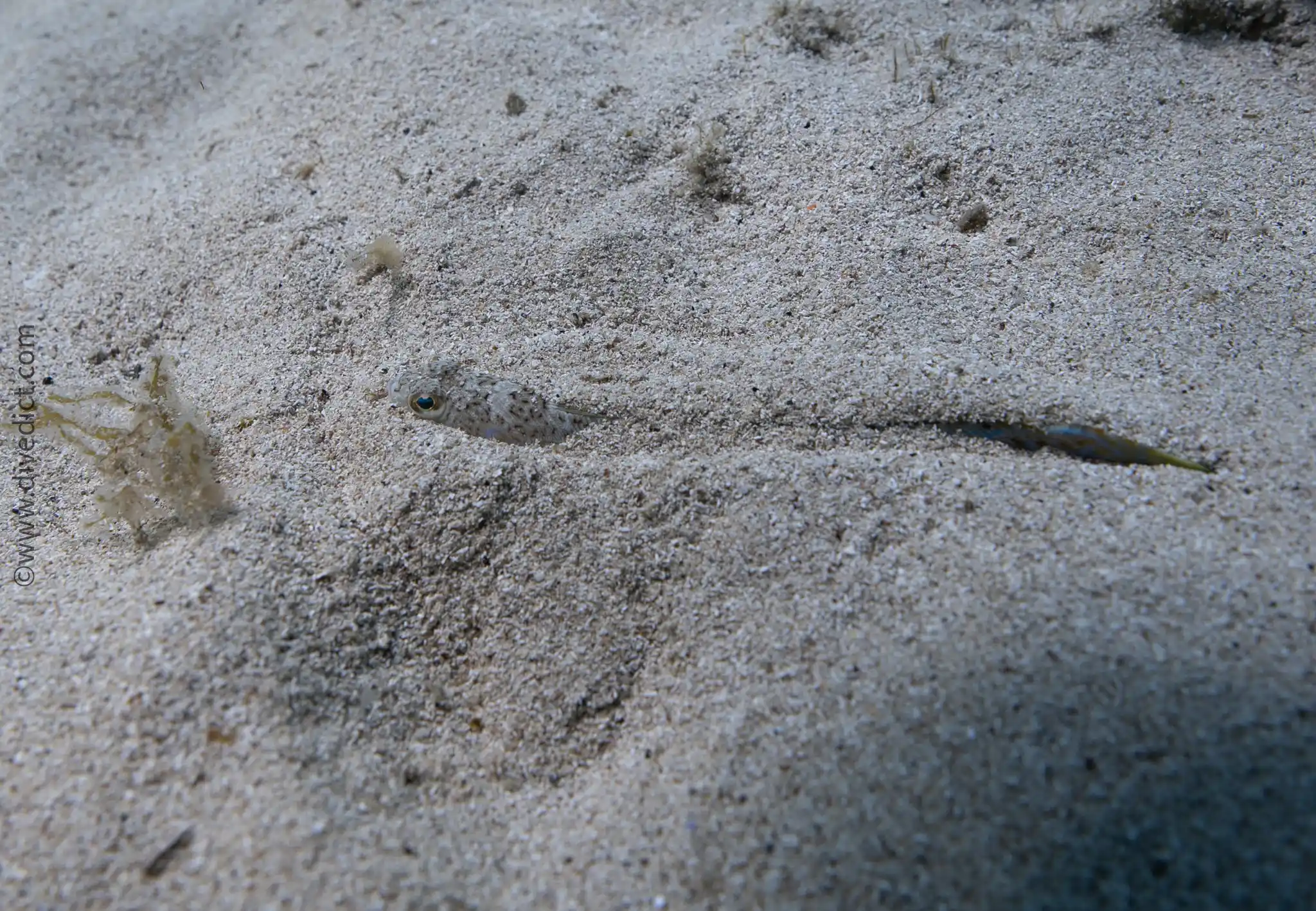
Since it is perfectly camouflaged on sandy seabeds, there is a risk of stepping on it.
When bitten or stung, the venom causes severe, painful swelling and paralysis, and an allergic reaction can even lead to loss of consciousness or cardiac arrest.
Sketch
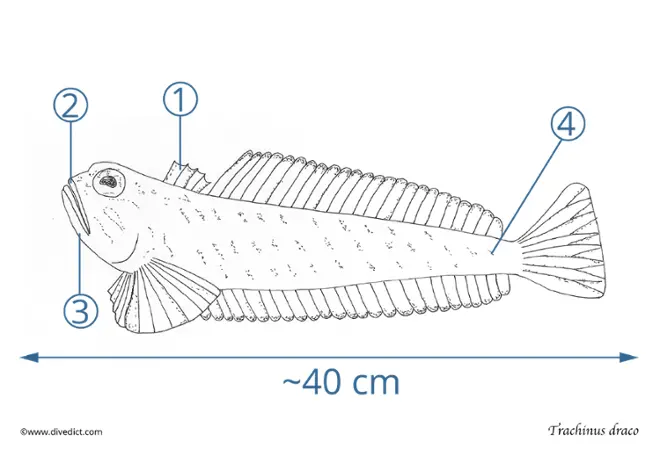
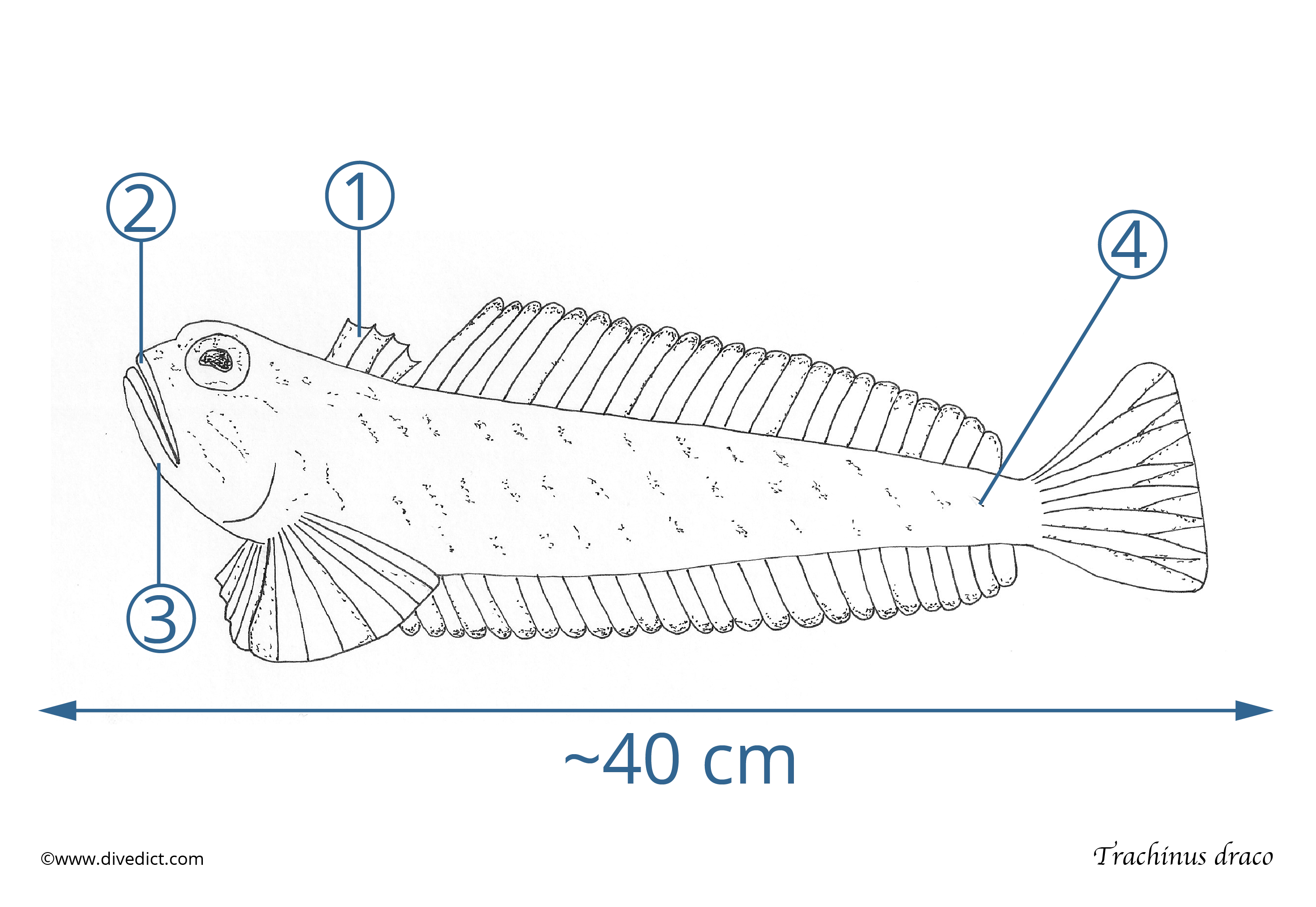
1. Dorsal fin with venomous spines
2. Lips, pulled down
3. Head held high
4. Marbling for camouflage in the sand
Pro tips
At night, the Greater Weever hunts for shrimps, gobies, and other small fish.
At dawn, this little dragon burrows halfway into the sand or mud and recovers from nighttime adventures.
However, he always keeps his head with the poisonous crown ready to defend himself from potential predators.
The mating season of these fish is from June to August.
Text: Carolina Leiter, Felician Hosp, Pia Balaka
Pic: Felician Hosp
Illustration: Dive Dict