
Masked butterfish
Chaetodon semilarvatus




Special features
All butterflyfish are perfectly adapted to life in coral reefs: with their high, laterally flattened bodies, they can maneuver skillfully through the narrow coral forests.
Appearance
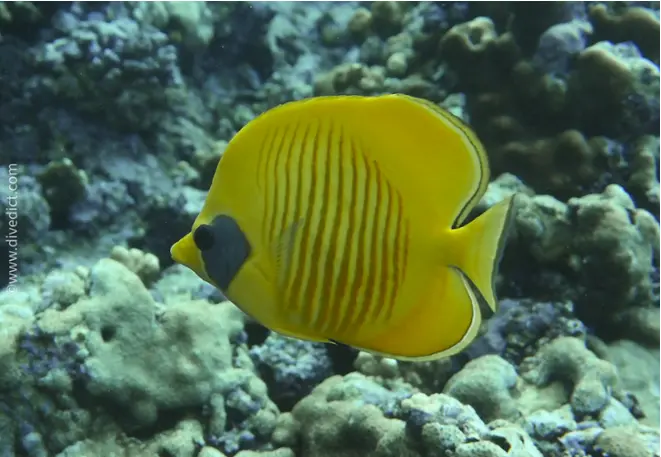
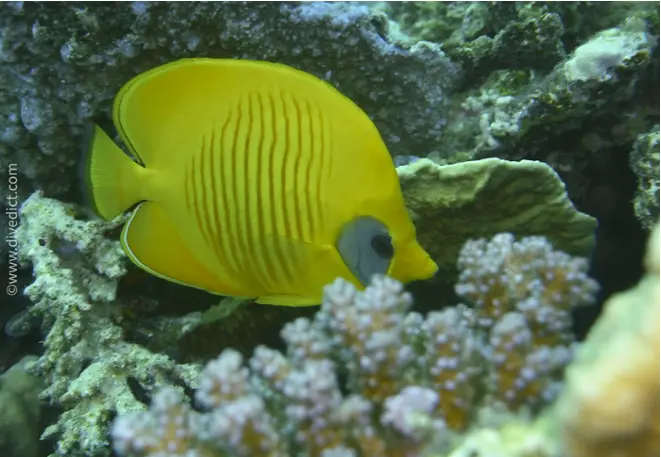
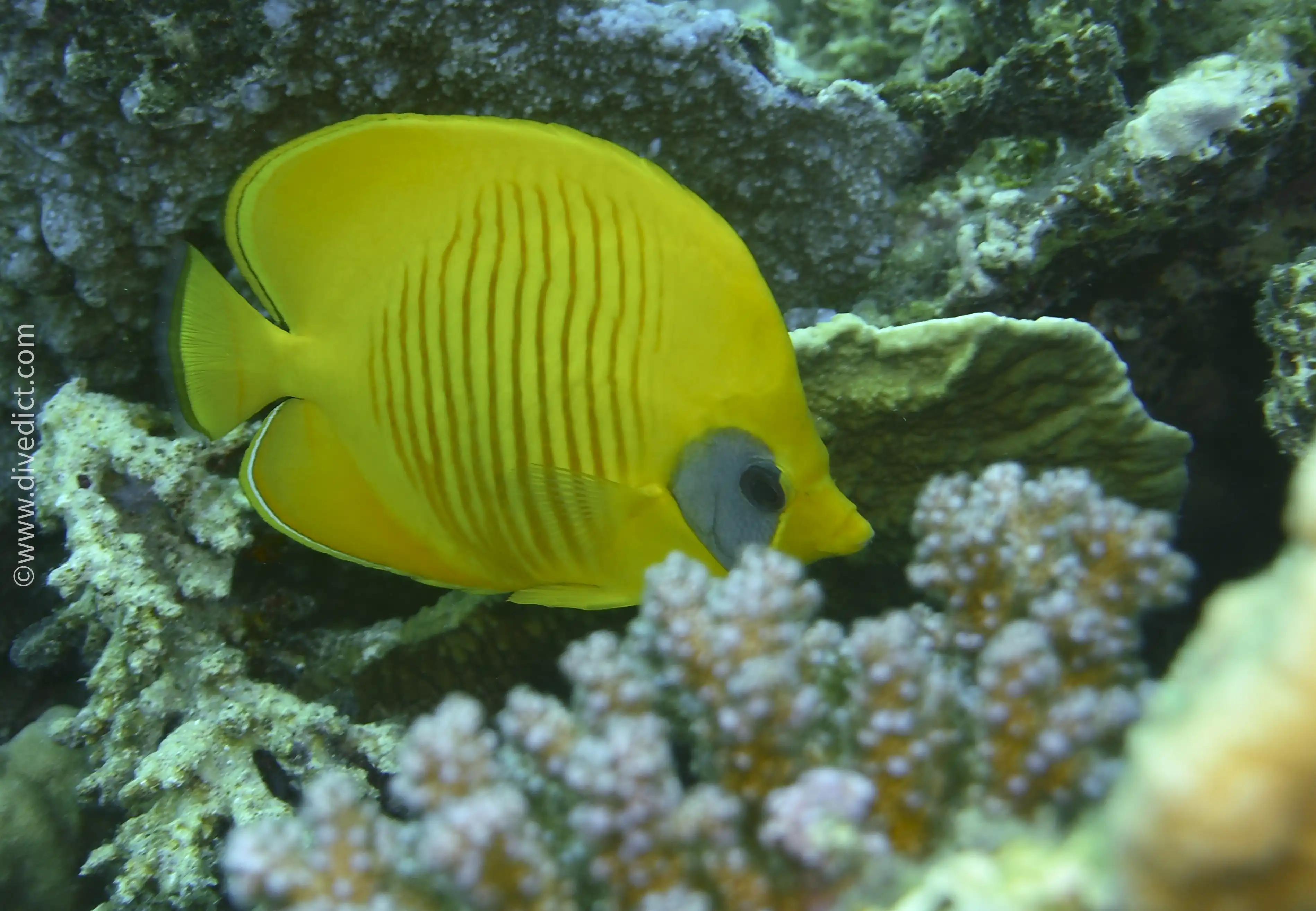
This buddy is certainly one of the most beautiful fish in our seas.
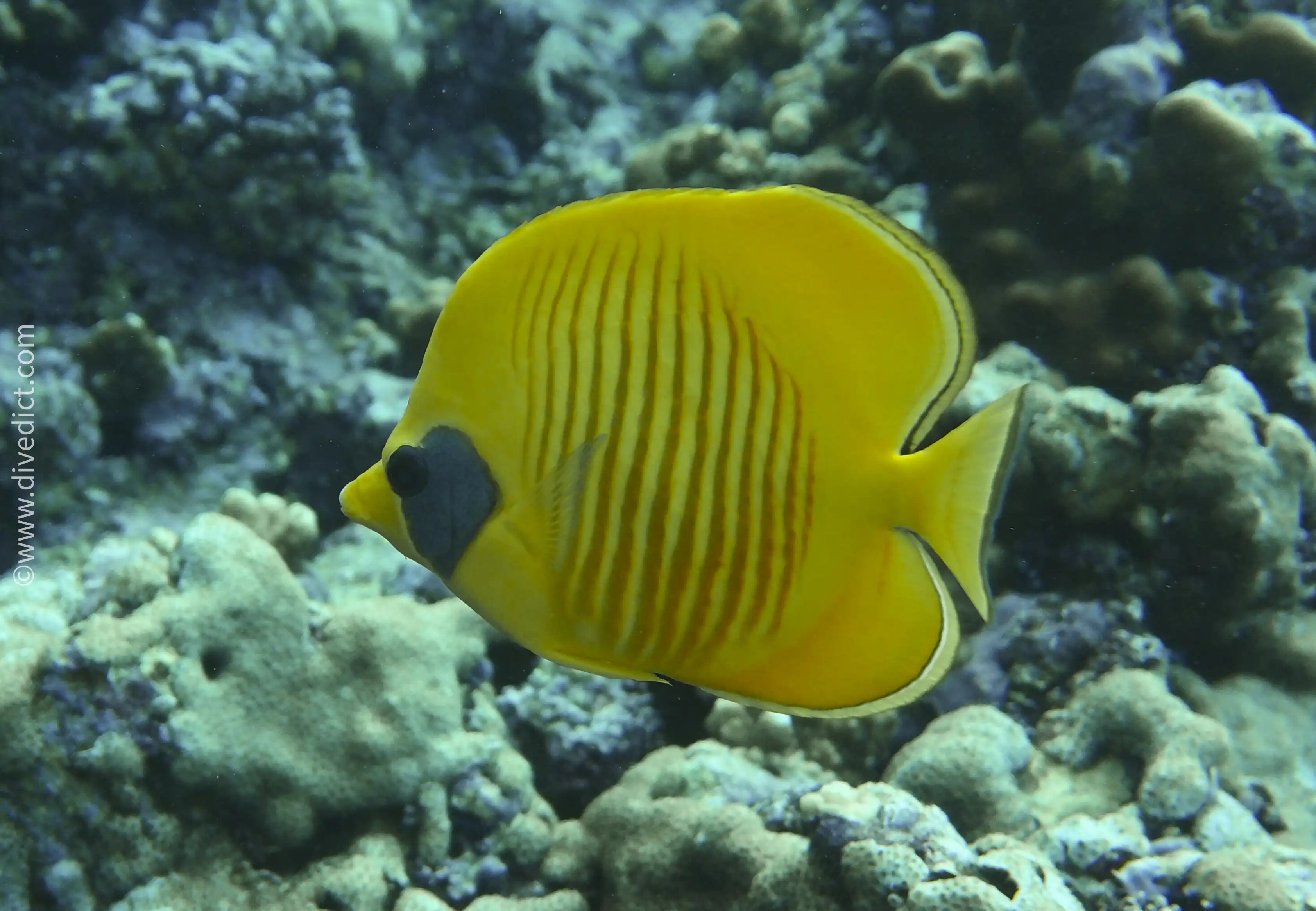
Thanks to its bright yellow base color, it’s a real eye-catcher. It's subtle, dark brown vertical stripes and gray-blue eye mask help with camouflage.
Its scales are tiny, its mouth is small, pointed, and extendable, with brush-like teeth behind it.
Its dorsal and anal fins run continuously along its body, rounded at the back, and between their ends forms a short tail fin.
Natural enemies
Predatory fish
Dangerous/Venomous
The masked butterflyfish is neither dangerous nor venomous.
Sketch

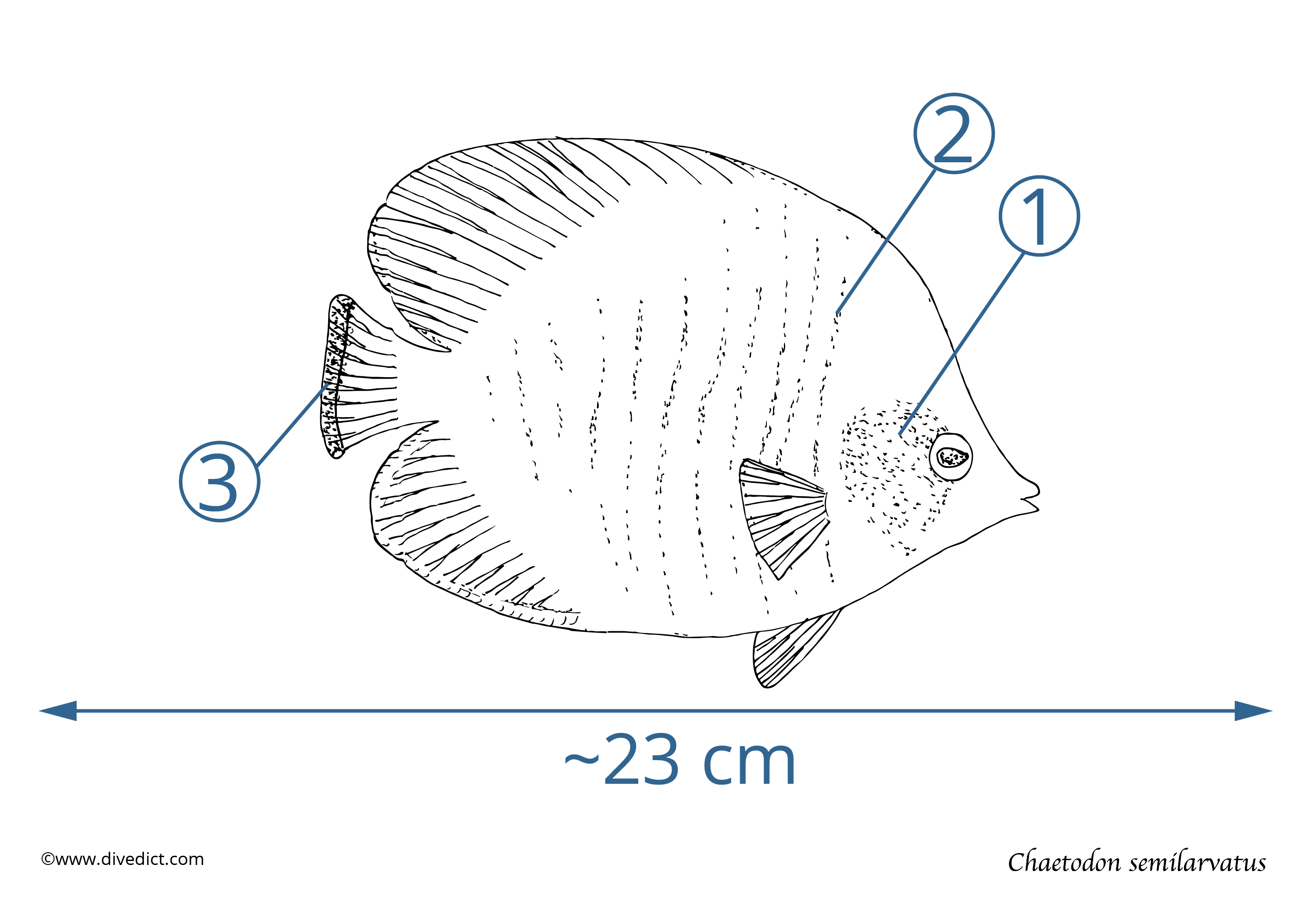
1. Dark spot
2. Bright stripes
3. Dark tail fin end
Pro tips
The animals are usually found in pairs or small groups and prefer coral-rich lagoons and bays.
At night, they retreat into the protective crevices of the coral reefs, where they are safe.
Their diet mainly consists of bottom-dwelling reef inhabitants such as small crustaceans, worms, fish, and filamentous algae. The polyps of stony and soft corals are especially popular.
In open water, they feed on plankton and form small schools to protect themselves from predators.
Their social behavior is particularly evident when defending their territory, where rituals take place that can be quite aggressive.
The conspicuous eye spot serves to confuse and distract predators.
The animals are typically paired for life. Reproduction occurs at night, with the eggs drifting planktonically in the current for several weeks.
Even the young fish are marked with striking yellow spots and stripes, distinguishing them from other species.
Text: Carolina Leiter
Pic: Felician Hosp
Illustration: Dive Dict