
Spotfin squirrelfish
Neoniphon sammara




Special features
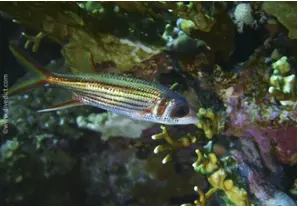
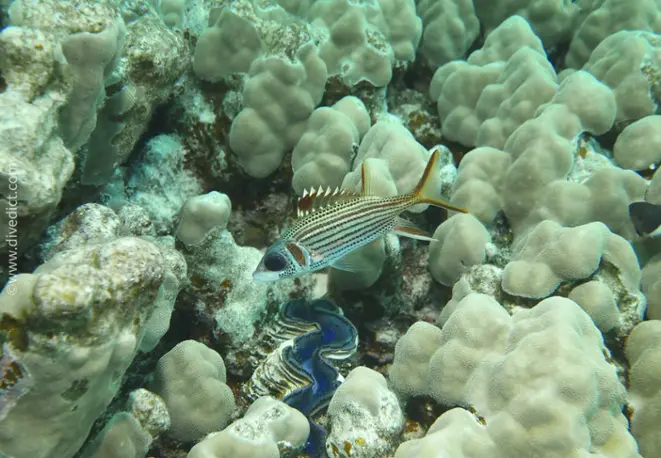
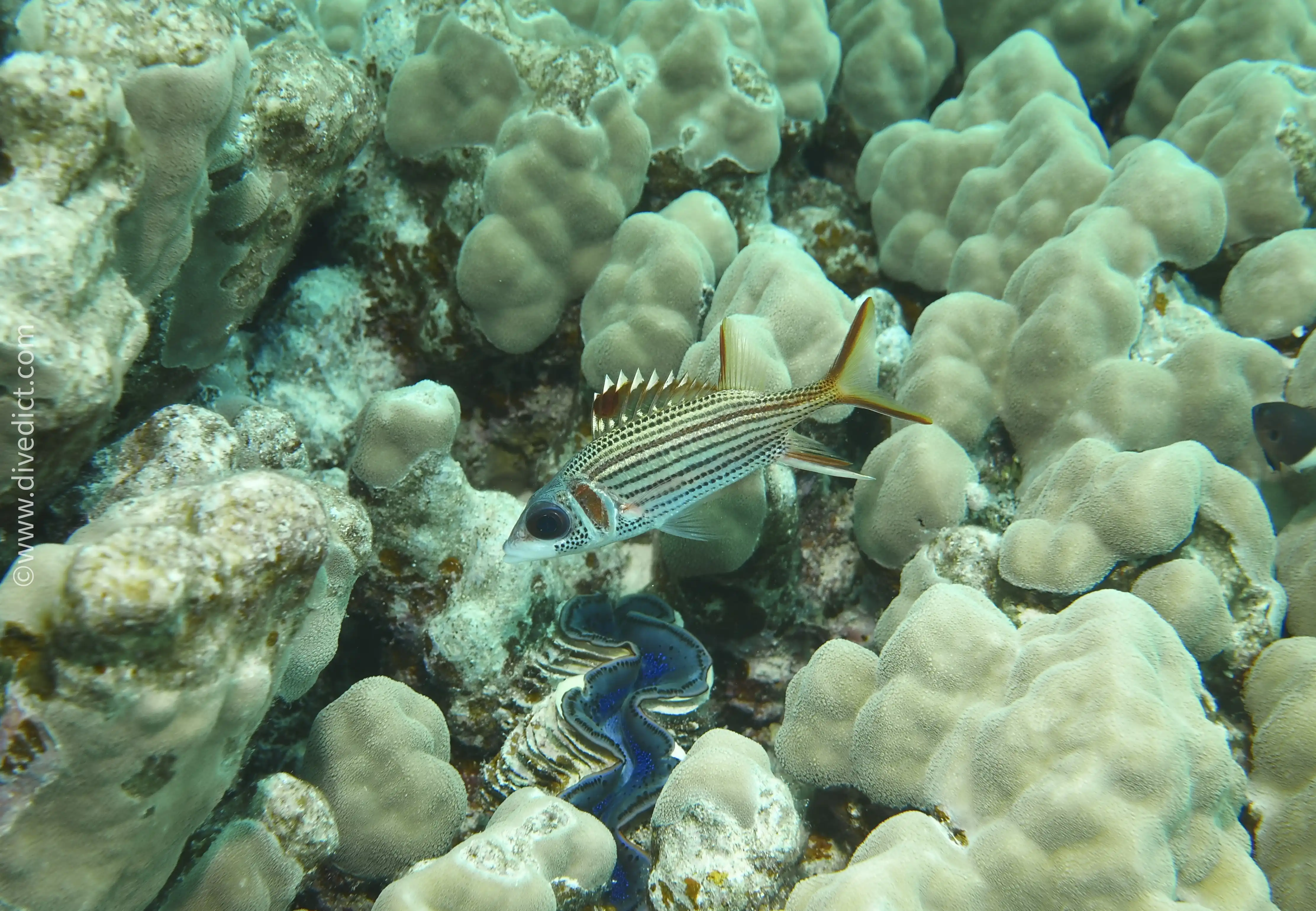
Unlike others in its genus, the Blutfleck-Husar's base color is not red but white. Its name likely comes from the dark spot at the front of its dorsal fin.
Appearance
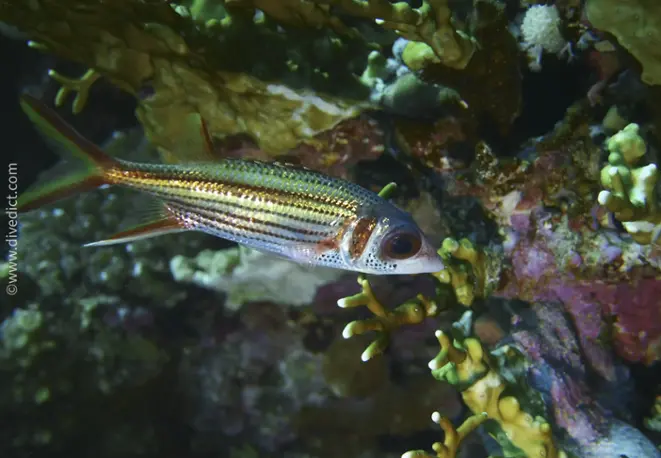
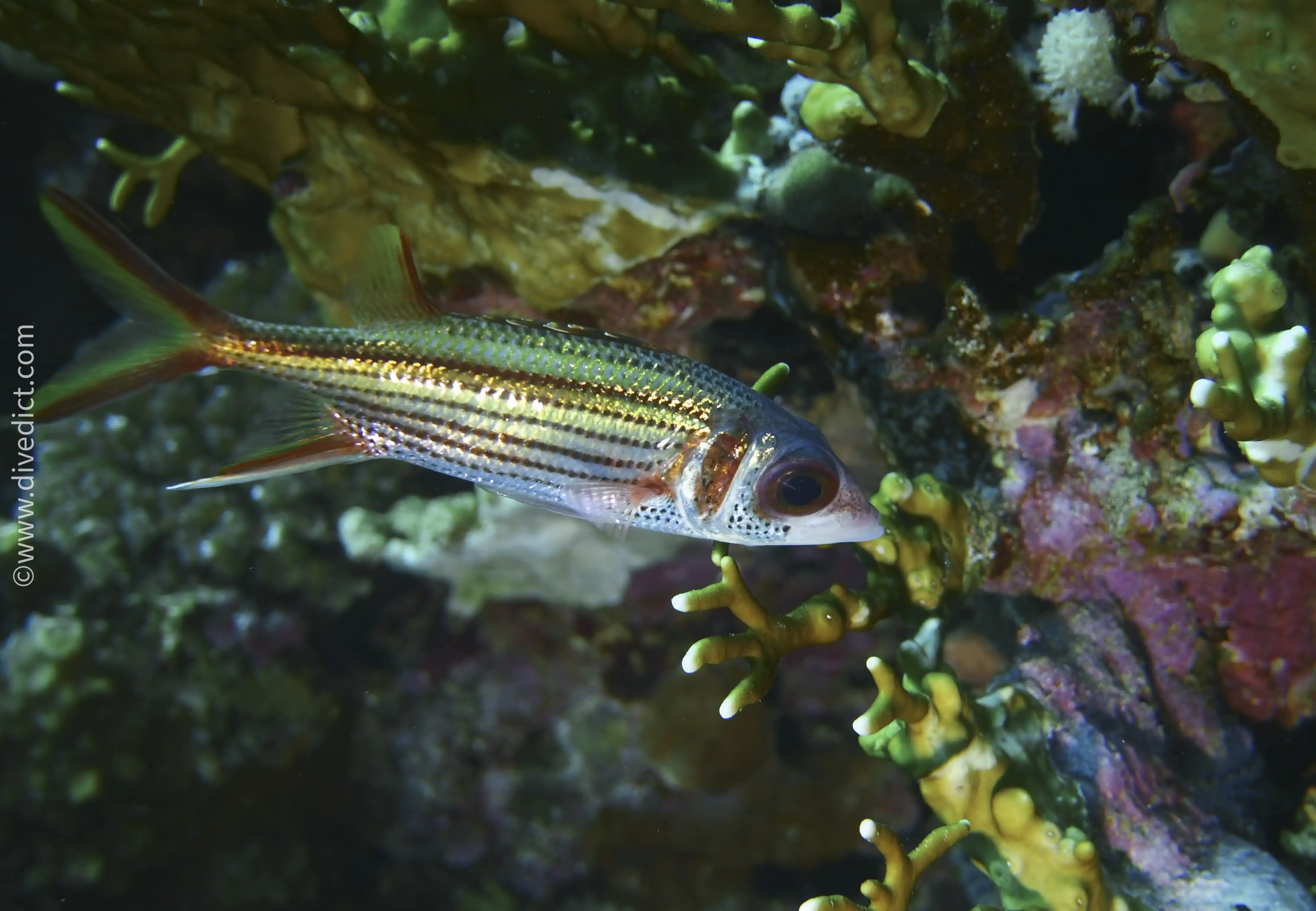
The Blutfleck-Husar has a silvery body with narrow, reddish-brown stripes. A striking red and black spot marks the front of its dorsal fin. When the fin is raised, it reveals the characteristic jagged, white tips, giving it a somewhat "villainous" appearance.
Natural enemies
Predatory fish
Dangerous/Venomous
The bloodstain hussar is neither dangerous nor venomous.
Sketch

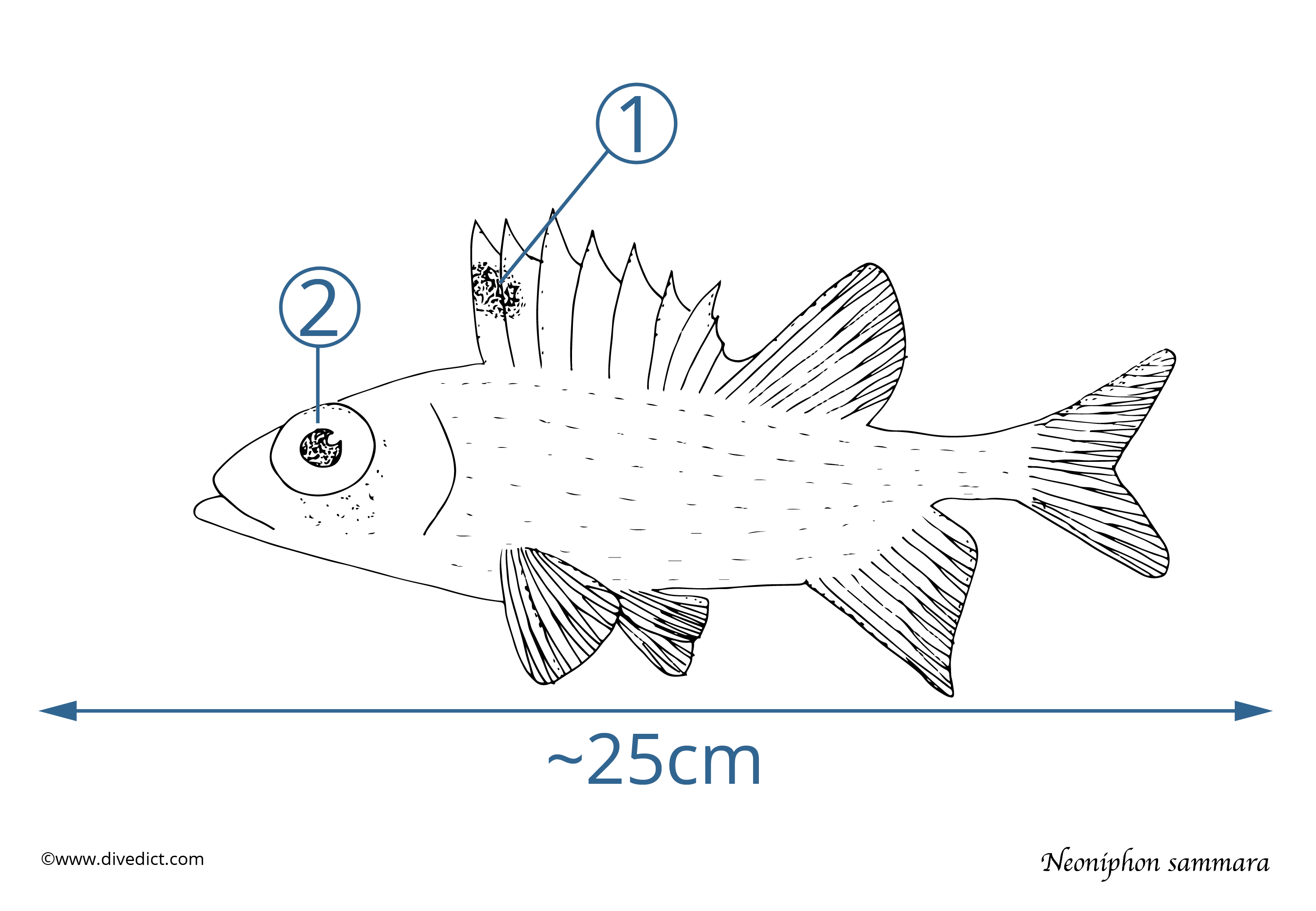
1. Dark red spot
2. Big eyes
Pro tips
Most species of these fish sport a striking red scale pattern. They are all nocturnal and have very light-sensitive eyes. However, they can also be easily observed during the day, as they calmly hover in caves, wrecks, or under overhangs, where they are not shy of divers. At night, they become active hunters. Hussar fish prefer hunting bottom-dwelling creatures like crabs, worms, or small fish, while soldier fish tend to feed on zooplankton. Their social behavior varies among species – some are solitary, others form small groups, and some gather in large schools.
The most noticeable differences between Hussar and soldier fish are in their physical features. Hussar fish have a pointed head and a prominent gill cover spine, whereas soldier fish either lack or have a very small gill cover spine, and their heads are rounded.
Text: Carolina Leiter
Pic: Felician Hosp
Illustration: Dive Dict