
Longjawed squirrelfish
Sargocentron spiniferum



Special features
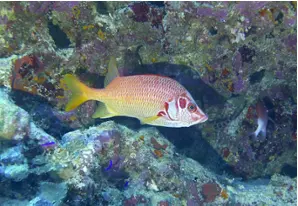
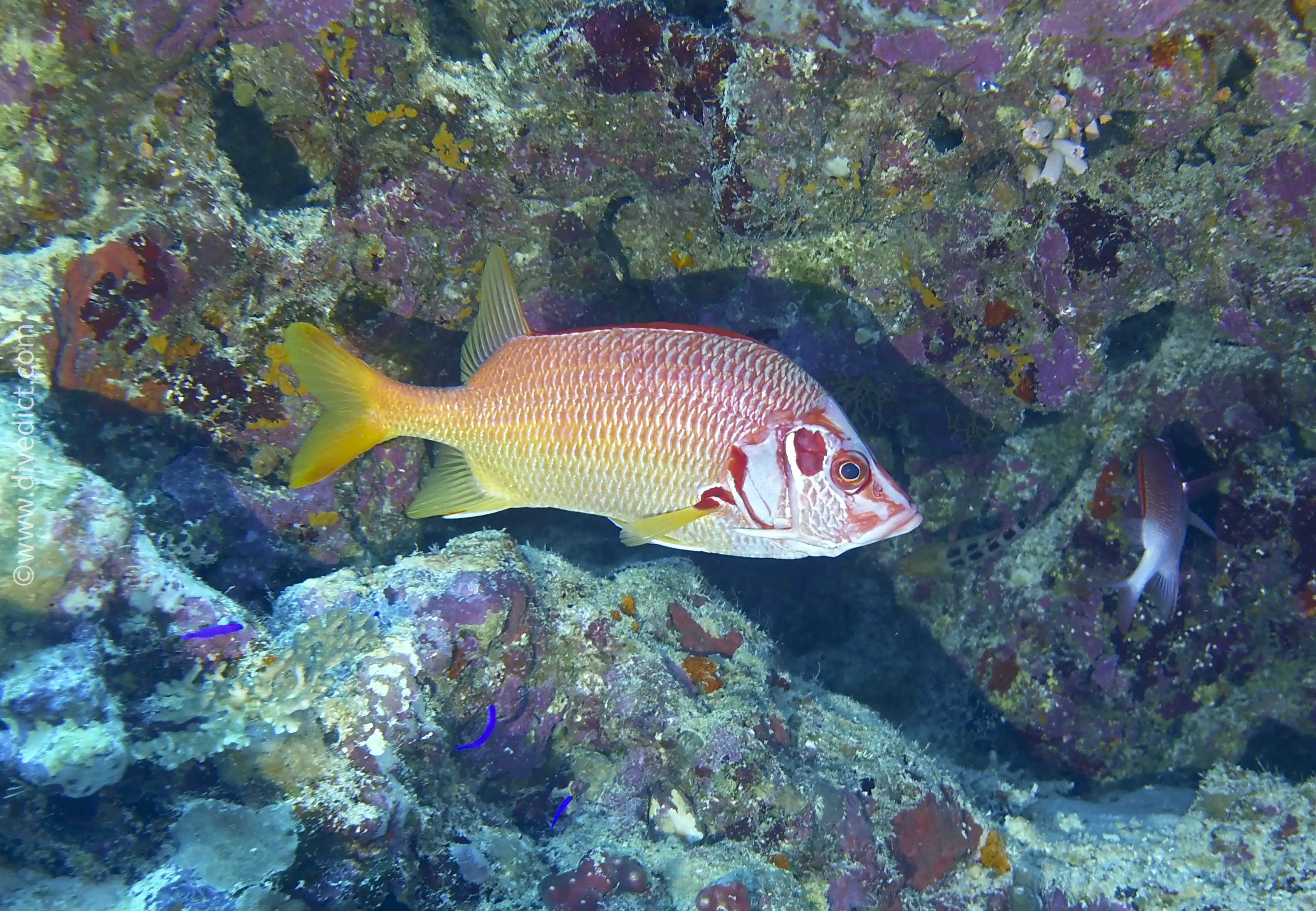
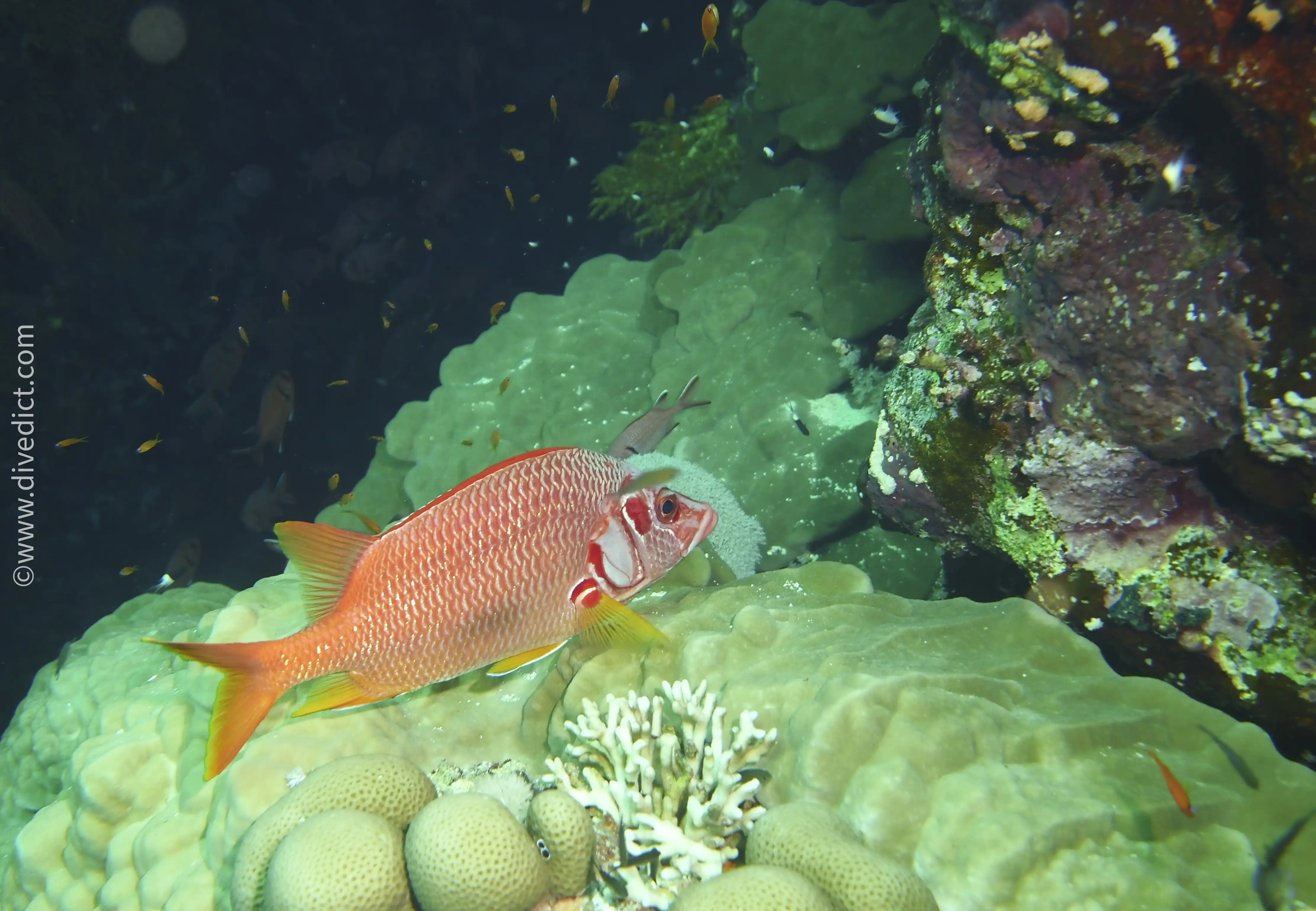
This guy holds the title of the largest member of his family — and he's not shy about it. His most striking feature? A seriously long spine jutting from the edge of his gill cover, which also earned him his name.
Appearance
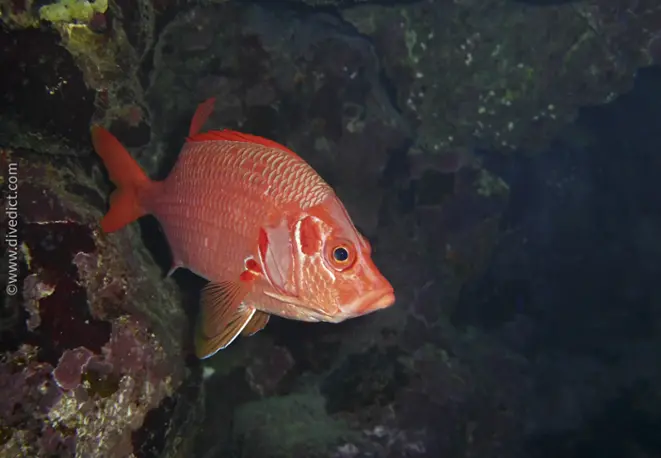
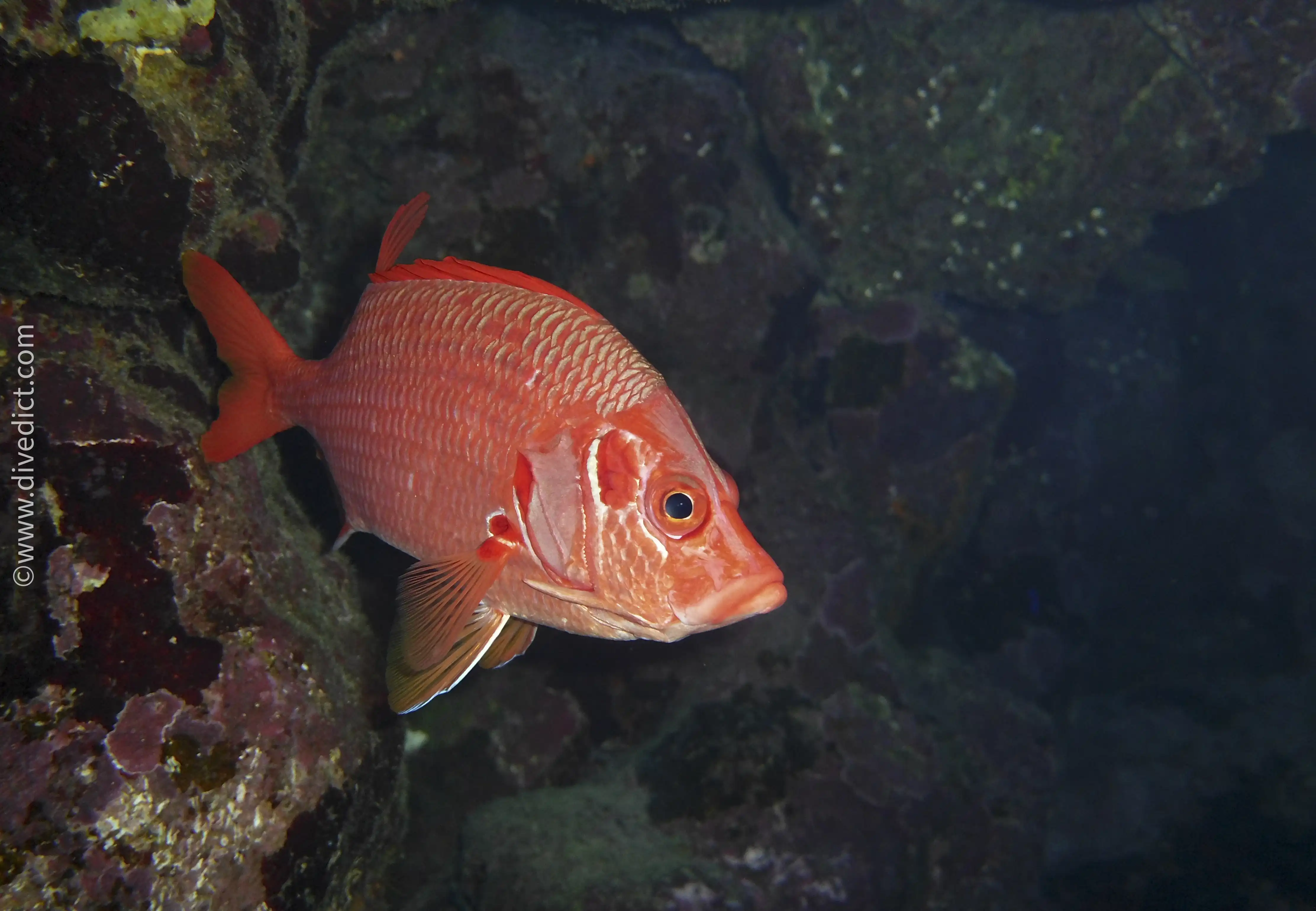
The Longjawed Squirrelfish sports a vibrant red body with silvery-white horizontal stripes that make him really stand out against the reef. That extra-long spine on the gill cover is his signature look, hard to miss. And those big, dark eyes? A clear sign he's a night owl — always alert and ready to explore the reef after dark.
Natural enemies
Predatory Fish
Dangerous/Venomous
The Longjawed squirrelfish is neither dangerous nor venomous.
Sketch
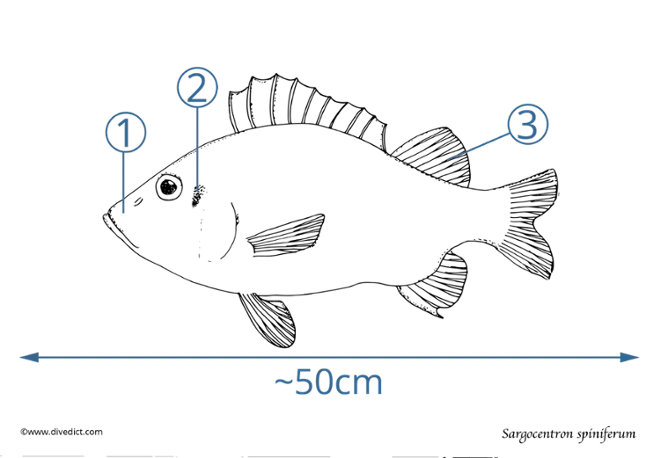
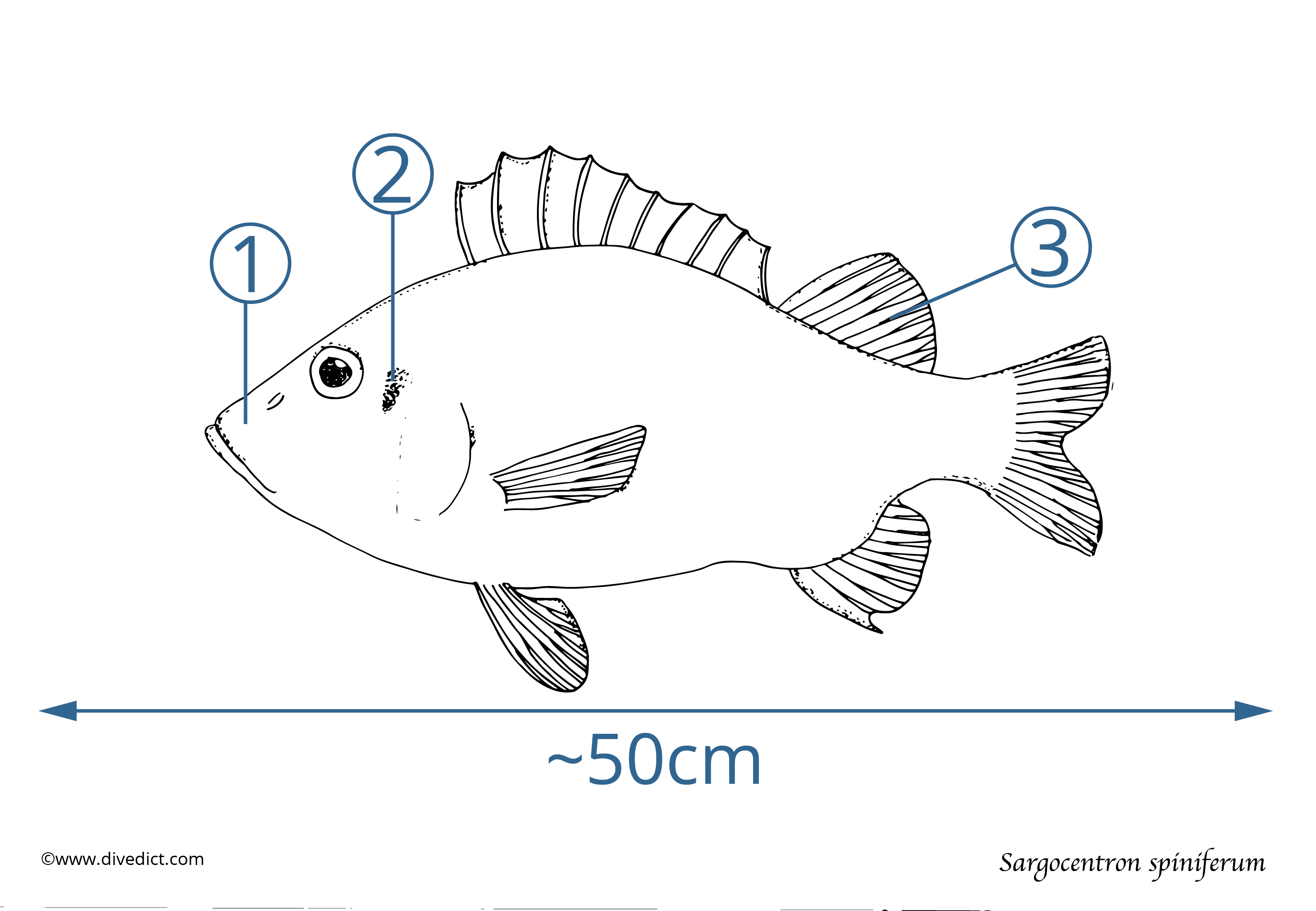
1. Long snout
2. Eye spot
3. Big second dorsal fin
Pro tips
You're most likely to spot him around lagoons and outer reefs. During the day, he hovers quietly in shaded hideouts — think ledges, caves, and under table corals. But come nightfall, he’s on the move, hunting crabs, shrimp, and small fish. The best part? He’s not all that shy, so if you move slowly and keep your distance, there’s a good chance you’ll get a great look at him in his natural element.
Most species of these fish sport a striking red scale pattern. They are all nocturnal and have very light-sensitive eyes. However, they can also be easily observed during the day, as they calmly hover in caves, wrecks, or under overhangs, where they are not shy of divers. At night, they become active hunters. Hussar fish prefer hunting bottom-dwelling creatures like crabs, worms, or small fish, while soldier fish tend to feed on zooplankton. Their social behavior varies among species – some are solitary, others form small groups, and some gather in large schools.
The most noticeable differences between Hussar and soldier fish are in their physical features. Hussar fish have a pointed head and a prominent gill cover spine, whereas soldier fish either lack or have a very small gill cover spine, and their heads are rounded.
Text: Carolina Leiter
Pic: Felician Hosp
Illustration: Dive Dict