
Oceanic whitetip shark
Carcharhinus longimanus





Special features
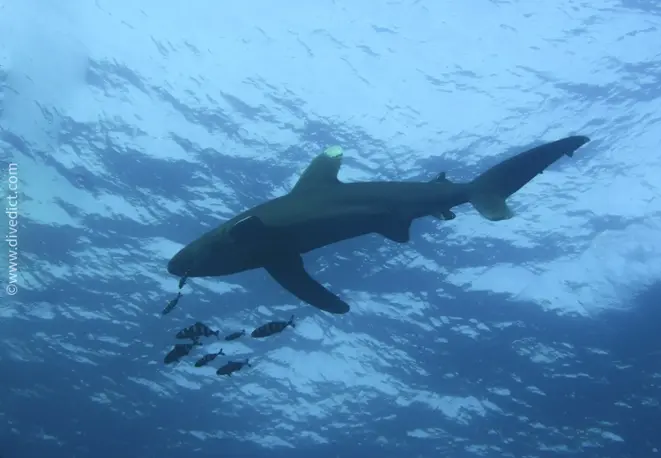
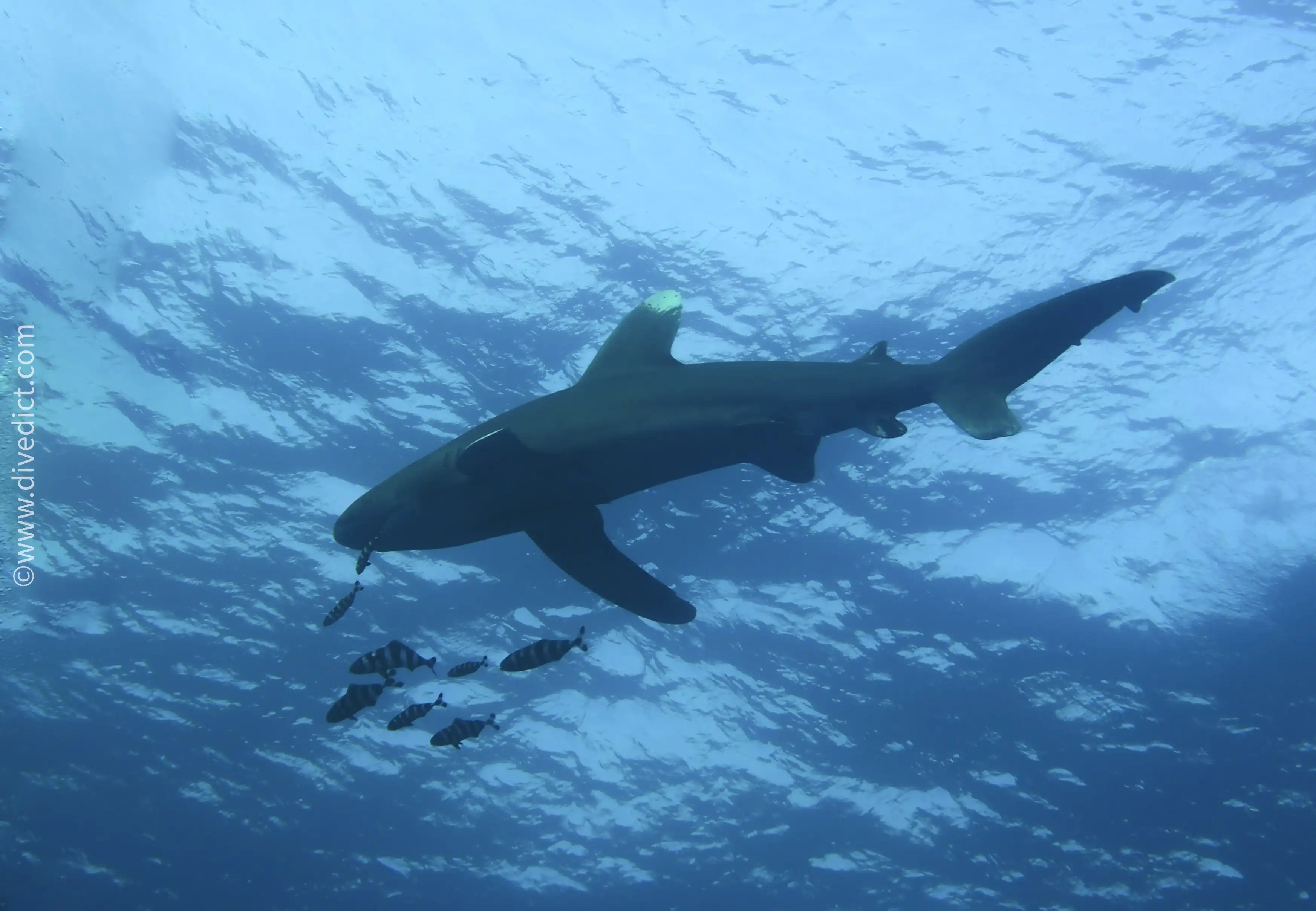
The oceanic whitetip shark is easy to spot – its most distinctive feature is the bright white tips on both its dorsal and pectoral fins.
Appearance
This shark has a strong, powerful build. What really stands out are its large, rounded dorsal and pectoral fins, each tipped in white. Its coloring is usually a murky dark brown or dark grey – not flashy, but very characteristic.
Natural enemies
Humans. In the oceans, it is at the top of the food chain.
Dangerous/Venomous
Oceanic whitetip sharks are considered potentially dangerous. While fatal attacks on humans have been recorded, such incidents are rare. They're not venomous.
Sketch

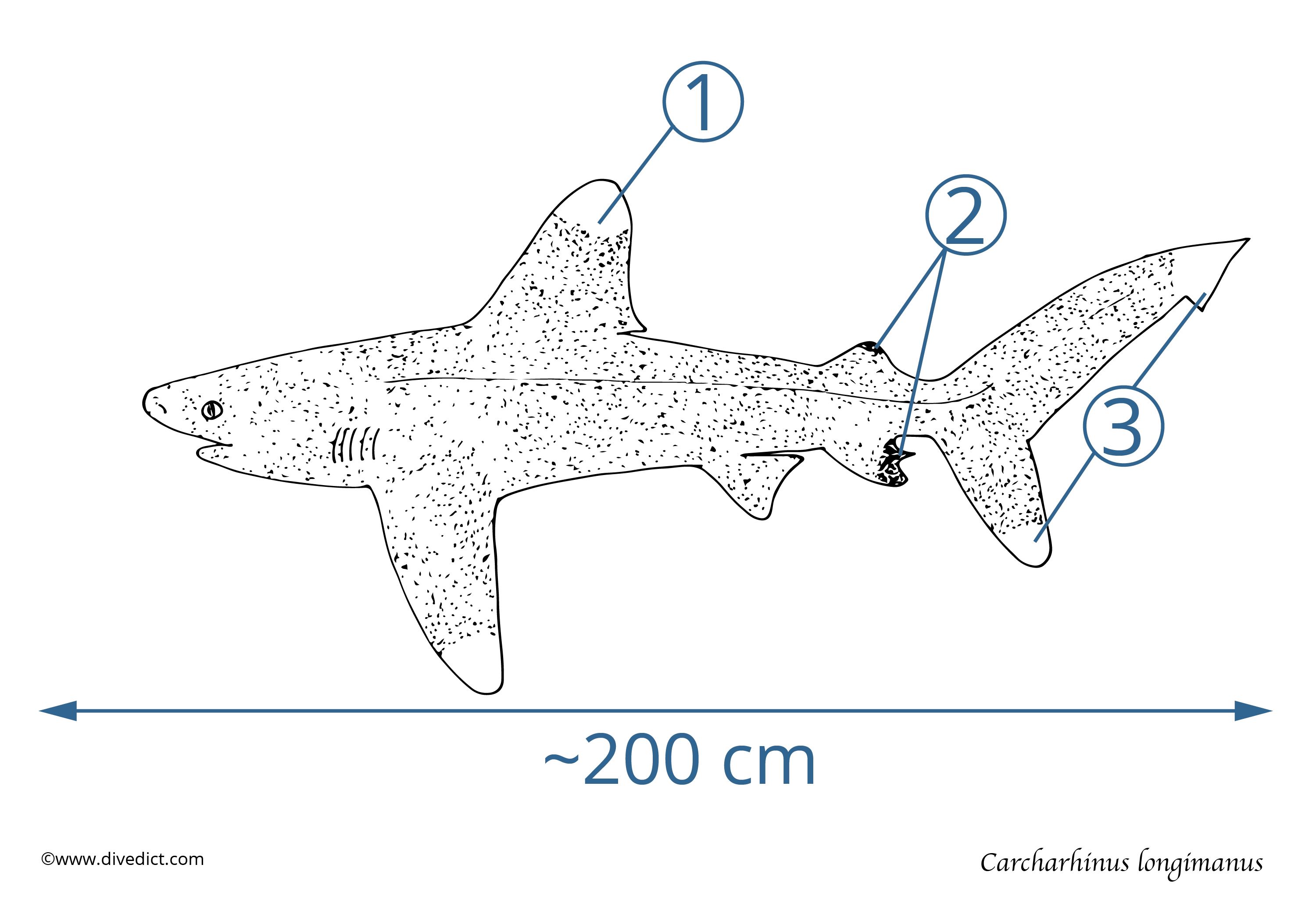
1. white tip
2. black tip
3. white tip
Pro tips
Oceanic whitetip sharks are most commonly found near the surface of deep, open ocean waters. They rarely venture close to shore. It's not unusual to see them accompanied by pilot fish, which often swim alongside them. Their diet is impressively varied — from bony fish and squid to seabirds, turtles, marine mammals, carrion, and even waste. These sharks aren't shy around humans. In fact, they're known for their curious nature and will often circle divers persistently and with great interest.
Oceanic whitetips belong to the requiem shark family, which includes 49 species. Many of these sharks show territorial behavior. Female sharks often bear bite marks left by males during mating. Signs of aggression can often be picked up from the shark’s posture and swimming style. Larger members of this family are generally considered potentially dangerous. Around 30 shark attacks are reported worldwide each year, and most are not fatal. These incidents are usually the result of a mix of poor visibility, nearby prey or bait, and erratic or panicked movements in the water.






Text: Carolina Leiter
Pic: Felician Hosp
Illustration: Dive Dict