
Nursehound
Scyliorhinus caniucla




Special features
The species name “canicula” is the diminutive of the Latin “canis”, which means dog.
In ancient times, sharks were disparagingly referred to as dogs because they were considered dangerous and tasted bad. Nursehounds were known as the food of the poor.
Appearance
Nursehounds have thin bodies with their dorsal fins located at the back end of their body for faster swimming.
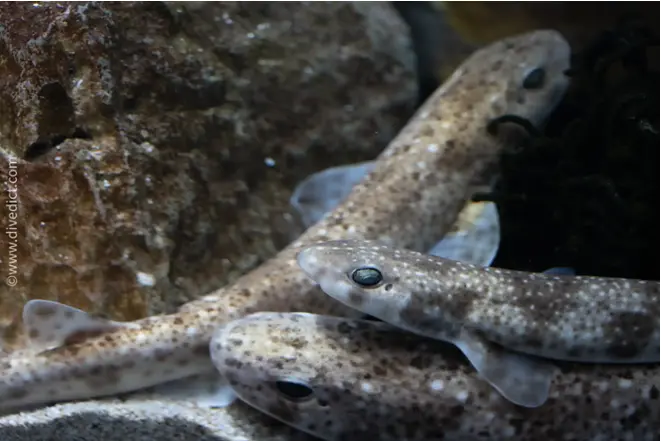
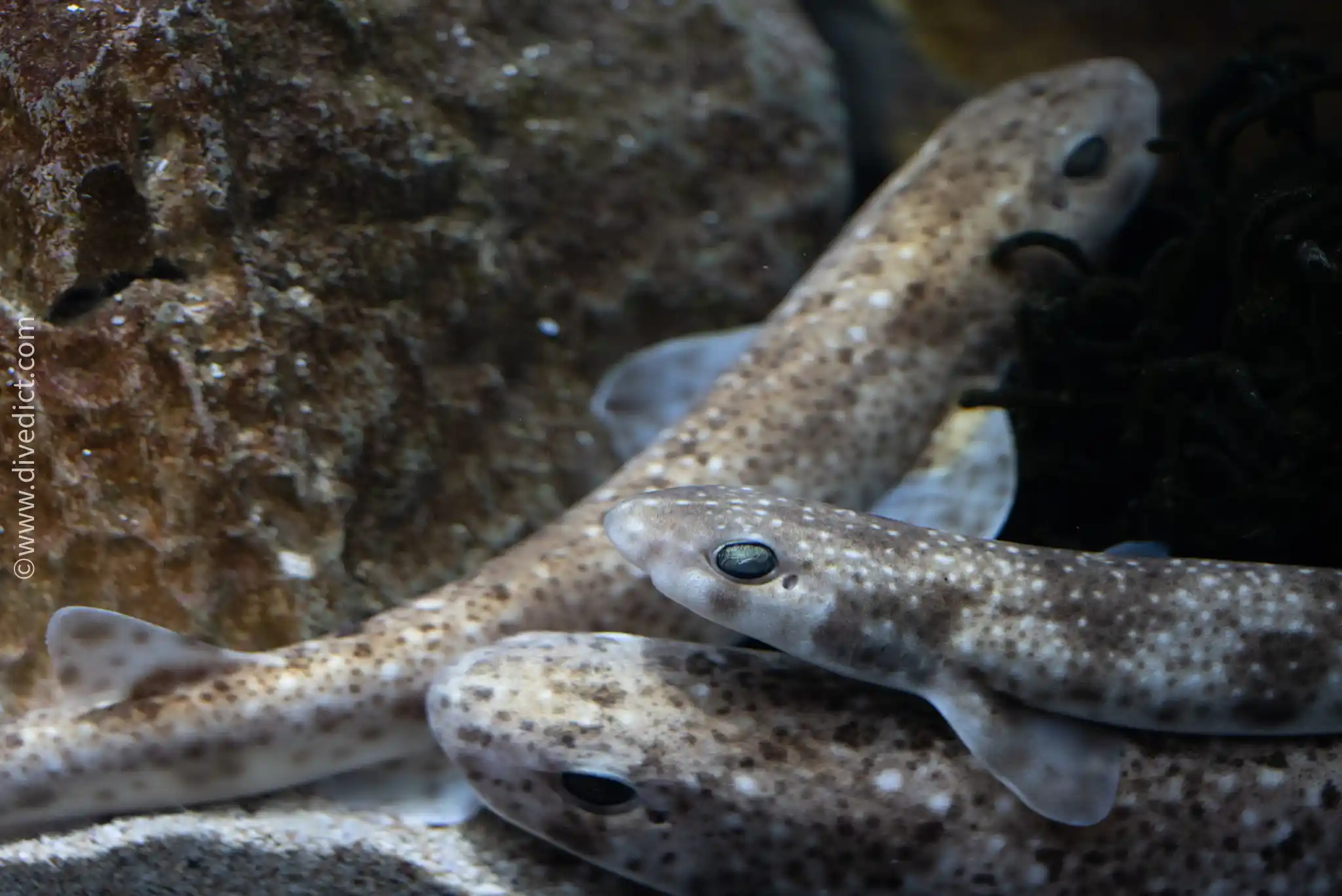
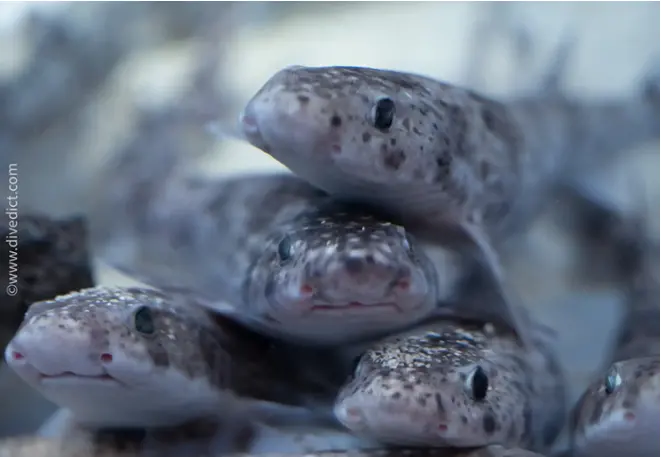
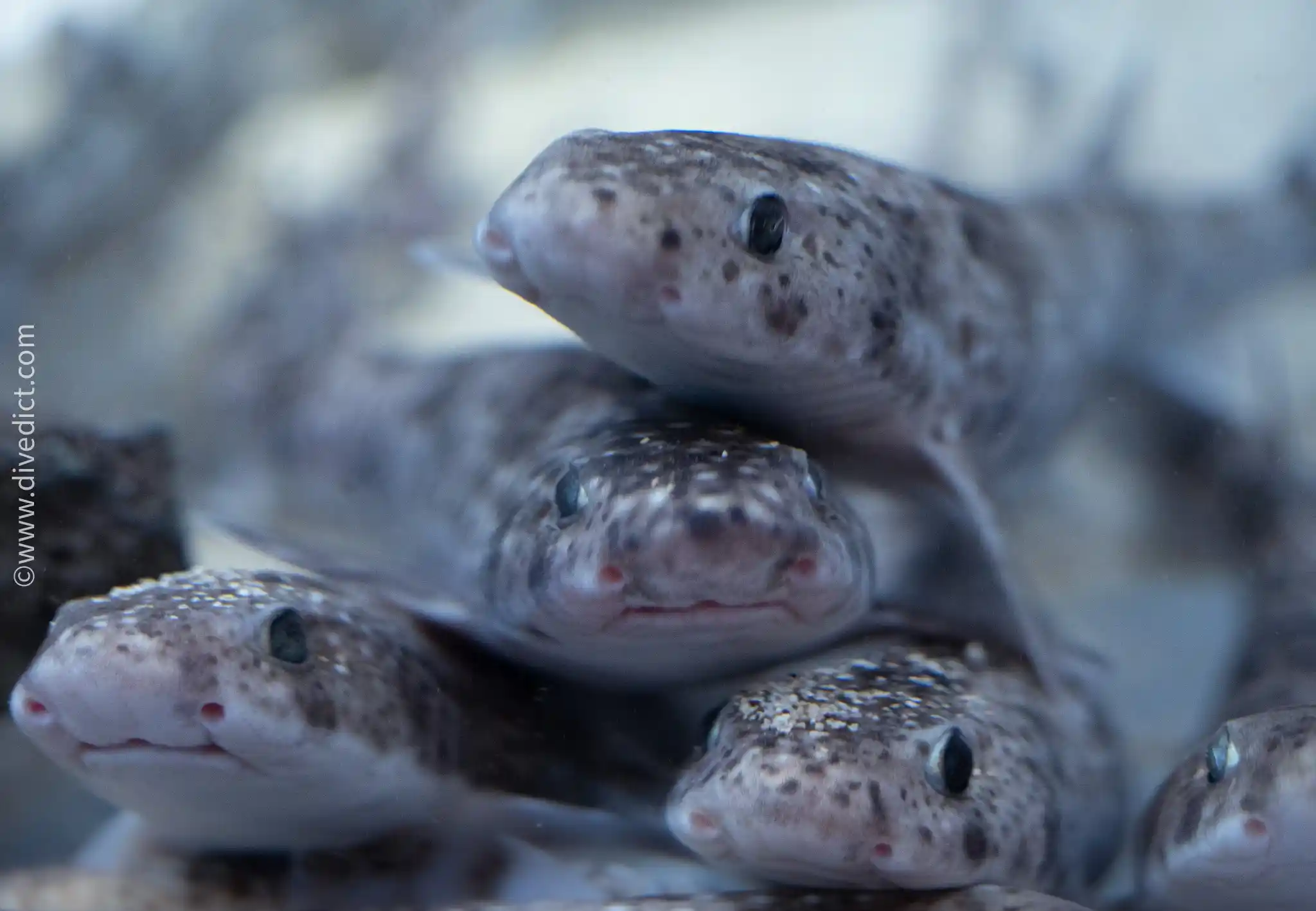
It has a light base color with many small, dark brown spots on it, while the belly is always white.
Even though it looks cute, his skin is rough and sandpaper-like as it is covered by skin teeth.
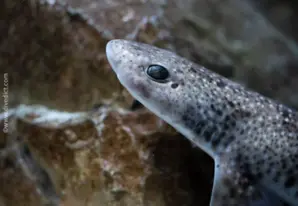
His dark big dark eyes add up to his puppy-like look.
Natural enemies
Sharks
Dangerous/Venomous
Nursehounds are neither dangerous nor venomous.
Sketch
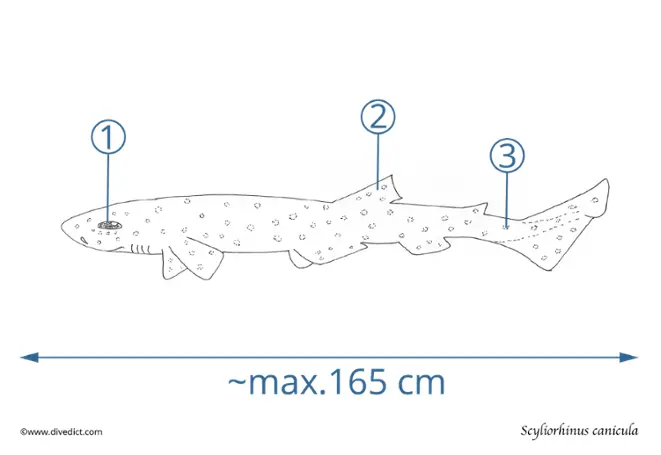
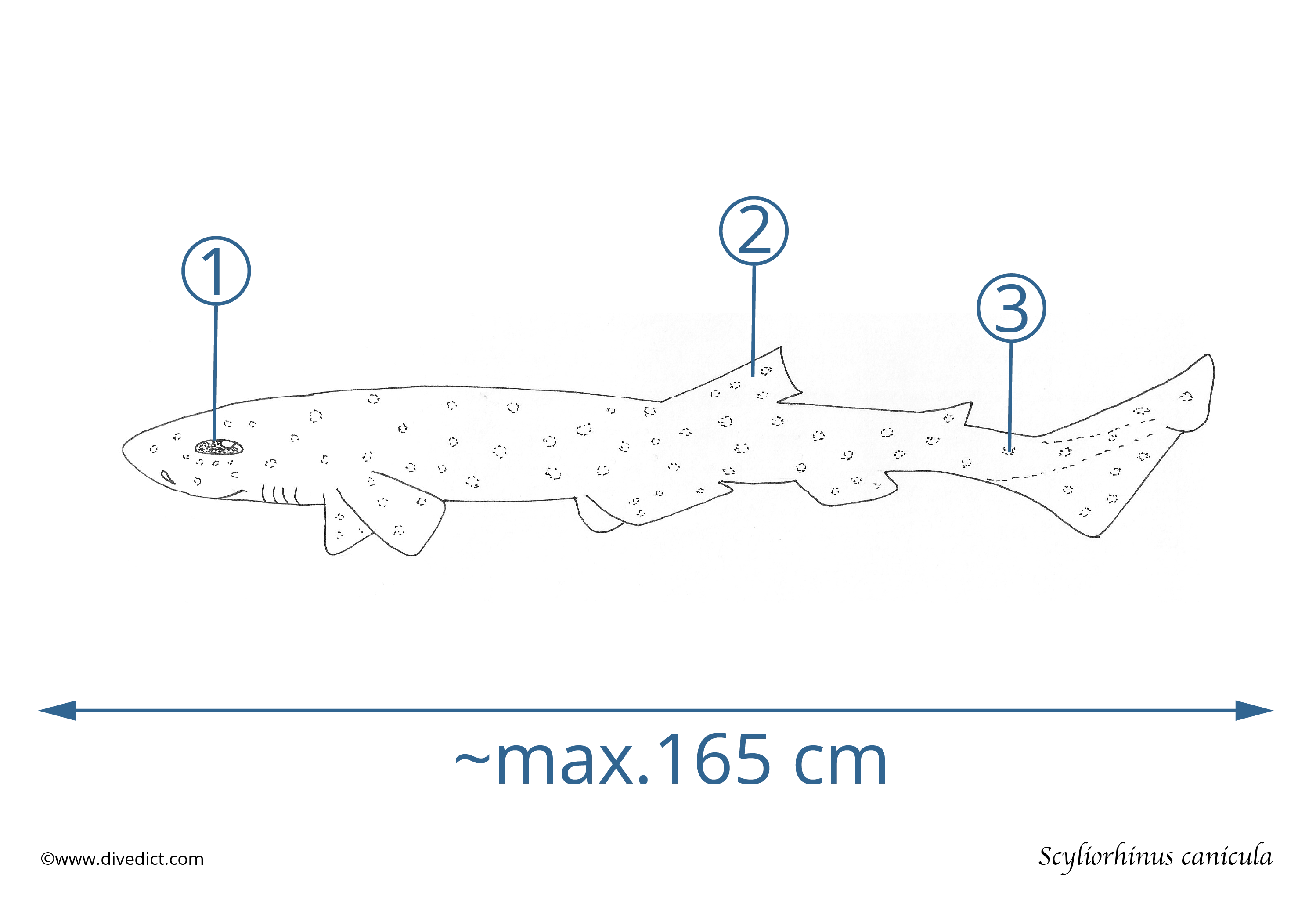
1. Big dark eyes
2. Dorsal fin
3. Dark brown spots
Pro tips
During the day, Nursehounds often hide in caves with other companions.
At night, they leave their burrows in swarms of the same sex to hunt.
Divers can find females in shallower water, especially in early fall during mating season.
With one of his two copulatory organs, the so-called claspers, the male fertilizes the eggs in the female's body.
She then attaches the thick-walled egg capsules to seaweed and it takes 5 to 11 months before they hatch.
Text: Carolina Leiter, Felician Hosp, Pia Balaka
Pic: Felician Hosp
Illustration: Dive Dict