
Smallscale Scorpionfish
Scorpaenopsis oxycephalus



Special features
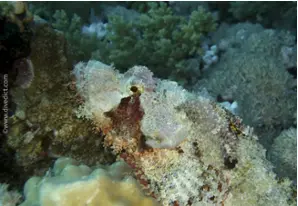
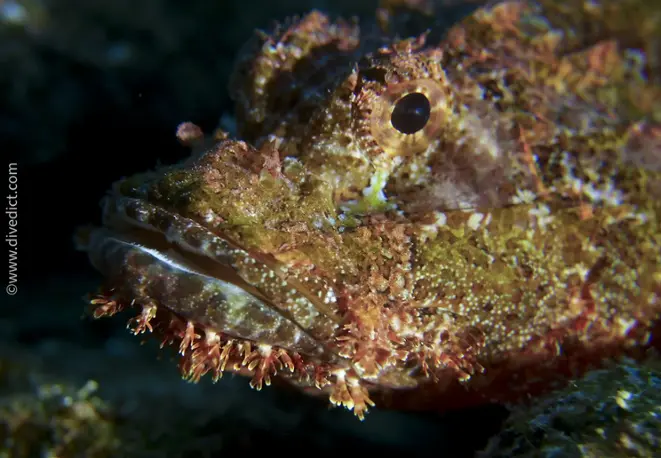
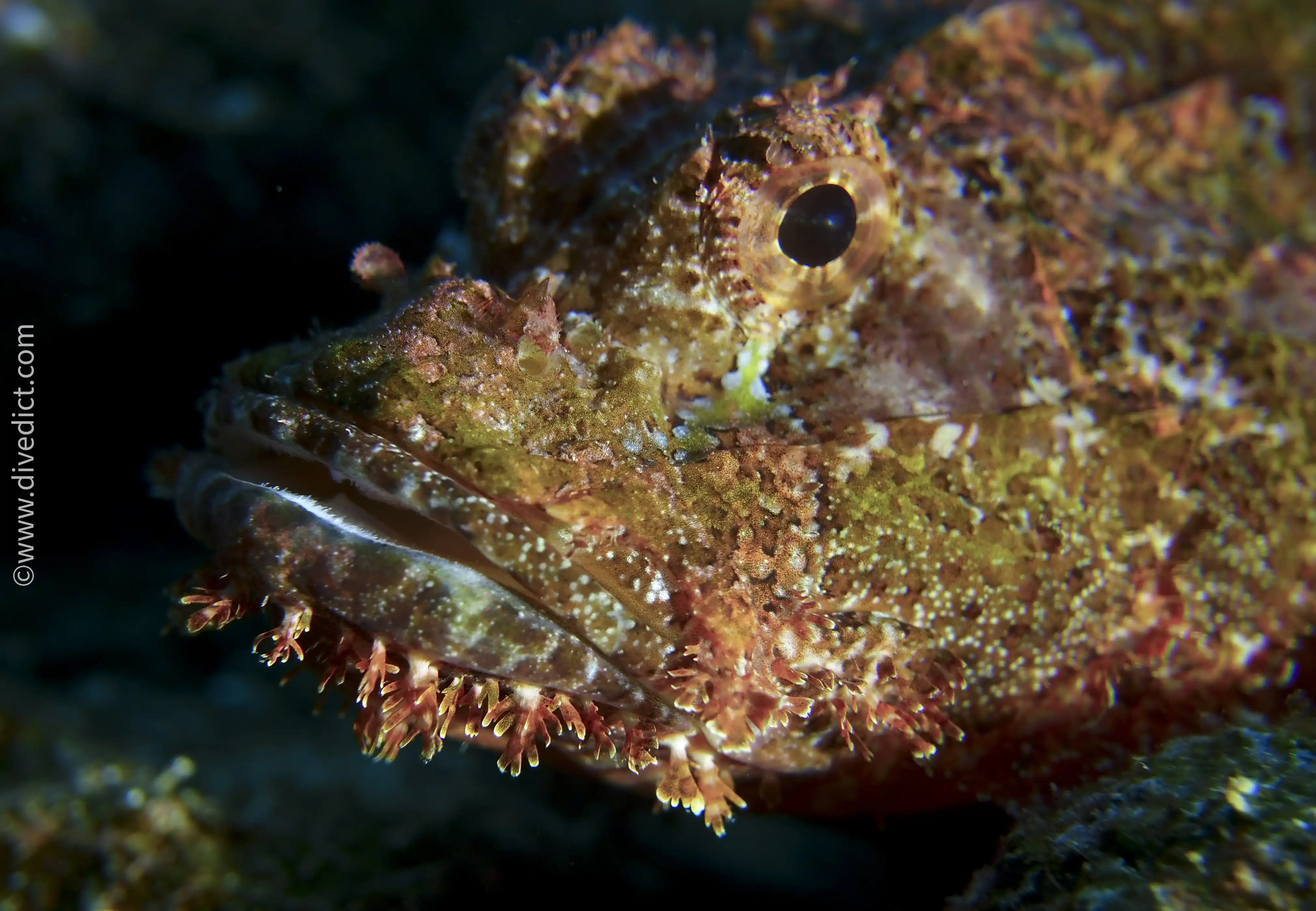
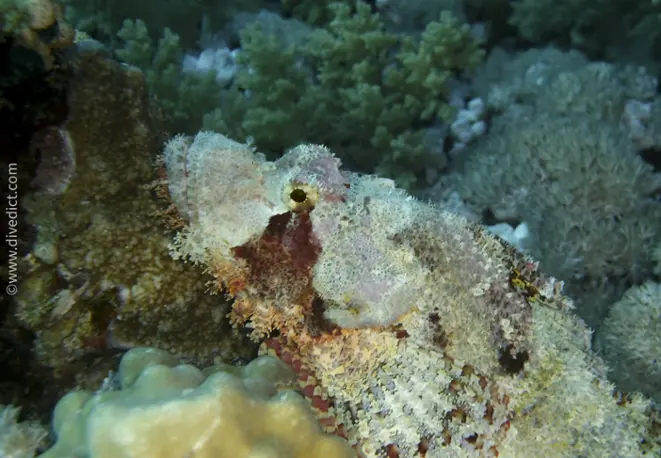
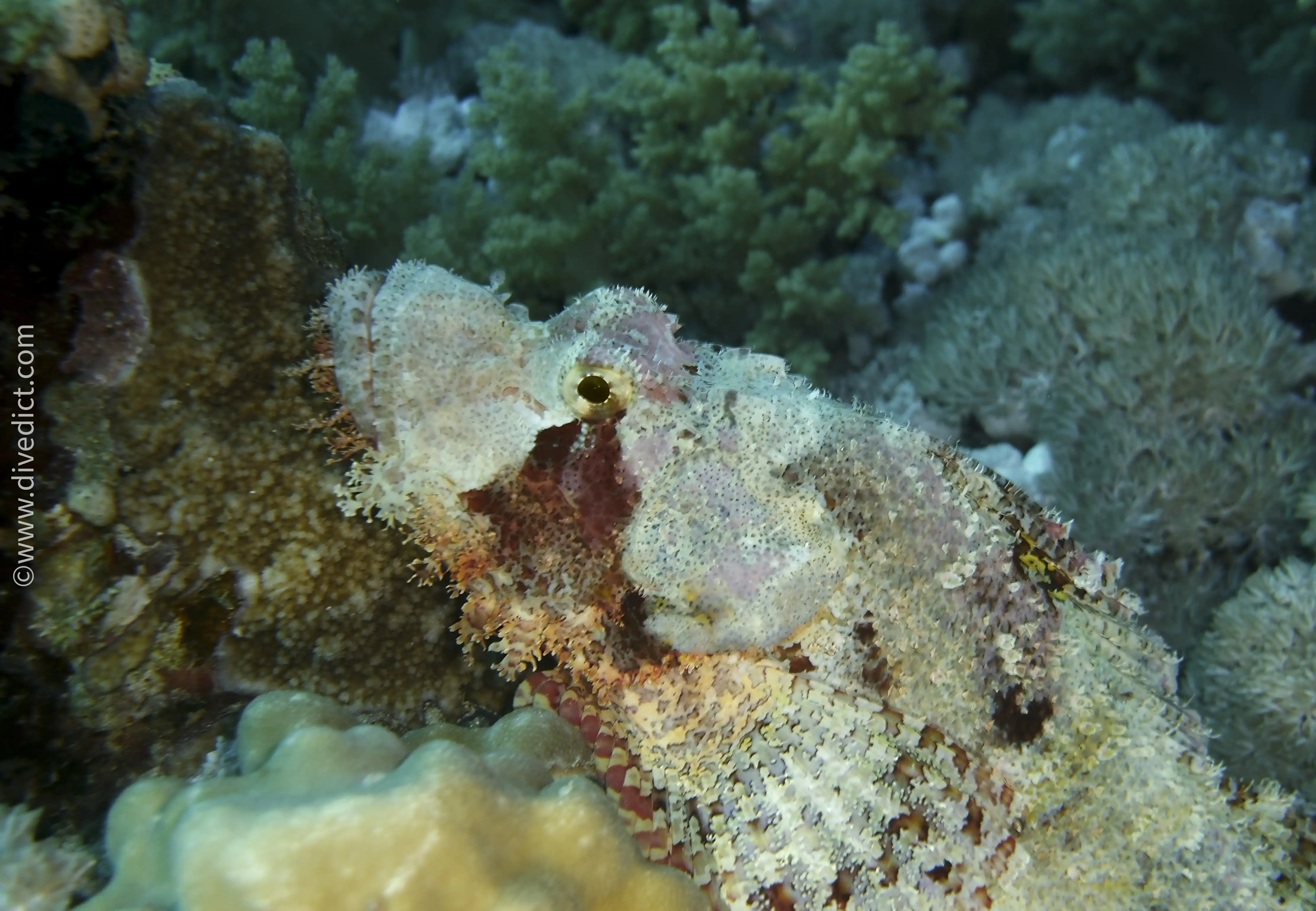
The Smallscale scorpionfish is recognized by the frilly skin flaps on its chin and head. Its snout is much longer and wider than other fish of its kind, giving it a truly distinctive look. It almost looks like someone stepped on its snout, and now it’s permanently smashed.
Appearance
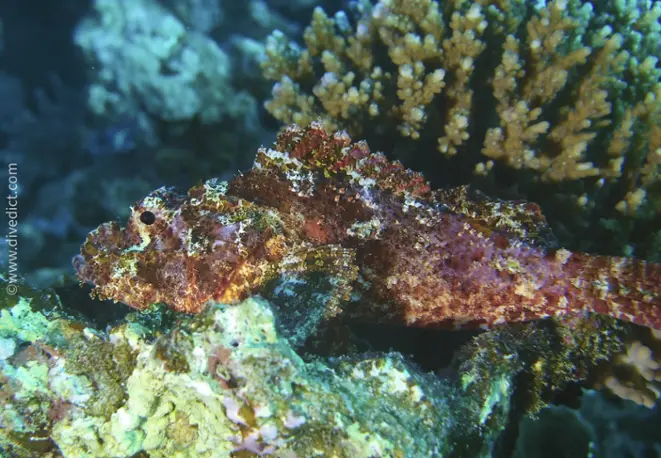
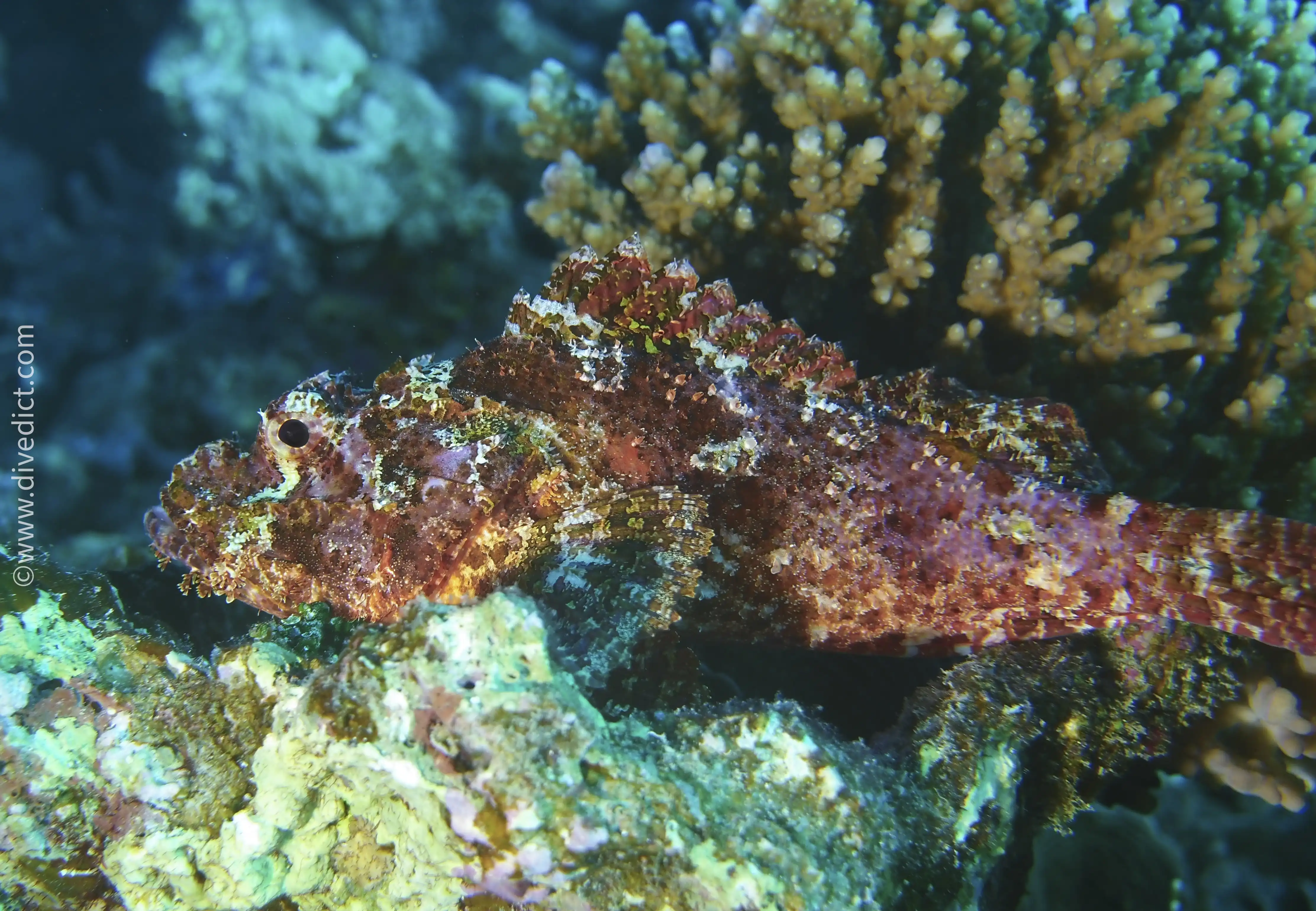
The Smallscale Scorpionfish has a second dorsal fin spine that is as long as the third, giving it a symmetrical appearance. Its coloration ranges from brown to reddish, with irregular lighter spots that provide excellent camouflage in its environment.
Natural enemies
Sharks
Dangerous/Venomous
Many of these species, of lionfish and stonefish, possess venomous spines along their dorsal, anal, and pelvic fins, as well as small spines on their heads. Their venom can cause excruciating pain, vomiting, swelling, breathing difficulties, and fever in those who get stung. The best first-aid treatment is immersing the affected area in hot water (45°C for about 40 minutes) or using a hairdryer to apply heat. This helps break down the venom's proteins and relieve pain, which usually subsides within a few days.
Sketch

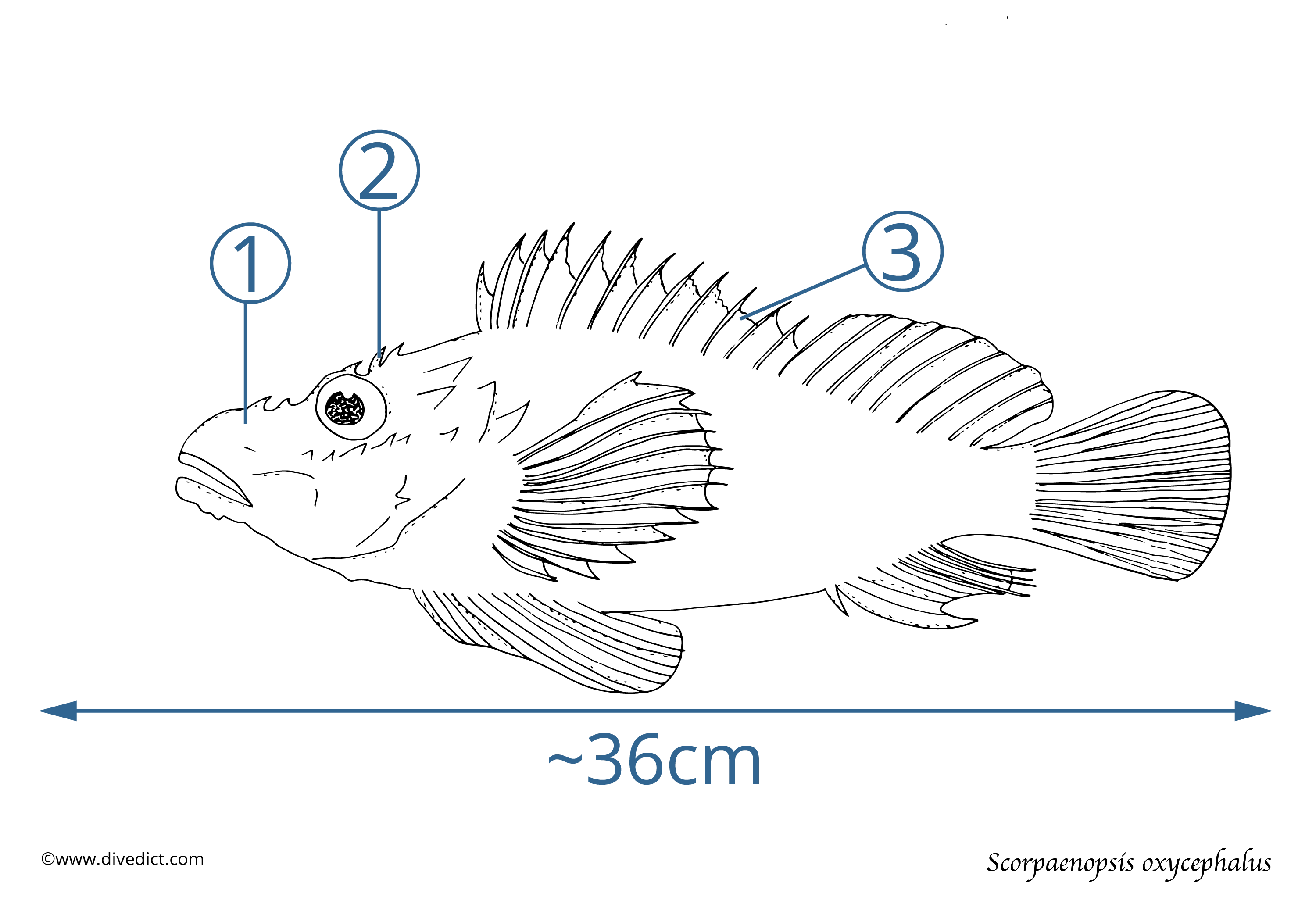
1. Flat and broad snout
2. Small spikes
3. Venomous finscales
Pro tips
The Smallscaled scorpionfish inhabits lagoons and outer reefs. It usually rests motionless on hard surfaces like live corals, rubble, or rocks rather than swimming. It prefers coral-rich reefs with clear water and is often found in these areas.
Little is known about their reproduction, but their tiny 1mm eggs are embedded in a gelatinous mass that floats with the ocean currents, dispersing their offspring far and wide.
Text: Carolina Leiter
Pic: Felician Hosp
Illustration: Dive Dict