
Clearfin lionfish
Pteropterus radiatus




Special features
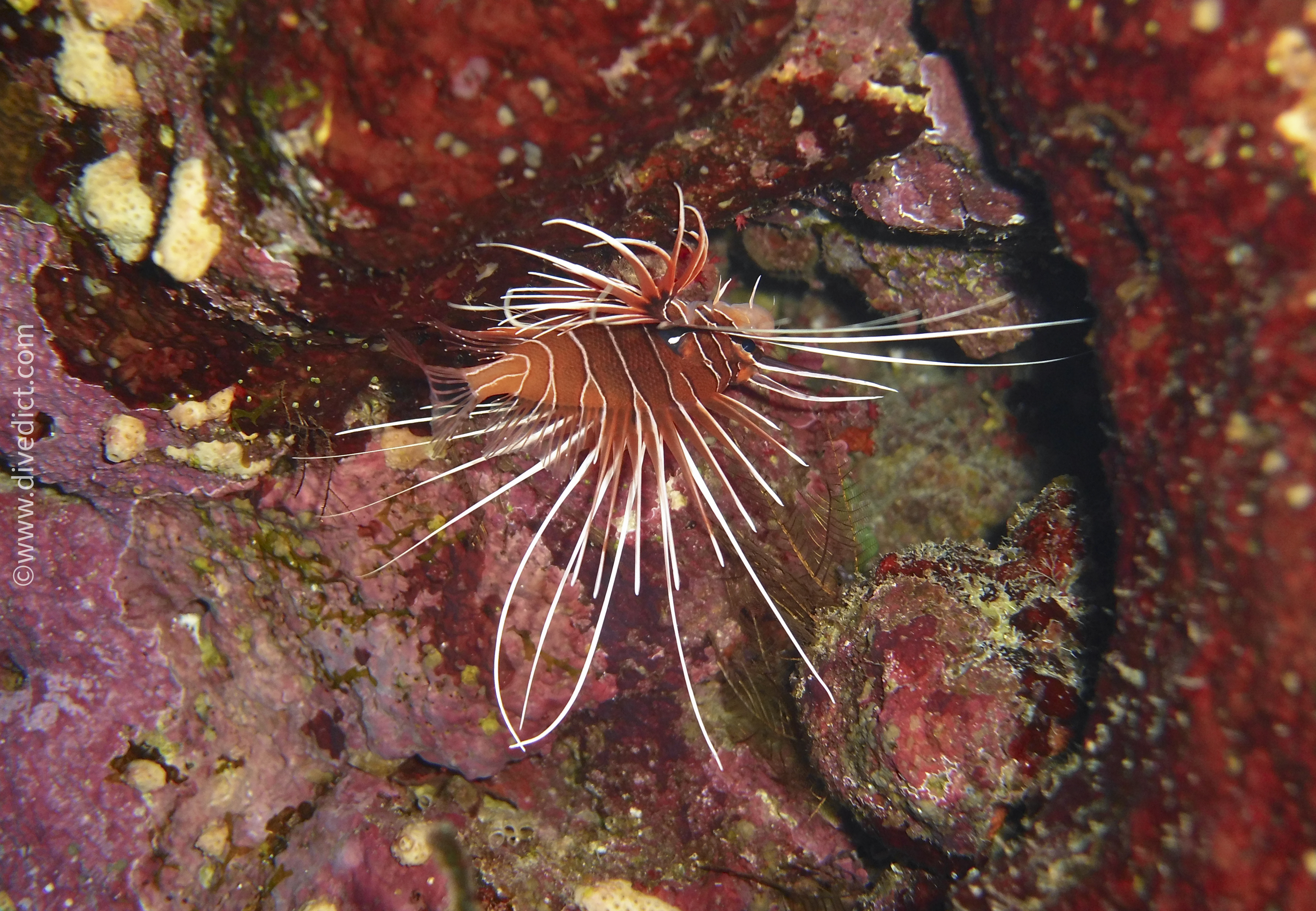
Especially in the waters off Yemen it often inhabits algae-covered areas with poor coral growth.
Appearance
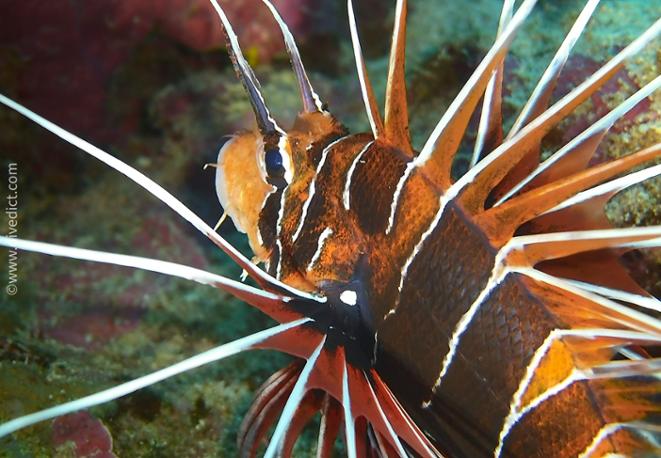
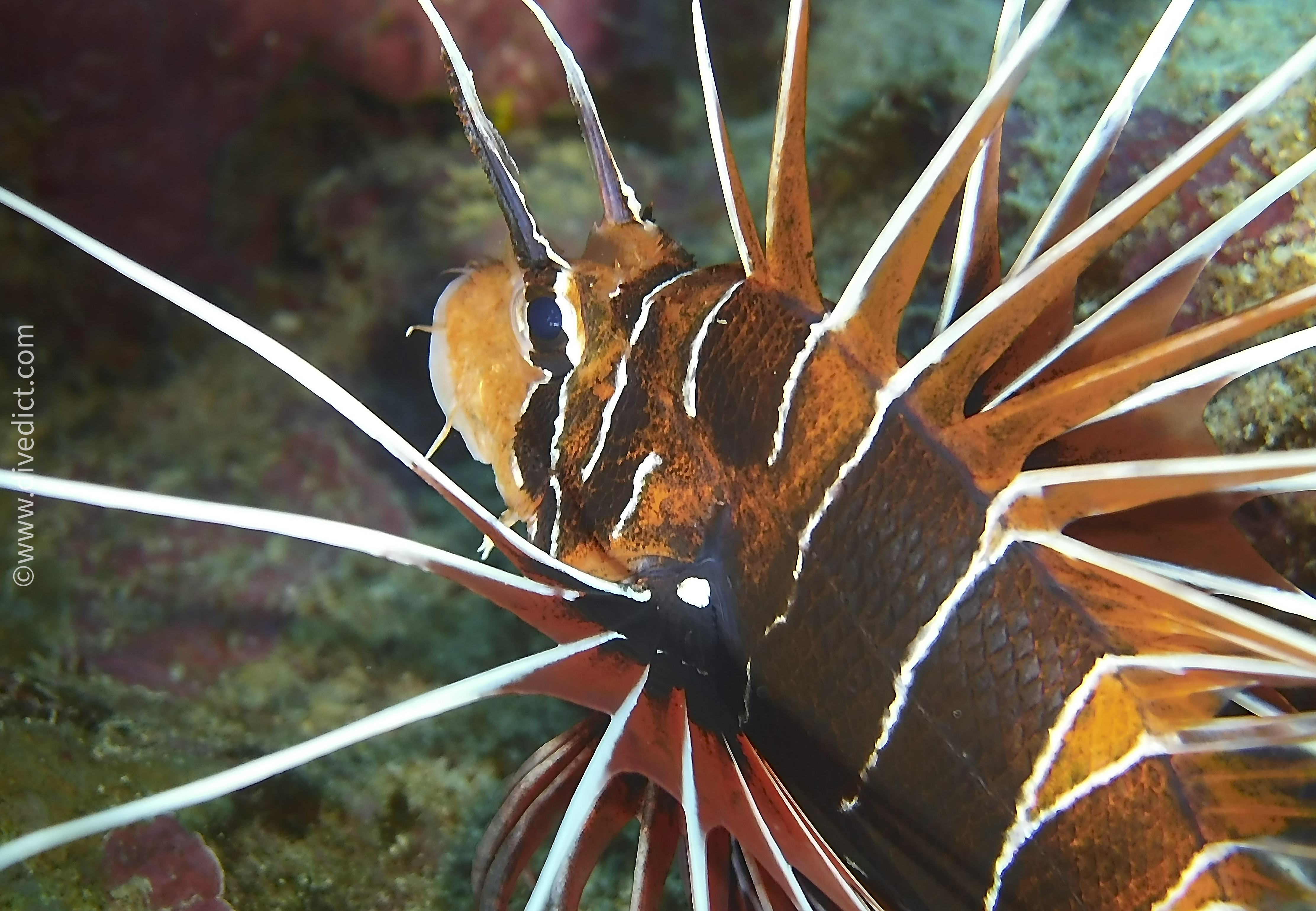
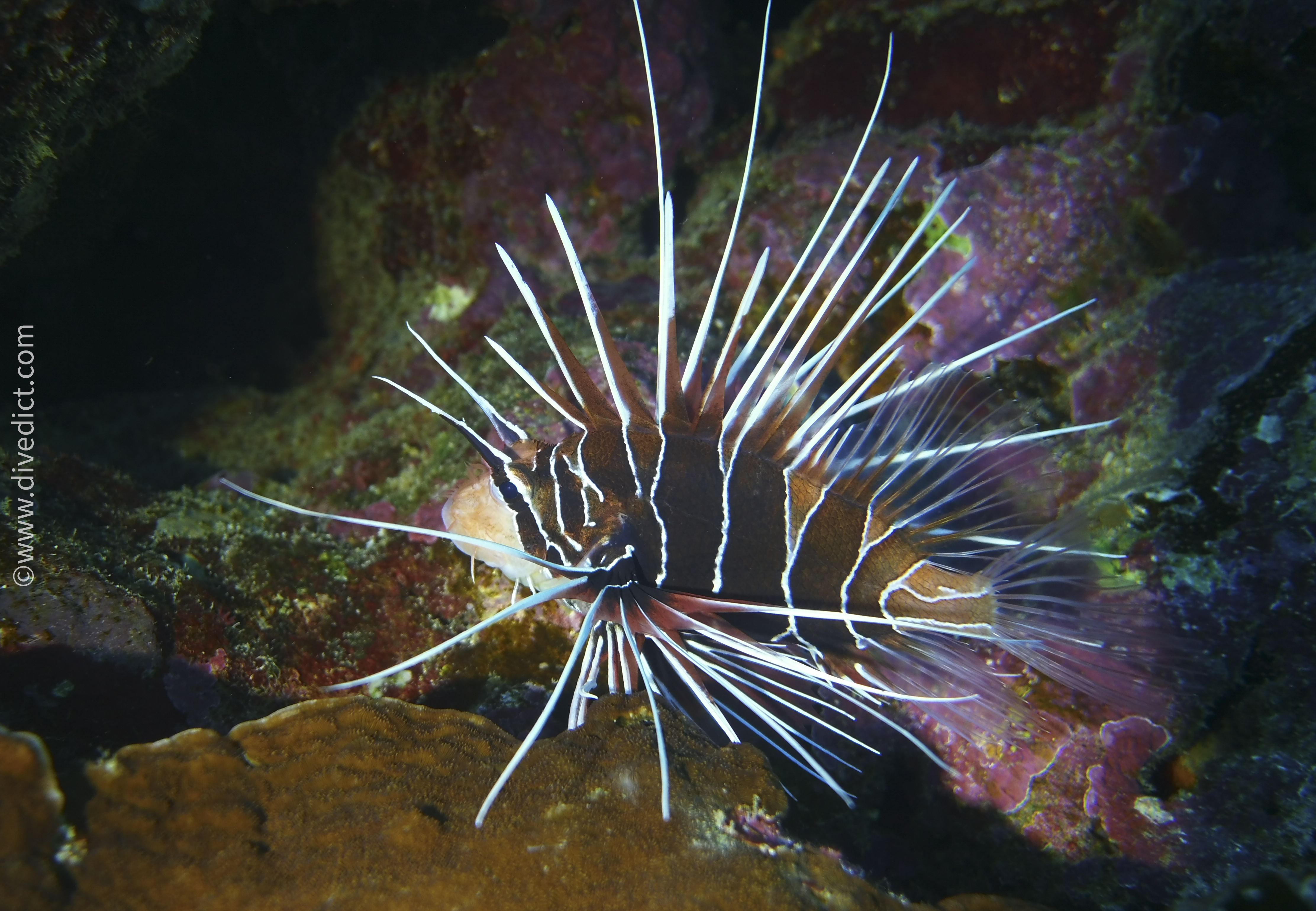
It can be recognized by the long white, free-standing pectoral fin rays and the white longitudinal stripes on the tail base.
Natural enemies
Sharks
Dangerous/Venomous
The lionfish shows no aggressive behavior, but it is venomous!
Sketch

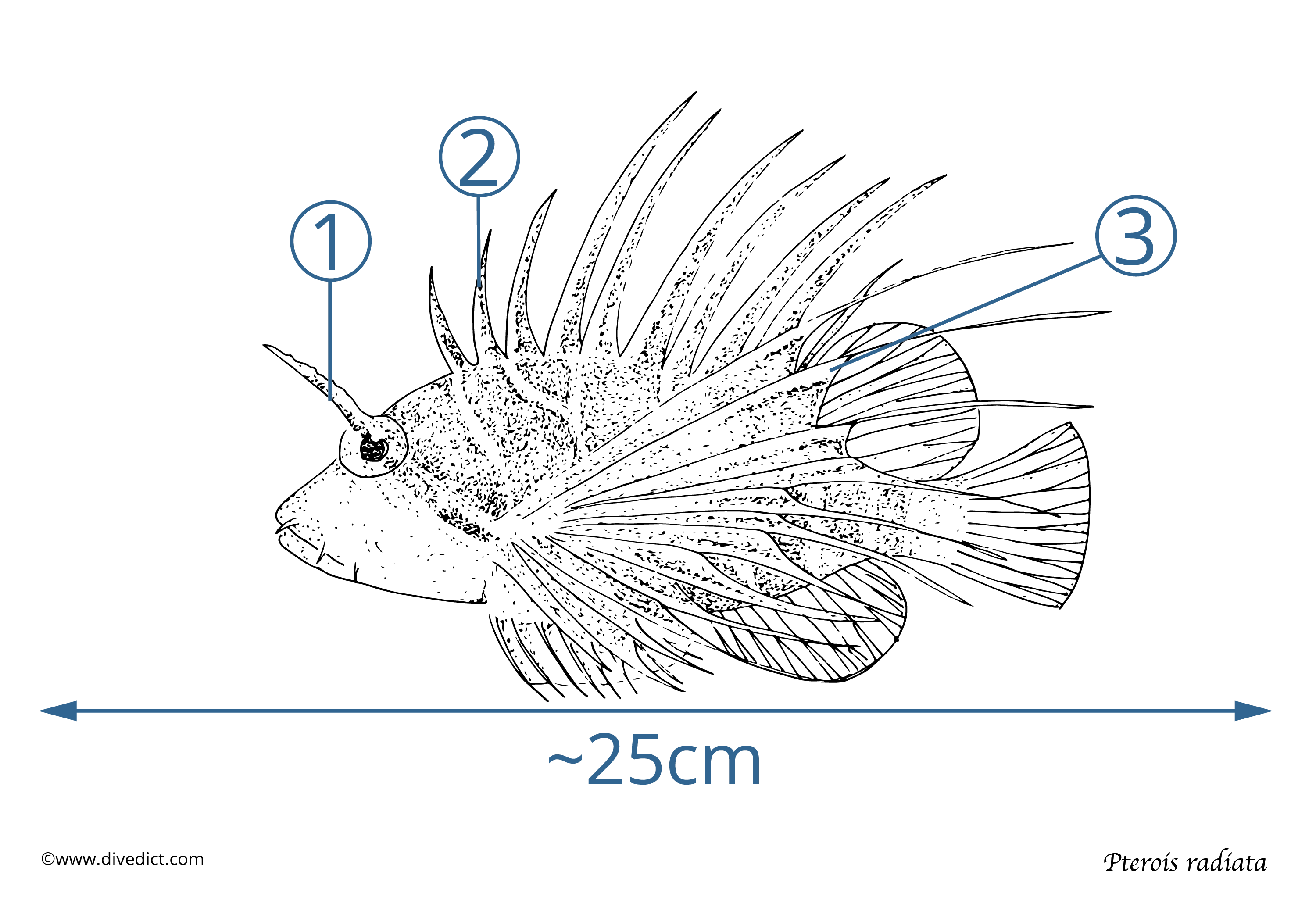
1. Venomous horns
2 and 3. Venomous finspikes
Pro tips
It inhabits reef flats, lagoons, and seaweed-covered reefs. Typically solitary or found in small groups, it hovers in crevices, caves, or under ledges during the day. Its diet primarily consists of crabs and shrimps.
These fascinating bottom-dwelling carnivores are true masters of camouflage. With their elaborate flaps, tassels, and highly variable coloration, they blend seamlessly into their surroundings—most often coral reefs. This natural disguise not only helps them evade predators but also allows them to ambush unsuspecting prey, which includes fish, crustaceans, and cephalopods. Their hunting strike is lightning-fast, taking less than 15 milliseconds to capture their target.
Though they spend much of the day hidden, most species become active at night, emerging from their shelters to hunt. If disturbed, they raise their venomous dorsal spines in a clear warning before making a quick escape. Some species even have brightly colored undersides on their pectoral fins, which can startle predators and buy them precious seconds to flee.
Little is known about their reproduction, but their tiny 1mm eggs are embedded in a gelatinous mass that floats with the ocean currents, dispersing their offspring far and wide.
Many of these species, of lionfish and stonefish, possess venomous spines along their dorsal, anal, and pelvic fins, as well as small spines on their heads. Their venom can cause excruciating pain, vomiting, swelling, breathing difficulties, and fever in those who get stung. The best first-aid treatment is immersing the affected area in hot water (45°C for about 40 minutes) or using a hairdryer to apply heat. This helps break down the venom's proteins and relieve pain, which usually subsides within a few days.
Despite their dangerous reputation, these stealthy predators play an important role in the marine ecosystem—just be sure to admire them from a safe distance!
Text: Carolina Leiter
Pic: Felician Hosp
Illustration: Dive Dict