
Mediterranean sand smelt
Atherina hepsetus




Special features
This little fella usually does not grow larger than 20cm.
Similar to other fish that call the open water their favorite habitat, it has a bluish-greenish base color, which disguises it from predators in the blue sea.
Appearance
The body of the Mediterranean sand smelt is long and slender, spindle-shaped, and slightly flattened laterally. It is a maximum of 20cm long, but usually no longer than 15cm.
It is easy to recognize by a bright blue stripe that runs sideways along the body.
It has characteristic small scales on its body and head.
The two dorsal fins are spaced; that's what sets him apart from Sardines.
Natural enemies
European sea bass (Dicentrarchus labrax)
Common garfish (Belone belone)
Dangerous/Venomous
The large earfish is neither dangerous nor venomous.
Sketch
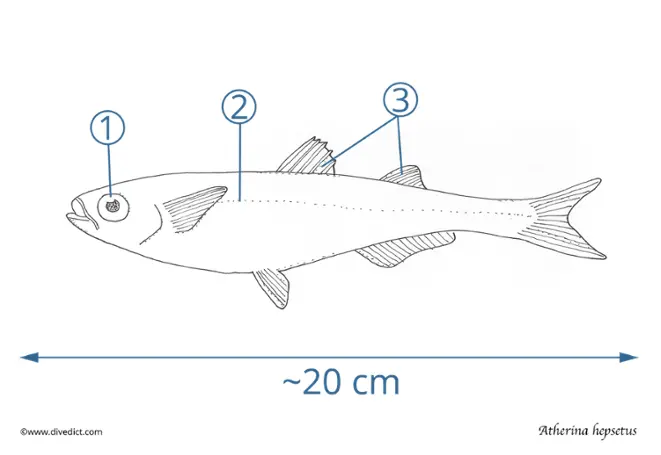
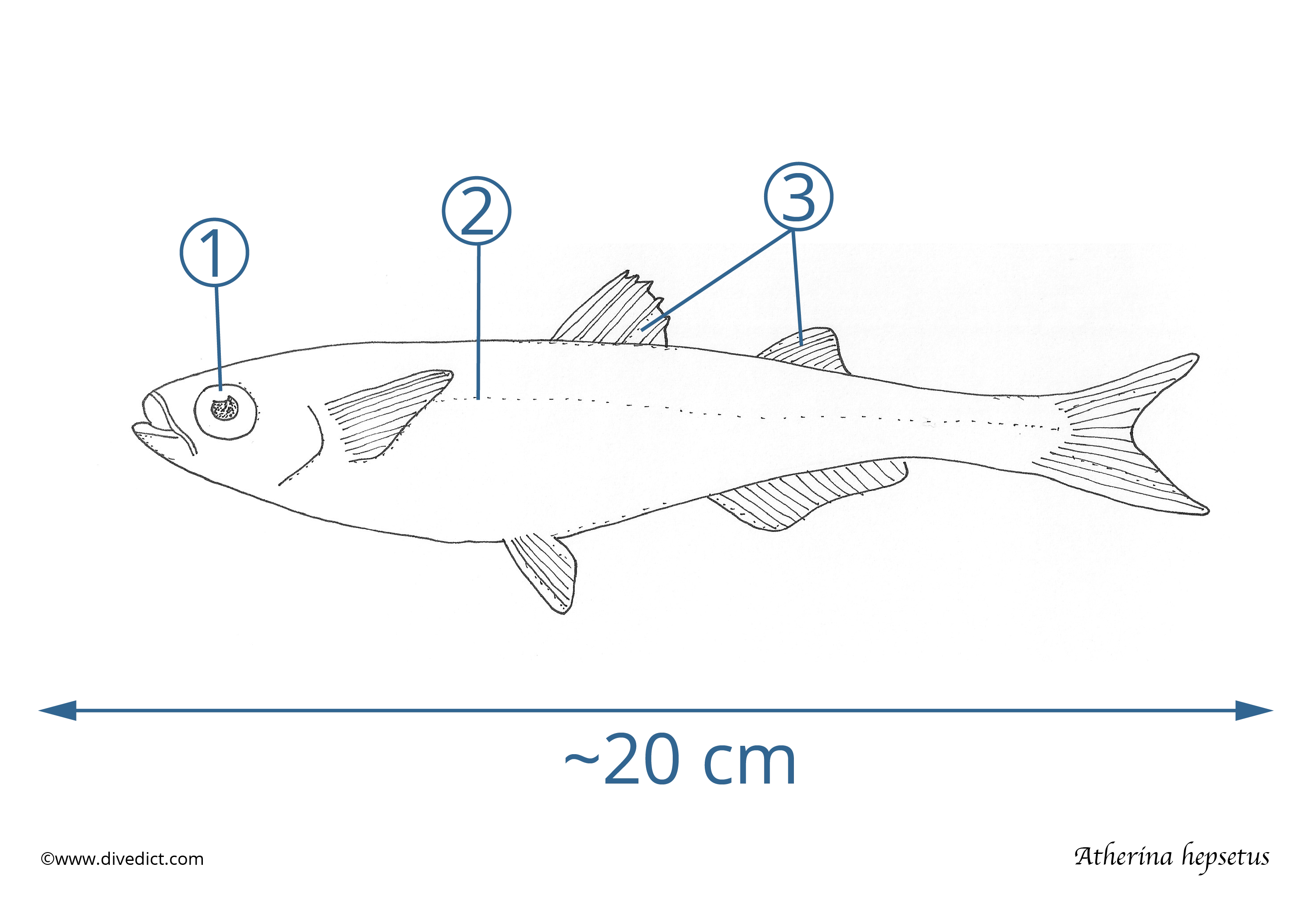
1. Big eyes
2. Bright blue stripe
3. Wide distance between dorsal fins
Pro tips
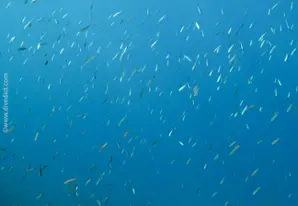
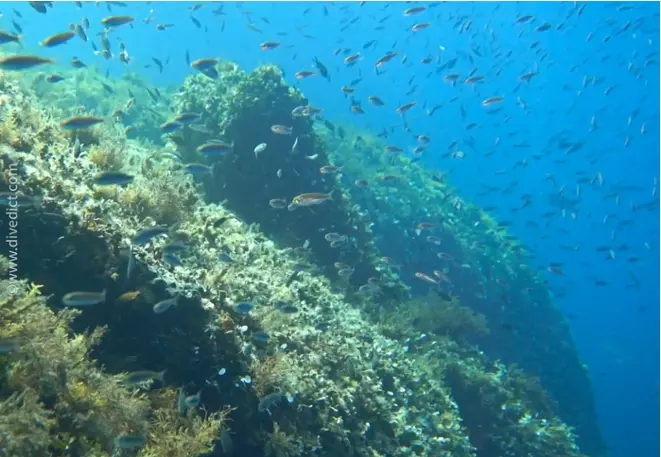
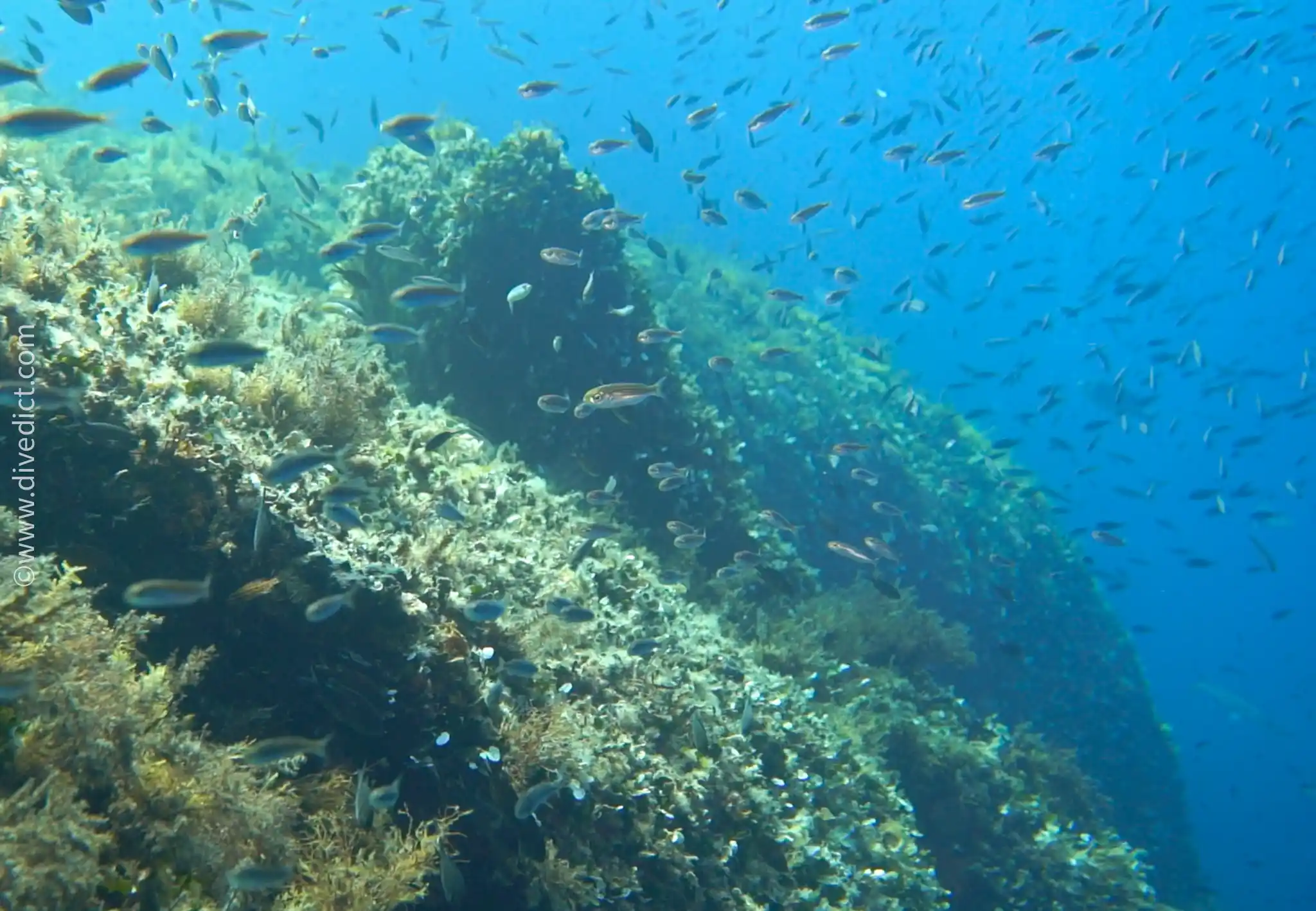
Mediterranean sand smelt live in shallow water, where they form large shoals of hundreds to thousands of fish.
These big, floating clouds are fantastic to look at during a dive; in the greatness of the blue ocean, they seem just like little snowflakes.
They like to linger in the shadows of boats.
They feed on small crabs that float in water, and they themselves are an important food source for many other fish species.
They reproduce between December and May.
With the help of fine adhesive threads, the eggs attach themselves to algae, rocks, or soil.
Text: Carolina Leiter, Felician Hosp, Pia Balaka
Pic: Felician Hosp
Illustration: Dive Dict