
Orbicular burrfish
Cyclichthys orbicularis




Special features
The rear dorsal fin, pectoral fins, and anal fins resemble the shape of a three-leaf clover and are delicately patterned.
Appearance
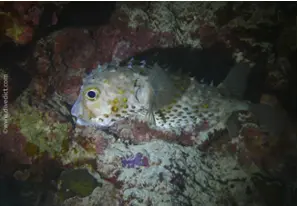
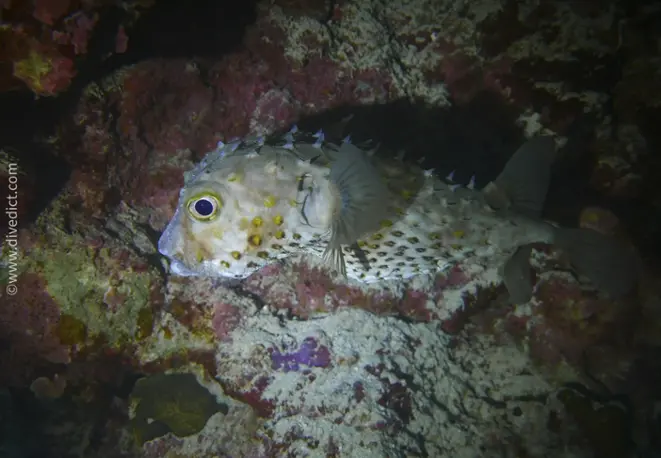
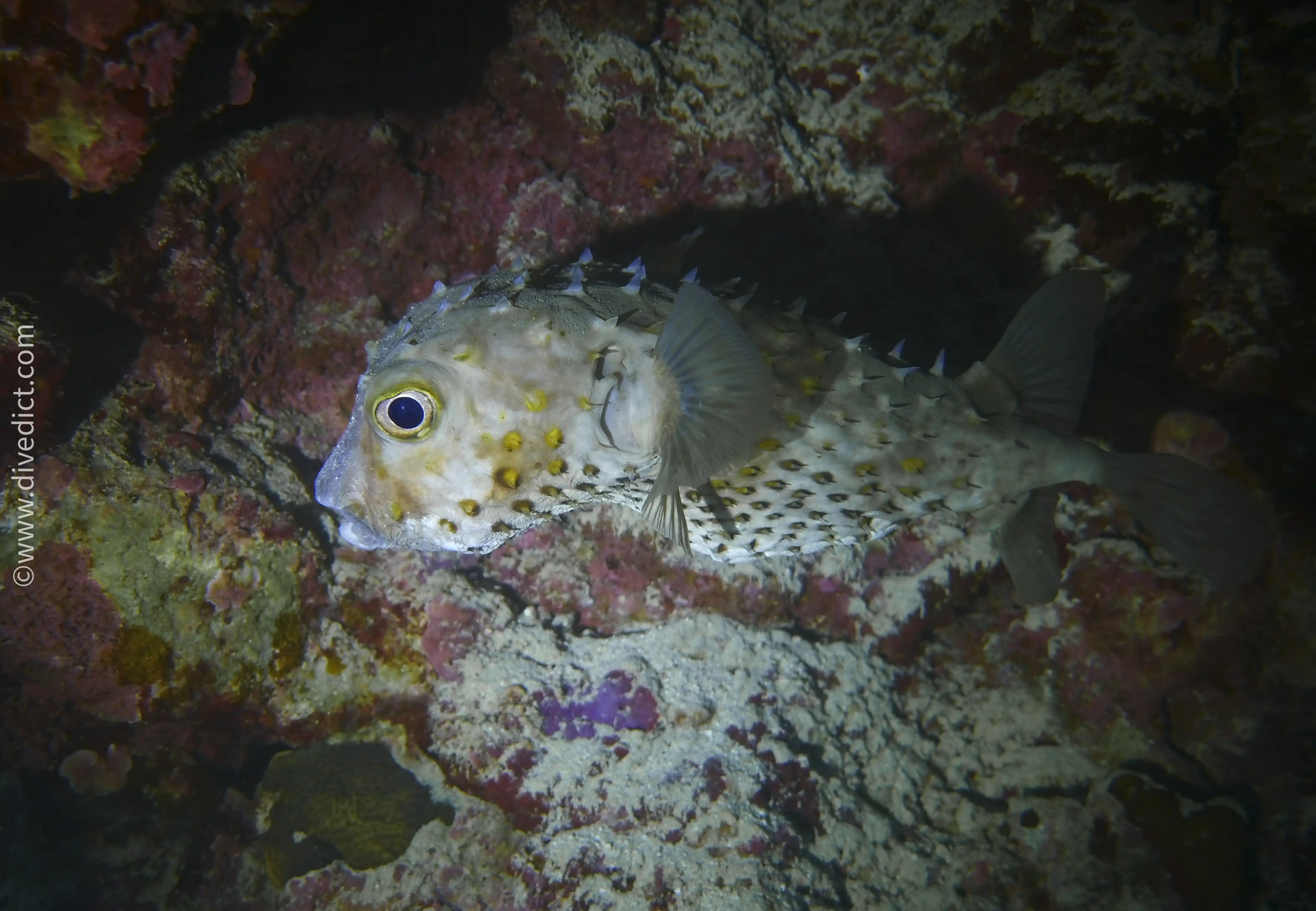
The Orbicular burrfish has a brownish to rust-brown coloration, sometimes appearing in a delicate cream shade, especially when resting on sandy bottoms. It is often covered in dark spots. Its fixed spines give it a distinctive appearance. Its most striking feature is its enormous eyes, which stand out in comparison to its body.
Natural enemies
Predatory fish
Dangerous/Venomous
The Orbicular burrfish is neither dangerous nor venomous.
Sketch
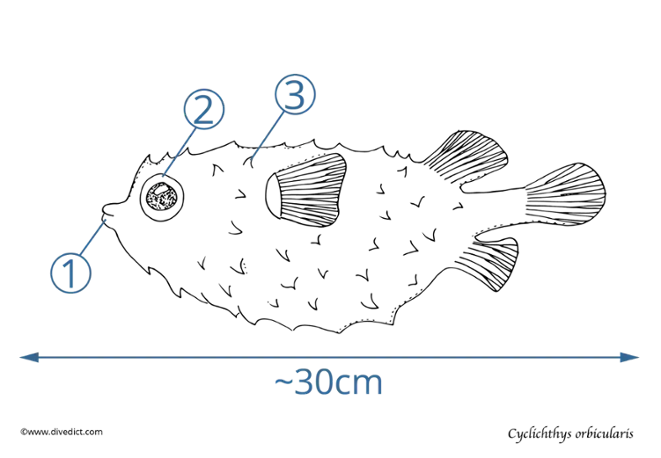
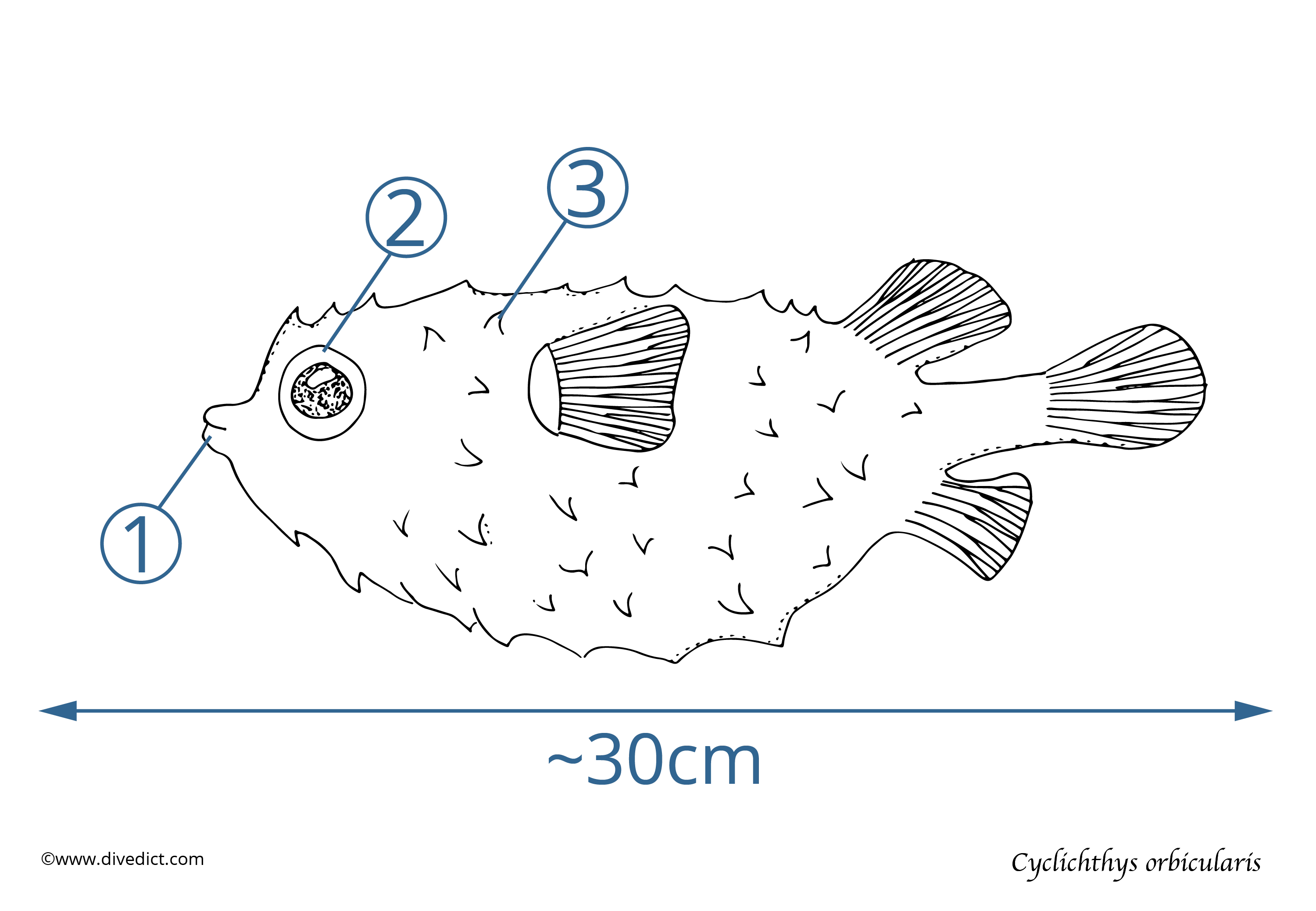
1. Pointed, tiny mouth
2. Big eyes
3. Spines
Pro tips
The Orbicular burrfish inhabits sheltered reefs and bays, often found over sandy and rubble-covered seabeds.
During the day, it rests in safe, hidden spots.
At night, it actively hunts for crabs, mollusks, and worms. This fascinating fish is rather rare to encounter.
As their appearance suggests, porcupinefish are relatives of pufferfish.
They have a strong, beak-like set of teeth, which allows them to crack open and consume shells, snails, sea urchins, and hermit crabs.
Like hedgehogs on land, porcupinefish are nocturnal. They hide in caves during the day.
Some species of porcupinefish have fixed spines, while others can raise and lower them.
When threatened, they swallow water, inflating their bodies like a balloon, making them difficult to swallow. Even sharks can choke on a porcupinefish.
For reproduction, they rise to the surface to spawn, and their eggs drift with the currents. A few days later, the larvae hatch.
Text: Carolina Leiter
Pic: Felician Hosp
Illustration: Dive Dict